Stellantis Group Loses 150 Billion Yuan in Half a Year: Is DPCA Still Waiting for a "Dongfeng"?
Stellantis Group's semi-annual report showed a loss of approximately 150 billion yuan, and its stock price plummeted by over 20% in a single day, evaporating nearly 70 billion euros in market value. Group CEO Carlos Tavares attributed the reasons to "overestimating the pace of the energy transition."
Facing a predicament, Stellantis has turned its attention to China – investing in Leapmotor, collaborating with Pony.ai, and adopting CATL batteries, attempting to drive global transformation through "Chinese solutions."
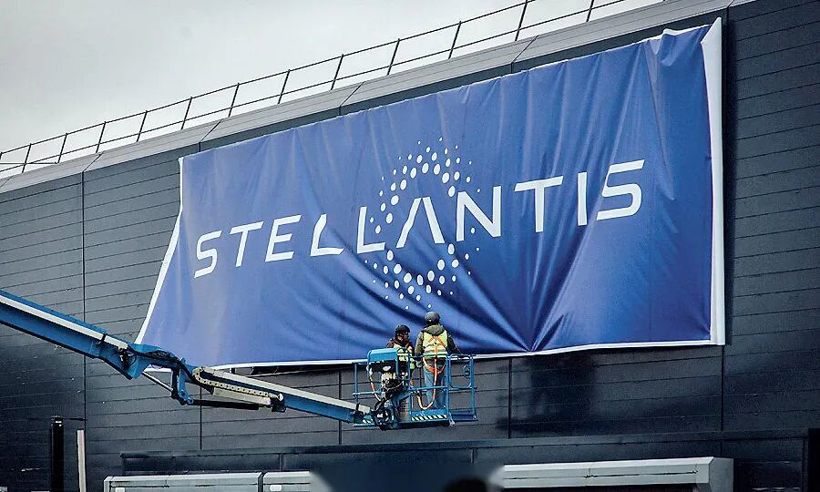
As Stellantis's "only spark" in China, Dongfeng Peugeot-Citroën Automobile (DPCA) made a similar choice: launching a new brand called "Shijie," with its first model, the Shijie 06, utilizing Dongfeng's electric platform. However, this model, seen as a last resort, failed to bring about the expected turnaround.
Global Giants' Shift to China
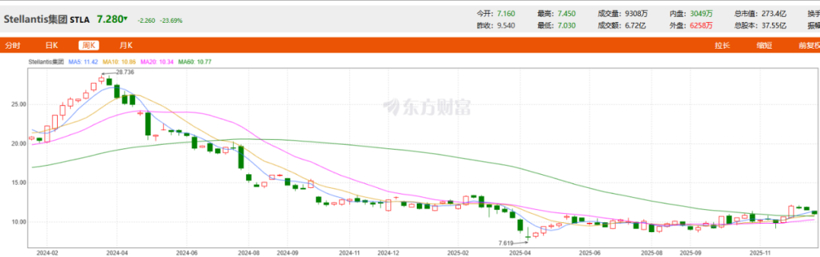
February 6, 2026, became a "Black Thursday" for the Stellantis Group. On the Milan and New York stock exchanges, the automotive giant, which owns 14 brands including Jeep, Peugeot, and Citroën, saw its stock price plummet by over 20%, wiping out more than $6 billion in market value in a single day.
Since its historical high in March 2024, the company's market capitalization has cumulatively evaporated by nearly €70 billion. The group's interim report reveals staggering figures: losses of approximately 150 billion yuan.
At the earnings call, Philosa admitted, "We overestimated the speed of the energy transition, and our product portfolio was severely detached from actual consumer needs." This statement marks a major traditional automaker's public reflection on its own transformation strategy.
It is this introspection that has given rise to Stellantis's "China Strategy": investing in Leapmotor to acquire electric vehicle technology, partnering with Pony.ai to establish a foothold in intelligent driving, and adopting CATL batteries to secure its supply chain. This European automotive giant is attempting to drive its global transformation through a "Chinese solution."
The Struggle and Imitation of the Divine Dragon
Shenlong Motor, Stellantis's "last hope" in China, is also undertaking similar attempts.
In March 2025, Dongfeng Peugeot launched its new independent brand "Shijie," with its first model, the Shijie 06, utilizing Dongfeng Group's electric platform technology. This choice was both a natural progression and a pragmatic necessity for Dongfeng Peugeot.
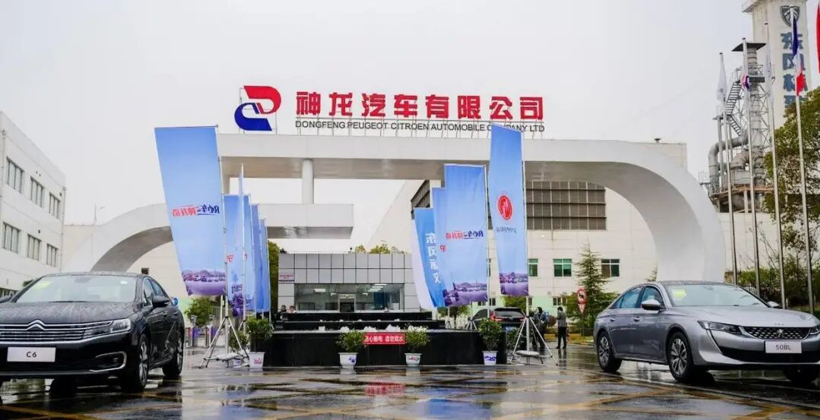
From glory to the brink, the decline of Dongfeng Peugeot-Citroën Automobile Company (DPCA) is a sobering tale. A decade ago, this joint venture's annual sales once exceeded 700,000 units, firmly establishing itself among the mainstream players in the Chinese market. By 2025, its full-year operating scale is projected to remain at a low of merely 73,000 units.
Once a flagship Sino-French joint venture, it now faces the severe challenge of market marginalization. The launch of the Shijie brand is seen as a crucial step for Dongfeng Peugeot-Citroën Automobile Company (DPCA) to make a comeback.
The Realm of Revelation 06: The Gap Between Expectation and Reality
However, the arrival of Shijie 06 did not provide Dongfeng Peugeot-Citroën Automobile with the "final answer." Online statistics show that this model's average monthly sales are less than 500 units, with market performance falling far short of expectations.
Compared with the strong sales of GAC Toyota's Bozhi series and the successful transformation of the Volvo XC70, Shijie 06, which also embraced Chinese technology, has clearly failed to replicate that success. Despite sharing the "Jie" (World/Boundary) naming convention, Shijie’s brand recognition lags far behind that of competitors like AITO (Wenjie) and Li Auto.
The design of Shijie 06 lacks the romantic flair typically associated with magic-based designs, its intelligent features remain conservative, and its configuration offers no advantage compared to similarly priced Chinese brand vehicles. Given this, it will likely struggle to attract consumers.
Perhaps seeing the success of GAC Toyota's bZ series and the turnaround of the Volvo XC70, it gives people the illusion that actively embracing Chinese technology can create bestsellers.
The Balancing Act: The Dilemma of Sino-French Integration
The core challenge facing Dongfeng Peugeot-Citroën Automobile lies in striking a balance between "embracing Chinese technology" and "retaining French characteristics."
The predicament of Shijie 06 demonstrates that simple technology transfer and platform borrowing are far from sufficient. Without deeply integrating Dongfeng technology with the core values of French cars, it is difficult to create products that are truly competitive in the market.
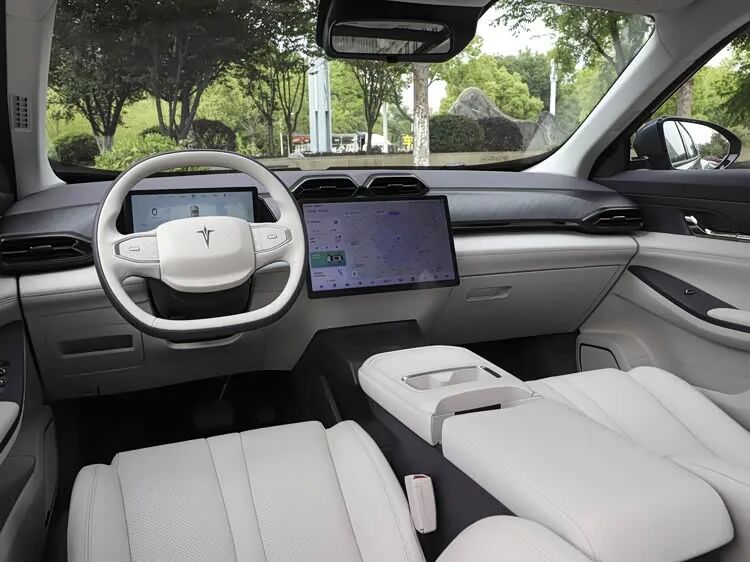
From a product rhythm perspective, Avatr 06 was released in May 2025, and there hasn't been a second model launched since. The lack of further action in nearly a year shows that Dongfeng Peugeot Citroën Automobile is lagging behind in adapting to the "fast-paced, high-iteration" nature of the Chinese market.
In contrast, the product update cycle for Chinese domestic brands has shortened to 18-24 months, while Dongfeng Peugeot-Citroën (DPCA) still cannot escape the long product development cycle of 3-4 years typical of traditional joint ventures.
Wait for the East wind or create the wind yourself?
Facing the lukewarm market reception of Shijie 06, Dongfeng Peugeot-Citroën Automobile Company (DPCA) needs to rethink its transformation strategy. Stellantis' "China Solution" global strategy might offer a possible path: utilizing Chinese technology to develop products and selling them to the global market.
Shenlong Motors General Manager Lü Haitao once stated: "We will accelerate the development pace of new energy vehicles, and will launch 8 new models in the next five years." This commitment needs to be translated into actual product launch speed and market performance.

The failure of Metaspace 06 should not be seen as the end, but as a starting point for reflection and adjustment. Shenlong Motor needs to find a unique value proposition for French cars in the era of electrification on the Dongfeng technology platform, and create products that are truly distinctive and competitive.
In January 2026, Dongfeng Peugeot Citroën Automobile (DPCA) achieved a 16% year-on-year increase in sales. Although this figure is not substantial, it hints at a potential turnaround.
In China's new energy vehicle market, technology can be borrowed and platforms can be shared, but the soul of a brand and the unique features of a product must be shaped internally. Stellantis has initiated its global transformation through the "China Solution," and Shenlong Motors, as its "sole spark" in China, needs not only to await the east wind but also to learn how to "create its own wind."
【Copyright and Disclaimer】The above information is collected and organized by PlastMatch. The copyright belongs to the original author. This article is reprinted for the purpose of providing more information, and it does not imply that PlastMatch endorses the views expressed in the article or guarantees its accuracy. If there are any errors in the source attribution or if your legitimate rights have been infringed, please contact us, and we will promptly correct or remove the content. If other media, websites, or individuals use the aforementioned content, they must clearly indicate the original source and origin of the work and assume legal responsibility on their own.
Most Popular
-
A Look at the Material Suppliers Behind SpaceX
-
Daily Review: Cost and Supply Support Push Polyester Bottle Film Market Higher
-
Dreame Launches All-Solid-State Battery Sedan With Energy Density Exceeding 450Wh/kg
-
【Overseas News Highlights】 SABIC Launches New Products! Amcor Opens New U.S. Headquarters! UPM and BASF Enter Strategic Partnership!
-
Energy Autonomy and Circular Economy Drive Cortec to Redefine Sustainable Corrosion Protection Packaging Standards in Europe