Spoiler for 2040 Future Cars: New Energy Vehicles Exceed 80%, L3 Autonomous Driving Becomes Common!
“By 2028, carbon emissions from China's automotive industry will have basically peaked, and by 2040, they will be reduced by 60% from that peak.New energy vehiclesThe penetration rate will exceed 80%. The integrated vehicle-road-cloud intelligent connected vehicle infrastructure will be basically improved, and high-level autonomous driving will achieve large-scale application.”
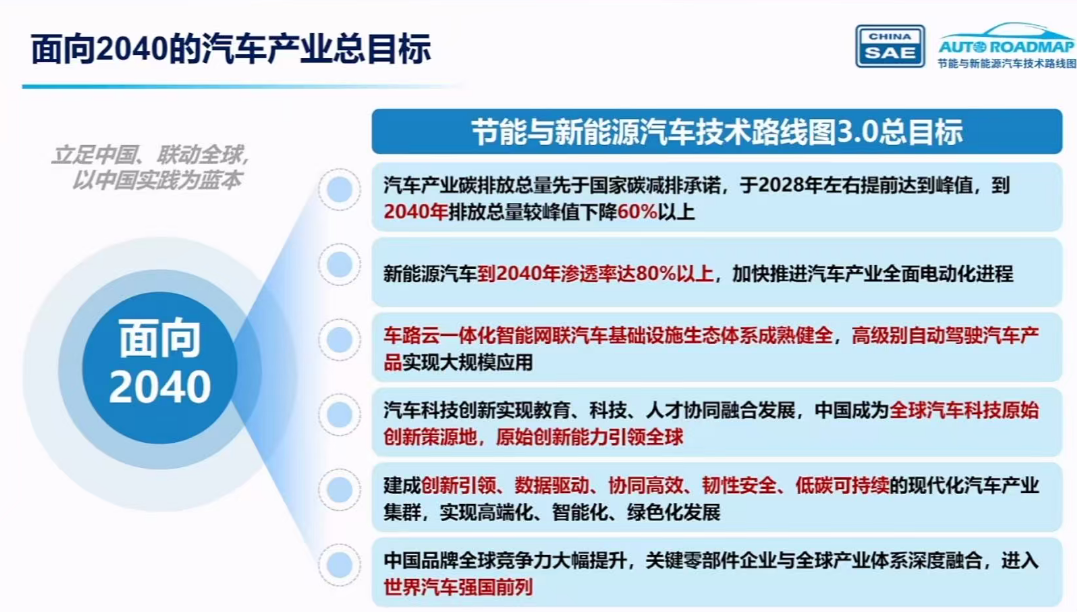
On the afternoon of October 22, 2025, the opening ceremony and general assembly of the 32nd Annual Conference and Exhibition of the Society of Automotive Engineers of China was grandly held at the Chongqing Science Hall. At the conference, Zhang Jinhua, the president of the Society of Automotive Engineers of China, delivered a speech based on "Energy Conservation and..."New Energy"Automotive Route Map 3.0" outlines a grand vision for the future industrial ecosystem to the attendees.At that time, China will become the source of global automotive technology innovation, with original innovation capabilities leading the world. A new automotive industry ecosystem characterized by innovation-driven, data-driven, collaborative efficiency, resilience and safety, as well as low-carbon sustainability, will be initially established, fully achieving the strategic goal of becoming a strong automotive nation.”
China's Position in the Global Changes
In 2022, global new energyAutomobile production"Exceeding 10 million units, it is expected to likely surpass the 20 million mark by 2025; the penetration rate in the Chinese market will exceed 45%, accounting for more than 20% globally." A set of data released by Zhang Jinhua at the press conference directly demonstrates the rapid momentum of the global wave of automotive electrification.
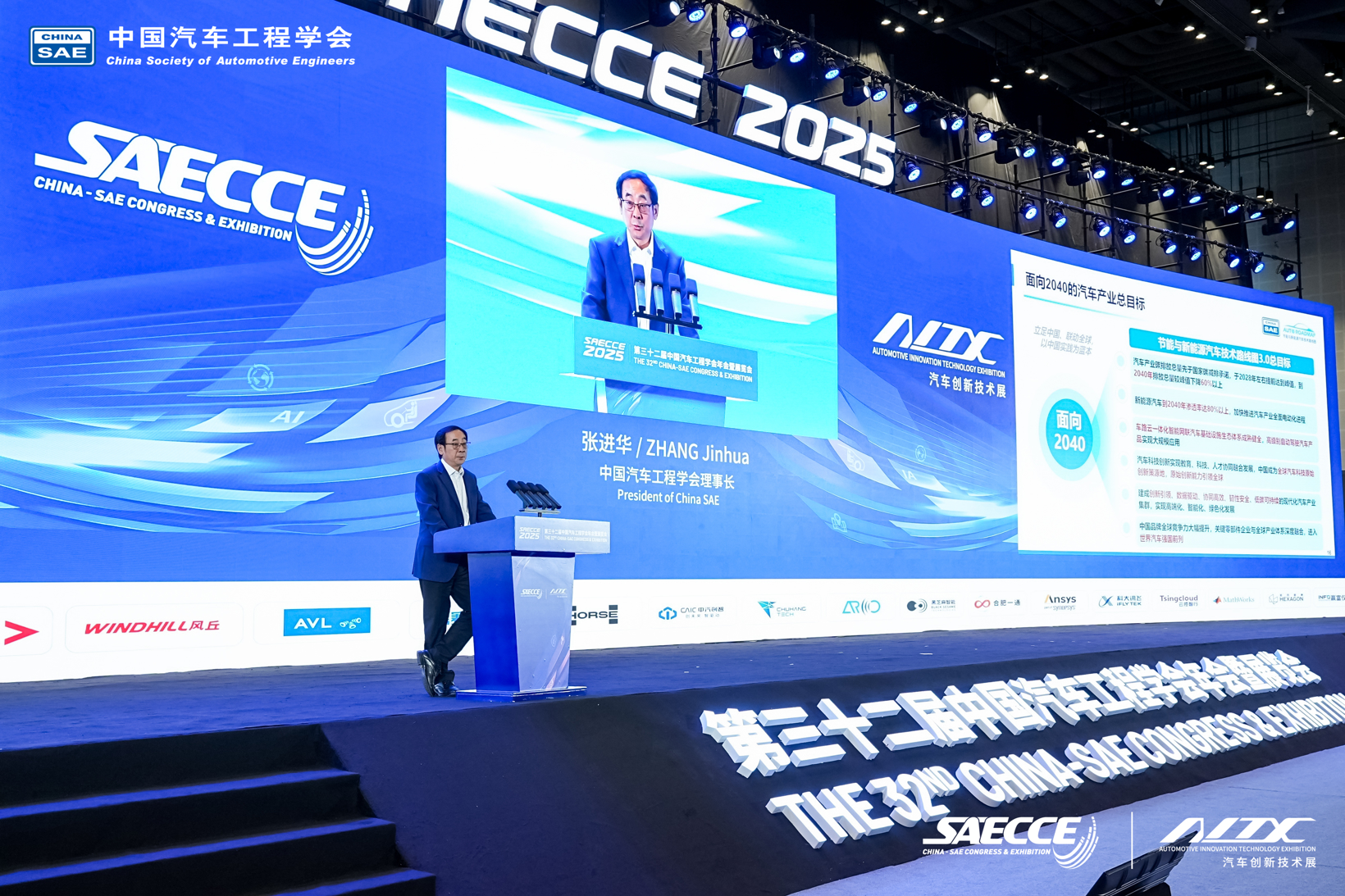
Chairman of the China Society of Automotive Engineers, Zhang Jinhua; Image Source: China Society of Automotive Engineers
In the field of intelligence, data is equally remarkable: the penetration rate of L2-level assisted driving has generally exceeded 50%, and L3-level advanced autonomous driving has entered the stage of small-scale industrialization. More notably, cities like Beijing, Wuhan, and Guangzhou have intensively introduced regulations related to autonomous driving, paving the way for the commercialization of L3-level technology. Industry insiders expect that the Ministry of Industry and Information Technology will release the L3-level certification system within the year, with the dual drivers of policy and technology propelling intelligent driving from the "testing and demonstration" phase to a new phase of "commercial promotion."
In Zhang Jinhua's view, artificial intelligence will be the core variable shaping the automotive industry over the next 15 years. "Artificial intelligence will drive deep transformations in product technology, product form, industrial ecosystem, and the entire manufacturing process, while also changing the paradigm of innovation and reshaping embodied relationships." This judgment is not without basis.
Currently, the computing power of AI chips independently developed by car companies such as Xpeng and NIO is increasing rapidly. Various advanced driver assistance systems are reducing their reliance on high-definition maps through large model training, and the cost of hardware such as LiDAR is rapidly decreasing, driving the penetration of high-level autonomous driving into mid-range models. The speed of technological iteration far exceeds market expectations. Zhang Jinhua specifically mentioned that AI-based end-to-end architecture and data loops supporting reinforcement learning will become the mainstream solutions for autonomous driving.
However, behind the rapid development, China's automotive industry still faces multiple "growing pains." Zhang Jinhua did not shy away from pointing out:Some core technologies are still bottlenecks, efficient models for cross-industry collaborative innovation need to be explored, the evaluation system for autonomous driving has yet to be, and the talent support system is struggling to meet the rapidly changing demands of the industry.”
Even so, Zhang Jinhua remains confident in the strategic value of the automotive industry.From a global perspective, the automotive industry remains the ballast and propeller for economic recovery, the leader and main force in addressing climate change, and the testing ground and primary carrier for a new round of technological revolution.。”
He further emphasized.In the context of rising anti-globalization sentiments, China's automotive industry should take proactive actions to become the "adhesive and connector of economic globalization."This positioning not only highlights the global responsibilities of China's automotive industry but also points the way for its future development—overcoming technological bottlenecks through open cooperation and building an industrial ecosystem through collaborative innovation.
Vision for 2040
The most notable part of the Roadmap 3.0 is undoubtedly the clear definition of the development goals for China's automotive industry by 2040. Zhang Jinhua pointed out at the press conference that in the next 15 years, China's automotive industry will focus on...Green and low-carbon, safe and efficient, integrated development, harmonious and friendly.The vision of building a strong automotive nation in four dimensions to ultimately achieve the strategic goal of "comprehensively building a strong automotive nation" is not an unattainable fantasy, but is based on phased, quantifiable specific goals.
The Technology Roadmap 3.0 further strengthens the revision principles of "foresight, systematicness, scientificness, continuity, openness, and public welfare." Building on the "1+X" research framework of Technology Roadmap 2.0, it proposes a "1+5+X" research framework for Technology Roadmap 3.0 from the perspective of a new round of industrial transformation and new industrial ecology, aligning the "industry product" and "automobile manufacturing" technology roadmaps.
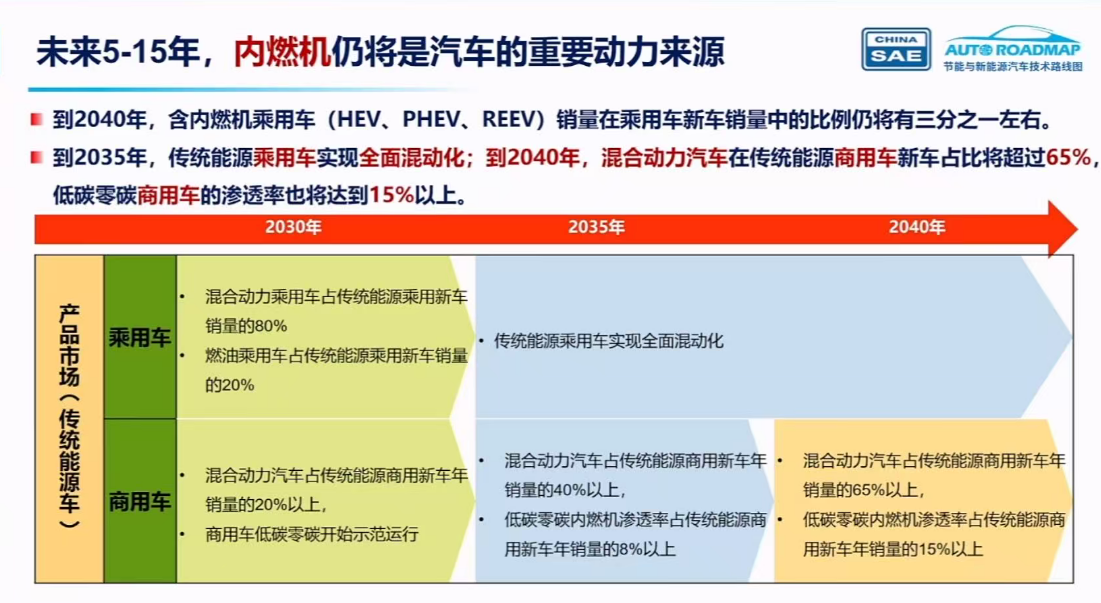
As mentioned at the beginning of the article, by 2040, new energy vehicles will become the absolute main force, but this does not mean the complete extinction of internal combustion engines.By 2040, one-third of vehicles will still require internal combustion engines as a power source or as a co-power source, although the proportion of traditional pure internal combustion engines will significantly decrease."Zhang Jinhua explained."
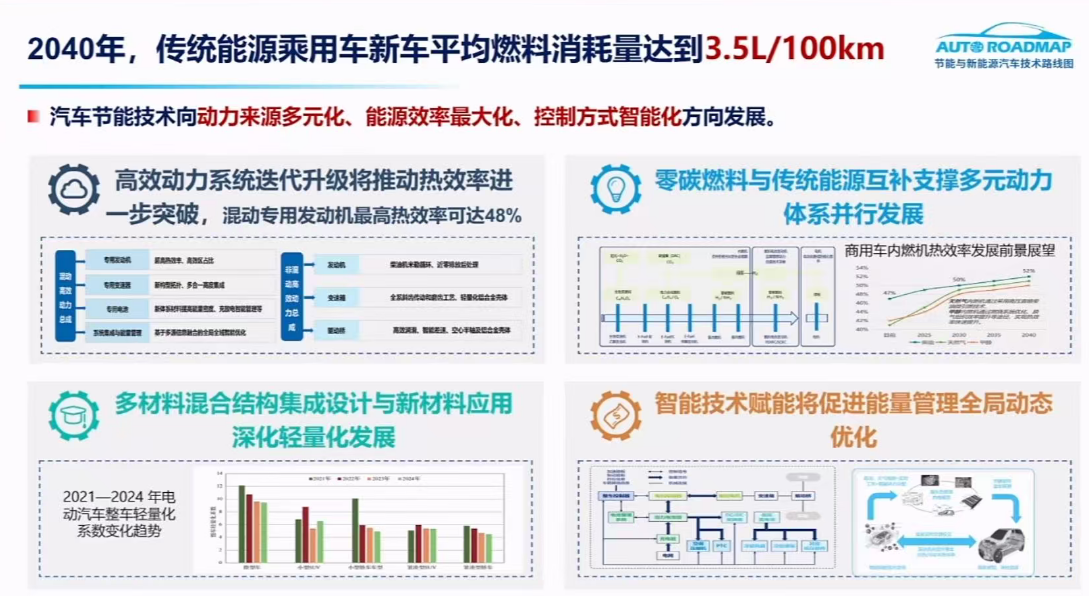
The Roadmap 3.0 clearly states that in the next 15 years, automotive energy-saving technologies will focus on diversified power sources, maximizing energy efficiency, and intelligent control modes.The maximum efficiency of hybrid-specific engines will exceed 48%, and zero-carbon fuels will complement traditional energy sources to support a diverse power system.LightweightingThe technology continuously reduces carbon emissions through the integrated design of multi-material mixed structures.。
Technological innovation is the core support of the 2040 vision. To achieve the goal of making China the "global source of automotive technological innovation," Roadmap 3.0 has planned a clear path for technological evolution.
In the field of power batteries, liquid batteries will gradually upgrade to solid-liquid hybrid and all-solid-state forms. Two technological routes, high energy density and cost-effectiveness, will proceed in parallel to suit different application scenarios. The electric drive system will achieve deep integration of electromechanics, and around 2035, distributed drive will become an important model for electrification.。
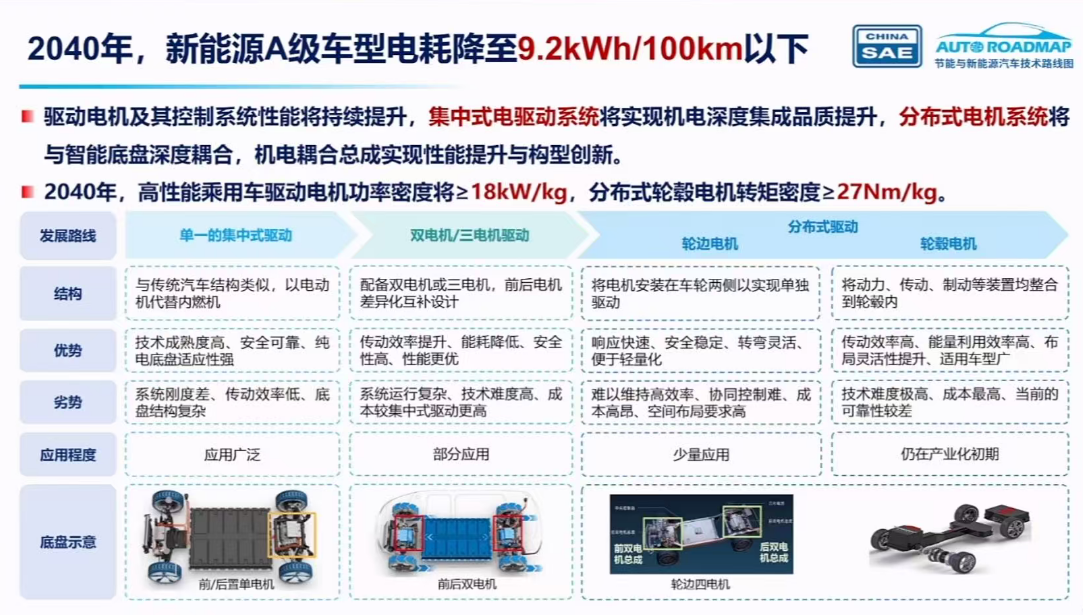
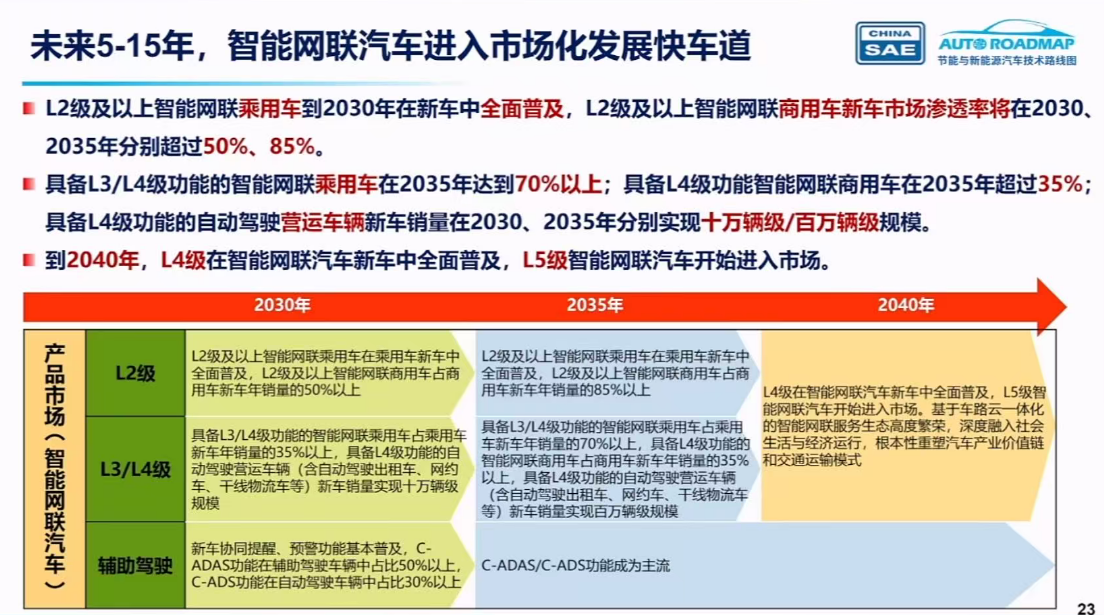
Intelligent Connected NetworkField,By 2030, L2 level combined auxiliary driving for passenger cars will achieve widespread adoption, with L3 level penetration exceeding 35%. By 2035, the penetration rate of L3/L4 levels will reach over 70%, and by 2040, L4 level will be fully popularized in new smart connected vehicles."2030 may be the 'DeepSeek moment' for high-level autonomous driving, becoming a key node for large-scale industrialization." Zhang Jinhua quoted Academician Zhang Yaqin's judgment, emphasizing the importance of this timeline.
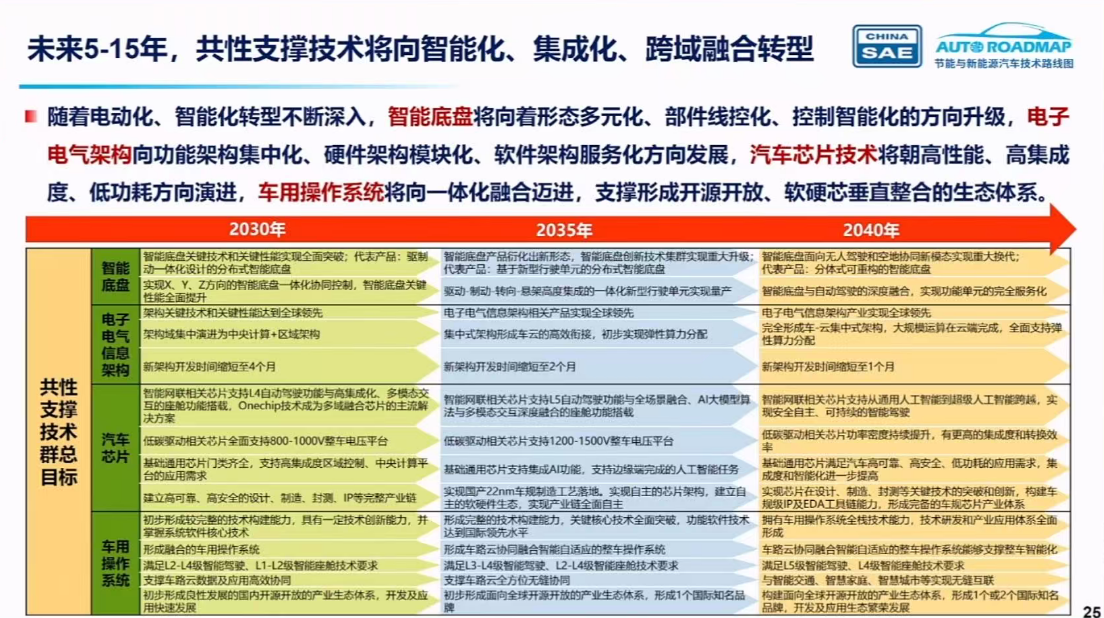
In the field of generic technology,The roadmap indicates that in the next 5-15 years, there will be a transition towards "intelligentization, integration, and cross-domain convergence".Specifically, "the intelligent chassis will upgrade towards diversified forms, component control, and intelligent control; the electronic and electrical architecture will develop towards centralized functional architecture, modular hardware architecture, and service-oriented software architecture; automotive chip technology will evolve towards high performance, high integration, and low power consumption; and automotive operating systems will advance towards integrated fusion, supporting the formation of an open-source, open, and vertically integrated ecosystem of software and hardware." These breakthroughs in fundamental technologies will provide a solid technological foundation for the Chinese automotive industry.
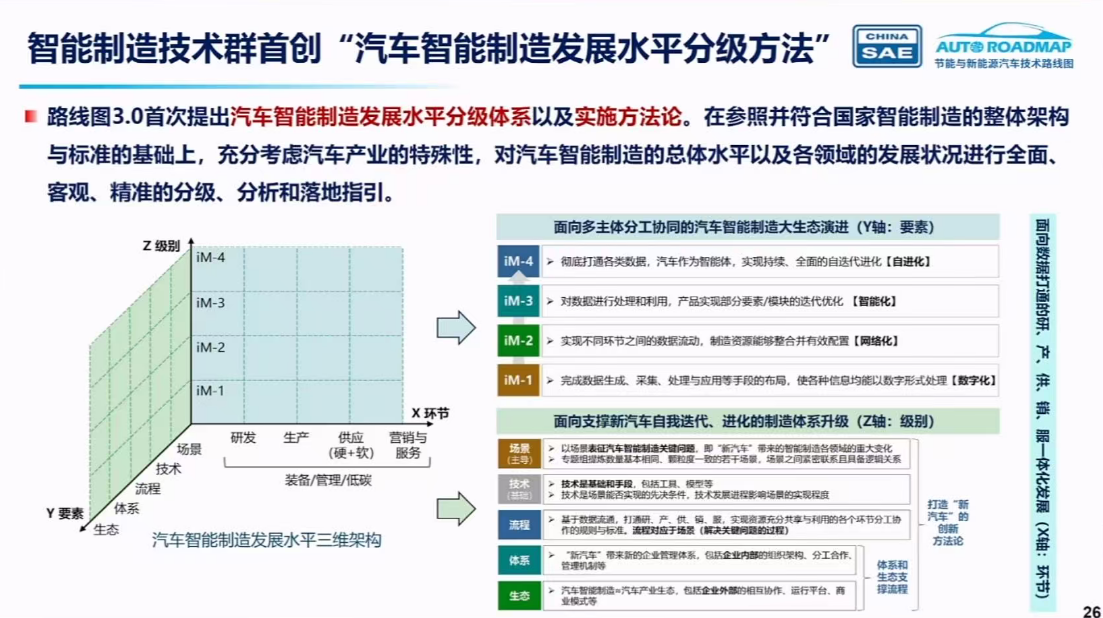
It is worth mentioning that, for the first time, the automotive manufacturing technology roadmap stands alongside the automotive product technology roadmap, becoming a major highlight of the "Roadmap 3.0". The Roadmap 3.0 proposes:Achieve large-scale intelligent production by 2030, with a few enterprises reaching "self-purification and self-intelligence" levels by 2035, and 40% of enterprises achieving the highest level of integrated intelligent manufacturing in research, production, supply, sales, and service by 2040.
Conclusion:
Since the launch of the technology roadmap research in 2015, China's automotive industry has achieved a transition from following to running alongside, and in some areas, leading, in just ten years. A statement by Zhang Jinhua at the press conference may encapsulate the core significance of this roadmap: "The roadmap is not a rigid doctrine, but a dynamically adjusted navigator. It will be continuously optimized along with the development of the industry, but the core goal of 'building a strong automotive nation' remains unchanged."
The year 2025 marks the launch of Roadmap 3.0 and is a crucial starting point for China's automotive industry to become a strong nation. The journey over the next 15 years, from reaching peak carbon emissions by 2028 to the scaling of Level 3 automated driving by 2030, and from the small-scale production of all-solid-state batteries to the widespread adoption of intelligent driving by 2035, culminating in the establishment of a global hub for scientific and technological innovation by 2040, is filled with challenges but also abundant opportunities. As Zhang Jinhua stated, the upgrade of the automotive industry is not only about technological iteration but also about ecological reconstruction and innovative models. When the clock strikes 2040, we expect to see not only cold data such as a 60% reduction in carbon emissions and an over 80% penetration rate of new energy, but also a new type of automotive industry ecosystem that is innovation-driven, data-driven, safe, low-carbon, and open to win-win cooperation. We look forward to a new era of smart mobility that truly realizes the integrated development of "vehicles, roads, energy, and cities," and a rightful position as a global automotive powerhouse.
【Copyright and Disclaimer】The above information is collected and organized by PlastMatch. The copyright belongs to the original author. This article is reprinted for the purpose of providing more information, and it does not imply that PlastMatch endorses the views expressed in the article or guarantees its accuracy. If there are any errors in the source attribution or if your legitimate rights have been infringed, please contact us, and we will promptly correct or remove the content. If other media, websites, or individuals use the aforementioned content, they must clearly indicate the original source and origin of the work and assume legal responsibility on their own.
Most Popular
-

Mexico Imposes Tariff Up to 36% on Cross-Border E-Commerce Products, Effective January 1, 2026; Plastic Shows Partial Fluctuation Today
-
4.5 Million Tons! Wanhua Chemical Dominates Globally in MDI, Heavy Investment in Battery Materials Spurs New Storm
-

Trump Delays Tariff Increase on Furniture, Cabinets, and Vanities
-
Wanhua Chemical Invests $27.3 Billion, 2026 Investment Map Revealed, $1.1 Billion Bet on Battery Materials
-
Back-to-back major joker moves! covestro’s 1.32 million ton mdi dual-line expansion and hdi acquisition reshape global polyurethane landscape