Shunde Spends 70 Million Yuan to Build a 10,000-Ton New Materials Base
In today’s fiercely competitive global markets for new energy vehicles and smart home appliances, downstream end users no longer demand materials that are simply “cheap and durable”; instead, they want them to be “lighter, stronger, and ultra-low in VOCs”!
In Shunde, Foshan, a major plastics hub in South China, a “green intelligent manufacturing” revolution in high-performance modified composite materials is quietly unfolding...
01
Throwing down 70 million! Shunde Xingtan welcomes a new 10,000-ton-level new materials base
In the dynamic Guangdong-Hong Kong-Macao Greater Bay Area, the value of the new materials industry is skyrocketing.
Recently, industry insiders have collectively turned their attention to Parcel South 02 on Second Ring Road, Fengjian Village Committee, Xingtan Town, Shunde District, Foshan City. On this land with exceptionally mature industrial supporting facilities, Guangdong Shunwei Sate Engineering Plastics Development Co., Ltd.’s high-performance modified composite materials production and construction project has officially sounded the call to begin construction!
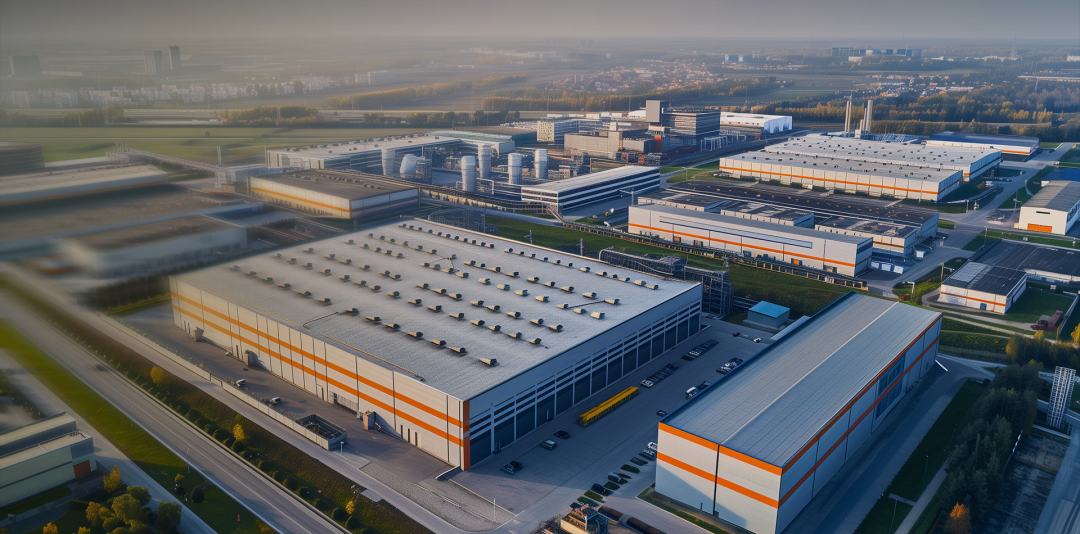
Image source: Sunway Sait official website
As a new (relocation) project, Shunwei Saite’s move this time can be described as “steady, precise, and decisive”:
Strong capital backing: Total investment reaches RMB 70.7481 million, with every penny spent where it matters most—on technological upgrades.
High space utilization: On a land area of 4,900 square meters, a compact and multi-layered building of 14,700 square meters has been planned, demonstrating the industrial aesthetic of "every inch of land produces gold."
Heavy investment in environmental protection: Of the total investment, RMB 2.45 million is strictly earmarked exclusively for environmental protection, accounting for 3.46%! In the modified engineering plastics sector, this is truly a major “green” commitment.
02
Unveiling the 13,000-Ton “All-Round Matrix”: Five Flagship Engineering Plastics Target Pain Points
What exactly is this new modified engineering plastics base with an annual output of 13,000 tons going to produce? Open their product portfolio, and it is practically a “precision banquet” for the high-end manufacturing industry in the Greater Bay Area.
1️⃣ PBT modified engineering plastics (annual output of 3,500 tons)
Jianghu Status: The "Iron Man" of electronics and automotive lightweighting.
Hardcore applications: Thanks to its excellent insulation and fatigue resistance, it will be widely used in appliance frames, automotive ignition system components, and the housings of today’s hottest new energy vehicle charging guns.
2️⃣ Modified PC Engineering Plastics (Annual Output: 3,500 Tons)
Jianghu status: an optical structure master who possesses both “peerless beauty” and an “indestructible body.”
Hardcore applications: high light transmission and super strong impact resistance are essential materials for 5G communication base station equipment, new energy vehicle battery pack shells, and smart camera modules.
3️⃣ PA-modified engineering plastics (annual output: 3,000 tons)
Rivers and lakes status: A trailblazer in "plastic instead of steel" making waves.
Hardcore application: After being reinforced and modified with glass fiber, it can directly replace traditional metals, transforming into automotive engine intake manifolds, high-load power tool housings, or industrial robot joints.
4️⃣ Flame-Retardant ABS Modified Engineering Plastics (Annual Output: 2,500 Tons)
Jianghu Status: The "safety firewall" for consumer electronics and smart terminals.
Hardcore application: It needs to look good and be easy to process, while also having maximum fire resistance. High-end small home appliances, office automation equipment, and monitor housings all depend on it.
5️⃣ Special PPS modified engineering plastic (annual output of 500 tons)
Jianghu Status: A "special forces" who fearlessly faces water and fire, constantly stationed in extreme environments.
Hardcore applications: as the flagship of specialty engineering plastics, it is purpose-built for critical components that must withstand high temperatures and corrosion, such as hot air valves around automotive engines and high-end electronic components.
04
Cutting-Edge “Micro-Manipulation”: Why Is It Called a “Detox Revolution” for Materials?
The project operates on a three-shift, 24-hour continuous production schedule, but don’t assume this is the same old story of a traditional modification plant with “billowing black smoke and pungent odors.” The process introduced by Sunway Sat this time, in industry terms, is like giving engineering plastics a deep “detox spa.”
Highlight 1: Online "Equalization Desorption" to Eliminate Odors and Defects at the Source
After conventional engineering plastics undergo melt processing in a twin-screw extruder at high temperatures of 180°C or even up to 290°C, some monomers, oligomers, and small-molecule volatiles inevitably remain inside the resin. These small substances are the “culprits” behind odors, silver streaks, and voids during downstream injection molding.
The real highlight of this project lies in the fact that the pelletized material is not packaged directly. Instead, it is fed into a specialized online VOC removal thermal devolatilization system. Under high-temperature vacuum conditions, it is deliberately held there for 30 to 60 minutes to actively strip out and remove the harmful VOC components as thoroughly as possible, before being sent for injection molding testing at 190°C to 300°C.
This “active detoxification” process dramatically boosts the purity of modified materials, perfectly meeting the almost obsessive requirements of automotive interior components for low odor and ultra-low VOCs!
Highlight 2: Regenerative Catalytic Oxidation (RCO), a textbook-level “green closed loop”
How should waste gas from plastic factories be treated? Traditional activated carbon adsorption easily becomes saturated and generates large amounts of secondary hazardous waste; direct incineration is too costly.
Shunwei Sait directly installed a Regenerative Catalytic Oxidation (RCO) system. It uses highly efficient heat storage media to firmly retain heat, and with the help of a catalyst, it allows organic waste gas to undergo gentle flameless combustion at around 300°C, directly converting it into harmless carbon dioxide and water. The waste gas treatment efficiency reaches as high as 85%! Finally, the gas is discharged scientifically through a 25-meter-high exhaust stack that soars straight into the sky. Not only is there no odor in the factory area, but it also will not add any burden to the ecological environment of the Lingnan water towns nearby.
04
Behind 13,000 tons: the "Greater Bay Area Express" that is small yet beautiful, soft yet exquisite.
Some people might ask: in the bulk plastics market, where volumes easily reach hundreds of thousands of tons, is an annual production capacity of 13,000 tons considered large?
It may not be considered large in the world of commodity plastics, but for high-performance customized modified engineering plastics, this scale is simply the “perfect size”!
For high-end engineering plastics such as PBT, PPS, and PA, downstream customers often demand “multiple varieties, small batches, and fast delivery”—today an automaker needs highly flame-retardant materials, while tomorrow an electronics manufacturer needs ultra-antistatic materials.
The Shunwei Site is equipped with four twin-screw extruders and multiple intelligent compounding and gravimetric automatic batching systems. This production capacity configuration not only reduces costs through continuous production, but also enables rapid formulation switching like an “octopus,” achieving flexible manufacturing. It is like a “high-speed rail express” for new materials on the Greater Bay Area’s high-end manufacturing supply chain—ready to respond at any time and to produce on demand.

As a globally renowned hub for home appliances and plastic products, Xingtan in Shunde has long relied on other regions and even imports for many high-end modified specialty plastics.
A ten-thousand-ton-scale base combining “low-VOCs homogenization and devolatilization” with “high-efficiency RCO green treatment” has risen at Shunwei Site, serving not only as a “super materials hub” positioned upstream in the local industrial chain, but also as a resounding response to the national policies of “lightweighting, replacing steel with plastics, and green, low-carbon circular development.”
In this green quality upgrade battle in the Greater Bay Area materials industry, Shunwei Sait has clearly already seized a favorable position.
【Copyright and Disclaimer】The above information is collected and organized by PlastMatch. The copyright belongs to the original author. This article is reprinted for the purpose of providing more information, and it does not imply that PlastMatch endorses the views expressed in the article or guarantees its accuracy. If there are any errors in the source attribution or if your legitimate rights have been infringed, please contact us, and we will promptly correct or remove the content. If other media, websites, or individuals use the aforementioned content, they must clearly indicate the original source and origin of the work and assume legal responsibility on their own.
Most Popular
-
Ascend Adipic Acid Hit By Force Majeure, Market Expects Supply Resumption In Mid-September
-
Layoffs, Divestments, Plant Closures While Pouring Billions: BASF Undergoes Major Transformation!
-
LG Chem And TK Chemical Sign PBAT Cooperation MOU
-

[Overseas News] Dow Considering Exit From Joint Venture With Saudi Aramco; US Government Pressures Ford to Cut Ties With China
-
AI Computing Power Demand Ignites Electronic Fabrics! China Jushi Hits Limit Up! Domestic Substitution Welcomes Golden Window