



Researchers develop new technology to achieve the transparency of recycled plastics.
A team of engineers at the University of Wisconsin-Madison has developed a new solvent-based technique to remove stubborn pigments from recycled multi-layer plastic packaging. This advancement makes recycled plastic more commercially attractive, increases its market value, and brings the industry closer to a "closed-loop" recycling process for plastics.
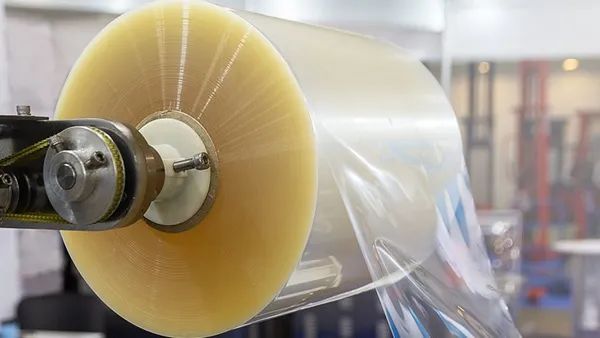
This study was published in the March 14, 2025, issue of *Science Advances* and was led by postdoctoral researcher Tianwei Yan and Ph.D. student Charles Granger, who work in the lab of George Huber, a professor of chemical and biological engineering at the University of Wisconsin-Madison.
Solvent-targeted recovery and precipitation
Plastic pollution is a significant environmental and sustainability issue, with millions of tons of plastic, produced from petroleum products, entering landfills, waterways, and oceans each year. Despite decades of research, plastic recycling remains limited; only about 9% of plastic is recycled globally, with most of it being downgraded into lower-value products.
However, new technologies may help enable closed-loop recycling to produce high-quality recycled plastics that are as good as virgin “virgin” plastics. Since 2020, researchers at the University of Wisconsin-Madison have made significant progress in chemical recycling through an innovative process called Solvent Targeted Affinity Partitioning (STRAP™). STRAP
Especially skilled at recycling multi-layer flexible colored plastics, including food packaging such as bags, pouches, wrappers, and films. These types of plastics typically consist of multiple special layers that prevent moisture, seal out oxygen, and increase strength. STRAP uses a series of solvent washes to dissolve each layer of plastic, which is then recycled and processed into near-virgin plastic. The films also contain various colored bodies for brand owners to use in marketing their products.
Yellow 12 makes recycled plastic appear light yellow.
In recent years, Huber's team has made improvements to STRAP. However, researchers found that the plastic films they ultimately produced often have a pale yellow tint. This hue significantly reduces the appeal of the recycled end product to manufacturers, diminishing the value of the plastic by more than half.
"For consumers, yellow might be a sign of aging or degradation," Granger said. "But that's not the case for these recycled plastics. It's just a matter of the pigment. Still, it looks disgusting."
This is why Granger and Yan began investigating why recycled plastic films produced through STRAP appeared yellow and what they could do about it. They first tested dozens of pigments, adding them individually to polyethylene (the plastic most commonly used in flexible packaging) and then running them through the STRAP process to see if they caused the yellowing. Quickly, they narrowed the culprit down to Yellow 12, a common organic pigment used in printed packaging.
Use a solvent with low pigment solubility.
Most other pigments decompose during the STRAP processing and are removed through solvents or filtration. However, the elements of Yellow 12 survive during this process and remain in the solvent used to dissolve the plastic. In the final processing step, the recovered plastic is dried, and researchers found that the evaporated solvent leaves behind plastic pigments, resulting in a yellow sheen in the final product.
With this knowledge, the team was able to devise a method for removing color. "Due to its chemical structure, yellow pigment has higher solubility in STRAP solvent compared to other types of plastic pigments," Huber said. "Therefore, the first step is to choose a solvent with lower solubility. Then, there are additional steps required to truly make the plastic crystal clear."
The team collaborated with Reid van Lehn, an associate professor of chemical and biological engineering, and his students to find a solvent that could minimize the solubility of yellow pigments. They developed a complex solvent-polymer solubility database called SolventNet. Then, Yan and Granger added activated carbon to the process to bind the colorants and remove more of the yellow pigment. They also used an extractor to squeeze out as much solvent as possible from the recycled plastic. Through all these operations, they produced transparent plastic that is visually indistinguishable from黄色.
It appears there is a repetition or an unintended trailing "黄色" at the end of your provided text. If you intended to end with "黄色," please clarify, or I will assume it was a mistake and provide the translation without it. Here is the corrected translation:
The team collaborated with Reid van Lehn, an associate professor of chemical and biological engineering, and his students to find a solvent that could minimize the solubility of yellow pigments. They developed a complex solvent-polymer solubility database called SolventNet. Then, Yan and Granger added activated carbon to the process to bind the colorants and remove more of the yellow pigment. They also used an extractor to squeeze out as much solvent as possible from the recycled plastic. Through all these operations, they produced transparent plastic that is visually indistinguishable from yellow.
Although making recycled plastics clearer might seem like just an aesthetic issue, Huber said it's a crucial step in making plastic recycling economically viable. "One of the biggest challenges in plastic recycling is contaminants, and one of the biggest issues is dealing with color," he said. "Clear plastic is worth two to ten times more than colored plastic. That's because every company wants to imprint its own special color or logo on the packaging. Clear plastic can have that color added. But color also makes recycling more difficult."
Yan and Granger stated that they hope to use their method to remove other contaminants from recycled plastics, including other harmful pigments, dirt and debris, as well as chemicals such as bromine and PFAS.
George Huber is the Richard L. Antoine Professor in the Department of Chemical and Biological Engineering at the University of Wisconsin-Madison. Reid Van Lehn is an Associate Professor in the Hunt-Hougen Department of Chemical and Biological Engineering. This work is partially supported by a donation from Ross Annable.
Other authors from the University of Wisconsin–Madison include Kevin L. Sánchez-Rivera, Panzheng Zhou, and Styliani Avraamidou. Additional authors include Steven Grey and Kevin Nelson from Amcor in Neenah, Wisconsin, as well as Fei Long and Ezra Bar-Ziv from Michigan Technological University in Houghton, Michigan.
This work was funded by the U.S. Department of Energy, Office of Energy Efficiency and Renewable Energy, Bioenergy Technologies Office, under award numbers DE-EE0009285 (GWH award) and DE-EE0010294.
【Copyright and Disclaimer】The above information is collected and organized by PlastMatch. The copyright belongs to the original author. This article is reprinted for the purpose of providing more information, and it does not imply that PlastMatch endorses the views expressed in the article or guarantees its accuracy. If there are any errors in the source attribution or if your legitimate rights have been infringed, please contact us, and we will promptly correct or remove the content. If other media, websites, or individuals use the aforementioned content, they must clearly indicate the original source and origin of the work and assume legal responsibility on their own.
Most Popular
-

Mexico Imposes Tariff Up to 36% on Cross-Border E-Commerce Products, Effective January 1, 2026; Plastic Shows Partial Fluctuation Today
-
4.5 Million Tons! Wanhua Chemical Dominates Globally in MDI, Heavy Investment in Battery Materials Spurs New Storm
-

Trump Delays Tariff Increase on Furniture, Cabinets, and Vanities
-
Wanhua Chemical Invests $27.3 Billion, 2026 Investment Map Revealed, $1.1 Billion Bet on Battery Materials
-
Back-to-back major joker moves! covestro’s 1.32 million ton mdi dual-line expansion and hdi acquisition reshape global polyurethane landscape


