



Research Status and Applications of PBT Engineering Plastic Modification
PBT is a crystalline linear saturated polyester produced by the polycondensation of terephthalic acid (PTA) or dimethyl terephthalate (DMT) with 1,4-butanediol (BDO). It has excellent mechanical properties, and its symmetrical molecular structure enables close packing, resulting in high crystallinity and rapid crystallization at low temperatures.
PBT parts are easy to process and form due to their good flowability and short molding cycle, which can reduce production costs. In addition, PBT has advantages such as moisture resistance, wear resistance, oil resistance, and relatively low creep.
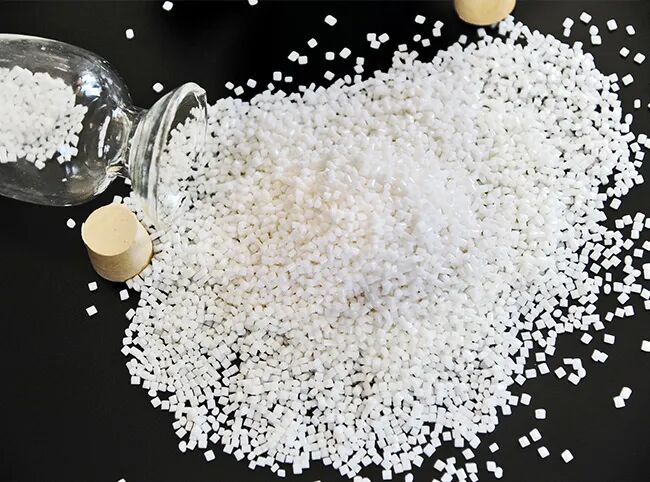
Because PBT contains both crystalline and amorphous regions, it is easily modified by the addition of other substances. However, PBT also has shortcomings such as flammability, a high amount of small-molecule exudation when in contact with refrigerants, insufficient dielectric properties, and easy warpage in thin-wall parts, which limit its range of applications. To compensate for the insufficient performance of pure PBT resin, some modification studies on PBT resin have already been conducted.
Current Research Status on the Modification of PBT Engineering Plastics
In recent years, relevant enterprises have developed various new application technologies and products, and PBT engineering plastics have been developing toward high performance, functionalization, and diversification. To meet the needs of industrial sectors, functional modification of PBT has gained market favor. At present, methods such as copolymer modification, inorganic filler modification, nanocomposite technology, and blend modification are mainly adopted at home and abroad to improve the comprehensive performance of PBT. Research on PBT material modification is mainly focused on high strength, high flame retardancy, low warpage, low precipitation, and low dielectric properties.
Mechanical properties
Pure PBT resin has relatively low tensile strength, flexural strength, and flexural modulus, making it unsuitable for large-scale industrial applications. It therefore needs to be modified to improve its mechanical properties. Glass fiber offers advantages such as broad applicability, simple compounding processing, and low cost. By adding glass fiber to PBT, the inherent advantages of PBT resin can be fully utilized, while the tensile strength, flexural strength, and notched impact strength of PBT products are significantly improved.
In addition to glass fibers, other fibers can also be introduced to improve the mechanical properties of PBT. Zeng Deming et al. used chopped basalt fibers to reinforce PBT resin. After the action of a coupling agent, the basalt fibers were able to be well compatible with PBT, effectively improving the mechanical properties of the PBT composite material.
In terms of flame retardant performance.
Pure PBT can only achieve an HB rating in the vertical burning test. It is flammable and exhibits continuous dripping during combustion, allowing the flame to spread easily, which limits its applications in automobiles, electronics and electrical appliances, and textiles. Halogenated and halogen-free flame retardants are often added to impart flame retardancy to PBT. However, halogenated flame retardants release toxic hydrogen halide fumes during combustion, posing hazards to human health and the ecological environment, and some halogenated flame retardants have been banned by the European Union. Therefore, phosphorus-based flame retardants and inorganic flame retardants are mainly used for the flame-retardant modification of PBT.
Warping deformation
PBT has relatively easy molecular sliding, and is prone to orientation and crystallization, resulting in a high shrinkage rate. This causes warpage deformation in PBT parts, especially in large thin-wall parts. For glass fiber reinforced PBT, the added glass fibers are anisotropic, which leads to different shrinkage rates in different directions during injection molding, increasing warpage deformation of the part. This not only affects the surface quality and installation performance of plastic products, but also affects the strength of the plastic.
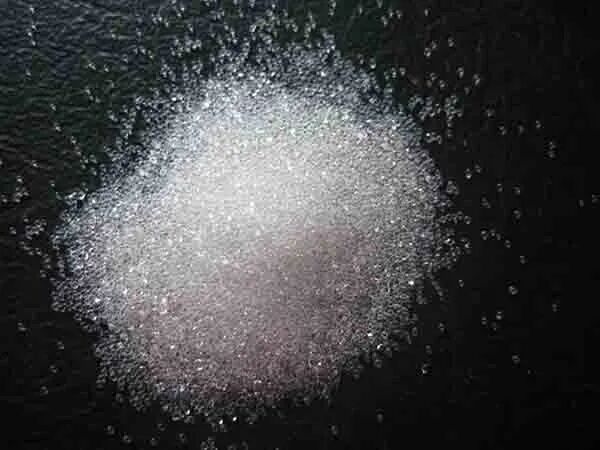
For the warpage of PBT parts, in addition to improving the part geometry, mold design, and molding process parameters, the PBT material can also be modified to reduce warpage deformation. In recent years, the warpage deformation of PBT materials has mainly been improved through inorganic filler reinforcement and blend alloys. Inorganic filler reinforcement includes single inorganic fillers and combined filling with glass fiber. The inorganic fillers used for filling mainly include talc, mica, wollastonite, glass beads, kaolin, and calcium sulfate whiskers.
In addition, amorphous polymers such as polycarbonate (PC), acrylonitrile-butadiene-styrene copolymer (ABS), and styrene-acrylonitrile copolymer (SAN) do not undergo crystallization during the injection molding process, and blending them with PBT can also effectively improve the shrinkage rate of PBT.
Precipitation performance aspects
Because the raw materials cannot react completely during the production of PBT materials, small molecules, oligomers, and other substances are generated. Products made from unmodified PBT materials may exhibit precipitation or exudation under certain conditions, affecting the performance of the parts. When PBT materials are used in mufflers inside refrigerator compressors, motor coil bobbins, and air-conditioner insulating bobbins, due to the special operating conditions, large amounts of small-molecule substances may exude and dissolve in refrigerants such as Freon and dichlorodifluoromethane, easily clogging refrigeration pipes and causing refrigeration failure.
PBT precipitates are mainly low-molecular-weight oligomers of the resin itself and small amounts of additives contained within it. The use of glass fiber and high-viscosity resin, as well as the addition of a certain amount of adsorbent, can reduce the amount of precipitation from PBT. At present, precipitation modification of PBT is mainly carried out through adsorption using inorganic porous materials, as well as chemical methods such as adding end-capping agents, chain extenders, and 1,4-cyclohexanedimethanol (CHDM).
In terms of dielectric properties.
PBT materials are used in fields such as integrated circuits and electromagnetic shielding, where their dielectric properties play an important role in signal transmission speed, signal loss, and other aspects. In recent years, more stringent requirements have been imposed on the dielectric properties of insulating materials, requiring insulating resin materials to have a dielectric constant of no more than 2.8. However, the dielectric properties of pure PBT materials cannot meet the requirements of communications applications. Therefore, developing a PBT material with a low dielectric constant and low dielectric loss is of great significance.
At present, the dielectric properties of PBT are mainly modified by incorporating fillers and blending low-dielectric-constant copolymers. Commonly used fillers include polytetrafluoroethylene powder and hollow glass microspheres. Carbon nanotubes also have a positive effect on the dielectric properties of PBT materials, but excessive addition increases the dielectric constant and dielectric loss of the material.
Applications of PBT-Modified Engineering Plastics
Automotive field
With the gradual development of replacing steel with plastic, more and more non-ferrous metals and alloy materials are being replaced by plastics. Due to its good processing performance and insulating properties, PBT has also been widely used in automotive components, such as instrument panels, accelerator and clutch pedals, in-vehicle ashtrays, and interior mirror support bars.
In addition, due to the excellent oil resistance of PBT, it is also used in automotive engine system components, such as fuel supply system parts and spark plug insulators. Recently, alloy-modified PBT has been applied in automotive shock absorbers for shock absorber sleeves and bearings. Modified PBT is widely used in automotive engine equipment due to its advantages of good flame retardancy, dielectric properties, low warpage, and low water absorption.
Electronic and Electrical Field
PBT, due to its low dielectric properties, low warpage, high flame retardance, high toughness, aging resistance, and environmental friendliness, is widely used in the electronics and electrical fields. Applications include the shells of electronic computers, igniters, electrical switches, components of copiers, the skeletons of transformers, parts of baking machines, and covers for electric irons. Additionally, modified PBT, which has excellent dielectric properties and is easy to process, can be used for the bottom covers, shells, and spools of electrical appliances.
PBT is also widely used in communication equipment, such as junction boxes, Ethernet ports, and the middle frames of mobile phones and laptops. Modified PBT is also used to manufacture base components for energy-saving lamps, where the temperature is relatively high and the flame retardancy of ordinary plastics generally cannot meet the requirements. In the power strip industry, materials are required to pass the ball pressure test and possess good flame-retardant properties.
Mechanical Equipment Field
PBT is widely used in the field of mechanical equipment due to its high flame retardancy and heat resistance, such as cams, gears, camera parts, electronic watch housings, mercury lamp housings, and various buttons. Common coil bobbins require materials with high dielectric breakdown strength to prevent electrical breakdown during use; when applied in components such as refrigerators, they also need to have low extractability to prevent small-molecule substances from precipitating and causing mechanical component failure.
PBT is widely used in the production of coil bobbins due to its excellent low dielectric properties and low precipitation performance. With its excellent flame retardancy, good fluidity, and ease of molding, PBT can be used in the production of cooling fans, such as those for computer CPUs, power supplies, motors, and similar heat sinks.
Communications field
PBT is widely used in the field of communications due to its excellent dielectric properties, processability, dimensional stability, and low coefficient of thermal expansion. In radio communication, Fe3O4 nanoparticles are added to PBT composites to enhance their electromagnetic wave absorption and achieve magnetic shielding functionality, thereby reducing the harm of electromagnetic radiation to the human body. Such materials are used as plastic substrates for basic components in high-power communication equipment.
PBT is also used to produce connectors that transmit signals. After modification, PBT not only offers the insulation, flame retardancy, and weather resistance required for connectors, but also features excellent cost-effectiveness and good moldability, making it suitable for connector production. It is widely used in television and Ethernet cable interfaces, as well as in the connection and transmission between various unit components of new energy vehicles.
Textile field
Due to the long flexible segments in the basic chain of PBT, PBT fibers exhibit excellent flexibility and elasticity. At room temperature, their elasticity is comparable to that of rubber, and it is not affected by the surrounding environment. They have fine three-dimensional crimping, making them suitable for the production of highly elastic and comfortable textiles such as stretch fashion garments (e.g., stretch denim) and elastic composite fabrics (e.g., elastic yarns for clothing).
In addition, the relatively loose molecular structure of PBT allows dye molecules to penetrate easily, giving PBT fibers good dyeing properties, excellent color fastness, bright coloration, good chlorine resistance, low cost, and easy processability. As a result, PBT is widely used in the manufacture of swimwear, sportswear, fillings for home textiles, and tufted carpets. Blended fabrics composed of PBT and PET exhibit good tensile and compression elasticity, and their elasticity is not affected by changes in ambient temperature. Owing to their relatively low cost, they can serve as substitutes for spandex.
For the performance deficiencies exhibited by PBT engineering plastics in specific applications, several modification methods have been developed. Through modification approaches such as filling, blending, and the preparation of nanocomposites, PBT can be endowed with excellent high strength, high flame retardancy, low warpage, low bleed-out, and low dielectric properties, enabling it to meet the requirements of applications in automotive, electronics and electrical appliances, optical fibers, textiles, and other fields.
In the future, low-carbon and environmentally friendly PBT materials that meet the high-quality requirements of various industries should be developed. By enhancing modification technologies to accelerate the development of functional PBT products, a combination of various modification schemes can be utilized to avoid the drawbacks of a single modification method, resulting in the creation of PBT materials with high added functions. The focus should be on expanding the applications of PBT materials in thermal conductivity, biomedicine, and electromagnetic shielding, enabling PBT materials to be used in an increasing number of fields.
【Copyright and Disclaimer】The above information is collected and organized by PlastMatch. The copyright belongs to the original author. This article is reprinted for the purpose of providing more information, and it does not imply that PlastMatch endorses the views expressed in the article or guarantees its accuracy. If there are any errors in the source attribution or if your legitimate rights have been infringed, please contact us, and we will promptly correct or remove the content. If other media, websites, or individuals use the aforementioned content, they must clearly indicate the original source and origin of the work and assume legal responsibility on their own.
Most Popular
-

Layoffs, Divestments, Plant Closures While Pouring Billions: BASF Undergoes Major Transformation!
-

Ascend Adipic Acid Hit By Force Majeure, Market Expects Supply Resumption In Mid-September
-

Raw Material Supply Shortage! INEOS Phenol Declares Force Majeure on Phenol and Acetone Businesses
-
South Korea initiates anti-dumping investigation against Chinese PVC suspension resin! The target is Tianjin Bohua and Wanhua Chemical. How to break through?
-

Sixth national procurement set to be implemented: A “Reshuffling” Moment for the $10-Billion Medical Device Market


