



Predicting the Trends in Medical Consumables Centralized Procurement in 2025
This year's Government Work Report explicitly proposed to "optimize the centralized procurement policy, strengthen quality assessment and supervision." In 2025, China's centralized bulk procurement will enter a critical period of consolidation and enhancement. The focus of the policy will shift from "expanding coverage and reducing prices" to "stabilizing prices and improving quality." By dynamically adjusting the selection rules, it ensures that price reductions do not compromise quality, promoting the industry towards standardization and sustainable development.
First, the volume-based procurement continues to advance, with procurement scope expanding nationwide. By 2025, seven categories and ten types of medical consumables, including ultrasonic scalpel heads, ligation clips, neurointerventional coils, breast biopsy needles, orthopedic trauma products, dental implants, bone cement for joints, coronary expansion balloons, coronary drug balloons, and coronary intravascular ultrasound diagnostic catheters, have achieved 100% coverage across all regions in China through provincial alliances and provincial volume-based procurement.
Dual-chamber pacemakers, coronary guiding catheters, coronary guidewires, manual laparoscopic cutting/stapling devices and staple cartridges, atrial septal puncture sheaths, electrophysiology catheter sheaths, atrial septal puncture needles, surface positioning reference electrodes, perfusion tubing, electrical positioning diagnostic catheters, magnetic positioning diagnostic catheters, intracardiac ultrasound catheters, electrical positioning therapy catheters, magnetic positioning therapy catheters, cryoablation therapy catheters, and electric laparoscopic cutting/stapling devices and staple cartridges have achieved over 90% regional coverage.
The municipal centralized procurement will expand the "supplement" scope, extending to county-level medical communities, focusing on basic consumables and low-value medical materials. New forms of centralized procurement, such as "package procurement" for reagents and equipment, as well as the procurement of new products like AI-assisted consumables, will gradually enter the scope of centralized procurement.
Secondly, the optimization and improvement of the "one product, one policy" approach have led to more precise centralized procurement rules. In response to the characteristics of different product categories, the rules for centralized procurement have become more refined. For example, in the centralized procurement of cochlear implants, a technical bonus for "3.0T MRI compatibility" has been introduced to encourage technological upgrades among companies. Peripheral vascular stents are grouped and bid on according to treatment location (lower limb/non-lower limb/venous), balancing clinical needs with market competition. This differentiated strategy effectively balances market competition with industry innovation, avoiding the supply risks associated with a "one-size-fits-all" approach.
Third, national joint procurement and regional collaboration to break down regional barriers. Provincial alliances are accelerating their evolution into nationwide procurement initiatives. By 2025, the provincial alliance led by Zhejiang and Fujian had achieved nationwide procurement, covering 32 provincial-level administrative regions. In the future, under policy guidance, such projects will become more prevalent. National joint procurement, through unified rules and collaborative negotiations, reduces administrative costs, avoids local protectionism, and promotes the formation of a "unified national market" landscape.
Fourth, deepening price management, implementing dynamic regulation and reasonable price differentials in parallel. We will enhance the price linkage mechanism and conduct regular monitoring of centralized procurement varieties. The National Healthcare Security Administration requires all provinces to continue squeezing out the inflated prices of overpriced products and dynamically adjust the selected prices for those with unstable supply or rising costs. At the same time, a price differential regulation mechanism within and between enterprises will be established. For instance, in the follow-up procurement of artificial joints, the price difference of selected products has been reduced from 2.8 times to 1.1 times, promoting fair market competition. Additionally, the listed price of non-selected products must not exceed 1.5 times the selected price, and non-compliant products will be suspended from procurement.
Fifth, a dual-wheel drive of credit management and surplus retention policies ensures the implementation of centralized procurement. The credit evaluation system and medical insurance surplus retention policy have become the core tools for the execution of centralized procurement. The former implements graded punishment on enterprises with unstable supply and substandard quality, while the latter establishes an incentive mechanism of "retention of savings and sharing of excesses," returning the saved medical insurance funds to healthcare institutions. By incorporating the execution rate of centralized procurement by healthcare institutions into performance evaluations, it incentivizes the priority use of selected products, ensuring the implementation of the procurement results.
Sixth, the process of domestic substitution is accelerating, and technological breakthroughs are reshaping the market landscape. In the five batches of national centralized procurement of high-value medical consumables, the market share of domestic products has continued to rise. For example, the localization rate of coronary stents increased from 70% in the first volume-based procurement in 2020 to 80% in the subsequent procurement in 2022; orthopedic artificial joints also rose from 52% in the first volume-based procurement to 67% in the subsequent procurement. According to incomplete statistics, the current localization rates are 70% for orthopedic spinal consumables, 60% for intraocular lenses, 45% for orthopedic sports medicine products, and 30% for cochlear implants.
Seventh, implement standardized closed-loop management throughout the entire process from procurement, usage to settlement. Strengthen supervision over the entry, distribution, and use of centrally procured products in medical institutions. The National Healthcare Security Administration requires medical institutions to procure through provincial platforms, upload inventory and flow data in real time, and establish a quality traceability system. At the same time, the online procurement rate of high-value consumables will be included in the scope of the healthcare security inspections. Institutions that fail to meet the agreed procurement volume or exhibit abnormal use of high-priced non-selected products will be summoned for discussions. The direct settlement between the healthcare security fund and enterprises will be promoted to shorten the payment cycle to within 30 days.
Eighth, the separation of technology and consumables should be promoted in coordination with the reform of medical service prices. The year 2025 is a significant year for the reform of medical service prices. Currently, 24 project guidelines have been issued, and provinces are required to complete price adjustments by the third quarter of this year, aiming to establish a unified national price within 2 to 3 years. The National Healthcare Security Administration has made it clear that surgical treatment projects closely related to the centralized procurement of consumables will be prioritized for price adjustments. The reform of medical service prices and centralized procurement should work together to reduce the proportion of consumables through the principle of "separation of technology and consumables," guiding medical institutions to reduce their excessive reliance on high-value consumables and enhance the value of technical services.
Ninth, the centralized procurement of medical consumables is transitioning from "price discovery" to "value-based procurement." By 2025, this transition in China’s medical consumables centralized procurement has entered a critical phase, requiring a dynamic balance between "basic coverage" and "innovation promotion." Through innovations in rules, improvements in mechanisms, and technological empowerment, the industry needs to shift from "price competition" to "value competition." As living standards improve and medical technology advances, both patients and healthcare institutions demand more than just low-priced consumables; they place greater emphasis on quality, performance, and applicability. Value-based procurement can better meet the diverse and multi-tiered demands of the medical field, aligning with the development trends of the medical industry.
With the continuous advancement of big data and artificial intelligence technologies in the medical field, more data and technical tools will be utilized for the value assessment of medical consumables in the future. This will provide stronger support for value-based procurement and drive its ongoing refinement and development.
【Copyright and Disclaimer】The above information is collected and organized by PlastMatch. The copyright belongs to the original author. This article is reprinted for the purpose of providing more information, and it does not imply that PlastMatch endorses the views expressed in the article or guarantees its accuracy. If there are any errors in the source attribution or if your legitimate rights have been infringed, please contact us, and we will promptly correct or remove the content. If other media, websites, or individuals use the aforementioned content, they must clearly indicate the original source and origin of the work and assume legal responsibility on their own.
Most Popular
-
Mexico Imposes Tariff Up to 36% on Cross-Border E-Commerce Products, Effective January 1, 2026; Plastic Shows Partial Fluctuation Today
-
4.5 Million Tons! Wanhua Chemical Dominates Globally in MDI, Heavy Investment in Battery Materials Spurs New Storm
-

Trump Delays Tariff Increase on Furniture, Cabinets, and Vanities
-
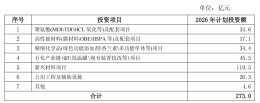
Wanhua Chemical Invests $27.3 Billion, 2026 Investment Map Revealed, $1.1 Billion Bet on Battery Materials
-

Back-to-back major joker moves! covestro’s 1.32 million ton mdi dual-line expansion and hdi acquisition reshape global polyurethane landscape


