



"Plastic Raw Material 'Supply Countdown'! 20% of National Refining Capacity Impacted"
local timeOn March 20, the U.S. Department of the Treasury's Office of Foreign Assets Control (OFAC) updated the Specially Designated Nationals list (SDN list), adding eight Chinese companies and one related individual to the list. For the first time, the U.S. government has targeted Chinese 'Teapot' refineries with sanctions, marking a new phase in Iran oil sanctions.
"Teapot refinery" refers to small and medium-sized private oil refining enterprises in China, mainly distributed in Shandong, Northeast, Shaanxi, and other regions, characterized by small scale, high flexibility, and low cost. Due to the crude early refining equipment, the atmospheric pot-type refining tanks they used were similar in shape to teapots, henceand got its name; later, although the technology was upgraded,"Teapot" as an industry label continues to this day. In additionUnlike the continuous procurement by large state-owned enterprises, teapot refineries purchase small and intermittent quantities of crude oil, also resembling teapots"Use in small quantities frequently."
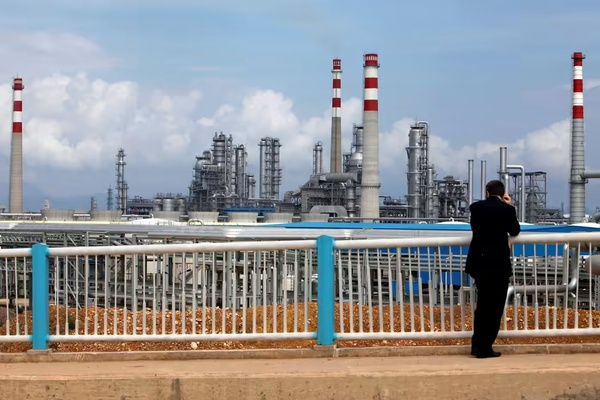
This sanction is sinceFebruary 4, 2025, since the release of Presidential National Security Memorandum No. 2 by US President Trump, the fourth round of sanctions targeting Iranian oil sales. The memorandum aims to "maximize pressure" on Iran. In the sanction announcement, the US government claimed that China's "teapot" refineries purchased and refined Iranian crude oil worth hundreds of millions of dollars. This is the first time the US has imposed sanctions on Chinese independent refineries, with the aim of cutting off channels for Iranian oil exports and further compressing its economic living space.
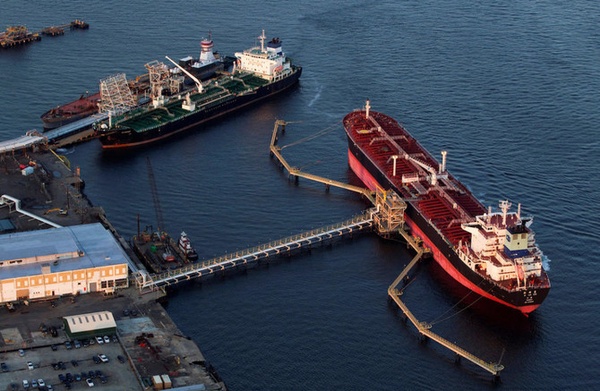
In addition to targeting buyers, the sanctions also targeted those responsible for transporting Iranian oil."Shadow Fleet". The US side accused multiple Chinese companies and associated vessels of being involved in the transportation of Iranian oil, leading to their inclusion on the SDN list.
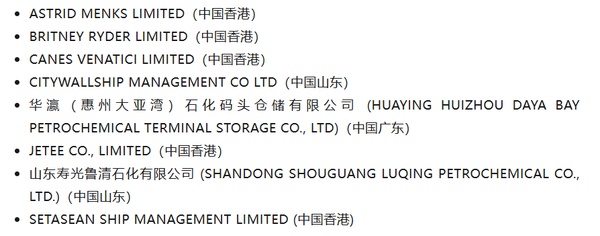
The specific entities listed include:
This time the US onThe sanctions on the "teapot" refinery have mainly resulted in short-term impacts on our country's energy and chemical products and their supply chain, primarily through supply chain disruptions and increased costs.
as ofIn 2024, the production capacity of Shandong's local refineries reaches 70% of the national private refining capacity, and teapot refineries account for more than 20% of China's total crude oil processing.Due to the teapot refineries being highly dependent on Iran (Iranian crude oil accounts for13% of low-cost crude oil from sanctioned countries such as Russia, thus sanctions will lead to restrictions on the import channels for Iranian crude oil, and a sharp increase in transshipment costs, which may force refineries to turn to other sanctioned countries like Russia and Venezuela, but these alternative channels also face transportation and settlement obstacles, with the worst-case scenario being that teapot refineries are forced to halt production.
and the shutdown or reduction of production at the teapot refineries will directly decrease the output of refined products such as diesel and gasoline. previously, four local refineries (with a total capacity320,000 barrels/day) The shutdown due to policy pressure has led to a 5% weekly jump in the wholesale price of diesel in East China. After the intensification of sanctions, the regional supply gap may further expand, triggering a chain reaction in energy prices.
Once the supply of raw materials (such as naphtha, mixed aromatics) for midstream chemical industry products like plastics and chemical fibers becomes tight, it may affect the production of chemicals, leading to the risk of supply chain disruption being transmitted to the terminal manufacturing sector.
In the medium to long term, industry consolidation is bound to accelerate.——Hengli Petrochemical and other giants have initiated acquisitions of shut-down refineries; Shandong Province plans to promote transformation through a policy of "replacing 1 ton of old capacity with 0.8 tons of high-end chemical capacity." In the future, the number of independent refineries may decrease sharply from 65 to less than 20, and the market share of the top 5 companies will exceed 60%.
Due to the plastic industry's high dependence on international crude oil and natural gas supplies, sanctions and tariff policies may disrupt the procurement rhythm of raw materials. Enterprises need to increase inventory to cope with the risk of supply interruptions, leading to increased capital occupation pressure. In the long term, this may force the industry towards higher-end and greener transformation. Enterprises need to respond to challenges through technological upgrades, diversification of the supply chain, and market adjustments, while national-level energy strategy adjustments (such as the RMB settlement system, new energy layout) will also become key variables.
author: Gao Xing,special plastic perspectivesenior market analysis expert
【Copyright and Disclaimer】This article is the property of PlastMatch. For business cooperation, media interviews, article reprints, or suggestions, please call the PlastMatch customer service hotline at +86-18030158354 or via email at service@zhuansushijie.com. The information and data provided by PlastMatch are for reference only and do not constitute direct advice for client decision-making. Any decisions made by clients based on such information and data, and all resulting direct or indirect losses and legal consequences, shall be borne by the clients themselves and are unrelated to PlastMatch. Unauthorized reprinting is strictly prohibited.
Most Popular
-

Mexico Imposes Tariff Up to 36% on Cross-Border E-Commerce Products, Effective January 1, 2026; Plastic Shows Partial Fluctuation Today
-

Trump Delays Tariff Increase on Furniture, Cabinets, and Vanities
-
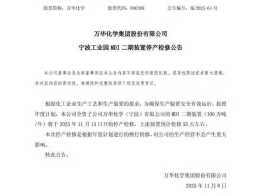
4.5 Million Tons! Wanhua Chemical Dominates Globally in MDI, Heavy Investment in Battery Materials Spurs New Storm
-
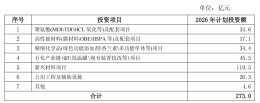
Wanhua Chemical Invests $27.3 Billion, 2026 Investment Map Revealed, $1.1 Billion Bet on Battery Materials
-
Back-to-back major joker moves! covestro’s 1.32 million ton mdi dual-line expansion and hdi acquisition reshape global polyurethane landscape


