Oil prices continue to plunge! plastic markets remain weak and volatile
I. Overnight Crude Oil Market Developments
On July 28, the US and Iran are expected to start new negotiations, leading to a decrease in market concerns over supply risks, and international oil prices continue to decline. NYMEX crude oil futures for September fell by $3.35 to $79.26 per barrel, a decrease of 4.06%; ICE Brent crude futures for September dropped by $4.27 to $84.09 per barrel, a decrease of 4.83%. China's INE crude oil futures for contract 2609 fell by 24.8 to 540.2 yuan per barrel, with a night session drop of 13.4 to 526.8 yuan per barrel.
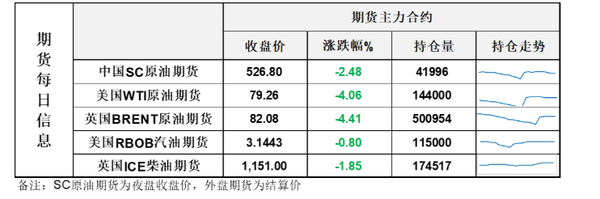
Market Outlook
On Tuesday, oil prices continued to plunge sharply, falling more than 5% in overnight trading. WTI crude dropped back below the $80 per barrel mark, and the oil market cooled rapidly, completely erasing all the gains from the previous week. The volatility in oil prices in July has been driven entirely by the impact of geopolitical factors on expectations. This influence has had a huge effect on market sentiment, yet it is difficult to quantify precisely and can only be tracked gradually. This week, market attention has returned to the possible resumption of U.S.-Iran negotiations. Trump gave the market hope for a potential agreement, which pushed oil prices lower again on Tuesday. U.S. President Donald Trump said on Tuesday that the United States had held productive talks with Iran, while also continuing to pressure Tehran by warning that if no agreement is reached, strikes would be carried out on “pickaxes and mountains,” as well as bridges and power plants. However, it remains clearly challenging at present to see how the differences between the two sides can actually be resolved. Iran has insisted on control over the Strait of Hormuz, saying that the strait can never return to the way it was before. On Tuesday, Oman proposed a new management plan for the Strait of Hormuz that has already won support from Gulf countries. The plan would allow Tehran to collect voluntary fees from users of the strait and is seen as a viable path toward restoring oil trade and easing the impact of the U.S.-Israel confrontation with Iran. U.S. officials said that the parties are discussing a coordinated plan under which no tolls or other charges would be imposed on passing vessels. Iran’s demands regarding the Strait of Hormuz are excessively harsh, and Oman, the United States, and the international community have justifiably rejected them. Iran has not yet responded. After this news broke, oil prices rebounded in the early morning hours and recovered most of the losses from overnight trading.
The factors affecting the oil market are not entirely bearish for crude prices. In fact, the supply side still faces significant challenges. The blockade measures by Iran and the Houthis continue to have a clear impact on exports from the Gulf region in the Middle East. In addition to the obvious reduction in traffic through the strait, the cost increase caused by Saudi Arabia’s detour is also very evident. There are reports that Saudi Arabia may raise its official selling prices (OSP) for long-term Asian customers by $5 due to rising costs. Meanwhile, an intrusion by protesters has led to operational suspensions: Libya’s National Oil Corporation has halted production at the El Feel oil field, and Saudi Aramco has shut down the Jazan refinery after it was attacked. OPEC+ is expected to approve an increase of 188,000 barrels per day in September output quotas, with no further increases planned for the rest of the year. In the early hours, API data showed crude inventories fell by 3.296 million barrels, a decline greater than expected.
On the geopolitical front, tensions between Ukraine and Iran have also intensified, with both sides issuing threatening remarks. Recently, Ukraine carried out a drone attack on an Iranian merchant vessel, and the two countries, which sit at the center of two major war-related flashpoints, have in fact entered a state of direct military confrontation. Tehran has directly labeled the attack as an “act of aggression,” and Iran has explicitly reserved the right to retaliate. Fortunately, Ukrainian Foreign Minister Andrii Sybiha and Iranian Foreign Minister Abbas Araghchi held a phone call on the 28th regarding the recent Ukrainian attack on the Iranian merchant ship, calling for restraint and urging both sides to avoid escalation. Araghchi stressed that the relevant losses must be compensated. At present, the Ukraine-Iran standoff has temporarily avoided further escalation, but the incident serves as a reminder to the world that on the geopolitical front, even a slight misstep could lead to renewed escalation. The rapid pullback in oil prices has brought the geopolitical risk premium back to a relatively reasonable level, and the sharp decline appears to have come to an end for now. Looking ahead, attention should remain on developments in U.S.-Iran negotiations, as oil prices may still see renewed volatility at any time. Please manage your timing carefully and participate cautiously.
II. Macroeconomic Market Dynamics
OPEC+ representativesOPEC+ is expected to keep production stable in 2026 after September.。
2. South Korea's KOSPI index has fallen below 6,000 points, dropping more than 30% from its June peak.
According to reports, Amazon is adjusting its AI strategy by gradually phasing out many internal models and focusing on "Frontier Model Research" (FMR).
Trump meets with Zelensky, focusing on the production of Patriot interceptors.
5. Iranian Foreign Minister: The Ukrainian side has assured that the attack on the Iranian vessel “was not intentional, and Ukraine does not seek escalation.” However, the Iranian sideDemand compensation from the Ukrainian side.。
6. An earthquake with the highest seismic intensity occurred in Kumamoto, Japan.
Middle East Situation - ①Oman has proposed a management plan for the Strait of Hormuz to Iran.Regional joint management, voluntary contributions from users.
2. Iran’s Deputy Foreign Minister: A proposal has been made to hold talks with Oman on temporary shipping lanes in the Strait of Hormuz.Most of the strait’s waterways are controlled by Iran.。
③ U.S. Official: Strait Navigation Coordination PlanNot involving charges.。
④Yemen's Houthi armed group said it attacked a Saudi oil tanker.。
⑤ as a mediator: the mediator believes they are close to reaching a breakthrough agreement, and it is hoped thatRestart the memorandum of understanding signed by the US and Iran last month.。
Iran: Those who accept frozen Iranian assets as compensation for ships will be banned from passing through the Strait of Hormuz.
Netanyahu described his meeting with Trump as "excellent."
It is reported that Iran, in the early hours of the 29th Beijing timeMissiles were fired at the U.S. military base in Jordan.United States Central Command:All Iranian missiles have been successfully intercepted.The U.S. military remains vigilant and is on high alert.
3. Plastic Market Dynamics
Oil prices continue to fall, while plastic futures fluctuate:
Plastic was quoted at 7,655 yuan/ton, down 0.35% from the previous trading day.
PP was quoted at 8,124 yuan/ton, up 0.14% from the previous trading day.
PVC was quoted at 4,504 yuan/ton, down 0.55% from the previous trading day.
Styrene is quoted at 8,400 yuan/ton, up 0.30% from the previous trading day.
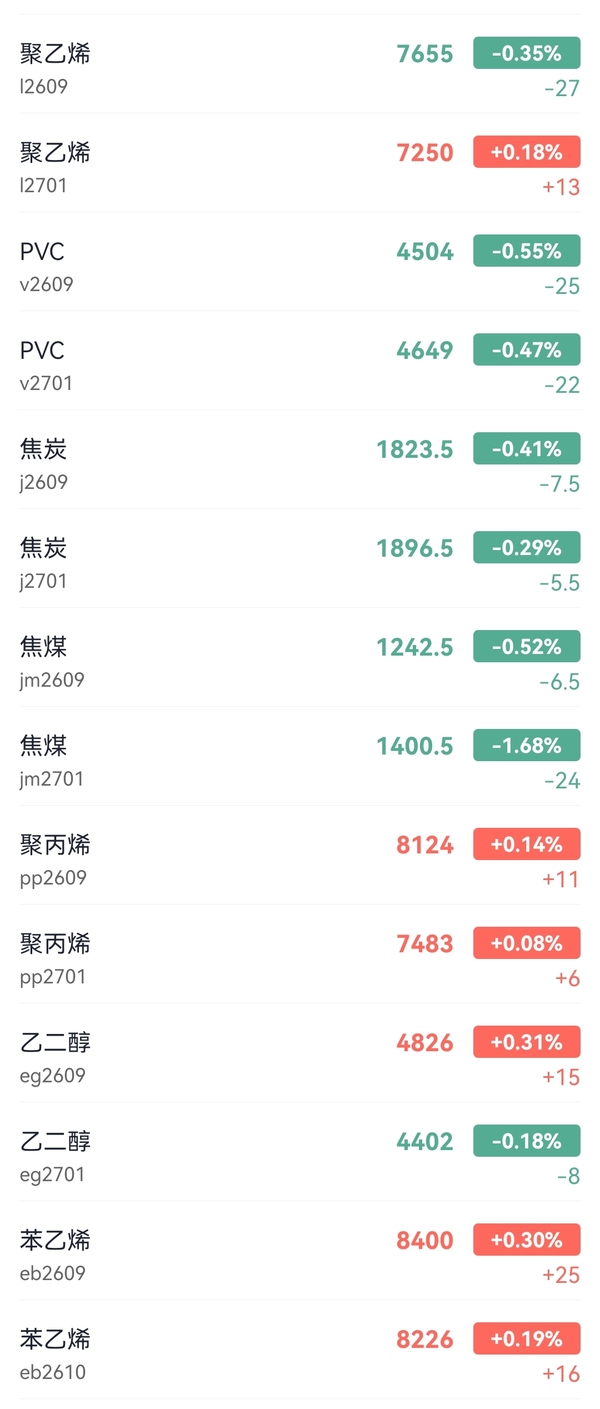
IV. Today's Market Forecast
PE: Overall, the short-term market for polyethylene is under pressure and relatively weak; however, as the end of the month approaches, traders and downstream operators are adopting a cautious mindset, and the willingness to short the market is limited. It is expected that the downside price potential will be relatively constrained in the future.
PP: The temporary ceasefire between the U.S. and Iran has led to a sharp decline in crude oil prices, with the geopolitical premium gradually being priced out, leaving polypropylene lacking sustained upward momentum and weakening cost support. Demand remains sluggish in the off-season, with downstream buyers sticking to hand-to-mouth procurement and market transactions staying muted. On the supply side, the pressure from continued capacity additions is gradually emerging, and the medium- to long-term oversupplied outlook remains unchanged. Weighing these factors, the market is expected to fluctuate weakly in the short term.
PVC: Maintenance adjustments among domestic PVC producers remain limited, and market supply is ample. Domestic end-user demand remains subdued, while low-priced export inquiries have improved in the short term. The industry is slowly destocking, and supply-demand fundamentals remain in a stalemate. Weak domestic crude oil prices, combined with poor industry expectations, have weakened cost support. In the short term, the domestic PVC market is expected to continue fluctuating weakly within a range.
【Copyright and Disclaimer】This article is the property of PlastMatch. For business cooperation, media interviews, article reprints, or suggestions, please call the PlastMatch customer service hotline at +86-18030158354 or via email at service@zhuansushijie.com. The information and data provided by PlastMatch are for reference only and do not constitute direct advice for client decision-making. Any decisions made by clients based on such information and data, and all resulting direct or indirect losses and legal consequences, shall be borne by the clients themselves and are unrelated to PlastMatch. Unauthorized reprinting is strictly prohibited.
Most Popular
-

Layoffs, Divestments, Plant Closures While Pouring Billions: BASF Undergoes Major Transformation!
-
Ascend Adipic Acid Hit By Force Majeure, Market Expects Supply Resumption In Mid-September
-
Raw Material Supply Shortage! INEOS Phenol Declares Force Majeure on Phenol and Acetone Businesses
-

South Korea initiates anti-dumping investigation against Chinese PVC suspension resin! The target is Tianjin Bohua and Wanhua Chemical. How to break through?
-

Sixth national procurement set to be implemented: A “Reshuffling” Moment for the $10-Billion Medical Device Market