Number Of Electric Vehicle Charging Stations In California Surpasses Gas Pumps By 68%
According to foreign media reports, the latest data from the California Energy Commission (CEC) shows that the state currently has 201,180 public and shared electric vehicle charging stations, which is 68% more than the number of gas pumps.
California Governor Gavin Newsom regarded this data as an important achievement in the state's push for a "zero-emission transition." Additionally, another significant recent report indicates that nearly a quarter of new trucks sold in California in 2024 will be zero-emission trucks.
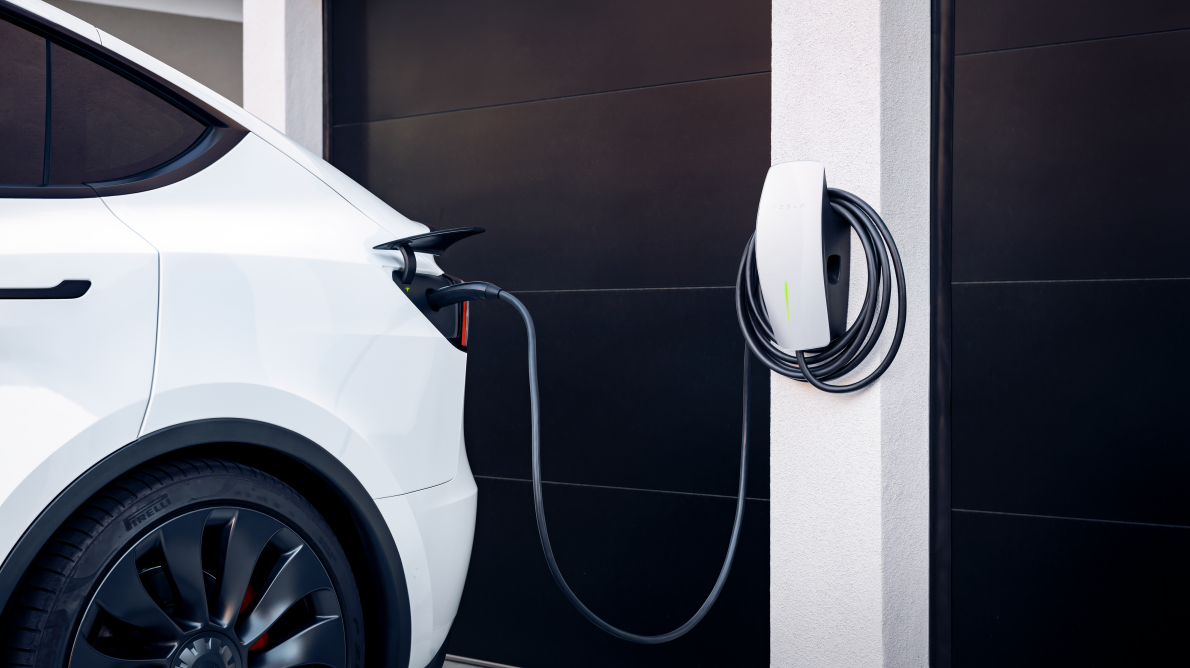
Image Source: Tesla
Newsom said, "Today in California, 94% of residents can find an electric vehicle charging station within a 10-minute drive. We are taking concrete actions to prove that electric vehicles have become an irreversible trend — even though President Trump has canceled several electric vehicle support policies."
In California, public charging stations are widespread in grocery store parking lots, garages, office spaces, stadiums, and gas stations; meanwhile, shared charging stations are also gradually becoming popular in apartment buildings and office buildings. Besides public and shared charging stations, about 800,000 home charging stations have already been installed in single-family homes in California.
California Energy Commission member Nancy Skinner pointed out that the continuously improving charging network makes owning an electric vehicle more convenient than ever. "Our goal is to make it so that Californians can choose electric vehicles without hesitation. These vehicles offer a great driving experience, require no oil changes, do not contribute to smog or air pollution, and with the enhancement of public charging infrastructure, charging is becoming increasingly convenient."
California's relevant agencies are continuing to advance two key initiatives: first, to accelerate the installation of electric vehicle charging stations, and second, to increase grid capacity to meet the growing demand for electricity. Current.
In June of this year, California successfully prevented the federal government from withholding billions of dollars in special funding for electric vehicle charging infrastructure that had been approved by a bipartisan majority in Congress.
California also announced that it has built 20,093 charging and hydrogen refueling points for medium and heavy-duty zero-emission vehicles, a 23% increase since February of this year.
Trucks account for only 6% of California's total vehicle count, yet their emissions make up 35% of transportation-related emissions and 25% of total road greenhouse gas emissions. Therefore, improving charging and refueling infrastructure in this sector is crucial for California to achieve its climate goals.
【Copyright and Disclaimer】The above information is collected and organized by PlastMatch. The copyright belongs to the original author. This article is reprinted for the purpose of providing more information, and it does not imply that PlastMatch endorses the views expressed in the article or guarantees its accuracy. If there are any errors in the source attribution or if your legitimate rights have been infringed, please contact us, and we will promptly correct or remove the content. If other media, websites, or individuals use the aforementioned content, they must clearly indicate the original source and origin of the work and assume legal responsibility on their own.
Most Popular
-

Mexico Imposes Tariff Up to 36% on Cross-Border E-Commerce Products, Effective January 1, 2026; Plastic Shows Partial Fluctuation Today
-
4.5 Million Tons! Wanhua Chemical Dominates Globally in MDI, Heavy Investment in Battery Materials Spurs New Storm
-

Trump Delays Tariff Increase on Furniture, Cabinets, and Vanities
-
Wanhua Chemical Invests $27.3 Billion, 2026 Investment Map Revealed, $1.1 Billion Bet on Battery Materials
-
Back-to-back major joker moves! covestro’s 1.32 million ton mdi dual-line expansion and hdi acquisition reshape global polyurethane landscape