New Players Flood In, Car Makers Start Clustering To “Build People”
Under the wave of embodied intelligence, the "silicon concentration" at the 2026 Beijing Auto Show has quietly increased.
According to Guoshi Automobile’s analysis, at this year’s Beijing Auto Show, major automakers—including FAW, GAC, Chery, and XPeng—placed robots and their core technologies front and center on their exhibition stands. Meanwhile, a number of intelligent automotive core technology providers collectively signaled their deep commitment to embodied intelligence, either unveiling key solutions or announcing major strategic upgrades.
And in addition to companies in the automotive industry chain, products such as the Glory robots "Lightning" and "Energetic Boy," as well as the Zhiyuan Expedition A3, were also present on-site, interacting closely with the audience.
At an auto show, robots have unexpectedly taken center stage—a clear signal that if electrification is seen as the first half of the intelligent vehicle revolution and autonomous driving as the mid-game tug-of-war, then embodied intelligence could be the decisive battle determining the rankings for the next decade.
Automakers flock to enter the humanoid robot race.
It is not exactly news that automotive companies are venturing into robotics.
However, a qualitative change is taking place at this auto show: from new energy vehicle startups to traditional car manufacturers, and from private to state-owned enterprises, all have brought out practical robot products or clear layout plans.
Under theof leading automakers, robots are moving beyond the realm of technical reserves and demonstrations to become a strategic standard. It seems there was a slight oversight in the translation. The term "" was not translated. Let me correct that for you: Under the intensive actions of leading automakers, robots are moving beyond the realm of technical reserves and demonstrations to become a strategic standard.
The most noteworthy signal comes from the “national team’s” entry.
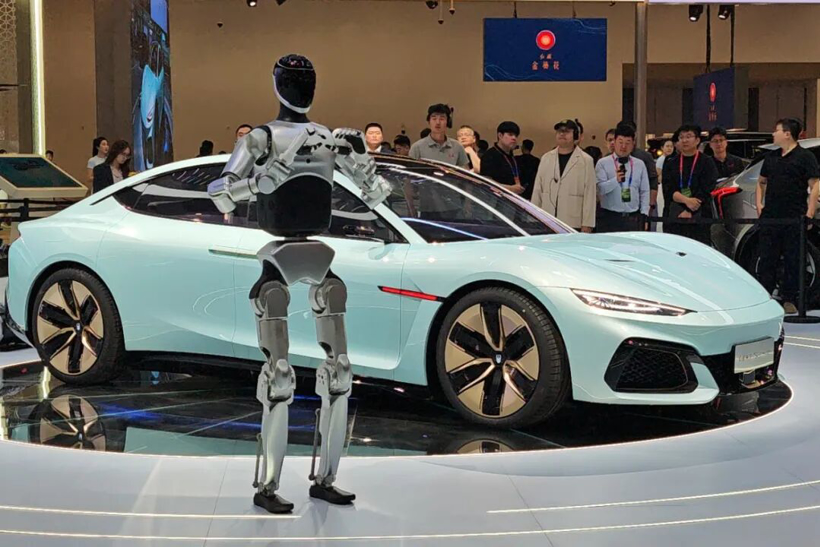
Image source: FAW Die
During this year's Beijing Auto Show, China FAW made a significant appearance with its independently developed series of intelligent robot products. During the event, not only did FAW's full-size humanoid robot make its global debut, but in the parts exhibition area, the FAW Mould independent booth also showcased a product matrix including full-size humanoid, commercial service humanoid, wheeled-arm, quadruped robots, and lightweight joint modules.
These four robots have clear positioning: full-size humanoid robots focus on all-scenario, high-precision heavy-duty tasks, aiming to become "super employees" in future intelligent societies; service-oriented humanoid robots target reception and customer service in 4S stores; wheeled-arm robots specialize in core industrial tasks such as material handling and intelligent assembly; and quadruped robots, with exceptional mobility across complex terrains, can perform inspection and reconnaissance missions in hazardous or specialized environments.
It is reported that China FAW completed the robot’s development and debuted it at an auto show in just 190 days—from core joint modules to the complete system—achieving full autonomy. It has also established a five-dimensional coordinated industrial development system encompassing “brain,” “body,” integration, data, and components.
This means that FAW has completed the technological implementation from core components to full-range products in the robotics sector.
Previously, the outside world's attention on the humanoid robot sector focused mainly on two types of entities: on one hand, start-ups such as Unitree and Zhiyuan; on the other hand, tech-oriented car companies such as XPeng and Xiaomi.
As a traditional automotive manufacturer and the leader of China's automobile industry, FAW's bold entry into the embodied robotics arena undoubtedly carries significant landmark significance.
Especially before this, Dongfeng Motor had already launched its own self-developed humanoid robot product. As the two major "national teams"”Automakers tilting resources towards embodied intelligence indicates that the strategic priority of this field is being elevated overall.
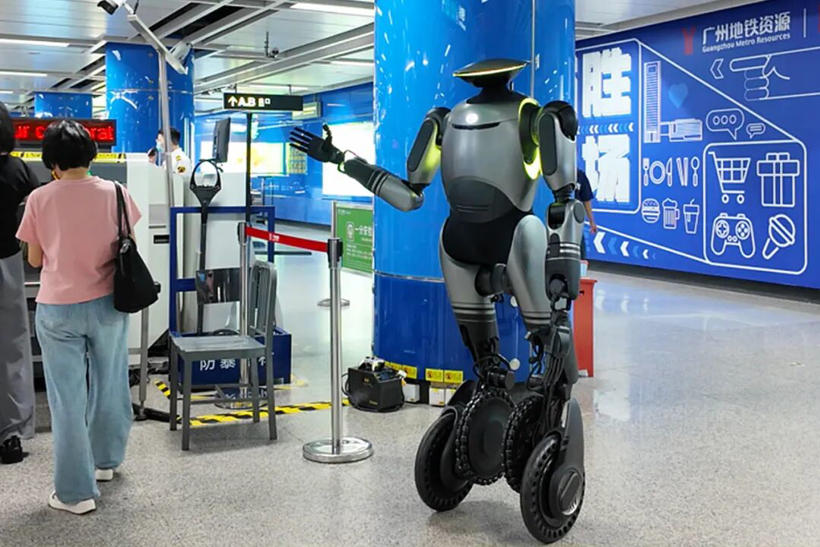
Image source: GAC
Traditional automakers like Guangqi and Chery, the "practical" forces, have already demonstrated tangible implementation results.
GAC Group's Hui Lun Technology presented the fourth-generation embodied intelligent humanoid robot GoMate Mini, alongside four core self-developed components including an axial flux motor, an integrated joint module, a driver, and a dexterous hand.
GoMate Mini focuses on security scenarios and pioneers a variable wheeled-leg structure. It achieves a maximum speed of 15 km/h and offers over 8 hours of single-charge battery life. It has already entered routine operation at Guangzhou Metro and is rapidly expanding to automotive production lines, residential property management, and commercial districts.
Chery's Moji Robotics presented a "practical" lineup featuring the ZhiJing robot, the humanoid robot Moyin, and the quadruped robot dog Argos.
Argos has exceeded 1,000 units delivered, and the intelligent police robot has been deployed in multiple cities across the country, covering real scenarios such as school protection posts, traffic guidance, and event security.
When traditional automakers start speaking with delivery data and scenario cases, a clear signal emerges: from demos to deliveries, from "being able to move" to "being able to perform," the evaluation criteria for automakers entering embodied intelligence are quietly changing.
If the entry of traditional automakers has defined the "industrial foundation" of the embodied intelligence track, then the strategic upgrades of new forces have pushed this cross-border wave to a higher dimension.
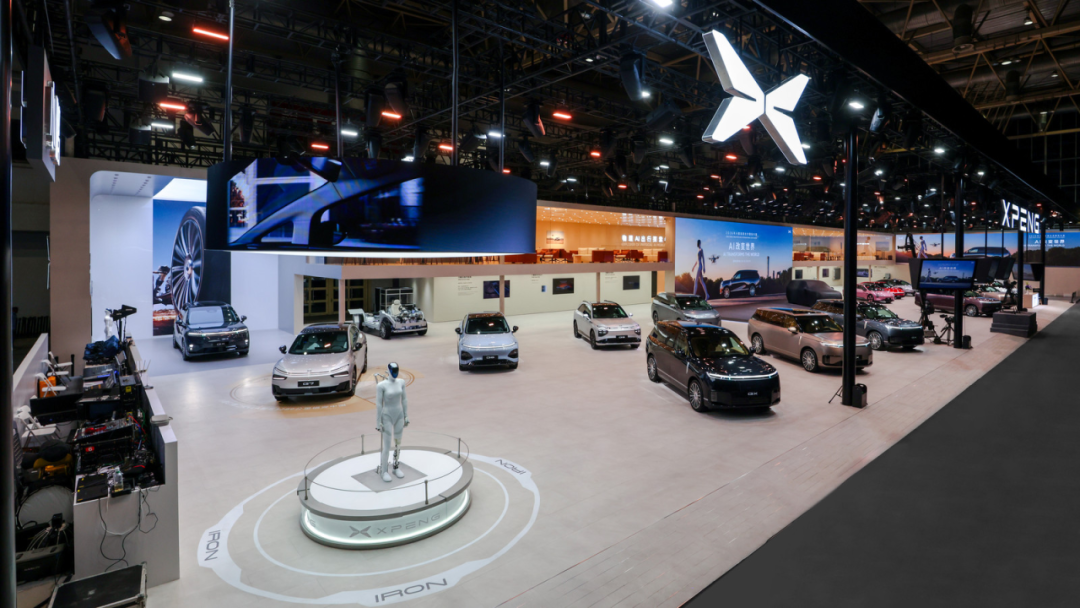
Image source: XPeng Motors
Recently, XPeng Motors officially announced its name change to "XPeng Group," and set "becoming a global embodied intelligence company" as the core positioning for the company's next ten years.
Guided by this positioning, XPeng's IRON humanoid robot is confirmed to enter mass production by the end of 2026, commence full-year commercial sales in 2027, and achieve a monthly production capacity of over 1,000 units by the end of that year. To this end, XPeng also launched construction of a full-chain humanoid robot mass production facility in Guangzhou in the first quarter of this year.
Li Auto’s strategic shift is equally clear.
At the beginning of this year, Li Xiang, CEO of Li Auto, held a company-wide meeting, announcing that the brand positioning of Li Auto would no longer be limited to "creating a mobile home," while further strengthening the "embodied intelligence" attribute. At the same time, Li Xiang clearly stated that 2026 is the "last window period" to become a top AI company globally, and it is necessary to "launch and showcase as soon as possible."
Xiaomi also recently unveiled its new humanoid robot. Prior to this, Xiaomi’s CyberOne had already entered the company’s own automobile factory and was working at the self-tapping screw assembly station.
According to incomplete statistics, at least a dozen automakers have already clearly announced their robotics strategies.
This means that “building robots” is transitioning from a differentiated exploration by a few automakers to a strategic standard for mainstream automakers.
Supply chain
Car companies crossing into embodied intelligence, on the surface, is "seeking a second growth curve".
However, if we broaden our perspective from the vehicle manufacturers and observe the overall trends of the parts suppliers at this auto show, we will find a deeper structural change: the perception, decision-making, and execution capabilities accumulated over a long period in the automotive industry are being systematically transferred to the robotics sector.
This is not a single company's turnaround, but a whole industrial system's shift.
Yang Xiaoming, President of Aptiv China and Asia Pacific, stated bluntly during the auto show: "The underlying logic of embodied intelligent perception and automotive intelligent driving perception is highly aligned, and automotive companies' solutions can be directly applied to the field of humanoid robots."
Based on this technological commonality, Aptiv has developed the PULSE™ fusion perception system, which is being showcased for the first time at this auto show. It is reported that this solution has already been applied to collaborative robots and autonomous mobile robots, achieving safe and efficient collaboration with humans in complex warehouse environments.
YiHang Intelligent founder and CEO Chen Yuxing also believes that autonomous driving technology and robotics share the same origin, essentially representing AI applications implemented on different physical forms.
“All resources—including talent, supply chains, and technology—are readily available in the autonomous driving industry. As a result, we can see many autonomous driving companies expanding into the robotics field, with a large number of autonomous driving professionals moving to robotics firms, and numerous robotics companies adopting technologies originally developed for autonomous driving. This is a gradual, step-by-step process. Viewed from the perspective of autonomous driving, robotics and autonomous driving may belong to different industries; but from an AI standpoint, they are inherently connected, representing a natural progression from one stage of development to a more advanced one,” noted Chen Yuxing.
This is also the underlying logic behind Easymile Intelligence's move into the robotics field. According to Chen Yuxing, the company's first robotic product prototype has already been developed and has secured its first pilot application project, with an official launch expected later this year.
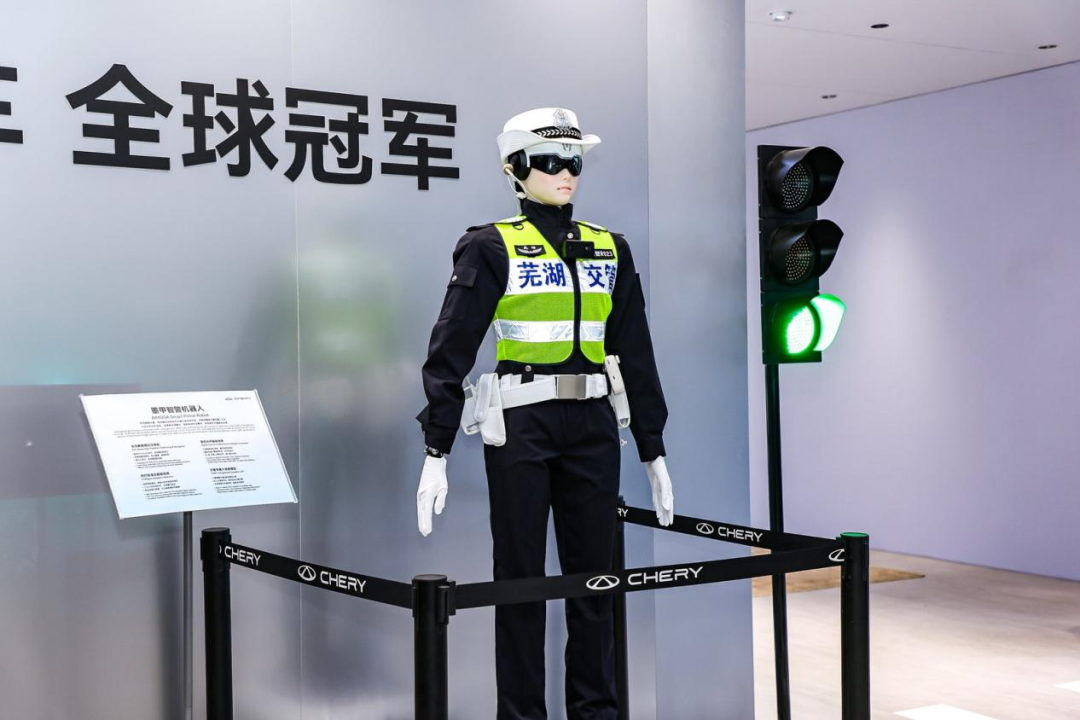
Image source: MoJia Robot
Moreover, the rapid development of Chery’s Mojia robot deeply inherits Chery’s over twenty years of experience in whole-vehicle R&D and manufacturing, including its mature R&D system and validation processes, world-leading supply chain management capabilities, and a global sales and service network.
In terms of technology, Mojia Robotics is actively promoting the migration of automotive intelligent technology to robot platforms, reusing autonomous driving-level environmental perception capabilities in robots to achieve centimeter-level positioning in complex scenarios, dynamic obstacle avoidance, and full 3D perception. In terms of energy, it deeply shares Chery's three-electric (motor, battery, and controller) technologies, including the adoption of Chery's solid-state batteries, enabling long-duration continuous operation.
In addition, numerous automotive supply chain companies such as Weizhijie, Valeo, Horizon, ChipNeuron, Four Dimensions Map, Jingwei Hengrun, Qingshan Industry, Xingyu Co., and Weifu Group have showcased innovative embodied robot solutions at this auto exhibition, covering various core technology fields including joint modules, head modules, embodied brain, embodied cerebellum, and dexterous hands.
Overall, nearly every key node along the intelligent vehicle supply chain—from emerging intelligent driving chip companies and traditional precision component manufacturers to global Tier-1 giants—is extending its reach into the robotics sector.
Notably, in Chen Yuhang's view, the deployment paths of robots and autonomous driving are also highly similar.
“Our understanding of robots is very similar to our previous approach to autonomous driving. Autonomous driving has followed an incremental path, and I believe robots will follow a similar incremental trajectory—humanoid robots may ultimately be the end goal, but along the way, numerous robots tailored to specific scenarios will emerge, each addressing high-frequency real-world needs,” Chen Yuxing noted.
Based on such considerations, according to Chen Yuxing, at this stage, Yihang Intelligence's robots are mainly focused on transportation scenarios. "This is our core consideration in the field of robotics, which is to start from specific scenarios and develop targeted robot products. Currently, we are independently developing the robot itself, as well as its 'brain.'"’"...that is, the entire AI system."
Not landing, currently.
As automakers and suppliers rush into the field, the embodied intelligence industry is undergoing a silent yet irreversible restructuring of its value logic.
An increasingly clear signal is that the core driver of this sector is shifting from “technology narratives” to “mass production narratives.”
In other words, today's capital market and industry end-users are no longer willing to pay for polished demos, but instead want to see whether robots can work reliably in real-world scenarios and make economic sense.
In mid-April, Deng Taihua, Founder, Chairman, and CEO of Zhiyuan Robotics, stated candidly at the 2026 Zhiyuan Partners Conference: “2026 is the inaugural year of deployment for embodied intelligence, marking its formal transition from the ‘development phase’ to the ‘deployment phase,’ and evolving from ‘being able to move’ to ‘knowing how to work.’”
From "being able to act" to "being able to work effectively"—a brief phrase highlights the transformation of the industry's fundamental logic.
Before this, the core value of a robot was more reflected in how complex actions it could perform and how smooth its gait could be; from then on, the value point will shift to a more fundamental question: can it replace a person on a production line, and is it cost-effective to do so.
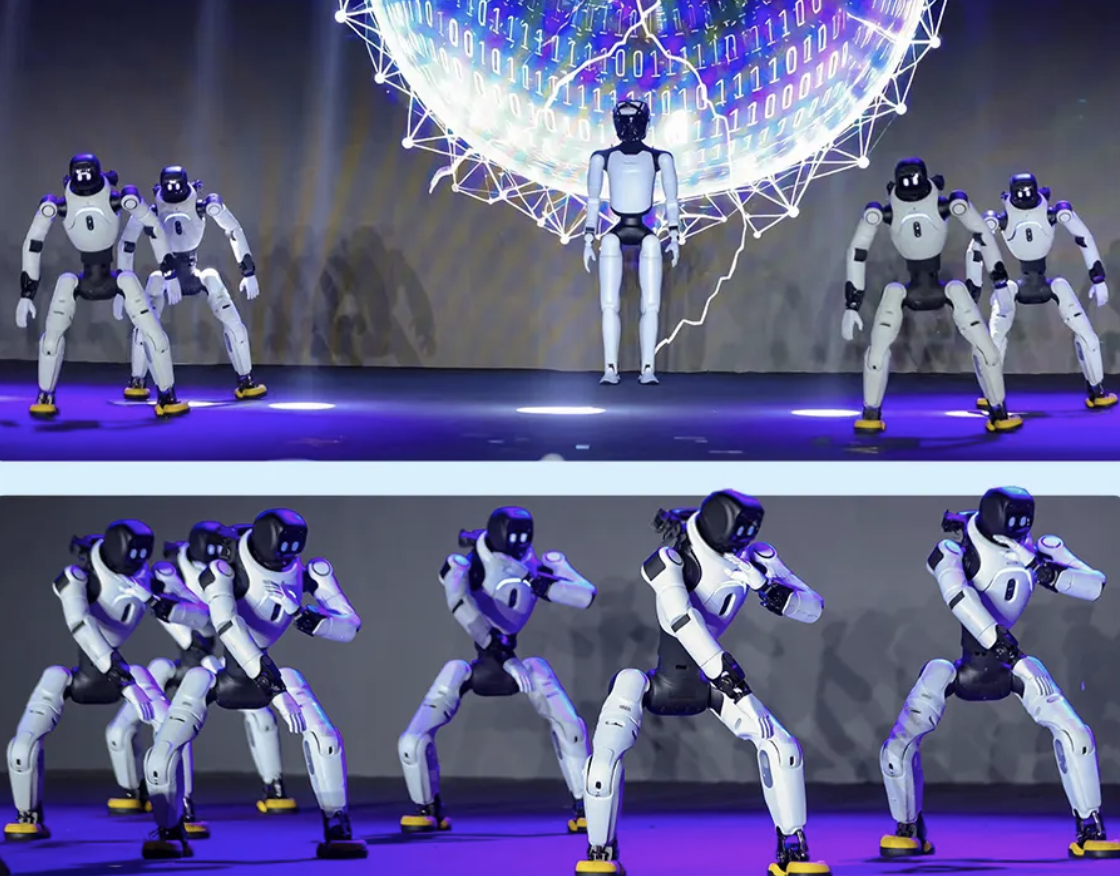
Image source: Zhiyuan Robotics
Zhihui Peng, co-founder, president, and CTO of Zhiyuan, put it more bluntly: "The true watershed for embodied intelligence is not only AI models entering the physical world, but also products beginning to integrate into real workflows. The industry is shifting from 'selling robots' to 'delivering outcomes.'"
If the views of these two industry pioneers represent the internal consensus within the sector, then the capital market’s response more directly confirms the shift in industry trends: enterprises that have already delivered deployable solutions and demonstrated proven commercial viability in real-world scenarios are now more likely to receive sustained investment from capital.
According to incomplete statistics from Gasgoo, in the first quarter of 2026, the domestic embodied intelligence sector cumulatively disclosed over 200 equity financing events, attracting more than 30 billion yuan in funds, with an average daily inflow of about 330 million yuan, including 16 financings at the billion-yuan level.
Further analysis shows that the vast majority of this over 30 billion yuan in funding flowed to enterprises that can deliver products, fulfill orders, and have successfully validated their business models in real-world scenarios.
In other words, nowadays, capital is no longer willing to pay for "dreams" and "team backgrounds," but is instead using real money to draw a line in the industry: those who can prove their business model get the ticket for the next stage, while those still at the demo stage are being ruthlessly squeezed out of the financing window.
This also means that there is little time left for cross-industry automakers and Tier 1 suppliers to prove themselves.
So, which type of company is more likely to come out on top?
There is still no consensus. However, a gradually emerging reference point is that the path of robots is unlike that of cars. Cars have highly unified functions and product forms, whereas robots are more similar to autonomous driving, requiring different product forms and combinations of capabilities for different scenarios. For example, a robot that moves materials on an assembly line does not necessarily need complex conversation abilities, and a home care robot does not need industrial-grade load capacity.
And it is precisely because of this high degree of fragmentation in scenarios that it is unlikely for a single dominant giant to emerge in the field of embodied intelligence that dominates all segments.
Looking at the 2026 Beijing Auto Show, one signal is clear: the battle for embodied intelligence to redefine the automotive industry has already begun.
The last time the automotive industry saw such a concentrated shift was during the early stages of electrification. Now, the entire industry is collectively upgrading to intelligence, and although the competition landscape has changed, one thing is certain: whoever can successfully replicate a viable solution in real-world scenarios will better seize the initiative in the next stage of competition.
【Copyright and Disclaimer】The above information is collected and organized by PlastMatch. The copyright belongs to the original author. This article is reprinted for the purpose of providing more information, and it does not imply that PlastMatch endorses the views expressed in the article or guarantees its accuracy. If there are any errors in the source attribution or if your legitimate rights have been infringed, please contact us, and we will promptly correct or remove the content. If other media, websites, or individuals use the aforementioned content, they must clearly indicate the original source and origin of the work and assume legal responsibility on their own.
Most Popular
-

Layoffs, Divestments, Plant Closures While Pouring Billions: BASF Undergoes Major Transformation!
-

Ascend Adipic Acid Hit By Force Majeure, Market Expects Supply Resumption In Mid-September
-

Raw Material Supply Shortage! INEOS Phenol Declares Force Majeure on Phenol and Acetone Businesses
-
South Korea initiates anti-dumping investigation against Chinese PVC suspension resin! The target is Tianjin Bohua and Wanhua Chemical. How to break through?
-

Sixth national procurement set to be implemented: A “Reshuffling” Moment for the $10-Billion Medical Device Market