



Japanese cars flee to india
Have you seen the roads in India?
I have seen it online.
The scene is usually like this: a sedan gets stuck behind a cow’s backside, with motorcycles weaving around nearby, and even a bubble tea delivery guy in the vicinity—so “clean and sanitary,” indeed.

However, at a time when many people feel physically uncomfortable with this situation, Japanese car companies like Toyota, Suzuki, and Honda have decided to bet on India.
According to the website of India’s Brand Quality Foundation, three automakers will invest nearly $11 billion in India to build factories, expand production capacity, and boost exports.
Some netizens commented that the three Japanese car companies must have too much money to spend.
In fact, it's not that they have endless money to spend, nor are they enchanted by Indian curry; these Japanese car company executives are much more clear-headed than we think.
Nowadays, Japanese automakers are seeing both revenue and market share decline, while raw material costs are soaring. Looking at the world map, it is by no means easy to find a market that can absorb production capacity, expand market share, and offer relatively mild competition.
So, it wasn’t that Japanese automakers chose India; rather, they had no other choice.
The Pain of Japanese Automakers
Japanese cars used to be the quintessential “perfect kid next door.”
If you ask veteran drivers who owned Japanese cars more than a decade ago, almost all of them would give Japanese cars a thumbs-up: affordable, fuel-efficient, tough, and durable...
Even many Japanese cars required paying a markup to buy, but who could have imagined that this seemingly unshakable dominance would, in just a few short years, be beaten so badly that it would lose all sense of direction.
With the advent of the new energy vehicle wave, electrification and intelligence have become the goals for many Chinese independent automakers seeking to overtake on the curve. Relying on China’s strong advantages in the new energy vehicle industry chain and automakers’ own commitment to R&D and technology, Chinese independent brands have quickly achieved this leapfrogging.
Once ridiculed, domestic cars are now increasingly common on the roads, even surpassing joint ventures in market share.
According to the data from the China Passenger Car Association, in April 2026, the market share of domestic brands had already reached 62.5%, far exceeding the 13.1% of Japanese brands.
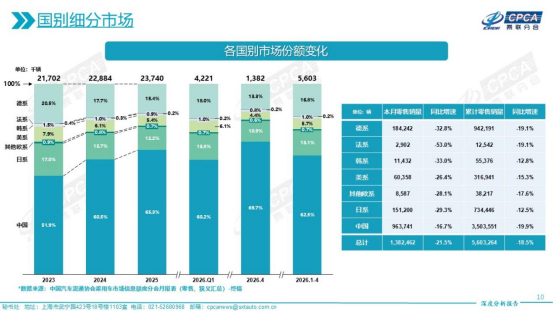
To know, the Chinese automotive market is the largest car market in the world. Losing momentum in the Chinese market is equivalent to giving up a huge piece of the pie.
In recent years, the main theme of the Chinese market has still been price wars, with competition over configurations, prices, and services becoming a norm, which has had a significant impact on the profits of Japanese car manufacturers.
Besides China, Japanese cars aren’t doing too well in the U.S. either.
On January 20, 2025, Trump was sworn in as the 47th President of the United States, and since then he has launched a series of controversial moves, including imposing additional tariffs on automobiles on national security grounds. As a result, the tariff rate on imported Japanese cars once rose as high as 27.5%. Although it later declined somewhat, it still remained far above the original rate.
This move directly caused the seven major Japanese automakers to suffer tariff losses of over 2 trillion yen in fiscal 2025.
Looking at Japan’s mainland as well, it actually wasn’t easy.
Geopolitical conflicts in the Middle East have disrupted shipping through the Strait of Hormuz, causing transportation and raw material costs to surge, leaving Japanese automakers in a difficult position.
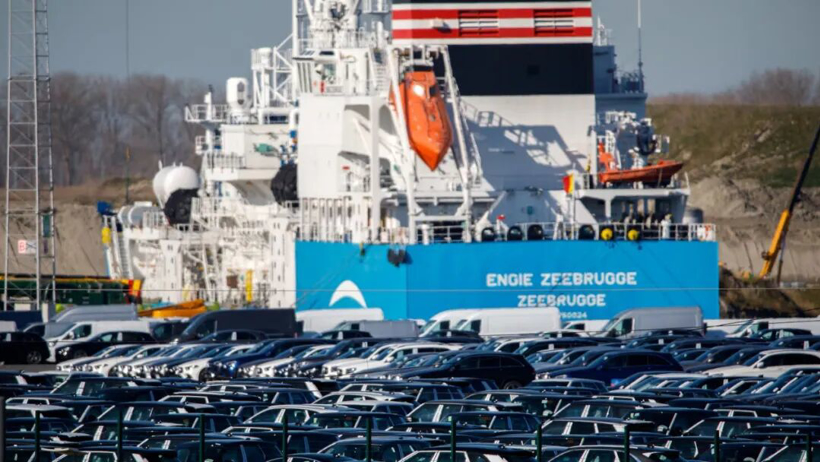
The executives looked at the reports, felt a chill down their spines, and could only search for an entirely new growth curve.
So, Japanese automakers didn’t fall in love with India; they simply had nowhere else to go.
Thoughtful Consideration of India
So what exactly is it about India that has such a strong appeal that Japanese automakers are willing to invest heavily there?
The first advantage is its size. In 2025, India’s auto market recorded 5.517 million new vehicle sales, up 6% year on year, setting a new historical record. It ranked as the world’s third-largest auto market, having surpassed Japan for four consecutive years, behind only China and the United States.
This achievement speaks for itself. India’s accomplishment is mainly due to the fact that India has been continuously promoting tax cuts and consumption-stimulating policies, which has led to a significant increase in domestic consumer willingness.
The second advantage is proximity—that is, being close to places where Japanese cars sell well, such as Africa.
So, for Japanese automakers, India is more like a convenience store built right in the middle of a crossroads: instead of shipping cars separately to eight different countries, they can build them in India and send them out shipload by shipload, cutting costs significantly.
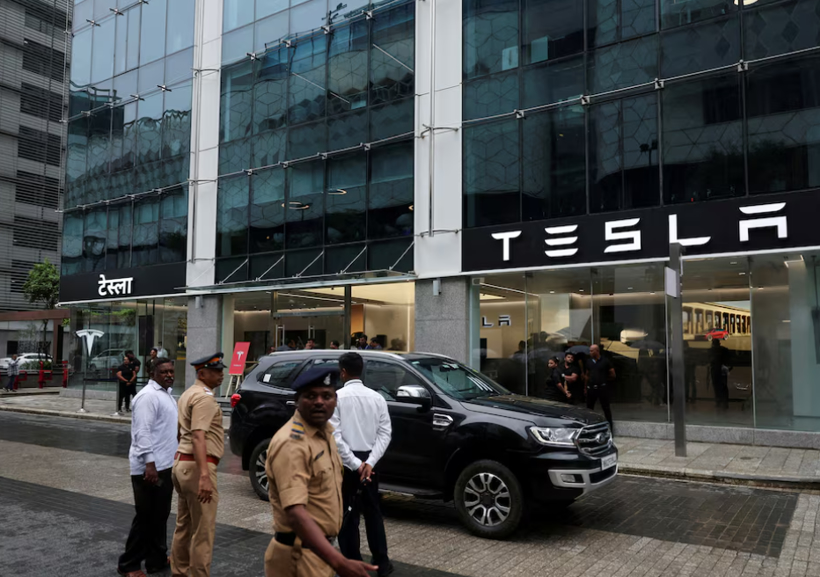
The Japan Economic Journal also believes that India is expected to transform into its global automotive supply hub.
The third advantage is stability. As we all know, the strength of Japanese cars lies in fuel-powered vehicles. After all, when it comes to the three core components—the engine, transmission, and chassis—they’ve been working on them for many years, and their technological accumulation is among the best in the world.
However, the Chinese automotive market has fully promoted the development of electrification and intelligence, which has weakened the advantages of Japanese cars, making it difficult for them to be fully realized. In contrast, India has fewer charging stations and a slow electrification process. Indian consumers still focus on inexpensive, fuel-efficient, and easily repairable cars, which are the traditional strengths of Japanese vehicles.
Suzuki, in particular, has long been an evergreen name in the Indian automotive market, with its best-selling models almost constantly topping the charts. Its reputation for being worry-free and reliable is more effective than any advertisement.
Therefore, Japanese car companies are vigorously positioning themselves in the Indian market, which is clearly a well-considered decision.
But is the Indian market really that easy to navigate?
The Tough Indian Market
Of course, India is not perfect either—it has flaws just as obvious as its strengths, and each of them is enough to give Japanese automakers a hard time.
First, let's talk about electrification. It's true that India currently has few charging stations and electric vehicles are not selling well, which indeed makes it a safe haven for Japanese gasoline cars. But you have to consider, how long can this "safe haven" last?
India had previously set a target of electric vehicles accounting for 30% of new car sales by 2030. Although that may sound like bluffing, they have been providing real subsidies and building real charging stations.
Imagine if one day India suddenly woke up and started aggressively promoting electrification and building infrastructure, with charging stations popping up everywhere like mushrooms after the rain—wouldn’t the Japanese automakers be caught flat-footed?
Isn’t this just a copy of the Thai market?
In the past, Japanese cars were dominant in Thailand, and the entire Southeast Asian market was referred to as the backyard of Japanese vehicles. However, Thailand took the lead in promoting electrification, and when Chinese electric vehicles entered the market, they quickly became highly sought after. Meanwhile, the market share of Japanese cars in Thailand has been steadily declining.
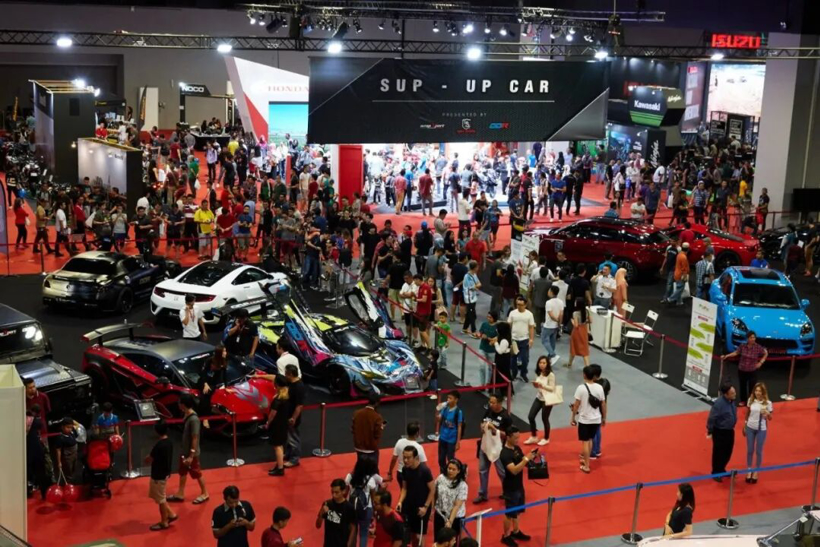
If India accelerates its electrification, history is likely to repeat itself, and this time, Japanese car manufacturers may find themselves with little room to escape. Preventing this will become the primary issue for Japanese automotive companies.
Speaking of policy, India’s policies are like a pot of curry—you never know whether the next bite will be chicken or potato.
In this surreal country, today low tariffs encourage you to build factories, and tomorrow you could be slapped with a massive fine. Even more frustrating is the mandatory joint venture requirement: if foreign automakers want to sell cars in India, they have to team up with a local partner. By the time your factory is built and your supply chain is in place, India may stab you in the back. At that point, whether you pour in more money or pull out your investment, all you’re left with is heartache.
So you see, the Indian market is like a mango that looks sweet— the first bite is fine, but after a couple more bites, you hit the hard pit.
The current calculation for Japanese cars is to quickly take a few more bites while the core hasn't yet hurt their teeth, but eventually, the core will bite back; it's just a matter of time before that happens.
Japanese automakers’ trip to India wasn’t for sightseeing; it was a struggle to make a living.
The dining tables in China and Southeast Asia have become more crowded, and the costs of production and transportation have increased. Looking globally, only India's pot is still steaming, even if it's boiling stones with a curry flavor; we have to grit our teeth and chew on it.
Japanese automakers want to expand their market, while India is looking to boost its economy and address employment issues; both sides have their own agendas.
As for the outcome, whether Japanese cars will once again reign supreme in India, or whether they will, like some of their peers back then, leave in disgrace, remains to be seen.
But no matter what, this show has only just begun, so we can just watch it unfold slowly.
Anyway, India’s story is never boring.
【Copyright and Disclaimer】The above information is collected and organized by PlastMatch. The copyright belongs to the original author. This article is reprinted for the purpose of providing more information, and it does not imply that PlastMatch endorses the views expressed in the article or guarantees its accuracy. If there are any errors in the source attribution or if your legitimate rights have been infringed, please contact us, and we will promptly correct or remove the content. If other media, websites, or individuals use the aforementioned content, they must clearly indicate the original source and origin of the work and assume legal responsibility on their own.
Most Popular
-

Layoffs, Divestments, Plant Closures While Pouring Billions: BASF Undergoes Major Transformation!
-
Ascend Adipic Acid Hit By Force Majeure, Market Expects Supply Resumption In Mid-September
-

Raw Material Supply Shortage! INEOS Phenol Declares Force Majeure on Phenol and Acetone Businesses
-
South Korea initiates anti-dumping investigation against Chinese PVC suspension resin! The target is Tianjin Bohua and Wanhua Chemical. How to break through?
-

Sixth national procurement set to be implemented: A “Reshuffling” Moment for the $10-Billion Medical Device Market


