Is There No Winner in the Era of "Fake Sales" and Intense Competition Among Car Manufacturers?
When the narrative of scale in China’s new energy passenger vehicle market no longer proves persuasive, it is replaced by a more pressing question: where, exactly, does the fundamental value of the industry lie?
Looking at the sales data for April alone, everything seems to be “growing upward”: China’s retail penetration rate for new energy vehicles historically surpassed 60%, reaching 61.4%, meaning that more than 6 out of every 10 new cars sold were new energy vehicles.
However, a set of less-than-ideal data is echoing within the industry: in 2025, domestic car sales surpassed 34.4 million, but the overall profit margin of the Chinese automotive industry was only 4.1% during the same period.
“Although the market appears to be expanding, the overall health of the industry is facing challenges,” said Wang Hui, Vice President of Avatr Technology, citing data from the China Passenger Car Association. “In January and February 2026, this figure fell further to 2.9%.”
According to the latest data shared by Cui Dongshu, Secretary-General of the China Passenger Car Association, the profit margin of the automotive industry fell to 3.2% in January–March 2026, hitting a low for the same period in recent years. The industry’s profit margin is not only significantly below the average profit margin of China’s large-scale industrial enterprises, but has also approached the operating break-even point of most vehicle manufacturers.
When a penetration rate of 61.4% collides with a profit margin of 2.9%, it paints a highly torn picture of the industry: China's automotive industry is racing to "scale up" but stumbling on the path to "strengthening."
Sales are rising, but profits are falling?
Since entering 2026, China’s automotive market has presented a scene that may seem contradictory, yet is now an established reality.
On one hand, the rapid advancement of new energy vehicles is unstoppable. According to data from the Passenger Car Association, in April 2026, domestic retail sales of new energy passenger vehicles reached 849,000 units, with a historic penetration rate exceeding 60%, reaching 61.4%. This represents a year-on-year increase of 9.7 percentage points compared to the same period in 2025, setting a historical record for the monthly penetration rate in the domestic car market.
Among them, the performance of domestic brands was particularly impressive. In April, the penetration rate of new energy vehicles among domestic brands reached 80.1%, while the penetration rate among luxury vehicles was only 26.1%. Chinese brands have already taken a fairly dominant position in the new energy vehicle market.
On the other hand, the profit margin of automakers is being sharply compressed. The decline from 4.1% in 2025 to 2.9% in the first two months of 2026 is a concerning trend.
Looking only at the absolute profit figure, the total profit of the automotive industry from January to March 2026 was 78.4 billion yuan, a year-on-year decline of 18%. Faced with this figure, Wang Hui’s assertion at the conference was particularly pointed: “Sales without profit are fake sales; scale gained through price wars is nothing but false prosperity.”
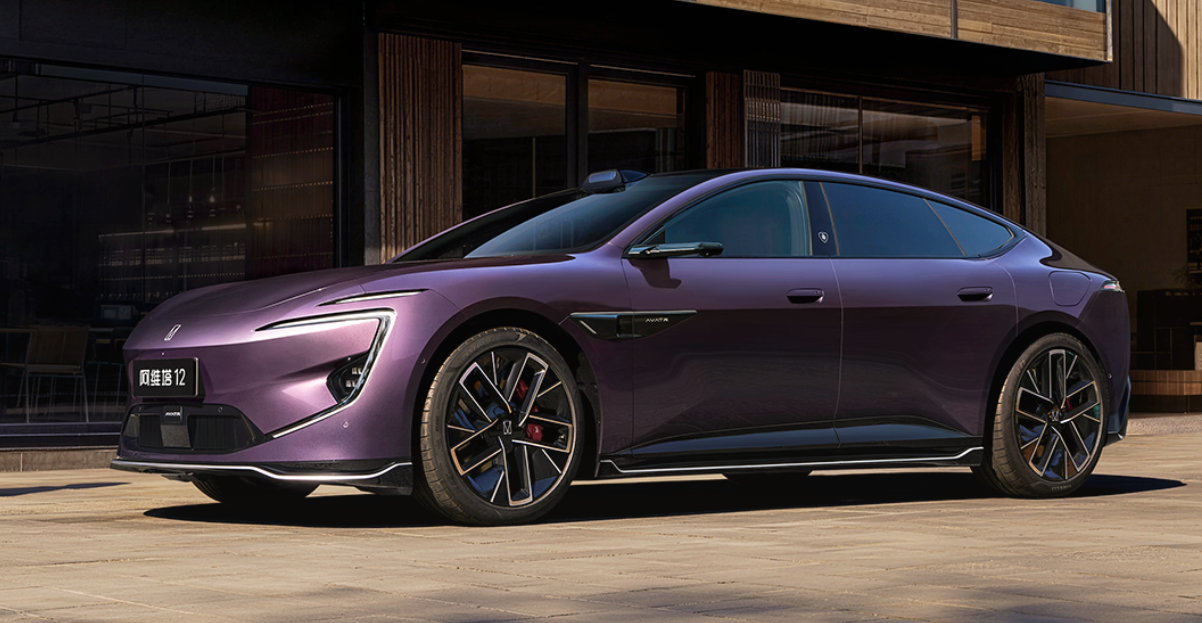
Image source: AVATR
"The more we sell, the more we lose" has transformed from a joke into a harsh reality.
The main reason is undoubtedly the large-scale "price war."
Since 2025, the industry has seen the slogan "electricity is cheaper than oil," followed by widespread adoption and price cuts that are no longer news. However, the more fundamental issue lies in the fact that as all automakers converge on highly similar technical routes and product configurations—such as 800V high-voltage platforms, AI voice large models, and end-to-end intelligent driving becoming standard features—price has become the sole means of differentiation, leading to profit margins being eroded at every level.
Leapmotor Senior Vice President and Chief Operating Officer Xu Jun analyzed: “For users, the perceived difference between a 700-kilometer range and a 1,000-kilometer range is close to zero, while the cost rises exponentially. The difference in experience between 30 TOPS and 1,000 TOPS of computing power is far smaller than the gap in the specifications.”

Image source: Leapmotor
He therefore believes that, up to now, parameters have only been a basic ticket to enter the game, not the decisive factor.
Behind Xu Jun’s viewpoint lies a trend more worthy of reflection: as automotive technology enters a “convergence phase,” with the central-computing-plus-zonal-controller architecture becoming increasingly uniform, end-to-end intelligent driving solutions growing ever more alike, and AI solutions for smart cockpits becoming more and more similar, it is becoming increasingly difficult to build differentiated competitiveness solely through technical specifications.
Users are placing significantly more weight on brand when making car purchase decisions.
NIO founder Li Bin revealed the latest research data from McKinsey: one or two years ago, brand was ranked fifth among the factors in car purchasing decisions, but it has now risen to second place, "and I believe it will soon reach first place."
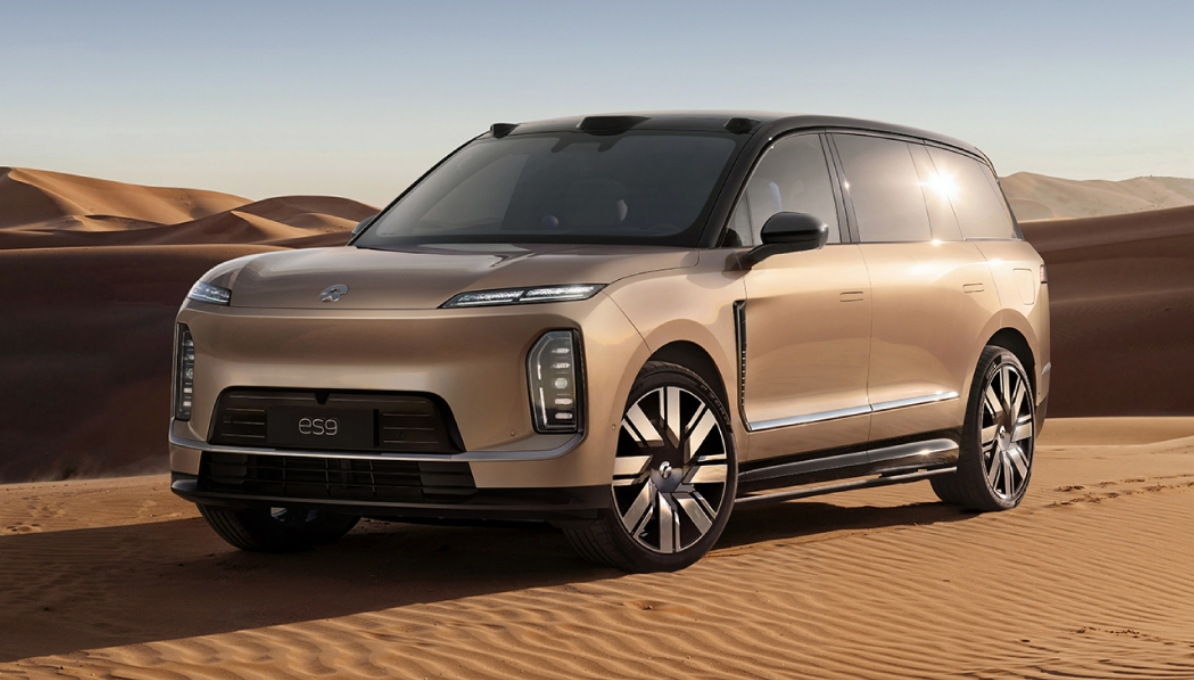
Image source: NIO Inc.
When brands begin to become the “decisive factor,” the technological dividends of China’s automotive industry are rapidly turning into brand dividends. Yet the reshaping and building of a brand is far more difficult than piling up specifications, and it tests one’s resolve far more.
Who is trying to break the curse of negative growth?
Against the backdrop of persistently declining profit margins across the industry, not all companies have fallen into the trap of “higher revenue without higher profits.”
At the Future Automotive Pioneers Conference, several “dark horses” backed up a possibility with solid data: Chinese brands can not only move upmarket in price, but also turn that into real profits.
Jianghuai Automobile Group Chairman Xiang Xingchu disclosed in his speech that since the launch of the Zunjie S800 in May 2025, cumulative deliveries have exceeded 18,500 units, and it has topped the sales ranking of luxury sedans priced above 700,000 yuan for eight consecutive months.
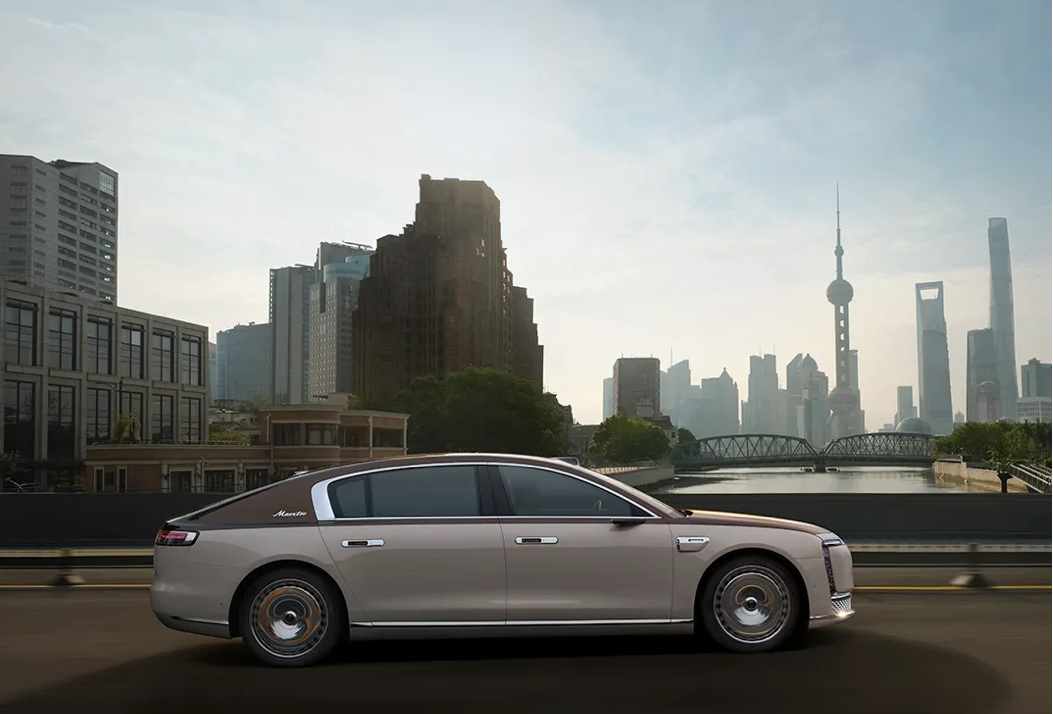
Image source: Zunjie Motors
From the perspective of price range, million-level Chinese luxury cars are able to continuously surpass century-old luxury brands, which was almost unimaginable five years ago.
Xiang Xingchu attributed this to a strategic choice of “redefining luxury through technology”: “The Zunjie brand is not simply replicating the development path of traditional luxury cars, but is instead using technological innovation to rewrite the narrative paradigm of ultra-luxury automobile brands.”
NIO, by contrast, represents another path worth examining.
On June 1, NIO announced its latest delivery figures: In May, it delivered 37,705 new vehicles, up 62.3% year-on-year and 28.4% month-on-month, setting a new monthly delivery record in the brand’s history.
The main brand "NIO" delivered 20,013 units, a year-on-year increase of 50.8%. The "ONVO" brand, targeting the family market, performed particularly well, delivering 12,029 units—a year-on-year surge of 91.5% and a month-on-month increase of 124.8%. The emerging brand "firefly" delivered 5,663 units, a year-on-year growth of 53.9%.
From January to May this year, NIO delivered a total of 150,526 new vehicles, up 68.7% year on year. As of now, NIO’s cumulative historical deliveries have officially surpassed 1.14 million units, reaching 1,148,118 vehicles.
In terms of financial performance, in the first quarter of this year, NIO’s total revenue reached RMB 25.53 billion, up 112.2% year over year, exceeding the upper end of the company’s previously issued revenue guidance of RMB 24.48 billion to RMB 25.18 billion. Gross profit totaled RMB 4.86 billion, a sharp increase of 428.4% year over year. The company’s overall gross margin reached 19.0%, hitting a four-year high. Vehicle gross margin was 18.8%, rising sequentially for four consecutive quarters and also reaching a four-year high. Gross margin on other sales was 20.6%, likewise the best level in four years.
In terms of net loss, the net loss for the first quarter narrowed to 332.1 million yuan, significantly reduced from a net loss of 6.75 billion yuan in the same period last year. As of the end of the first quarter, NIO's cash reserves increased to 48.2 billion yuan, achieving positive operating cash flow for three consecutive quarters.
In the first quarter of 2026, NIO’s brand average transaction price reached RMB 390,000, which was RMB 50,000 higher than BMW’s and RMB 130,000 higher than Audi’s.
Behind this price difference is a qualitative change in brand premium capability.
Coincidentally, data shows that the transaction average price of all models in the HarmonyOS Smart Mobility lineup remains stable at 390,000 yuan, ranking first in the transaction average price list of Chinese automotive brands for several consecutive months, with performance in certain periods exceeding that of traditional luxury brands.
Among the segmented brands, the AITO brand achieved an average transaction price as high as RMB 409,000. Its flagship model, the AITO M9, has accumulated over 280,000 deliveries and has remained the sales champion in the RMB 500,000-class luxury SUV segment for 21 consecutive months. The MAEXTRO brand, positioned in the ultra-luxury market, has also delivered strong performance. Its first model, the MAEXTRO S800, is priced between RMB 708,000 and RMB 1,018,000. Within 11 months of launch, it recorded over 17,000 deliveries and has ranked first in the over-RMB 700,000 ultra-luxury sedan segment for eight consecutive months, with monthly sales even exceeding the combined sales of several traditional top-tier luxury sedans.
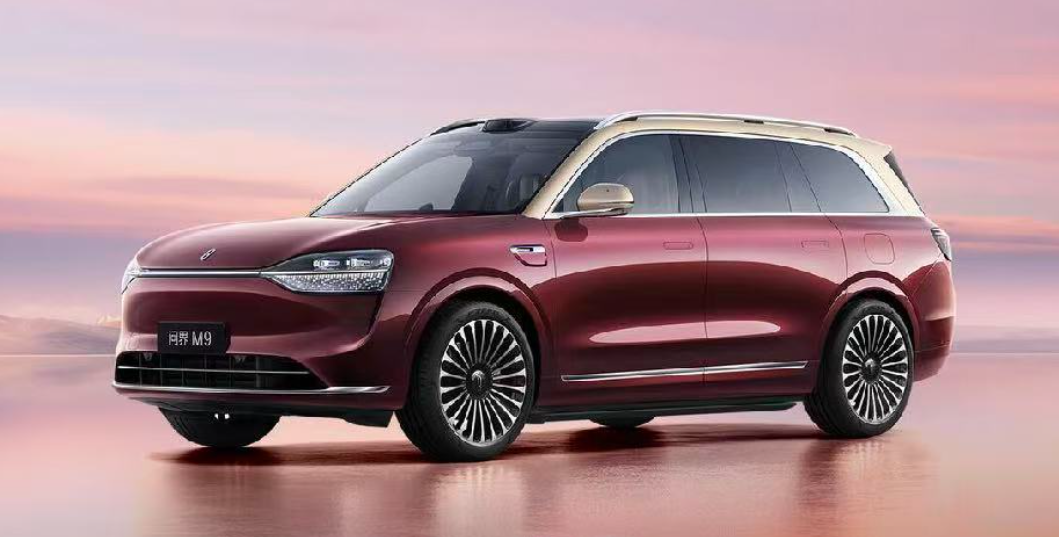
Image source: HIMA
The reason these brands have been able to rise against the odds amid price wars is no accident: first, they have a deep understanding of user value rather than simply piling on features; second, they make extreme investments in new technologies to create a technological premium; third, they build systematic capabilities in manufacturing, supply chain, and quality; and fourth, they work in deep coordination with partners such as Huawei to achieve technological leadership.
However, a profound question emerges when we delve into the financial performance of the aforementioned brands: Will the existence of these high-priced, high-profit brands fundamentally alter the direction of profit margins in the Chinese automotive industry as a whole?
The answer may not be optimistic. Although the Zhijie S800, NIO ES8/ES9, and AITO M9 have achieved impressive results in their respective price segments, their share of the industry’s overall sales remains limited.
In other words, localized breakthroughs in the push toward the high end have yet to reverse the industry-wide predicament as a whole.
For most domestic brands, the average vehicle price is still below 150,000 yuan, and the main battleground of the price war remains in the low- and mid-end market, where it continues to be intense.
While most players are still struggling below the loss line, a few successful high-end brands cannot support the overall profitability level of the entire industry.
The real test for China's automotive industry to transition from being large to strong lies not in whether it can produce one or two models that can compete with the Mercedes-Benz S-Class, but in whether it can achieve high-quality value creation across all categories and price segments.
Mercedes-Benz fell 27% in China—does that mean Chinese cars can smile abroad?
As price wars flare up repeatedly in the domestic market, overseas markets are becoming the "second battleground" for Chinese automobile brands in the new round of competition.
If domestic competition is a fierce battle for the existing market, then global competition is a long-term bet on growth markets.
Avita’s globalization practice provides an extremely representative case.
Wang Hui revealed that Avatr has entered more than 40 countries and regions worldwide. The starting price of the Avatr 11 in China is about 290,000 yuan, while overseas it is close to 450,000 yuan.
“In Thailand, we are firmly the top seller of luxury electric SUVs, and in Dubai we already hold a 10% share of the local high-end electric vehicle market,” Wang Hui said. “By the end of this year, we will also officially enter Europe. Although we have only been expanding overseas for about a year and a half, we have already achieved stable profitability. Therefore, globalization is something we must pursue in the future.”
Wang Hui also revealed the brand strategy behind sponsoring the Portugal national team during the interview. He said that Avatr’s main products in Europe will fully enter the European market around November and December, and that he will travel to Europe to meet with partners in multiple countries. “Sponsoring the Portugal national team is just one of our moves at the brand level in Europe. What we and the global market uphold is a long-term strategy. In addition to brand and product investments, we are putting greater resources into building our service capabilities, system capabilities, and operational capabilities.”
Geely’s globalization strategy is more macro-level and systematic.
Geely Automobile Group Vice President Li Chuanhai pointed out that the essence of Chinese automakers’ globalization is not low prices and high volumes, but rather being rooted in technology, grounded in systems, and driven by brand value, ultimately evolving from simply selling cars to defining the future of mobility on a global scale.
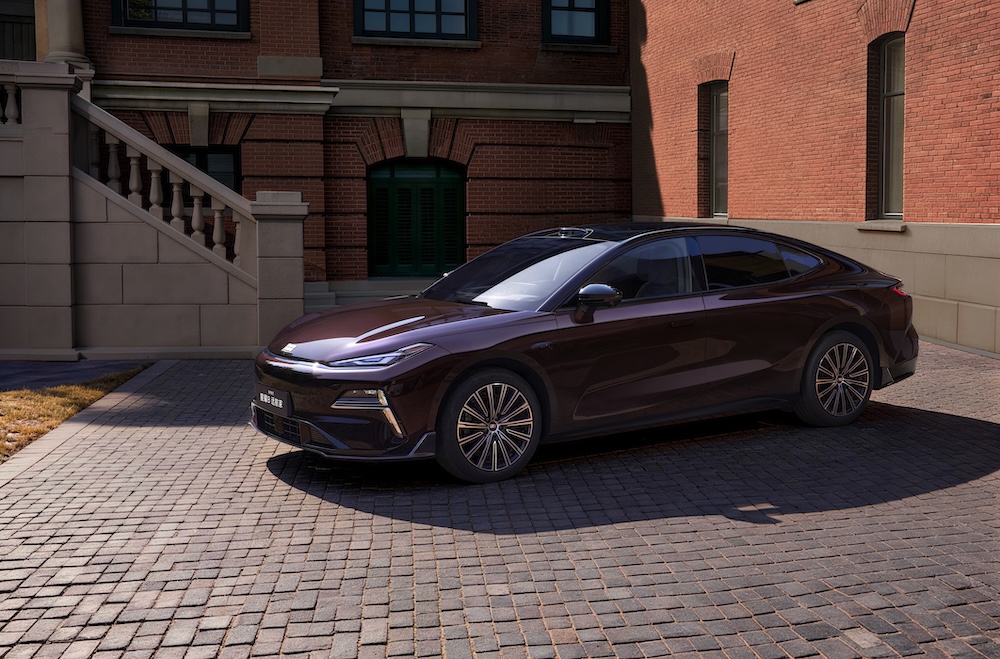
Image source: Geely Auto
He introduced that Geely has been operating global business for 20 years, with five major R&D centers and 16 testing bases, deeply integrating with local partners in Europe, Southeast Asia, the Middle East, Latin America, and Eastern Europe. Geely has participated in the co-construction of international standards and is the first Asian automotive company with board voting rights in IATF.
In terms of automobile exports, the data for April 2026 also provide an important reference.
In April 2026, automobile exports reached 901,000 units, up 74.4% year on year, with exports of new energy vehicles more than doubling year on year to 430,000 units. Overseas markets have become the most important growth engine for China’s automotive industry.
However, while export growth has been encouraging, one set of comparative data is worth examining: in the first quarter of 2026, Mercedes-Benz Group’s sales in China reached 111,600 vehicles, down 26.9% year-on-year, making it the region with the most pronounced decline among its major global markets. Meanwhile, financial reports showed that Mercedes-Benz’s first-quarter revenue was 31.602 billion euros, down 4.9% year-on-year; net profit was 1.433 billion euros, down 17.2%; and global sales totaled 499,700 vehicles, down 6% year-on-year.
These figures not only reflect the challenges Mercedes-Benz is facing in the Chinese market, but also raise a question: when Chinese brands have firmly established themselves in overseas markets, what posture will they adopt in the face of global competition?
Chinese automotive companies are replicating the challenges that BBA faced in the domestic market: as local brands continue to gain ground through technological advantages and high cost-performance ratios, powerful international brands may similarly encounter strong counterattacks from local brands in other markets.
When asked how he views China’s new luxury brands, Drummond Jacoy, Executive Vice President of R&D at Mercedes-Benz China, responded with caution tinged with a sense of urgency: “China has many outstanding brands and products, and I have great respect for them. We are embracing technological innovation with full force, continuously learning, and integrating cutting-edge technology with our brand heritage.”
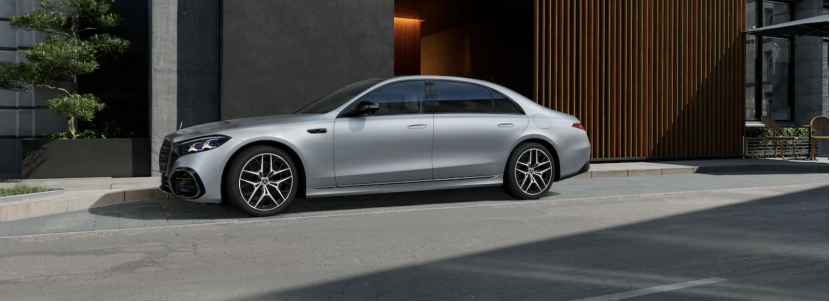
Image source: Mercedes-Benz
He particularly emphasized that Mercedes-Benz has already engaged in deep cooperation with Chinese technology companies in China, ranging from ByteDance and Tencent to Momenta, and from Amap to AISpeech. Mercedes-Benz is trying in an unprecedented way to narrow the gap in intelligent technology with local Chinese companies.
This precisely reveals the new dynamics of global competition: the battlefield has expanded from China's domestic market to the global market, and the core focus of competition has evolved from a single product competition to an all-encompassing competition involving technology, ecosystems, supply chains, and brands.
As Li Chuanhai said, "It's not difficult to go out; the real skill lies in standing firm, integrating in, and putting down roots."
True globalization is by no means a matter of simply replicating domestic products and pricing models overseas; rather, it requires comprehensive and deep integration of capital, technology, standards, and supply chains.
Leapmotor’s strategic layout also echoes this judgment. Leapmotor founder Zhu Jiangming has publicly stated the company’s globalization goals. Zhu believes the first step is to achieve a “60/40 split,” with China accounting for 60% and overseas markets for 40%. Next, the aim is to reach a “50/50 split.” The ideal state is a “40/60 split in reverse”: if Chinese automakers can achieve 40% of sales in the domestic market and 60% overseas, that would truly represent the best form of globalization.
From “selling products” to “building systems” — this is a threshold China’s auto industry must cross in its globalization journey. In the next three to five years, whoever can take the lead in establishing a healthy and sustainable profit model in overseas markets will gain a head start in the long-term global race.
Conclusion: Automakers must start making money.
Returning to the theme of this conference—“Ascending Step by Step.”
China’s automotive industry took 20 years to make the leap from catching up to taking the lead. There were no shortcuts along the way; every step was earned through hard work. But today, China’s auto industry faces an awkward reality: its achievements in scale have already reached their peak—it is the world’s largest automobile producer, the world’s largest new energy vehicle market, and home to globally leading intelligent technology clusters—yet breakthroughs in quality have only begun to emerge in a few areas.
The industry's profit margin has fallen below 3.2%, indicating that the red light for industry health has been turned on.
When most companies have exhausted their profits in a price war, who will still have enough capital to invest in the development of the next generation of technology, brand reinvention, and global expansion?
From Wang Hui’s “Sales without profit are fake sales,” to Xu Jun’s “Anyone can cut prices, but only true skill can reduce costs,” and then to Li Chuanhai’s “Maintaining a sense of direction in uncharted territory,” perhaps the most valuable consensus of this conference is this simplest of common senses: competition in the automotive industry is a protracted war, not a blitzkrieg.
As Xiang Xingchu said, “On the road to the premiumization breakthrough of Chinese brands, there are no lone heroes, only symbiotic evolution.”
When a 61.4% penetration rate and a 3.2% profit margin appear on the same page of this industrial landscape, the answer is clear enough: China’s automotive industry must move from pursuing “scale” to a new stage of pursuing “strength.”
The issue is not whether cars can be sold at a million-level price, but whether the entire industry can still steadily stand on each step of the "ladder" when the price war consumes the last bit of profit.
【Copyright and Disclaimer】The above information is collected and organized by PlastMatch. The copyright belongs to the original author. This article is reprinted for the purpose of providing more information, and it does not imply that PlastMatch endorses the views expressed in the article or guarantees its accuracy. If there are any errors in the source attribution or if your legitimate rights have been infringed, please contact us, and we will promptly correct or remove the content. If other media, websites, or individuals use the aforementioned content, they must clearly indicate the original source and origin of the work and assume legal responsibility on their own.
Most Popular
-
Layoffs, Divestments, Plant Closures While Pouring Billions: BASF Undergoes Major Transformation!
-
Ascend Adipic Acid Hit By Force Majeure, Market Expects Supply Resumption In Mid-September
-

Raw Material Supply Shortage! INEOS Phenol Declares Force Majeure on Phenol and Acetone Businesses
-
South Korea initiates anti-dumping investigation against Chinese PVC suspension resin! The target is Tianjin Bohua and Wanhua Chemical. How to break through?
-

Sixth national procurement set to be implemented: A “Reshuffling” Moment for the $10-Billion Medical Device Market