



How KBR Corporation's Supercritical Water Cracking + AI Enzymatic Recovery Dominates the High and Low-End Waste Plastic Recycling Market
KBR, as a global leader in engineering and technology solutions, demonstrates its leadership in sustainable solutions through the latest advancements in plastic chemical recycling technology and market, promoting the commercialization of multiple cutting-edge technologies by collaborating with several innovative companies.
Global Promotion of Supercritical Water Cracking Technology (Hydro-PRT)
KBR has partnered with UK-based Mura Technology to exclusively license and promote Hydro-PRT® technology, which utilizes supercritical water to convert mixed waste plastics into hydrocarbon feedstock that can be further processed into new plastics or chemicals. Compared to traditional pyrolysis, supercritical water effectively inhibits coking, increases yields, and broadens the range of applicable feedstock such as flexible packaging and multilayer films. KBR's Hydro-PRT technology is flexible in terms of feedstock requirements, capable of processing mixed waste plastics containing 55% to 60% polyolefins, and can tolerate small amounts of impurities (e.g., PVC <0.5%). Optimization of the pretreatment system further enhances economic viability, such as reducing subsequent processing costs by removing non-target components.

From a technical perspective, the core of this technology lies in utilizing the unique properties of supercritical water to achieve the cleavage of polymer chains. When the temperature of water exceeds 374°C and the pressure is greater than 22.05 MPa, it enters a supercritical state, losing its polarity and becoming an excellent organic solvent. Under these conditions, waste plastics can be thoroughly mixed with supercritical water and undergo decomposition reactions. After 30 to 45 minutes of reaction, waste plastics such as PE and PP can be efficiently converted into hydrocarbon products of varying chain lengths.
In terms of process design, the reaction conditions of Hydro-PRT® technology are relatively mild, with temperature fluctuations of only 1-2°C throughout the process. Secondly, the supercritical water is thoroughly mixed with the materials, which can significantly reduce the risk of coking and facilitate long-term stable operation of the equipment. Thirdly, the tubular reactor modular design makes it easy to expand capacity and scale up engineering. In terms of product yield, Hydro-PRT® technology can obtain 55%-60% of light oils (naphtha and diesel), as well as heavy oils and process gases. The product quality can meet the requirements of downstream cracking units, achieving a closed-loop cycle from plastic to plastic.
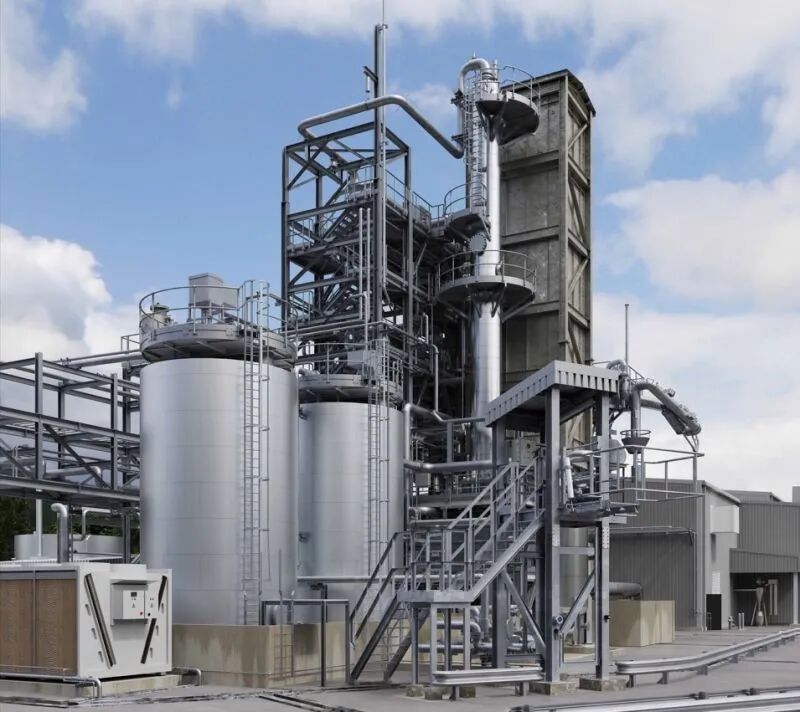
In June 2022, KBR announced an investment of $100 million to hold an 18.5% stake in Mura, highlighting its long-term confidence in this technology. Currently, the Hydro-PRT® technology has been commercially applied, with a plant located in Teesside, UK, having a total processing capacity of 80,000 tons per year. The first production line, with a processing capacity of 20,000 tons per year, began operations in 2022. Additionally, KBR has assisted Mura in implementing this technology in projects with LG Chem in South Korea and Mitsubishi Chemical in Japan, with global planned capacity expected to reach 500,000 tons by 2027. The recent support for the mass balance method by the European Parliament has further accelerated the market application of Hydro-PRT®.
KBR's breakthrough in innovative enzyme-based recycling.
On April 29, 2025, KBR announced a partnership with Australian biotechnology company Samsara Eco to serve as its key commercialization partner for its first enzyme-based recycling plant, aiming to complete construction by early 2028. This collaboration focuses on Samsara Eco's EosEco™ technology, an innovative enzyme-based recycling method that utilizes AI-driven patented enzymes to break down plastics and textiles into their original monomer molecules. The technology is particularly suited for nylon 6,6, mixed fibers, and colored and dyed fabric mixtures, which are traditionally challenging to process through mechanical or chemical recycling. The plant is designed with an annual capacity of 20,000 tons of nylon 6,6, demonstrating the industrial potential of this technology.

The core advantage of EosEco™ technology lies in its low carbon footprint and infinite recycling capability. By breaking down plastics into monomers, the technology ensures that the remanufacturing process does not compromise quality, which aligns closely with the goals of the current circular economy. Samsara Eco has collaborated with well-known brands like lululemon to launch the world's first enzyme-recycled nylon 6,6 product, as well as a limited edition Packable Anorak jacket made from enzyme-recycled polyester. These brand collaborations indicate that the market's acceptance of this innovative recycling technology is increasing, providing strong support for KBR's commercialization efforts.
【Copyright and Disclaimer】The above information is collected and organized by PlastMatch. The copyright belongs to the original author. This article is reprinted for the purpose of providing more information, and it does not imply that PlastMatch endorses the views expressed in the article or guarantees its accuracy. If there are any errors in the source attribution or if your legitimate rights have been infringed, please contact us, and we will promptly correct or remove the content. If other media, websites, or individuals use the aforementioned content, they must clearly indicate the original source and origin of the work and assume legal responsibility on their own.
Most Popular
-
Middle East Tensions Escalate Sharply: How Polyolefins Respond Amid Soaring Risk Premium
-
Huntsman Introduces “War Surcharge” Amid Shipping Disruption and Soaring Energy Costs, Global MDI Prices Continue to Rise
-

Middle East Polymer Export Hub Hit in Sudden Attack, Global Supply Chain Sounds Alarm
-
Supply Extremely Tight! LG Chem Declares Force Majeure on Export Contracts for Di-Octyl Terephthalate (DOTP)
-

Overseas News Highlights: Major Reversal! Iranian Military Says It Has Not Blocked the Strait of Hormuz! BASF, Dow, Polyplastics Announce Price Hikes!


