The ongoing escalation of the Middle East geopolitical conflict has begun to exert a tangible impact on maritime logistics.
Currently, shipping through the Strait of Hormuz has virtually come to a halt. Multiple tankers in the area have reduced their speed to nearly zero and face the risk of missile strikes. Numerous vessels are opting to turn back, anchor in place, or temporarily alter their routes to avoid the danger.
Will shipping disruptions in the Strait of Hormuz impact China's automotive industry?
Increase automotive raw material costs
The Strait of Hormuz is the only outlet from the Persian Gulf to the Arabian Sea, hailed as one of the world's most important energy transit routes.
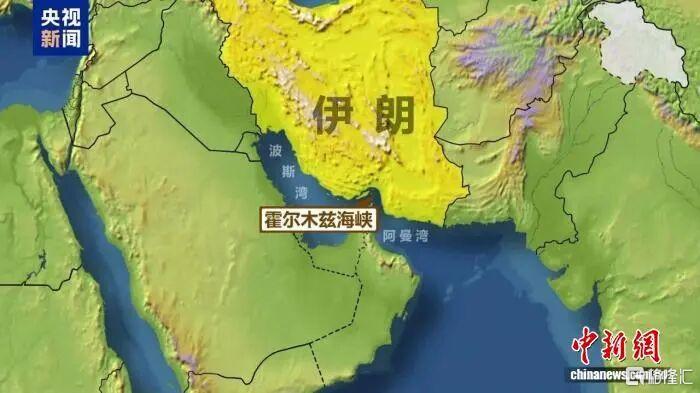
Strait of Hormuz. (File photo)
This strait, which is only 40 kilometers wide at its narrowest point, is a must-pass route for crude oil exports from Middle Eastern oil-producing countries such as Saudi Arabia, Iraq, Qatar, and the UAE, with about 20% of global maritime oil trade passing through it.
Immediately after the conflict news broke, international oil prices reacted swiftly. Brent crude surged nearly 13%, rising to approximately $82 per barrel. Bernstein revised its Brent crude price forecast for 2026 upward to $80 per barrel.
In addition, oil and gas are also key industrial raw materials. Based on these, a variety of organic chemical raw materials and synthetic materials can be produced, such as plastics, synthetic fibers, and synthetic rubbers, which are widely used in automotive interior and exterior trim, tires, wiring harnesses, and body parts.
Zhang Xiang, Researcher at the Industrial Innovation Research Center for Automobile Industry, North China University of TechnologySpeaking in an interview with China News Service's Guoshi Zhitongchao, he said that if oil and gas prices continue to rise, it will to some extent increase the cost of parts procurement and vehicle manufacturing. This will further compress the profit margins of automakers and increase operational pressure.
In addition to the cost pressures caused by oil price fluctuations, another major factor is the failure of imported and exported goods to arrive on schedule.
In recent years, Chinese automobiles have been increasingly popular in the Middle Eastern market. According to the data from the China Passenger Car Association, by 2025, the top ten countries for China's New Energy Vehicle (NEV) exports will include Belgium, the United Kingdom, Mexico, Brazil, the Philippines, the United Arab Emirates, Thailand, Australia, Indonesia, and India. Among these, the United Arab Emirates is one of the key export markets in the Middle East.
Iran likewise attaches great importance to the development of transportation and the automotive industry. According to data from the Central Bank of Iran, from the beginning of 2025 to November 16, the Iranian Gold and Foreign Exchange Center has allocated approximately $5.296 billion in foreign exchange to the country’s transportation and automotive sectors, accounting for 21% of the total foreign exchange allocation across all sectors.
Notably, China's automotive exports to the Middle East and certain European markets heavily rely on the Strait of Hormuz for maritime shipping routes. Any prolonged disruption would inevitably lead to extended transit times and increased freight and insurance costs.
Zhang Xiang expects that if this geopolitical conflict continues to escalate, it could temporarily disrupt China's auto export pace, supply chain stability, and corporate cash flow, adversely affecting automakers' operations.
He added that some Chinese automakers operate knock-down assembly plants in Middle Eastern countries, shipping components from China for local assembly. If shipping routes are disrupted and parts fail to arrive at ports on time, it would directly disrupt the normal production schedules of their overseas factories.
The impact on the automotive industry is not entirely negative.
The geopolitical conflicts in Iran do not have entirely negative effects.
Experts believe that while this crisis has caused short-term disruptions, it may also compel companies to accelerate the optimization of their supply chain layouts, diversify energy sources, and to some extent boost the penetration rate of new energy vehicles, thereby speeding up structural transformation in the industry.
Industry estimates show that for every 10% increase in oil prices, the penetration rate of new energy vehicles could rise by approximately 1.5% to 2%, as higher energy costs will, to some extent, accelerate the transition to electrification.
In Zhang Xiang's view, if international oil prices continue to rise due to geopolitical conflicts, the operating costs of gasoline vehicles will significantly increase, which will to some extent change consumers' car purchasing expectations and decision-making logic, leading more people to switch to new energy vehicles with lower operating costs and relatively stable energy prices.
Cui Dongshu, Secretary General of the Passenger Car Market Information Branch of the China Association of Automobile ManufacturersThe article points out that China’s new energy vehicle exports to the Middle East market are demonstrating high-quality development, with overall performance standing out notably—especially recently, when export growth to the Middle East has been particularly strong.
To sustain the positive trend in export figures, a shift in approach may be necessary.
It is pointed out that if the Strait of Hormuz is blockaded for a long time, the related trade and logistics systems need to accelerate the search for alternative routes to reduce dependence on a single route.
For example, consider activating non-Persian Gulf ports along the coast of the Gulf of Oman, connecting to inland markets in the Persian Gulf via land transport; at the same time, increase the capacity of the China-Europe Railway Express, and strengthen the connection between land and sea intermodal transport; for exports to Europe and some Middle Eastern countries, consider rerouting through the Mediterranean, Red Sea, and Suez Canal, to build a diversified transportation network.