



Freight Rates Surge 16%! Shipping Giants Launch Cost Defense Battle, Is Export Recovery Really on the Horizon?
The latest Shanghai Containerized Freight Index (SCFI) was recently released, ending a consecutive ten-week decline with structural rebounds in freight rates on major Europe and U.S. routes. Among them, the U.S. West Coast route saw a single-week surge of 16.29%, while the Europe route bottomed out with a 0.92% increase. This shift has drawn significant attention in the plastic and chemical industry sector.
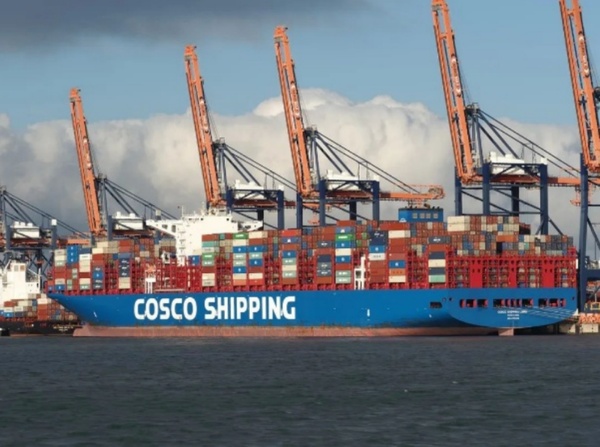
The cost red line triggers a pricing protection battle.
The direct reason for the rebound in freight rates this round comes from the shipping companies' cost defense strategy. Taking Formosa Plastics Marine as an example, its 10 chemical tankers with a capacity of 30,000 tons are responsible for the transoceanic transportation of basic raw materials such as ethylene glycol and methanol. When the spot price on the West Coast of the U.S. dropped below $1,600 per FEU, multiple shipping companies collectively activated price adjustment mechanisms on April 1st, attempting to stabilize long-term contracts through short-term price control. Data shows that the long-term price for the West Coast route in 2025 has increased by 15%-20% compared to last year, and shipping companies need to use spot market premiums to hedge against cost pressures.
SCFI freight rates:
The freight rate from Shanghai to Europe is $1,318 per TEU, up by $12, a 0.92% increase.
The freight rate from Shanghai to the Mediterranean is $2,076 per TEU, down $119, a weekly decrease of 5.42%.
The freight rate from Shanghai to the US West Coast is $2,177/FEU, an increase of $305, a rise of 16.29%.
The freight rate from Shanghai to the U.S. East Coast is $3,194/FEU, up $328, an increase of 11.44%.
The freight rate for the Persian Gulf route is $1188 per container, up $129, a weekly increase of 12.18%.
The freight rate for the South America route (Santos) is $2,172 per container, up $49, an increase of 2.31%.
The freight rate for the Southeast Asia route (Singapore) is $433 per container, down by $13, a weekly decrease of 2.91%.
For the near-ocean routes, the fare from Far East to Kansai, Japan is $319, up $15, with an increase of 4.93%; the fare from Far East to Kanto, Japan is $324, up $14, with an increase of 4.52%; the fare from Far East to Korea is up $4 to $141, with an increase of 2.92%.
This strategy mirrors the 'basis trade' model in the plastics industry. Polyester industry chain enterprises lock in raw material costs through the futures market, while shipping companies bind cargo owners with long-term contracts, both trying to smooth market fluctuations using financial instruments. Just as the polyester industry adopts production cuts to maintain prices during high inventory cycles, the shipping industry's price alliances also exhibit price coordination characteristics. Leading companies like Maersk and Mediterranean Shipping Company have clearly stated that they will further raise freight rates after mid-April.
The resilience of plasticization demand supports market expectations.
Plastic products serve as the "lifeblood" of industrial economies, with their transportation demand exhibiting strong rigidity. Taking ethylene glycol as an example, China's import volume in 2024 reached 18 million tons, 70% of which was transported via ocean container shipping. Although the Trump administration's tariff policies led to increased costs for some raw material imports, the rigid demand from downstream industries such as textiles and packaging continues to support the market. Formosa Plastics Marine Corporation revealed that the loading rate of its South China-Taiwan route container ships has recovered to 85%, primarily transporting raw materials like PVC and ABS, which are widely used in the production of electronic product casings. This type of demand is relatively lagging in its response to end-consumer trends.
It is noteworthy that the plastic industry chain is accelerating the construction of a 'virtual inventory' system. Traders such as Zhongji Ningbo are deeply integrating physical warehouses with futures delivery warehouses through a futures-spot linkage model. This innovative approach not only reduces logistics costs but also enhances the predictability of transportation demand. Data shows that in 2024, the delivery volume of PTA futures increased by 40% year-on-year, with futures-spot combined trade accounting for over 60% of the total. This shift has directly impacted the slot allocation strategies of shipping companies.
The market turnaround still needs time to be validated.
Despite a technical rebound in freight rates, the structural challenges facing the plastics industry remain. North America's dependence on imports of basic raw materials such as methanol is as high as 45%. The Trump administration’s imposition of tariffs on Canada could trigger a chain reaction in the supply chain of plastic raw materials. Formosa Plastics Ocean Shipping has begun adjusting its fleet structure, planning to add four 260,000-ton VLCC tankers to address potential changes in energy transportation demand.
Industry insiders point out that the current rebound in freight rates is more a result of short-term speculation, and a real market turnaround depends on the completion of the destocking cycle in the plastics industry. In 2024, polyester industry inventory days once exceeded the 60-day warning line, but through production cuts, inventory was reduced to 45 days. However, the recovery of terminal demand remains unclear. In this context, whether the shipping companies' battle to defend freight rates can continue depends on whether the plastics enterprises can achieve value reconstruction through technological innovation and collaboration within the industrial chain.
From the perspective of the petrochemical industry, fluctuations in ocean freight rates are not just changes in logistics costs but also a microcosm of the restructuring of the global supply chain. As China transitions from the "world factory" to an "innovation hub," the logistics demands of the petrochemical industry will trend towards high-end and customized solutions, potentially fostering more resilient shipping service models.
【Copyright and Disclaimer】The above information is collected and organized by PlastMatch. The copyright belongs to the original author. This article is reprinted for the purpose of providing more information, and it does not imply that PlastMatch endorses the views expressed in the article or guarantees its accuracy. If there are any errors in the source attribution or if your legitimate rights have been infringed, please contact us, and we will promptly correct or remove the content. If other media, websites, or individuals use the aforementioned content, they must clearly indicate the original source and origin of the work and assume legal responsibility on their own.
Most Popular
-

Mexico Imposes Tariff Up to 36% on Cross-Border E-Commerce Products, Effective January 1, 2026; Plastic Shows Partial Fluctuation Today
-

[Overseas News] Sumitomo Chemical Acquires Solvay's LCP Business! SK Chemicals Builds Circular Economy Model For Waste Banners!
-

Trump Delays Tariff Increase on Furniture, Cabinets, and Vanities
-
4.5 Million Tons! Wanhua Chemical Dominates Globally in MDI, Heavy Investment in Battery Materials Spurs New Storm
-
Wanhua Chemical Invests $27.3 Billion, 2026 Investment Map Revealed, $1.1 Billion Bet on Battery Materials


