



Embodied robots: No $1 Billion, No Series B
In the beginning of 2026, the embodied intelligence sector experienced a wave of B-round financing.
Recently, star companies such as Songyan Dynamics and Zhuji Dynamics successively announced the completion of their Series B financing rounds, with funding amounts all exceeding RMB 1 billion; the financing amounts for two of these companies even approached RMB 1.5 billion.
To know that a scale of one billion used to mainly appear in C round or even later rounds, but now it has become the "starting price" for the B round of leading embodied robotics companies.
This is not just a feast of capital, but also the prelude to industry consolidation. The B-round financing essentially marks a watershed in the industry, with capital using real money to draw a clear boundary.
When this watershed emerges, it signifies that embodied intelligence is transitioning from the “technical validation phase” to the “commercial explosion phase”; enterprises that have crossed this threshold can be regarded as having secured their “admission ticket” to the next stage of competition.”。
5 High-Value Series B Funding Rounds in 1 Month
In the capital markets, the period around the Spring Festival is traditionally a time of caution, with market activity typically becoming subdued.
However, the embodied intelligence track has seen a surge this year, with multiple B-round financing rounds of over 1 billion yuan closing in just two months from January to early March.
On March 2, Songyan Power announced the completion of its Series B financing, with a total scale of nearly 1 billion yuan.
This round of financing is led by Chen Dao Capital, an industrial investment platform affiliated with CATL, with participation from renowned institutions including Guo Ke Investment, Jing Guo Sheng Fund, and Jiu He Venture Capital. The funds will be primarily used to deepen penetration into household consumer scenarios, accelerate the industrialization and commercial implementation of technologies, and advance humanoid robots from the technology validation stage to a commercially viable and closed-loop operation.
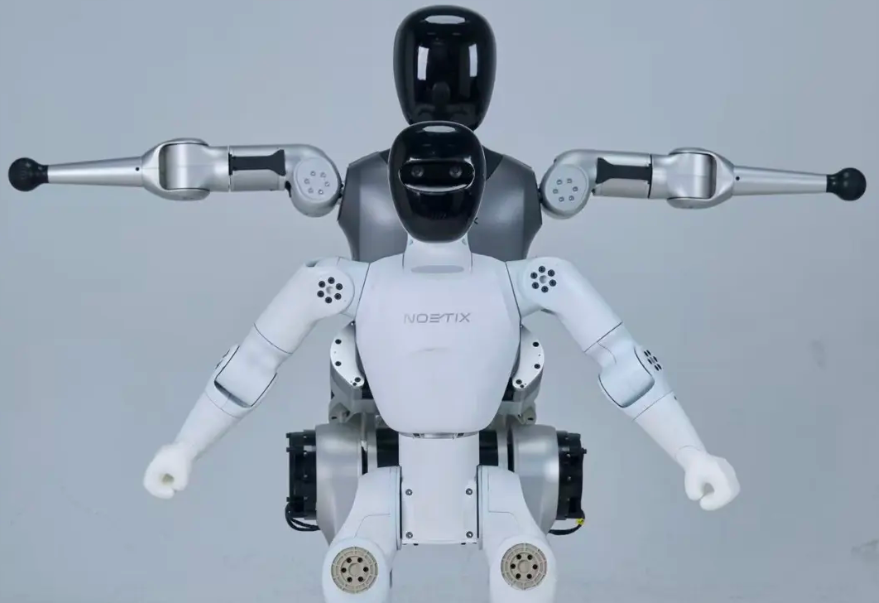
Source: Songyan Power
Songyan Power is the latest star company in embodied intelligence to secure 1 billion yuan in a Series B financing. In February, top companies such as Zhipingfang, Zhuji Dynamics, Lingxin Qiaoshou, and Xinghai Map also officially announced they had completed Series B financings of 1 billion yuan.
On February 23, AI²Robotics announced the successful completion of its Series B financing round exceeding RMB 1 billion. Investors in this round span internet and AI industry leaders, leading central SOEs, Tesla ecosystem leaders, strategic partners in application scenarios, deep-pocketed private equity funds, top-tier securities firm-affiliated funds, and local government funds—including Baidu, CRRC Capital, Yuxin Technology, Sailun Group, Yunbai Capital, and Guotai Haitong. The investor lineup is exceptionally prestigious.
In mid-February, Xinghai Tu and Lingxin Qiaoshou both received over 1 billion yuan in funding during their B-round financing. Among them, Lingxin Qiaoshou's financing amount even reached as high as 1.5 billion yuan, with investors including Daode Investment, Shengshi Investment, Yingyuan Puyuan Fund, Xinding Capital, Linyun Capital, and Eastern Epic Capitals from Singapore.
Behind Xinghai Tu are investment institutions including Jinding Capital, BAIC Industrial Investment, Meituan Longzhu, and Hillhouse Venture. After this round of financing, Xinghai Tu’s valuation has reached nearly RMB 10 billion, making it another “unicorn” in China’s embodied AI sector, following Unitree, Zhiyuan Robotics, and Galaxy General.
In early February, Zhujiji Power announced the completion of a $200 million B-round financing. The investors in this round include Al Maryah Capital from the UAE, Oriental Fuhai, Capital Stars, Tianchuang Capital, and Guofa Xinde, as well as strategic industry partners such as JD.com, Zhongdeng Co., Ltd., Guangyang Co., Ltd., and Dongtu Technology. Existing shareholders such as SAIC Shangqi Capital and NIO Capital also continued to increase their investments.
This shows that in the field of embodied robotics, RMB 1 billion has essentially become the entry threshold for Series B funding.
Two years ago, such a financing scale would have been sufficient to support a company from Series B to IPO; today, it is merely the baseline capital required to stay at the embodied robotics table.
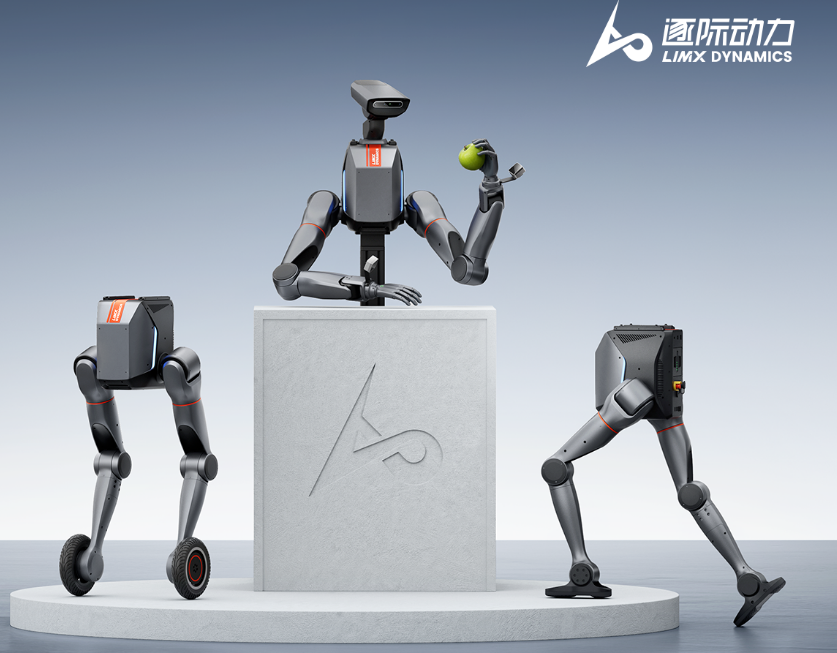
Image source: Zhujidongli
From the perspective of investors, industrial capital and state-owned capital have become the main forces in this round of financing. For example, CATL's investment in Songyan Power, JD.com and SAIC's heavy investment in Zhuji Power, BAIC and Meituan's increased investment in Xinghaitu, and Baidu Capital and CRRC Capital appearing on the shareholder list of Zhi Square, are all typical cases of deep participation by industrial capital.
These industry giants, leveraging their advantages in capital, supply chains, application scenarios, and technology ecosystems, not only provide financial support to embodied robotics companies but also offer end-to-end empowerment—from collaborative R&D to commercialization.
At the same time, the presence of state-owned capital has become increasingly active.
For example, the Jingguo Sheng Fund, which recently invested in Songyan Power, as well as Chengdu Science City Venture Capital and Kesheng Fund, backers of Zhi Pingfang. The entry of these state-owned capital investors not only demonstrates the government's strong support for embodied intelligence but also promises to provide stable resource support for the future development of companies in this sector.
By comparison, the share of pure financial investment is moving to a secondary position.
This change profoundly indicates that the "technological narrative" of embodied intelligence is being replaced by a "commercial narrative".
When industrial capital meets state capital at the table, what they bring goes far beyond financial figures, but rather a systematic set of resources from technological validation to scenario implementation.
What does a Series B funding round of over RMB 1 billion actually mean?
To understand the significance of this series B funding boom, it is necessary to examine it from both the perspectives of enterprises and capital.
From the corporate perspective, Series B financing is becoming a key "watershed" in the industry; from the capital perspective, this reflects the rapid increase in "certainty premium" for top-tier projects.
Looking at the corporate side, why does the B round become a "watershed"? The answer lies in the three aspects of technology, mass production, and business.
Technically, this is a life-and-death battle that opens up a "generation gap."
Behind this lies the continuous, substantial financial investment required for training VLA large models, building computing clusters, and accumulating data platforms.
Zhi Pingfang previously responded to completing 12 rounds of financing within a year by stating that the core objective was to "continuously widen the generational gap between GOVLA and its competitors." In the AI field, without such a generational gap, there is no pricing power.
In terms of mass production, this is the crucial leap from "sample" to "product."
Between a lab demo and a product that can be mass-produced, there are numerous hurdles such as supply chain integration, production processes, and yield control, each of which requires a significant amount of capital to overcome.
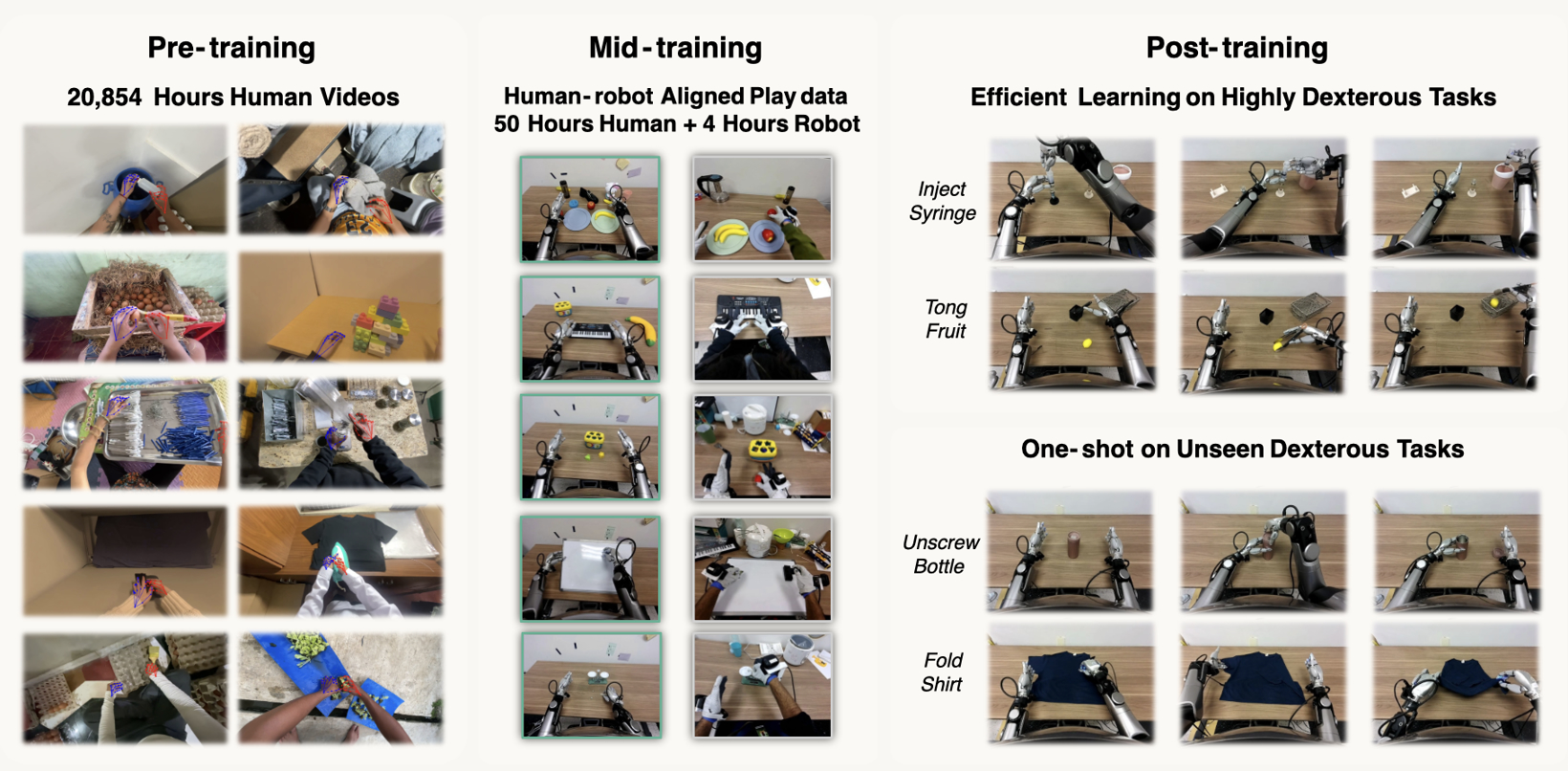
Image Source: StarSea Map
ZhiFangping clearly stated in its official announcement of the B-round financing that the funds from this round will be mainly used to maintain the leading position of the GOVLA embodied large model, and on this basis, drive the iteration and production line expansion of the AlphaBot (Aibao) series of robot products.
Lingxin Qiaoshou also stated that the funds raised in the Series B round will be invested in core product technology research and development, production capacity ramp-up, and the construction of full-stack foundational capabilities.
After all, without production capacity, technology cannot be implemented; and without substantial financial support, production capacity cannot be scaled up. It is precisely for this reason that the aforementioned analysts believe that 2026 will be the inaugural year for the large-scale commercial deployment of embodied robots—from laboratories to factories—with leading companies rapidly realizing productivity value.
In the business dimension, this is the ticket to obtain "verified orders".
At the current stage of the embodied intelligence track, the logic of capital has returned to its essence: only real orders can prove commercial value.
However, this is an industry that requires "upfront investment"—companies must first spend heavily to purchase the "entry ticket" into the core processes of the industry. Behind this ticket lies customized technology development, tailored production line modifications, deep alignment with pain points, and trust built through long-term collaboration.
Only after completing this step can one possibly secure a "validation order" that proves their commercial value, thereby closing the critical loop in commercialization.
More importantly, these orders are not only the source of corporate revenue, but also the key to initiating the "data flywheel" — acquiring data in real scenarios, feeding back to model iteration, and attracting more orders.
In short, this is a long-term race of “exchanging orders for data, and data for barriers.”
So, why are capital providers willing to offer such a high "certainty premium" at this stage?
Core logic is “strategic positioning.”
Source: BAIC Capital
For instance, CATL’s investment in Songyan Dynamics and JD.com’s investment in Zhuoji Dynamics not only provide substantial capital support to these enterprises but, to some extent, also represent purchasing future technologies through investment. Priority usage rights, buying the opportunity for deep scene integration, as currently, whether it's CATL's battery factory or JD.com's warehousing and logistics, they are the core commercial scenarios for embodied robots.
The entry of state-owned capital carries a stronger strategic intent for the industry.
National AI Industry Funds, Yizhuang State-owned Capital Investment, Hefei Innovation Investment, Shenzhen Capital Group, and other institutions frequently appear on shareholder lists—reflecting a dual mission: upward, supporting China’s national strategy to secure core competitiveness in future industries; and downward, fostering regional industrial clusters and cultivating long-term industrial ecosystems.
As for market-oriented funds, the logic is more straightforward—fear of falling behind among the leaders.
When resources accelerate their concentration toward market leaders, not investing in leading projects means potentially missing the entire sector. Moreover, rather than widely spreading investments across numerous projects at Series A—thus bearing higher uncertainty—it is more prudent to place substantial bets at Series B, when certainty has already become evident, even if it means paying a higher price for a more certain future. This approach is both a rational risk-mitigation strategy and an inevitable choice driven by the “winner-takes-all” effect.
Even some professional investment experts predict that the embodied intelligence industry will experience a pronounced “20-80 split” phenomenon in 2026. This means that a Series B round raising 1 billion RMB is not merely a financing event, but rather a ticket granting access to the next stage of competition.
Reshaping the landscape, the acceleration of track differentiation
If a $1 billion Series B financing round is an entry ticket, the next question to answer is: What battlefield awaits the companies that have secured this ticket? And what survival challenges will those players yet to enter face?
From the current situation, the competitive landscape of the embodied intelligence track is showing several clear evolving directions.
The migration of the focal point of competition is the most critical signal in this round of transformation.
In the past two years, the focus of the embodied robotics industry has mainly been on the "body," such as whether bipedal walking is stable, whether the degrees of freedom of the joints are sufficient, and whether the actions are executed smoothly. However, entering 2026, the focal point of industry competition is shifting toward the "brain" at an accelerated pace.
In recent months, several leading companies whose core competitive advantage lies in "embodied intelligence" have successively secured substantial funding—a clear and direct indication of this trend. This is because, as domestic robots have already achieved globally competitive hardware capabilities, the decisive battleground has naturally shifted to cognitive and generalization abilities—a pattern already thoroughly validated in the field of autonomous driving.
The differentiation in the pace of scenario implementation is also shaping different survival paths.
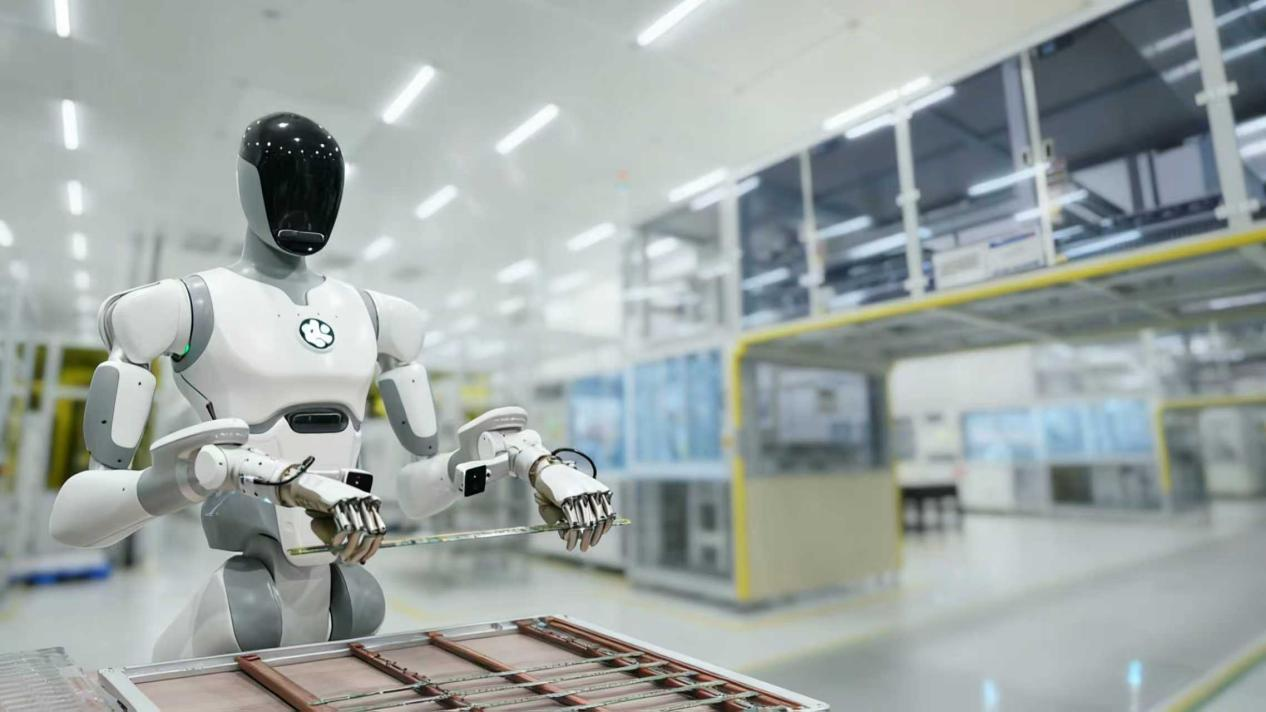
Image source: Zhisquare
Currently, industrial and specialized scenarios are on the verge of a small-scale breakout. For instance, in sectors such as automobile manufacturing, 3C electronics assembly, and warehouse logistics, customers demonstrate strong willingness to pay, tasks are highly standardized, and tolerance for errors is relatively high—these factors collectively position industrial scenarios as the “testing ground” where embodied intelligence is achieving its first breakthroughs.
By comparison, large-scale adoption in commercial and home settings still requires more patience.
Although the potential in fields such as elderly care and supermarket retail is significant, long-tail environments, complex tasks, and safety and ethical issues remain major obstacles on the path to commercialization.
Notably, divergence occurs not only among enterprises but also between expectations and reality.
Amidst the craze, perhaps a bit of calm is still needed.
Looking back at any major technological wave over the past decade, significant bubbles have often coexisted with enormous opportunities. Embodied intelligence is no exception—industrial inflection points and valuation bubbles are becoming the “two sides of the same coin” in this cycle.
Amid the controversy, many industry insiders agree that the embodied intelligence sector will see a clear divergence in 2026. Companies that only showcase their technology in laboratories without tying it to real-world applications will gradually feel the chill from the market — because capital will eventually realize that these technologies are just castles in the air.
Especially in this round of funding enthusiasm, capital itself also exhibits panic allocation — a fear of missing out on the era's opportunities, pushing up the valuations of some companies, making them deviate from their current revenue fundamentals. At the same time, structural issues such as huge long-term R&D investments and prolonged commercialization return cycles still exist, which have made the industry appear overheated. According to this analyst, based on this judgment, he predicts that capital will further concentrate on enterprises with actual implementation capabilities.
Just as the “warlord chaos” in the intelligent driving sector over the past decade has ultimately left only a few leading companies firmly seated at the table, the shakeout in the embodied intelligence has only just begun.
In the embodied robotics sector, the current Series B financing round—valued at over RMB 1 billion—is both a collective coronation and a silent elimination contest. While companies securing funding have undoubtedly obtained a ticket to the next stage, what follows will determine who can truly convert this capital into technological moats, mass-production capabilities, and commercial barriers to entry.
【Copyright and Disclaimer】The above information is collected and organized by PlastMatch. The copyright belongs to the original author. This article is reprinted for the purpose of providing more information, and it does not imply that PlastMatch endorses the views expressed in the article or guarantees its accuracy. If there are any errors in the source attribution or if your legitimate rights have been infringed, please contact us, and we will promptly correct or remove the content. If other media, websites, or individuals use the aforementioned content, they must clearly indicate the original source and origin of the work and assume legal responsibility on their own.
Most Popular
-

Middle East Tension Spikes Global Energy Pattern, Crude Oil and Plastic Industries Face Multiple Challenges
-
Middle East Tensions Escalate Sharply: How Polyolefins Respond Amid Soaring Risk Premium
-

Middle East Polymer Export Hub Hit in Sudden Attack, Global Supply Chain Sounds Alarm
-
[Forward-Looking Analysis] Impact of Escalating U.S.-Iran Tensions on Domestic Chemical Market
-

Futures Surge Violently, Polyolefin Spot Prices Rise Sharply in Tandem


