



Choose the right screw length-to-diameter ratio to find the balance between quality and cost
In the production process of modified plastics, the screw length-to-diameter ratio is a crucial parameter that directly affects the plasticizing quality, production efficiency, and the performance of the final product. Understanding the intricacies of the screw length-to-diameter ratio can help us make more precise decisions in daily production.
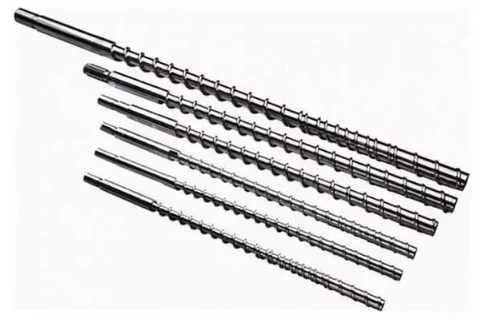
01
What is the screw length-to-diameter ratio?
Screw length-to-diameter ratio The screw is effective. The ratio of length to screw diameter,Typically expressed asL/DL represents the effective length of the threaded part of the screw, and D represents the diameter of the screw.
The length-to-diameter ratio is directly related to the residence time of the material in the screw, as well as the plastification quality and mixing effect. A larger length-to-diameter ratio and reasonable temperature distribution are beneficial for the mixing and plastification of plastics. At this time, the plastics are subjected to heat in the barrel for a longer period, resulting in more thorough and uniform plastification, thereby improving the plastification quality.
02
The selection of screw length-to-diameter ratio for different modified plastics?
Different plastic materials have varying requirements for the screw length-to-diameter ratio due to differences in their physical properties and processing characteristics.
Thermosensitive plastic:For plastics with poor thermal stability, such as rigid PVC, a length-to-diameter ratio of 17-18 is generally chosen to prevent decomposition due to excessively long residence times.
General-purpose plastics:Common plastics such as PE and PP usually choose a length-to-diameter ratio of 18-22.
High temperature stability plastic.For engineering plastics such as PC and POM, a length-to-diameter ratio of 22-24 can be chosen.
Flame-retardant polypropylene:When processing flame-retardant PP, the screw length-to-diameter ratio should ideally be controlled between 36:1 and 40:1.
Nylon PA:For injection molding, it is recommended to choose a mutant screw with a length-to-diameter ratio of 18-20.
Glass fiber reinforced material:For glass fiber reinforced thermoplastic resin composites, a length-to-diameter ratio range of 48:1 to 56:1 can be selected to improve the uniformity of glass fiber distribution in the resin.
03
The synergistic effect of the length-to-diameter ratio with other screw parameters.
The length-to-diameter ratio of the screw does not function independently; it needs to work in conjunction with other screw parameters to achieve the best modified plastic processing results.
Compression ratio:The compression ratio is the ratio of the depth of the last screw groove in the feed section to the depth of the first screw groove in the metering section. Different plastics require different compression ratios; for example, nylon PA injection molding generally uses a compression ratio of 3-3.5, while polypropylene requires 3.7-4.
Screw segmentation:The screw can be divided into the feeding section, plasticizing section, and homogenizing section based on its function. The distribution of the lengths of these three sections has a significant impact on the material's plasticizing quality. For amorphous plastics, the length of the plasticizing section is generally 45%-50% of the screw length; for crystalline plastics, it is (3-5)D; for nylon, it is (1-2)D.
Screw type:The gradual screw has a longer compression section, accounting for 50% of the total screw length, which allows for gentle energy conversion during plasticization and is mostly used for plastics with poor thermal stability such as PVC. The abrupt screw has a shorter compression section, accounting for 5%-15% of the total screw length, resulting in more intense energy conversion during plasticization and is mainly used for crystalline plastics such as polyolefins and PA.
04
The selection of the length-to-diameter ratio of a twin-screw extruder.
In the production of modified plastics, the twin-screw extruder is a more commonly used piece of equipment, and its length-to-diameter ratio is chosen differently from that of a single-screw extruder.
Commercial twin-screw extruders typically have an L/D ratio of 21-48. For processing heat-sensitive materials, granular materials, and products that do not require high quality (such as waste recycling and granulation), it is recommended to choose a smaller L/D ratio. A larger L/D ratio from 39 to 48 is more suitable for materials that require higher temperature, pressure, and product quality.
In recent years, twin-screw extruders with an ultra-high length-to-diameter ratio (exceeding 100) have also started to be applied in specific fields. For example, the research team led by Professor Wang Jian at Beijing University of Chemical Technology developed a co-rotating twin-screw extruder with a length-to-diameter ratio of 136, which has been successfully applied in the gel spinning of ultra-high molecular weight polyethylene (UHMWPE), demonstrating significant advantages in polymer chain disentanglement.
05
Principles of Choice in Practice
In the practical application of modified plastic production, the selection of the screw length-to-diameter ratio should follow the following principles:
Select according to material characteristics.Plastics with poor thermal stability should be selected with a smaller length-to-diameter ratio, while plastics with good thermal stability can be selected with a larger length-to-diameter ratio.
Choose according to product requirements.When the product quality requirements are not very high (such as recycling waste materials for granulation), a smaller screw length-to-diameter ratio can be selected; otherwise, a larger screw length-to-diameter ratio can be chosen.
Choose according to the form of the raw materials:For granular materials, the screw length-to-diameter ratio can be smaller due to plastification and granulation, while for non-plastified powdered materials, a larger screw length-to-diameter ratio is required.
Considering the overall production cost, although a larger aspect ratio may improve product quality, it can also increase equipment costs and energy consumption. A balance between product quality and cost needs to be found.
【Copyright and Disclaimer】The above information is collected and organized by PlastMatch. The copyright belongs to the original author. This article is reprinted for the purpose of providing more information, and it does not imply that PlastMatch endorses the views expressed in the article or guarantees its accuracy. If there are any errors in the source attribution or if your legitimate rights have been infringed, please contact us, and we will promptly correct or remove the content. If other media, websites, or individuals use the aforementioned content, they must clearly indicate the original source and origin of the work and assume legal responsibility on their own.
Most Popular
-

Mexico Imposes Tariff Up to 36% on Cross-Border E-Commerce Products, Effective January 1, 2026; Plastic Shows Partial Fluctuation Today
-
4.5 Million Tons! Wanhua Chemical Dominates Globally in MDI, Heavy Investment in Battery Materials Spurs New Storm
-

Trump Delays Tariff Increase on Furniture, Cabinets, and Vanities
-
Wanhua Chemical Invests $27.3 Billion, 2026 Investment Map Revealed, $1.1 Billion Bet on Battery Materials
-

Back-to-back major joker moves! covestro’s 1.32 million ton mdi dual-line expansion and hdi acquisition reshape global polyurethane landscape


