



Blockade Of Hormuz Strait, What Impact Will $7.6 Billion New Petrochemical New Materials Project Have
In February 2026, Rongsheng Petrochemical’s Jintang New Materials Project—totaling an investment of RMB 76 billion—is advancing rapidly, with full commissioning scheduled for 2028. Located on Jintang Island in Zhoushan, Zhejiang Province, the project covers an area of 11,188 mu and comprises the construction of 27 main production units and 16 utility facilities. It focuses on developing high-end new materials industries, including low-carbon polyolefins, high-performance resins, and biodegradable plastics.Its core production capacity includes 50,000 tons/year of ultra-high molecular weight polyethylene (UHMWPE) and 200,000 tons/year of polyolefin elastomer (POE), 1,000,000 tons/year of EVA, etc.,Aiming to enter high-end material fields such as robotics and new energy.It is expected to generate an annual revenue of 91.7 billion yuan after reaching full production.
Project Update: As of January 2026, the air separation and polyether polyol units have entered the equipment installation and commissioning phase. Participating contractors, including China National Chemical Engineering No. 2 Construction Company, are advancing critical path construction activities to prepare for the mechanical completion of certain units in 2026.
As of December 2025, the core equipment of the air separation system has been successfully hoisted, marking a critical phase in the construction project; the engineering design kick-off meeting for the POE unit was held in July 2024, and the overall project is progressing as scheduled.
——Iran announces the closure of the Strait of HormuzThe impact
On February 28, 2026, Iran announced the closure of the Strait of Hormuz, disrupting approximately 20% of global seaborne oil shipments.
The Strait of Hormuz blockade would have the greatest impact on Asian crude oil-importing countries. South Korea: 60% of its oil; China: 50% of its imported crude oil; Japan: 90% of its crude oil imports pass through the Strait of Hormuz.
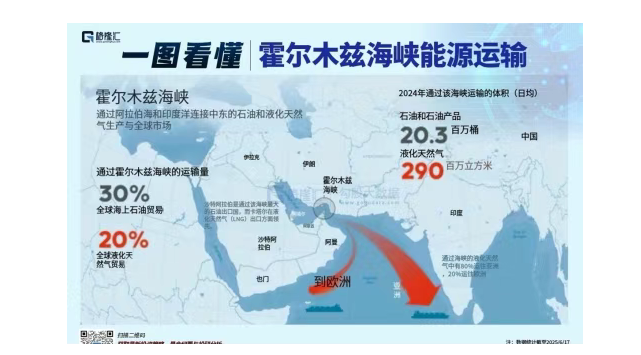
On March 2nd, international oil prices surged by 13% at the opening, with Brent crude oil briefly exceeding $82 per barrel. If the blockade continues, institutions predict that oil prices may climb to the range of $80-150 per barrel. This sudden geopolitical risk poses a potential direct impact on the Jintang project, which is highly dependent on oil-based raw materials.
The impact is mainly reflected in three aspects:
The first is the sudden increase in raw material cost pressureCrude oil is the source of basic chemical products such as olefins and aromatics; a sharp rise in oil prices will increase the costs of key raw materials for the project—naphtha, ethylene, and propylene. Although the project is designed with a large production capacity, encountering a high-price cycle for raw material procurement during the initial commissioning phase will directly squeeze profit margins.
Second, supply chain stability is under pressure.Rising oil prices are often accompanied by increased shipping costs and logistics delays. The large amount of imported equipment, catalysts, and some raw materials required for the Jintang project, if transported via the Persian Gulf route, may face longer transportation cycles and higher costs, affecting the construction schedule.
The third is the differentiation of product competitivenessThere is a 1-3 month lag in the transmission of oil price increases to chemical product prices, and the strength of downstream demand determines the transmission efficiency. High-end products such as UHMWPE and POE, due to their higher technological barriers, have relatively stronger cost transfer capabilities; however, if the terminal market (such as automobiles, home appliances) experiences weak demand, projects may still face the dilemma of "high costs, low selling prices."
However, Yahuajia Consulting’s research and analysis indicate that the project also possesses certain buffering conditions.
Second, the Zhoushan base is adjacent to Ningbo Zhoushan Port, and the logistics advantage helps reduce transportation risks.
Thirdly, high-end new materials have relatively high added value and are less sensitive to raw material costs compared to bulk chemicals.
However, from the company’s actual response, the impact has not yet been transmitted to its operations, and recruitment continues in an orderly manner.
Overall, the long-term competitiveness of the Rongsheng Jintang project hinges on its technological iteration speed and market expansion capability. Should the current geopolitical conflicts lead to a prolonged period of high oil prices, industry consolidation will accelerate, and domestic companies with diversified feedstock capabilities—such as those utilizing coal chemical routes—will gain a distinct competitive advantage.
The Strait of Hormuz carries about 20%-30% of global crude oil maritime trade daily (about 17 million to 20 million barrels). Among the major oil-producing countries such as Iran, Iraq, the UAE, Oman, Kuwait, and Saudi Arabia, oil is transported through the Strait of Hormuz, with Saudi Arabia having the largest volume.
【Copyright and Disclaimer】The above information is collected and organized by PlastMatch. The copyright belongs to the original author. This article is reprinted for the purpose of providing more information, and it does not imply that PlastMatch endorses the views expressed in the article or guarantees its accuracy. If there are any errors in the source attribution or if your legitimate rights have been infringed, please contact us, and we will promptly correct or remove the content. If other media, websites, or individuals use the aforementioned content, they must clearly indicate the original source and origin of the work and assume legal responsibility on their own.
Most Popular
-
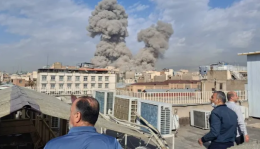
Middle East Tension Spikes Global Energy Pattern, Crude Oil and Plastic Industries Face Multiple Challenges
-
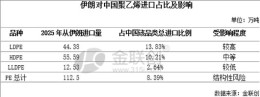
Middle East Tensions Escalate Sharply: How Polyolefins Respond Amid Soaring Risk Premium
-
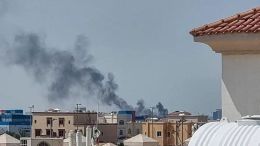
Middle East Polymer Export Hub Hit in Sudden Attack, Global Supply Chain Sounds Alarm
-
[Forward-Looking Analysis] Impact of Escalating U.S.-Iran Tensions on Domestic Chemical Market
-

Futures Surge Violently, Polyolefin Spot Prices Rise Sharply in Tandem


