



Baolvt's Three Major Technological Routes—Glycolysis, Microwave Alcoholysis, and Solvent Method
In the face of the challenge posed by hundreds of millions of tons of plastic waste generated globally each year, chemical recycling technology is seen as a key pathway towards a circular economy. Baolite employs three major technological approaches—glycolysis, microwave alcoholysis, and solvent method—to target PET, PP/PE, and composite and dyed plastics, respectively, achieving the conversion from waste plastics to high-quality recycled materials. These methods not only demonstrate advantages in terms of efficiency and energy consumption but also expand the boundaries of plastic recycling.
— 1 —
Challenges of Plastic Pollution and Opportunities of Chemical Recycling
Plastic products have become deeply integrated into modern life, but the environmental burden they bring is becoming increasingly severe. According to data from the United Nations Environment Programme, over 400 million tons of plastic are produced globally each year, but the recycling rate is less than 10%. A large amount of plastic waste is incinerated, landfilled, or enters the natural environment. The Organisation for Economic Co-operation and Development (OECD) predicts that by 2060, the amount of global plastic waste will nearly triple, while the recycling rate is unlikely to improve significantly.
In the face of this global challenge, the development of efficient and sustainable plastic recycling technologies has become key to solving the plastic pollution dilemma. Unlike traditional mechanical recycling, chemical recycling technology "restructures" plastic at the molecular level, enabling true closed-loop recycling and infinite regeneration, and is widely recognized as a core technological route for the future circular economy.
— 2 —
The three main chemical recycling technology paths of Baolv Tech.
01
Glycolysis method:
PET's "Molecular Rebirth"
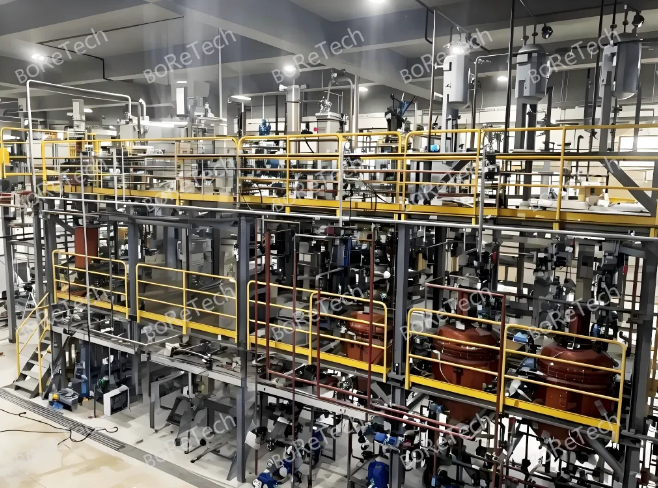
The glycolysis method is mainly used to process PET bottle flakes and polyester waste fibers, by reacting PET with ethylene glycol to produce the monomer BHET, achieving high-purity recycling of polyester materials. This process operates under mild reaction conditions, has low energy consumption, and requires simple equipment, making it economically feasible. During the reaction process, it can effectively remove dye molecules and heavy metal ions from PET, resulting in high-purity BHET that can be directly used in the polymerization production line for new PET, allowing for the re-production of bottles or fibers, thereby realizing a true "from waste to new" concept.
02
Microwave-assisted semi-chemical method.
Innovative breakthroughs with second-level response.
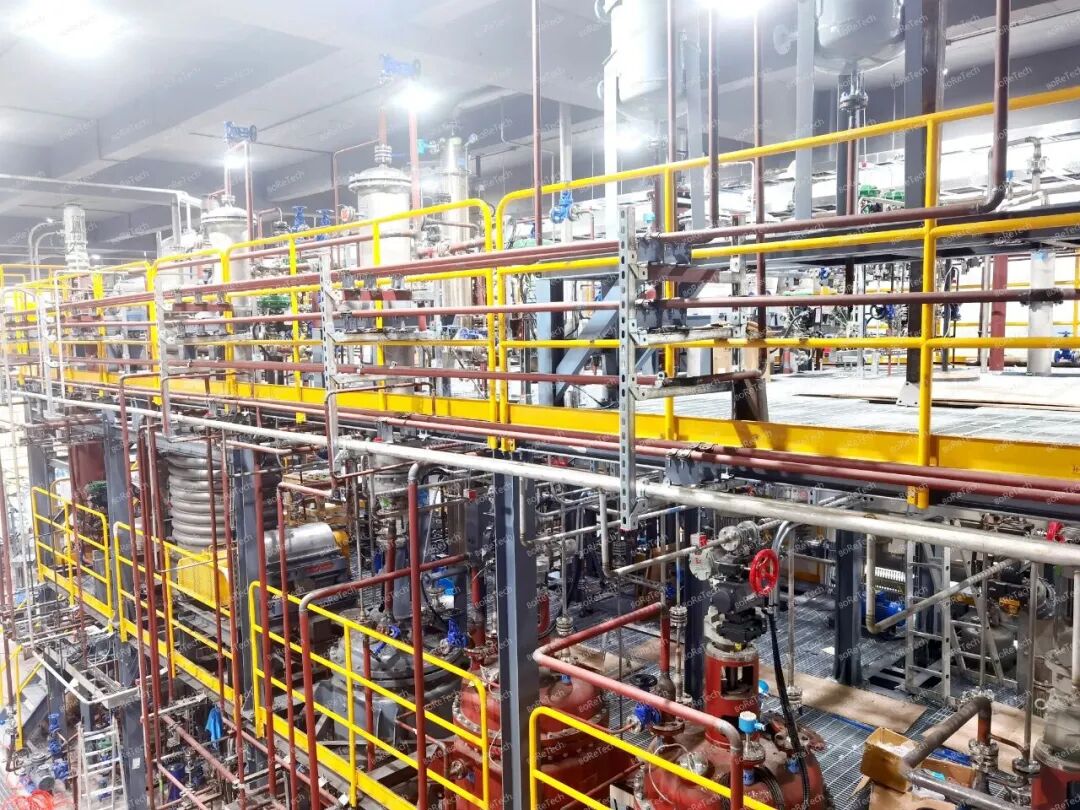
Baolvt's microwave glycolysis technology utilizes microwave energy to achieve a highly efficient reaction process, capable of rapidly depolymerizing PET fragments within 60 seconds, with speeds tens to hundreds of times faster than traditional methods. The advantages of this technology include compact equipment, low energy consumption, and a small footprint. The produced BHET oligomer can participate in the polymerization reaction along with PTA, resulting in recycled PET pellets that can match or even surpass the quality of virgin material, meeting food-grade bottle standards. This technology significantly reduces the production cost of high-quality recycled plastic, providing reliable support for brand enterprises to quickly increase the proportion of recycled material usage.
03
Solvent method:
Conquering the "last mile" of composite and dyed plastics.
For complex and difficult-to-separate PP, PE plastics, as well as composite packaging and dyed materials, Baoluite's solvent method demonstrates exceptional inclusiveness and purification capability. This technology achieves the separation of plastic substrates from pigments, additives, and impurities through processes of organic solvent dissolution, decolorization, filtration, and evaporation, ultimately obtaining high-purity recycled plastic pellets. The performance of the products approaches that of virgin materials and can be widely applied in high-end injection molding and packaging fields, truly expanding the technological boundaries of plastic recycling and providing a practical and feasible solution for "mixed plastics."
— 3 —
From Waste to Resource: The Green Engine of the Circular Economy
Through three technological routes—glycolysis, microwave alcoholysis, and solvent method—Baolvt has established a complete and efficient chemical recycling system, practicing the core concept of "giving plastics a new life." This approach views plastic waste as a reusable resource rather than a disposal burden.
With the global ban on plastics continuing to escalate and consumers' awareness of environmental protection steadily increasing, the demand for high-quality recycled plastics is rapidly growing. Baolvte provides solid technical support for the transformation of the plastic circular economy through innovative chemical recycling technologies, injecting new momentum into the construction of "waste-free cities." In the future landscape of the green industry, chemical recycling will no longer be just the endpoint for waste plastics, but rather the starting point for their new life cycle.
【Copyright and Disclaimer】The above information is collected and organized by PlastMatch. The copyright belongs to the original author. This article is reprinted for the purpose of providing more information, and it does not imply that PlastMatch endorses the views expressed in the article or guarantees its accuracy. If there are any errors in the source attribution or if your legitimate rights have been infringed, please contact us, and we will promptly correct or remove the content. If other media, websites, or individuals use the aforementioned content, they must clearly indicate the original source and origin of the work and assume legal responsibility on their own.
Most Popular
-

Mexico Imposes Tariff Up to 36% on Cross-Border E-Commerce Products, Effective January 1, 2026; Plastic Shows Partial Fluctuation Today
-
4.5 Million Tons! Wanhua Chemical Dominates Globally in MDI, Heavy Investment in Battery Materials Spurs New Storm
-

Trump Delays Tariff Increase on Furniture, Cabinets, and Vanities
-
Wanhua Chemical Invests $27.3 Billion, 2026 Investment Map Revealed, $1.1 Billion Bet on Battery Materials
-
Back-to-back major joker moves! covestro’s 1.32 million ton mdi dual-line expansion and hdi acquisition reshape global polyurethane landscape


