Alternative to Spandex? Good Fibes Develops New Bio-based Elastic Fiber Material
It is reported that Good Fibes, a startup operated by Tufts University and Argonne National Laboratory, is currently working on producing a biodegradable textile based on a silk elastin-like protein (SELP) analog.
The company was co-founded by two experienced scientists: Dr. Alexis N. Peña, who obtained his Ph.D. in Biomedical Engineering from Johns Hopkins University in May 2023, with over 10 years of research experience in tissue engineering and biomaterials at research institutions in the United States and the United Kingdom; and Dr. Lauren Blake, who earned her Ph.D. in Molecular Biophysics from Johns Hopkins School of Medicine in the same year, and holds a Bachelor's degree in Biomedical Engineering from the University of Cincinnati.
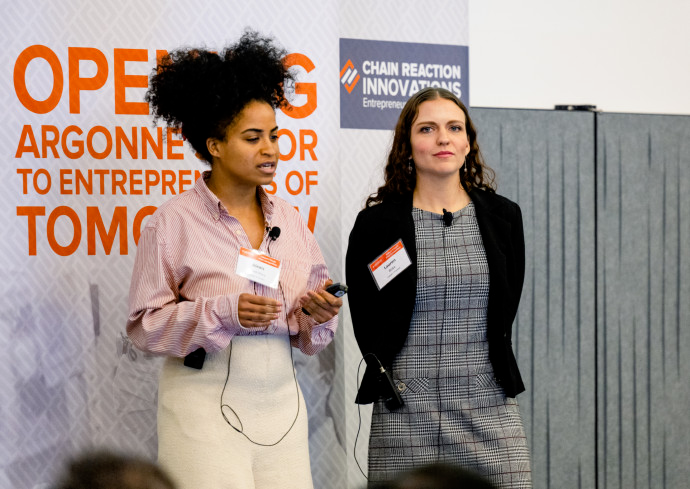
Alexis Peña and Lauren Blake
The production process of Good Fibes includes four key steps: producing proteins using engineered E. coli; converting the proteins into a gel-like material; spinning the gel into fibers through a wet spinning process; and processing the fibers into nonwoven fabrics or yarns for woven fabric production.
SELP materials combine the excellent properties of silk and elastin, allowing customization according to requirements such as tensile strength, dye affinity, and elasticity. The amino acid sequences of silk (such as glycine-alanine and glycine-serine) provide strength to the fibers, while the molecular structure of elastin offers elasticity. By combining these molecules like building blocks, it is theoretically possible to create an ideal elastic fiber.
However, despite the seemingly simple technical principles, scaling up production still faces significant challenges. For example, producing a test fabric requires at least 1 kilogram of microbial material. Additionally, the fibers need to have appropriate elasticity, durability, and moisture resistance. Good Fibes is attempting to address these issues by adding chemicals and exploring the use of plant-based proteins such as wheat gluten, which are more readily available in large quantities than bacterial sources.
The manufacturing process is the biggest obstacle for biotextile startups. Although many laboratories and startups have successfully created recombinant proteins with excellent properties, converting these proteins into usable fibers has proven to be a challenge. In 2022, Japanese biomaterials company Spiber opened a commercial facility using its fermentation process developed in 2007 to produce textiles from recombinant E. coli proteins. In 2023, after 16 years of prototyping, The North Face, Goldwin, Nanamica, and Woolrich became the first mass-market brands to sell clothing made from Spiber's protein textiles.
Good Fibes hopes to achieve similar success in the field of elastic fabrics. The company recently began experimenting with developing a nonwoven version of the textile, thanks to a $200,000 grant from the U.S. Department of Energy awarded to Peña in 2024.
【Copyright and Disclaimer】The above information is collected and organized by PlastMatch. The copyright belongs to the original author. This article is reprinted for the purpose of providing more information, and it does not imply that PlastMatch endorses the views expressed in the article or guarantees its accuracy. If there are any errors in the source attribution or if your legitimate rights have been infringed, please contact us, and we will promptly correct or remove the content. If other media, websites, or individuals use the aforementioned content, they must clearly indicate the original source and origin of the work and assume legal responsibility on their own.
Most Popular
-

Mexico Imposes Tariff Up to 36% on Cross-Border E-Commerce Products, Effective January 1, 2026; Plastic Shows Partial Fluctuation Today
-

[Overseas News] Sumitomo Chemical Acquires Solvay's LCP Business! SK Chemicals Builds Circular Economy Model For Waste Banners!
-

Trump Delays Tariff Increase on Furniture, Cabinets, and Vanities
-
4.5 Million Tons! Wanhua Chemical Dominates Globally in MDI, Heavy Investment in Battery Materials Spurs New Storm
-
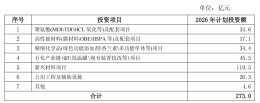
Wanhua Chemical Invests $27.3 Billion, 2026 Investment Map Revealed, $1.1 Billion Bet on Battery Materials