$60 billion petrochemical assets sold: Sinochem Exits Completely, CNOOC Completes Supply Chain, Plastics Industry Faces Major Restructuring
Recently, the energy and chemical sector witnessed a major restructuring announcement: Sinochem Group plans to sell its core refining and petrochemical asset, Sinochem Quanzhou Petrochemical Co., Ltd. (hereinafter referred to as "Sinochem Quanzhou Petrochemical"), to China National Offshore Oil Corporation (CNOOC) for RMB 60 billion.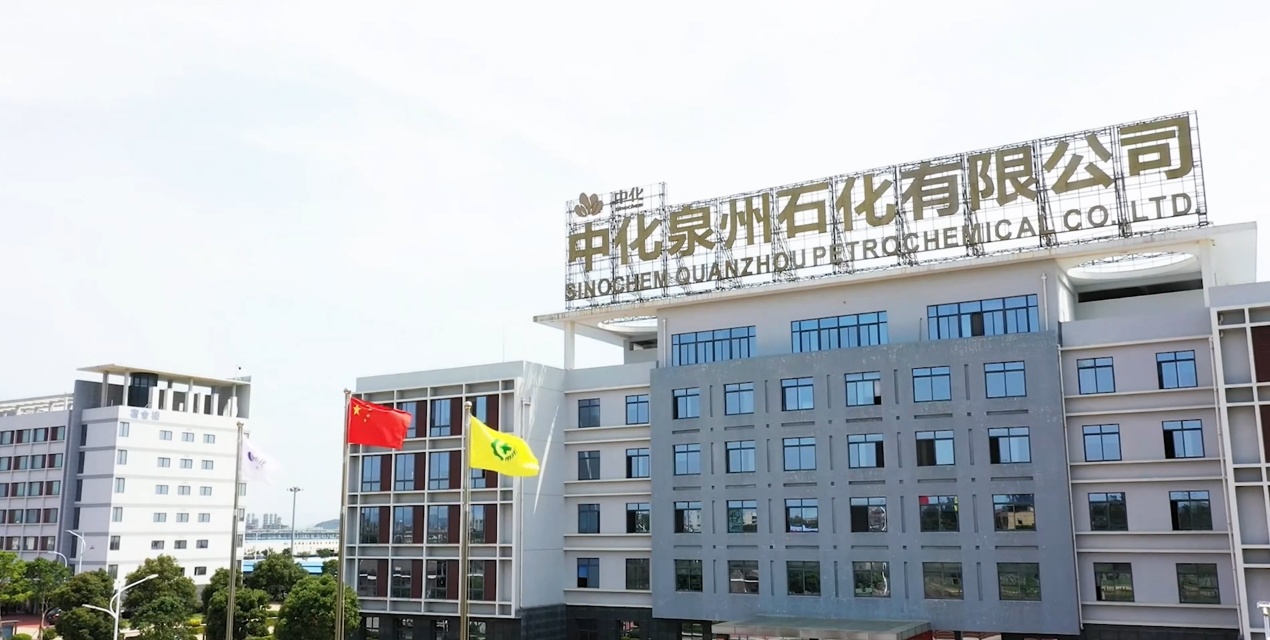
Image source: Screenshot from the official website video
According to the official website, Sinochem Quanzhou Petrochemical Co., Ltd. is a key enterprise under Sinochem Energy Co., Ltd., a subsidiary of China Sinochem Holdings Co., Ltd. Established in September 2006, the company has registered capital of RMB 23.6 billion and is located in the Quanhui Petrochemical Industrial Park, Hui’an County, Quanzhou City, Fujian Province, on the southeast coast of China. It is a large-scale integrated petrochemical enterprise engaged in petroleum refining, storage, transportation, and sales. Quanzhou Petrochemical has completed two phases of construction projects, with a current crude oil processing capacity of 15 million tons per year and an ethylene production capacity of 1 million tons per year. Its proprietary wharves have a total throughput capacity of 35.7 million tons per year.
This transaction is following the previous one.Sinopec and China National Aviation Fuel MergerSubsequently, this represents another critical move in the specialized integration of central state-owned enterprises, not only restructuring the competitive landscape of the refining and petrochemical industry but also triggering a chain reaction across the upstream-downstream deeply integrated plastic and chemical industry, propelling the entire industry to transition from the old model of scale expansion to a new stage of value-based competition.
1. A Perfect Match for Restructuring
The asset transaction between Sinochem and CNOOC has quickly come into the market's view, primarily because both parties have their own development needs, and it aligns with the overall trend of development in the refining, petrochemical, and plastic industries. It is a dual inevitable outcome of the strategic adjustment of central enterprises and the optimization of industry structure.
From the perspective of the industry's overall environment, the domestic refining and petrochemical industry has long left the stage of high-speed expansion. Overcapacity and homogenized competition have become prominent issues in industry development. After the peak of finished oil demand, the profit margin of traditional refining and petrochemical businesses has continued to shrink. It has become an inevitable trend for the industry to shift from "expanding scale" to "optimizing operations." At the same time, the layout of state capital in the refining and petrochemical sector suffers from a problem of fragmentation, with overlapping businesses among some central enterprises causing resource waste. The professional restructuring of central enterprises promoted at the national level aims, at its core, to consolidate similar businesses, concentrating resources in advantageous enterprises and core areas, enhancing the collaboration along the industrial chain. This has laid the policy and industry foundation for this transaction.
For Sinochem, the sale of Quanzhou Petrochemical is a strategic adjustment of "The final step。Quanzhou Petrochemical is the last piece of traditional refining and chemical assets under Sinochem, before which Sinochem had gradually divested other such assets.Shandong Changyi Petrochemical, Zhenghe Group, Huaxing PetrochemicalThree regional refinery assets, collectively representing tens of millions of tons of refining and petrochemical capacity, are being divested. Traditional refining and petrochemical operations have extremely low alignment with Sinochem’s core strategic direction, not only tying up significant capital and management resources but also dragging down the group’s overall return on assets. Against the backdrop of industry-wide overcapacity, their operational performance has also failed to meet strategic expectations, making the divestment of these refining assets and moving forward with a leaner portfolio an inevitable choice.
CNOOC’s demand lies in addressing the weaknesses in its industrial chain.As China’s largest offshore oil and gas producer, CNOOC possesses significant upstream resource advantages: its crude oil production reached 1.36 million barrels per day in 2025, accounting for two-thirds of China’s incremental domestic output, with a low breakeven cost of only $28 per barrel. However, insufficient downstream refining and petrochemical capacity has long been a “weak link” constraining its development. Consequently, a large portion of its self-produced crude oil must be sold externally, preventing the company from fully realizing the value along its industrial chain. The absence of refining and petrochemical capabilities also places CNOOC at a disadvantage relative to CNPC and Sinopec in competitive positioning, making it imperative to acquire high-quality assets to fill this gap and build a vertically integrated, competitive industrial chain.
Sinochem Quanzhou Petrochemical is precisely the best choice for CNOOC to strengthen its supply chain. This facility has a total investment exceeding 60 billion.billion-yuan refining and chemical base, with a capacity of 15 million tonsTen thousand tons/Annual refining capacity: 100Ten thousand tons/Ethylene, 8010,000 tons/Annual aromatics capacity, with a supporting 26ten thousand tons/Annual and other high-value-added facilities—these products are core basic raw materials for the plastics and chemical industry. Their leading technological capabilities, prominent geographical advantages, and scarce export quotas can rapidly address CNOOC’s shortcomings in downstream refining, petrochemicals, and advanced chemical materials, thereby achieving a closed-loop industrial chain layout.
2. Sinochem bids farewell to refining and focuses on advanced new materials
After selling its Quanzhou Petrochemical business, China National Chemical Corporation (ChemChina) will completely exit the traditional refining and petrochemical sector. This decision was not made on an ad-hoc basis but was established as a core development strategy following the merger of Sinochem Group and China National Chemical Corporation in 2021—to build a world-leading materials science enterprise, with high-end new materials in the plastics and petrochemical industry becoming the central focus of Sinochem’s strategic transformation.
Currently, Sinochem Group has multiple material companies, such as Sinochem International (600500.SH), Jiangsu Yangnong Chemical Group, Sinochem Saintau Chemical Technology, Nantong Star Synthetic Materials, Sinochem Fibers, Sinochem Blue Group, LuXi Chemical Group (000830.SZ), Cangzhou Dahua Group (600230.SH), Hao Hua Technology (600378.SH), Shenyang Chemical (000698.SZ), China National Chemical Research Institute of Sinochem, Sinochem International New Materials (Hebei) Co., Ltd., Jiangxi Lanxing Organic Silicon.Elkem SiliconesEquity (Eckel Silicon is currently in the process of being strategically acquired by CSC, a subsidiary of Sinochem Group, for its core assets in the silicone business, with the transaction expected to be completed by the end of April to early May 2026).

Image source: official website
This asset divestiture will enable Sinochem to recoup billions of funds for its new materials layout, further solidifying its development foundation and allowing the company to concentrate resources on its core business. In terms of specific business layout, Sinochem will fully focus on high-end categories in the plasticization field, such as epoxy resins, engineering plastics, para-aramid, and special rubbers. These are areas with a high degree of import dependence in China's plasticization industry and are also key materials in high-end manufacturing sectors like new energy, automobiles, and electrical electronics, aligning with the country's transformation direction towards high-end and high-value-added chemical industries.
In the future, Sinochem will completely transform from a traditional refining and petrochemical company into a high-end new materials supplier, forming a distinct development path compared to CNPC and Sinopec. The company will reduce its investment in basic refining and petrochemical raw material production, focusing its core efforts on the research and production of high-value-added downstream products in the plastic and chemical industry. It will accelerate the domestic substitution of high-end plastic products such as POE and special polypropylene, becoming an important driving force for the high-end transformation of China's plastic and chemical industry.
3Is Quanzhou Petrochemical worth taking over?
Taking over Quanzhou Petrochemical of Sinochem is a crucial step for CNOOC to achieve a full industrial chain layout of "upstream resources - midstream refining and chemical - downstream chemical new materials". Its core planning focuses on "strengthening weaknesses, enhancing synergy, and improving efficiency". Leveraging its upstream resource advantages, combined with the refining and plastic raw material production capacity of Quanzhou Petrochemical, it aims to create an integrated industrial layout. At the same time, it further consolidates its market position in the field of basic plastic raw materials, becoming a stable supplier of raw materials for the plastic industry.
First, achieve direct supply of self-produced crude oil to reduce the cost of plastic raw materials. CNOOC will establish a "upstream offshore oil production - midstream coastal refining" channel, directly supplying the self-produced crude oil, which was originally sold externally, to Quanzhou Petrochemical, significantly reducing the cost of crude oil procurement. As crude oil is the source of core basic raw materials for ethylene, aromatics, and propylene, the reduction in raw material costs will directly affect the downstream production of plastic raw materials, enhancing the profit margin and market competitiveness of products such as acrylonitrile, polyethylene, and polypropylene.
Secondly, building two refining and petrochemical bases to strengthen the supply capacity of petrochemical raw materials. After taking over the Quanzhou Petrochemical Company, CNOOC will form a dual refining and petrochemical base layout in Huizhou and Quanzhou, comprehensively covering the core consumption areas in South China. The Huizhou Petrochemical Area has already established a mature petrochemical new materials industrial chain, with an annual refining capacity of 22 million tons and an ethylene production capacity of 3.8 million tons. The Quanzhou Petrochemical Company has an ethylene capacity of 1 million tons per year and an acrylonitrile capacity of 260,000 tons per year. After forming synergies, the two bases will significantly enhance CNOOC's supply scale of basic petrochemical raw materials such as ethylene, propylene, and aromatics, becoming an important supplier in the domestic petrochemical raw materials market.
It is worth noting that Quanzhou Petrochemical is itself a high-profitability, high-quality asset, and in 2025…Annual revenue has reached 621.55hundred million yuan, truly a “cash cowIts advanced technology and convenient logistics can enable CNOOC's layout to be quickly implemented without the need for additional investment in significant renovations and upgrades.
4. The plastic industry is undergoing restructuring, moving towards high-quality development.
The recent RMB 60 billion restructuring between Sinochem and CNOOC, while appearing to be an internal adjustment within the refining and petrochemical sector, has in fact brought about comprehensive structural changes across the closely integrated plastics and chemicals industry. It has reshaped the raw material supply landscape, redefined market competition dynamics, and redirected the industry’s development trajectory, thereby laying a solid foundation for the high-quality growth of the plastics and chemicals sector.
In the raw material supply side, concentration and stability have both improved. After CNOOC became the operator of Quanzhou Petrochemical, it stabilized the basic raw material supply for petrochemicals by leveraging its integrated industry chain advantages. Combined with the elimination of outdated production capacity in the industry, the supply structure of core raw materials such as ethylene and propylene in China has been optimized, solving supply fluctuations caused by the disorderly production of small refineries. At the same time, CNOOC's self-produced crude oil directly supplied to the plants reduces costs, benefiting downstream petrochemical companies in improving their profitability.
On the industrial development front, integration and specialization have become mainstream trends. Central SOEs’ restructuring has clarified industrial directions: integrated layouts featuring upstream refining and petrochemicals extending downstream into new materials, and downstream enterprises moving upstream; alongside high-end, specialized layouts exemplified by Sinochem, these have become core development pathways for enterprises. Private refineries and plastic-chemical enterprises face increasingly intense competition, with tightening raw material supply compelling them to transform toward larger scale, standardization, and high-end upgrading, thereby accelerating industry consolidation.
Globally, China's plastic industry is enhancing its international discourse power. With the reduction of refining and chemical production capacities in Europe, Japan, and South Korea, China is boosting its global position through structural optimization and industrial chain integration. CNOOC ensures the stability of raw material supply and cost advantages, while Sinochem fills the gap in high-end technology. The complementarity between the two promotes the industry's transition from "dispersed and weak" to "concentrated and strong," not only meeting the demands of domestic high-end manufacturing but also enhancing export competitiveness.
Overall, this asset restructuring is an inevitable step in optimizing the energy and chemical industry structure and presents an opportunity for the high-quality development of the plastics and chemical industry. With deepening central SOE integration and the advancement of corporate strategies toward high-end and integrated operations, China's plastics and chemical industry will transition from reliance on imported raw materials to self-reliance and from scale expansion to value enhancement, entering a new, more sustainable phase of development.
Editor: Lily
Source: Hizine Information, Petrochemical Industry Record, DT New Materials, etc.
【Copyright and Disclaimer】This article is the property of PlastMatch. For business cooperation, media interviews, article reprints, or suggestions, please call the PlastMatch customer service hotline at +86-18030158354 or via email at service@zhuansushijie.com. The information and data provided by PlastMatch are for reference only and do not constitute direct advice for client decision-making. Any decisions made by clients based on such information and data, and all resulting direct or indirect losses and legal consequences, shall be borne by the clients themselves and are unrelated to PlastMatch. Unauthorized reprinting is strictly prohibited.
Most Popular
-

Middle East Tension Spikes Global Energy Pattern, Crude Oil and Plastic Industries Face Multiple Challenges
-
Middle East Tensions Escalate Sharply: How Polyolefins Respond Amid Soaring Risk Premium
-

Middle East Polymer Export Hub Hit in Sudden Attack, Global Supply Chain Sounds Alarm
-
[Forward-Looking Analysis] Impact of Escalating U.S.-Iran Tensions on Domestic Chemical Market
-

Futures Surge Violently, Polyolefin Spot Prices Rise Sharply in Tandem