



Why are some flame retardants carcinogenic while others are safe?
Have you ever thought about this question:Why are some substances called "flame retardants" listed as carcinogens and banned globally, while others can be safely used in food packaging? Why is it sufficient to add 5 parts of some substances, while others require 60 parts? Why do export products need to specifically check regulations?
In fact, the key lies in—They belong to different "families".Understanding classification is the first step in choosing the right flame retardant.
Today, we will explain the entire family of flame retardants, from their principles to their safety, all at once.
1. First understand: how do flame retardants "extinguish" fires?
Before discussing the classification, let’s first quickly understand how flame retardants work. Combustion is the result of three conditions coming together:Fuel + Oxygen + HeatThe essence of flame retardants is to...Think of a way to disrupt the "fire triangle"。
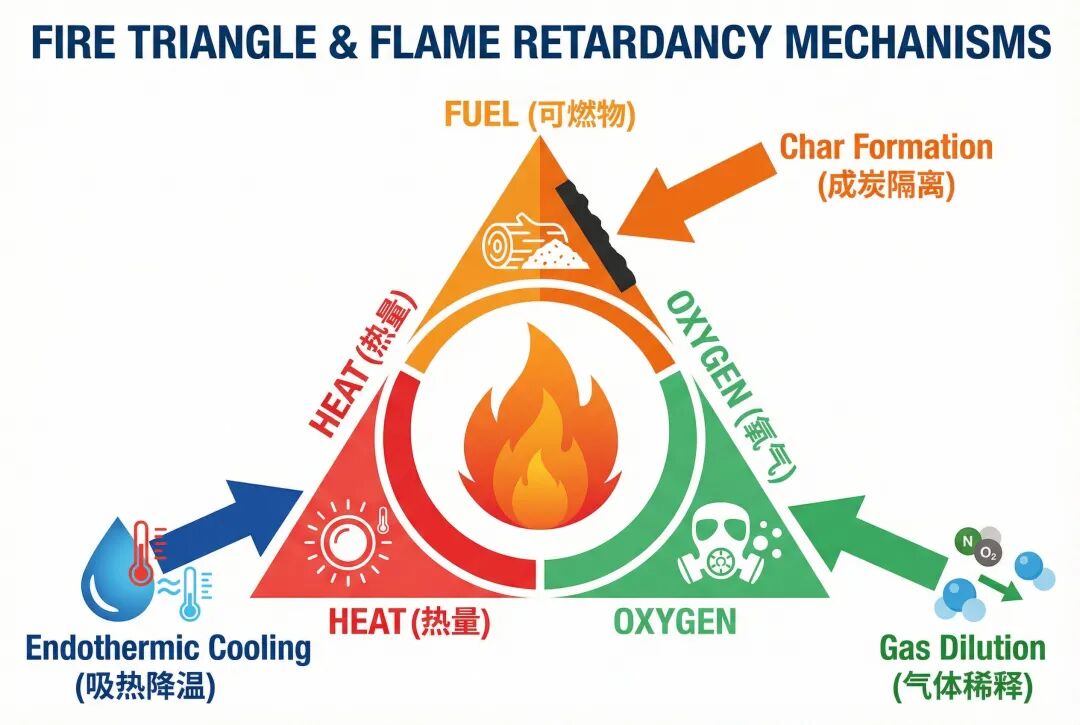
Figure 1 | The Fire Triangle and the Three Major Mechanisms of Flame Retardants
Different families of flame retardants each have their own “specialty” in extinguishing fires:
Gas-phase flame retardancy: releasing free radicals in the flame that "steal" the active substances sustaining combustion, interrupting the combustion chain reaction at its source. Flame retardants are typical representatives.
Cohesive phase flame retardancy: A dense carbonization protective layer forms on the surface of the material, isolating heat and oxygen. Flame retardants are experts.
Heat absorption + dilution: Decomposes to release a large amount of water vapor while absorbing heat and diluting the oxygen concentration.Inorganic systemTheir ATH and MDH rely on this very trick.
💡Core Concept: There Is No “Universal Flame Retardant”
Each flame retardant has its own unique "fire-extinguishing method" and "temperament."The Essence of SelectionBased on your material system, processing conditions, flame retardant requirements, and regulatory constraints, find the most suitable one.
A Visual Guide to Flame Retardant Classification
This classification tree is the “panoramic map” for understanding the flame retardant family: four major families, each with its own branches. Keep this chart in mind, and the logic of selection will become clear.
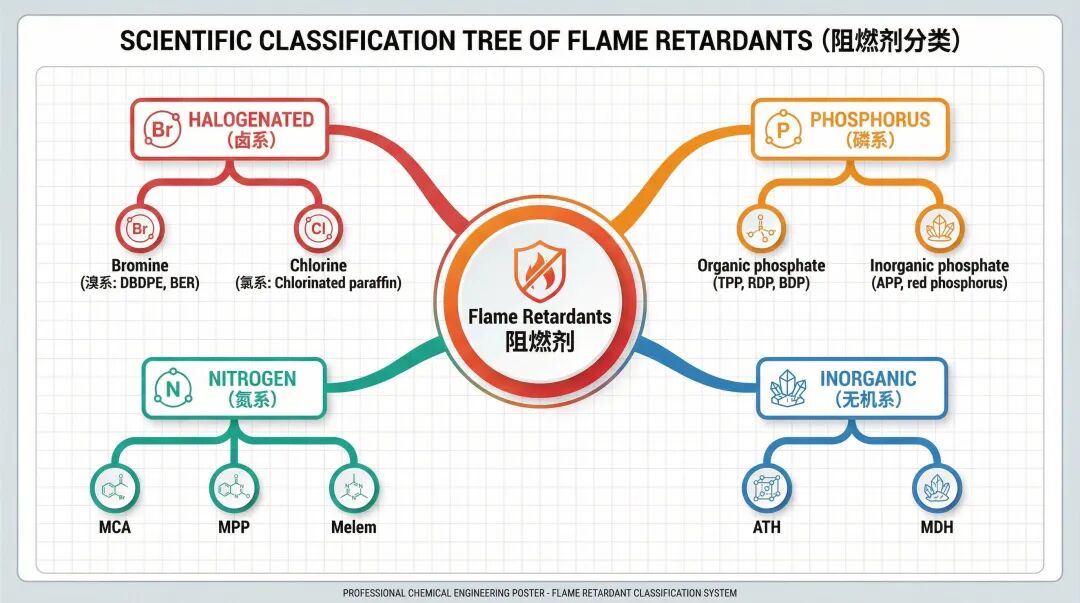
Figure 2 | Classification Tree of the Four Major Families of Flame Retardants
Core question: Why are some carcinogenic while others are safe?
Returning to the question in the title—Similarly, why is the safety of flame retardants different?What a world of difference?
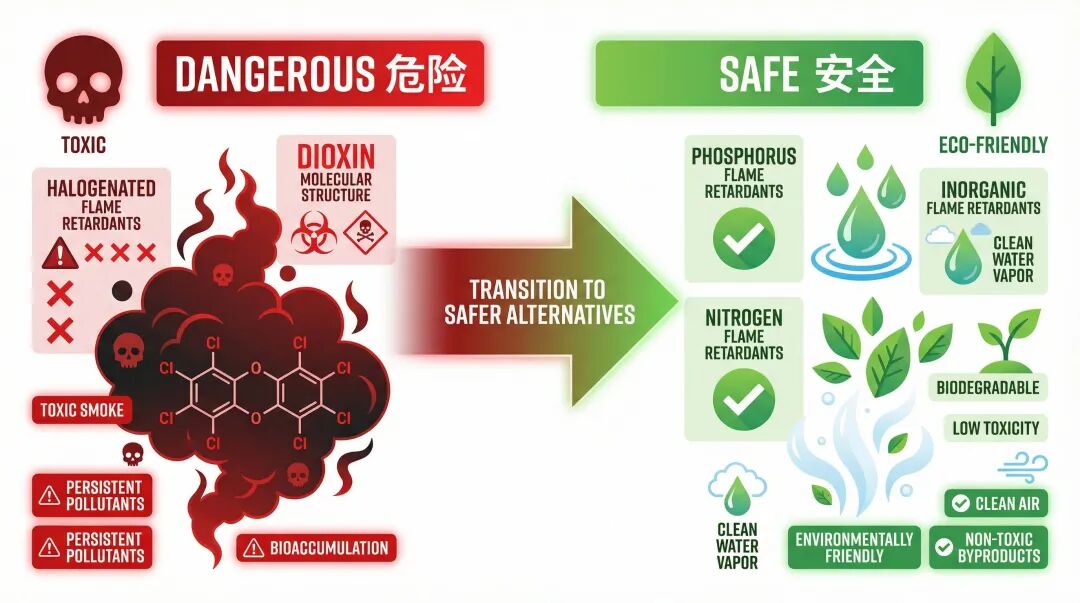
Figure 3 | Safety spectrum of flame retardants: from “hazardous” to “safe”
The answer is hidden inChemical structureInside. In short:
The issue with halogen-based systems (especially brominated aromatics) is that certain compounds (such as polybrominated diphenyl ethers, PBDEs) can generate at high combustion temperatures.Polybrominated dibenzo-p-dioxins and dibenzofurans (PBDD/PBDF)These substances are highly carcinogenic and bioaccumulative, and once released into the environment, they are extremely difficult to degrade. In addition, they are alsoPersistent Organic Pollutants (POPs)In the food chain, it continues to accumulate.
The safety advantages of phosphorus-based, nitrogen-based, and inorganic systems lie in the fact that their combustion products are mainly phosphates, nitrogen gas, and water vapor.Non-toxic or low-toxicThese substances do not generate highly toxic dioxin-like compounds, nor do they persist and accumulate in the environment. Among them, the inorganic types (ATH/MDH) are even safe enough for use in food-contact materials.
⚠️ Key distinction
Not all halogenated compounds are “carcinogenic,” nor are all phosphorus-based compounds “safe.” For example:
· DBDPEDecabromodiphenyl ethane does not produce dioxins, but becausePBT(Persistent, Bioaccumulative, and Toxic Substances),vPvBListed as an SVHC due to its very persistent and very bioaccumulative (vPvB) properties.
· TCEP(Tris(2-chloroethyl) phosphate), although it is a phosphorus-based compound, contains chlorine and has reproductive toxicity, and has been restricted under REACH.
Safety depends on the specific variety and cannot be generalized.
01 Halogenated Flame Retardants - The King of Efficiency, The Most Controversial
Halogenated Flame Retardants (Brominated + Chlorinated) | Primarily Gas-Phase Flame Retardant Mechanism
Halogen-based flame retardants areFlame retardant effectHighest rateA class of flame retardants that can achieve a high flame-retardant rating with only a very small amount added. The principle is that, at high temperatures, they release halogen radicals (Br·, Cl·), which interfere with the combustion chain reaction, making it impossible for the flame to sustain itself.
It is the most widely used because the atomic radius and bond energy of bromine are just in the "comfort zone"—they have sufficient flame retardant activity without being too easily decomposed like iodine.
Characteristics of halogenated flame retardants
Common addition amount: 5%–20%
Main mechanism: gas-phase free radical capture
Representative varieties: Decabromodiphenyl ethane, Octabromo diphenyl ether, Brominated triazine, Brominated epoxy, Brominated styrene
Environmental Rating: Highest Pressure
Typical Application Scenarios
Wires and cables (some), housings for home appliances (ABS/HIPS), electrical switches, electronic connectors, building materials, etc. However, in fields with stringent halogen-free requirements (rail transit, public transportation), it is being replaced.
⚠️ Carcinogenic Risk Interpretation
Varieties that have been listed in the restriction or prohibition list of the Stockholm Convention:
· Polybrominated biphenyls (PBB)Carcinogen, banned worldwide
· Polybrominated diphenyl ethers (PBDEs)Persistent Organic Pollutants, RoHS restriction <0.1%
· Decabromodiphenyl ether (DecaBDE)High temperatures can produce polybrominated dioxins.
· Short-chain chlorinated paraffins (SCCPs)Listed in Appendix A of the Prohibited List.
Common characteristics of these varieties:Containing an aromatic ring structure Carbon chain is too shortThe combustion/degradation products are carcinogenic and bioaccumulative.
Key points:If halogenated substances must be used, prioritize DBDPE (does not produce dioxins but has been listed as an SVHC) or brominated epoxy resin (BER; the reactive type is safer). For exported products, be sure to check the latest REACH and RoHS lists. Avoid using them if possible.
02
02 Phosphorus-Based Flame Retardants — Mainstream Halogen-Free, Versatile and Multifunctional
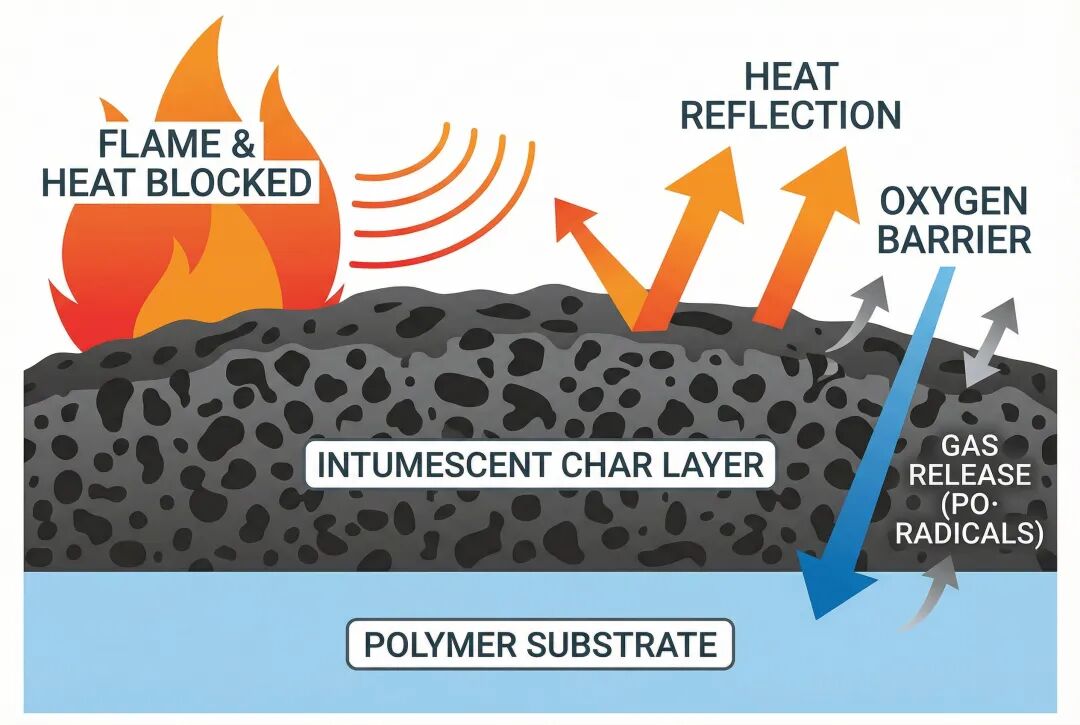
Figure 4 | Schematic illustration of the condensed-phase charring mechanism of phosphorus-based flame retardants
Phosphorus-based flame retardants (organic phosphorus + inorganic phosphorus)
Phosphorus-Based Flame Retardants | Dual Mechanism in Both Condensed Phase and Gas Phase
Phosphorus-based is currentThe absolute main force of halogen-free flame retardancyThe strength lies in the "dual approach."Condensed phasePromotes the formation of a carbonized insulating layer on the material surface. Release PO· radicals to inhibit the combustion chain reaction.
Family prosperity and thriving offspring: phosphate esters (TPP, RDP, BDP) combine flame-retardant and plasticizing functions and are commonly used in engineering plastics such as PC/ABS; ammonium polyphosphate (APP) is the core “acid source” in intumescent flame-retardant systems; DOPO and its derivatives are widely used in epoxy resins and copper-clad laminates.
Characteristics of Phosphorus-based Flame Retardants
Recommended usage level: 15%–30%
Main mechanisms: condensed-phase charring + gas-phase inhibition
Representative types: TPP, RDP, BDP, APP, DOPO
Environmental Rating: ✅ Relatively Friendly
Typical application scenarios
PC/ABS alloy (TPP/RDP/BDP), PPO/HIPS (RDP), epoxy resin copper-clad laminates (DOPO), polyurethane foam (APP expansion system), textile coatings (APP), etc.
⚠️ Please pay attention to distinguishing the variety.
Some organophosphate esters contain chlorine and are toxic.
· TCEPTris(2-chloroethyl) phosphate: Reproductive toxicity; restricted under REACH.
· TDCPThere is controversy over endocrine disruption.
These chlorinated phosphate esters are essentially "pseudo-halogen-free" and must be avoided when selecting materials.
💡 Security Summary:Mainstream products such as TPP, RDP, BDP, APP, and DOPO have good safety profiles, and their combustion products are low-toxicity phosphate substances. Phosphorus-based flame retardants represent a transition from “toxic” halogen-based systems toward “non-toxic” alternatives.Best Balanced Choice。
03 Nitrogen-Based Flame Retardants — Eco-Friendly Guardians, Skilled at Collaboration
Nitrogen-based flame retardants (melamine and its salts) | Endothermic + Expansion + Dilution
The nitrogen family is a "low-profile but useful" family. The principle is that during high-temperature decomposition,Absorb heat and cool downMeanwhile, it releases large amounts of nonflammable gases such as ammonia (NH₃) and nitrogen (N₂), which dilute the concentrations of oxygen and combustible gases.
The truly impressive thing about the Nitrogen series lies in its ability toSynergistic effect—When compounded with phosphorus-based components to form an “intumescent flame-retardant (IFR) system,” it can generate a char layer that expands by tens of times, delivering flame-retardant efficiency far superior to that achieved when each is used alone. MCA (melamine cyanurate) is one of the most commonly used nitrogen-based flame retardants for PA6/PA66.
Characteristics of nitrogen-based flame retardants
Common addition amount: 10% ~ 25%
Main mechanisms: endothermic decomposition + gas dilution
Representative varieties: MCA, MPP, Melam, and Melem
Environmental rating: ✅ Very friendly
Typical Application Scenarios
Nylon 6/Nylon 66 (MCA is the most classic), polyurethane foam (MPP), epoxy resin, phenolic resin, wire and cable sheaths, automotive interiors, etc. When compounded with phosphorus-based systems, the application range is broader.
💡 Safety Summary:The combustion products of nitrogen-based flame retardants are nitrogen gas and water vapor.Extremely low toxicity…is one of the safest families of organic flame retardants. Adding 15-20% MCA to a PA system can achieve a V-2 rating; to reach a V-0 rating, it usually needs to be compounded with phosphorus-based flame retardants or the addition amount needs to be increased to above 25%.
04 Inorganic Flame Retardants — Safe, Non-Toxic, and Effective in Large Quantities
Inorganic flame retardants (mainly ATH + MDH) | Heat absorption + Dilution + Char formation
Aluminum hydroxide (ATH) and magnesium hydroxide (MDH) are the "twin stars" of inorganic flame retardants, and are alsothe most widely used in the worldcategory of flame retardants. The principle is the most “straightforward”:Heating decomposition, endothermic cooling, releasing water vapor。
ATH is under contract. Translate the above content into English; output only the translation result, with no explanation.210°CDecomposition (endothermic 1.051 kJ/g), MDH at approximately330°Cdecomposition (endothermic, 1.316 kJ/g). However, both requireAdd in large quantities(40%–60% or even higher) is required to achieve effective flame retardancy, which poses significant challenges to the mechanical properties and processing flowability of the material.
Characteristics of Inorganic Flame Retardants
Common addition amount: 40% ~ 60%
Main mechanisms: endothermic reaction + water release dilution
ATH decomposition temperature: ~210°C
MDH decomposition temperature: ~330°C
Typical application scenarios
Wire and cable (the main force of low-smoke, halogen-free standards): EVA cable material uses ATH, and cross-linked PE uses MDH. It is also widely used in building insulation materials, rubber products, silicone rubber, etc.
💡 Safety Summary:The inorganic system is in the flame retardants.Maximum safetyfamily. The combustion products are only water vapor and metal oxides (aluminum oxide/magnesium oxide), completely non-toxic, and can even be used forFood contact materialsThey are the very opposite of “carcinogenic” — the absolute benchmark of safety.
Comparison of Security among the Four Major Families
|
|
|
|
|
|
|---|---|---|---|---|
| Carcinogenic/Toxicity Risk |
|
|
|
|
| Flame-retardant efficiency | ★★★★★ | ★★★★ | ★★★ | ★★ |
| Amount to be added |
|
|
|
|
| Toxicity of combustion products |
|
|
|
|
| Environmental persistence |
|
|
|
|
| Regulatory Trends |
|
|
|
|
|
|
|
|
|
|
| Typical substrate |
|
|
|
|
06 Regulatory Trends: Halogen-Free Is an Irreversible Direction
Global regulations on flame retardants continue to tighten. The following are key regulatory milestones in recent years:
RoHS Directive (ongoing implementation)
The content of PBB and PBDE shall not exceed.0.1%, the “hard threshold” for electrical and electronic products entering the EU.
March 2023
ECHA published the “Flame Retardants Regulatory Strategy.”Aromatic brominated flame retardantsIdentified as a candidate substance subject to EU restrictions.
November 2025
DBDPEListed as item 251 on the REACH SVHC Candidate List; if the content exceeds 0.1%, information disclosure obligations must be fulfilled.
May 2026
Products containing DBDPE intended for export must...Before May 5, 2026, translate the above content into English and output only the translation result, without any explanation.Complete the SVHC notification. The limit for unintentional PBDE residues is reduced to.10 mg/kg。
Chlorine System Dynamics
Short-chain chlorinated paraffins (SCCPs) have been listed asAppendix A is prohibited.Medium-chain chlorinated paraffins (MCCPs) have entered the review process.
🔑 Key Signals
From the RoHS restrictions on PBB/PBDE, to ECHA listing all brominated aromatic flame retardants as substances of very high concern, and then DBDPE being included in the SVHC list—The "living space" of halogen-based flame retardants is continuously being compressed.When selecting materials, be sure to place "regulatory compliance" and "flame-retardant efficiency" on an equally important footing.
Final Remarks
Back to the question in the title:Why are some flame retardants carcinogenic while others are safe?
Because "flame retardants" is just a functional name, behind it are four major families with completely different chemical structures.Halogenated aromatic structureMay produce carcinogenic dioxins at high temperatures.Inorganic metal hydroxidesThe decomposition product is only water vapor—the chemical structure determines a world of difference in safety.
The core logic of selection is very simple:First check the regulatory red lines (whether it can be used), then look at flame-retardant efficiency (whether it is effective enough), and finally calculate the cost (whether it is worthwhile).Remember this order, and 80% of your selection confusion will be easily resolved.
【Copyright and Disclaimer】The above information is collected and organized by PlastMatch. The copyright belongs to the original author. This article is reprinted for the purpose of providing more information, and it does not imply that PlastMatch endorses the views expressed in the article or guarantees its accuracy. If there are any errors in the source attribution or if your legitimate rights have been infringed, please contact us, and we will promptly correct or remove the content. If other media, websites, or individuals use the aforementioned content, they must clearly indicate the original source and origin of the work and assume legal responsibility on their own.
Most Popular
-

A Look at the Material Suppliers Behind SpaceX
-
Two Major Chemical Giants to Shut Down, Sell Again
-
BASF, Selling Again!
-
BASF Cuts Core Business As It Exits All Non-Core Operations, Triggering A New Round Of Industry Restructuring
-
Gas Explosion Accident at Shanxi Tongzhou Group Liushenyu Coal Mine Results in 82 Deaths


