



U.s. senator introduces legislation to verify recycled plastic claims
The "Tracking Plastics Act" will establish a federal working group responsible for developing standardized methods for verifying the recycled plastic content in consumer products.

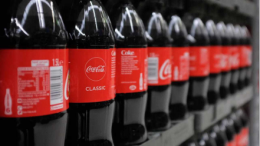
This bipartisan legislation aims to combat misleading environmental claims and provide consumers with accurate information about the plastic recycling content in the products they purchase. Getty Images
Democratic Senator Adam Schiff of California has introduced legislation aimed at cracking down on fraudulent claims about recycled plastic content and providing consumers with accurate environmental information about the products they purchase.
The Tracking Plastic Act will establish a federal task force responsible for developing standardized methods to track and verify recycled plastic content in consumer products, in order to address widespread issues such as misleading manufacturer labels and unsubstantiated environmental claims.
Schiff stated, "Implementing a reliable tracking process for recycled materials will provide the American public with accurate information about the plastic content in the products they purchase. Consumers should know the truth when making choices between competing products. Our legislation will target companies that mislead the public regarding the recycled plastic content in their reports."
The bill was co-sponsored by Oregon Democratic Senators Jeff Merkley and Ron Wyden, along with New Jersey Democratic Senator Cory Booker, reflecting growing bipartisan concern over transparency in plastics recycling and corporate accountability.
Build consumer trust through transparency
Merkley said, “Consumers deserve clear, accurate labels to help them make informed purchasing choices. Common-sense legislation like this empowers consumers to understand the plastic content of the products they buy, while ensuring manufacturers are held accountable for their recycled-content claims.”
Booker emphasized the importance of label integrity and pointed out that Americans should be able to trust product information when shopping.
He said, "This legislation will provide consumers with the truthful information they need, strengthen our recycling system, and ensure that businesses take responsibility for helping address the plastic pollution crisis."
Comprehensive Federal Scheme for Plastic Traceability
The Tracking Plastics Act would establish a federal working group composed of members from multiple agencies, including the U.S. Environmental Protection Agency, the Federal Trade Commission, the Department of Agriculture, the National Oceanic and Atmospheric Administration, the Department of State, the National Institute of Standards and Technology, and Rocky Mountain National Laboratory, as well as institutions of higher education and the National Academies of Sciences.
The main responsibilities of the working group include: developing recommendations to improve the measurement, traceability, and reporting of recycled plastic content in relevant economic sectors, and to increase the use of post-consumer resin.
The National Institute of Standards and Technology will lead the technical development work, studying existing international standards, such as Australia's "National Framework for Traceability of Recycled Content." This working group will focus on coordinating the recycled plastic content requirements across states through a federal tracking system.
Address marine litter and trade data issues
This legislative directive instructs the working group to improve the clarity of trade data by reassessing recycled content in plastic trade codes, and to explore ways to strengthen the traceability of plastic marine litter—a growing environmental problem affecting oceans worldwide.
The bill requires the working group to submit an annual report to Congress detailing its activities, the progress made in developing traceability recommendations, and its findings. The initial members of the working group must be identified within 90 days after the bill is enacted.
Received broad support from the industry and environmental organizations.
The Tracking Plastic Act has received support from major environmental and industry organizations, including the Association of Plastic Recyclers, The Recycling Partnership, the World Wildlife Fund, the Ocean Conservancy, and the Monterey Bay Aquarium, reflecting a broad consensus on the need for a transparent and accurate system for verifying recycled content.
This coalition of supporters demonstrates that environmental advocates and industry stakeholders are aligned in building credible systems to track recycled plastic content, empowering consumer decision-making, and ensuring that companies are held accountable in addressing the plastic pollution crisis.
【Copyright and Disclaimer】This article is the property of PlastMatch. For business cooperation, media interviews, article reprints, or suggestions, please call the PlastMatch customer service hotline at +86-18030158354 or via email at service@zhuansushijie.com. The information and data provided by PlastMatch are for reference only and do not constitute direct advice for client decision-making. Any decisions made by clients based on such information and data, and all resulting direct or indirect losses and legal consequences, shall be borne by the clients themselves and are unrelated to PlastMatch. Unauthorized reprinting is strictly prohibited.
Most Popular
-

Raw Material Supply Shortage! INEOS Phenol Declares Force Majeure on Phenol and Acetone Businesses
-

AI Computing Power Demand Ignites Electronic Fabrics! China Jushi Hits Limit Up! Domestic Substitution Welcomes Golden Window
-

1.451 billion bet! why the newly installed production line of guofeng new materials has japanese giants uneasy?
-

Coca-Cola Accelerates Reusable Bottle Initiative
-
[Overseas News] Ineos’ €5 Billion Cracker Arrives; Giants Close Plants in Unison, North American Paper and Plastic Prices Rise Across the Board


