



Toyota to Invest 300 Billion Yen in India, Fourth-Largest Global Production Base Emerges
Against the backdrop of the global automotive industry’s accelerating southward shift, Toyota Motor is elevating India to an unprecedented strategic importance.
According to media reports, Toyota plans to build three new vehicle assembly plants in Maharashtra, western India, with a total investment of approximately 300 billion yen, aiming to increase its local annual production capacity in India to 1 million units by the 2030s—triple the current level.
The plan will bring Toyota's total number of plants in India to six, potentially elevating the country to become the fourth-largest manufacturing base globally, after Japan, China, and the U.S.
India, with its 1.4 billion population and annual new car sales exceeding 5 million for the first time, is becoming the most important strategic pivot for Toyota in the "Global South."
From “Supplement” to “Pillar”: The Logic Behind Toyota’s Strategic Upgrade in India
The significance of Toyota's expansion plan lies not only in the investment scale but also in the shift in its strategic positioning.
So far, Toyota has three plants in Bidadi, Karnataka, in southern India, with an existing annual production capacity of about 340,000 vehicles, mainly targeting the Indian domestic market.
Meanwhile, the three newly planned factories in Maharashtra have a distinctly different mission—not only serving domestic demand but also undertaking the responsibility of exporting to emerging markets such as the Middle East and Africa.
Maharashtra, adjacent to the Port of Mumbai, has close trade and personnel exchanges with the Middle East and Africa, providing geographical convenience for Toyota's "west of India" strategy.
Product planning also reflects Toyota's accurate understanding of the Indian and emerging markets.
The new factory will produce three-row SUVs under the “Corolla” brand, directly entering India’s rapidly growing multi-seat vehicle segment, while also launching plug-in hybrid models to cater to environmentally conscious consumers. According to the plan, the first new factory is scheduled to commence operations in 2029, with the remaining two factories to be completed successively during the 2030s.
Toyota’s growth momentum in India has supported this production expansion.
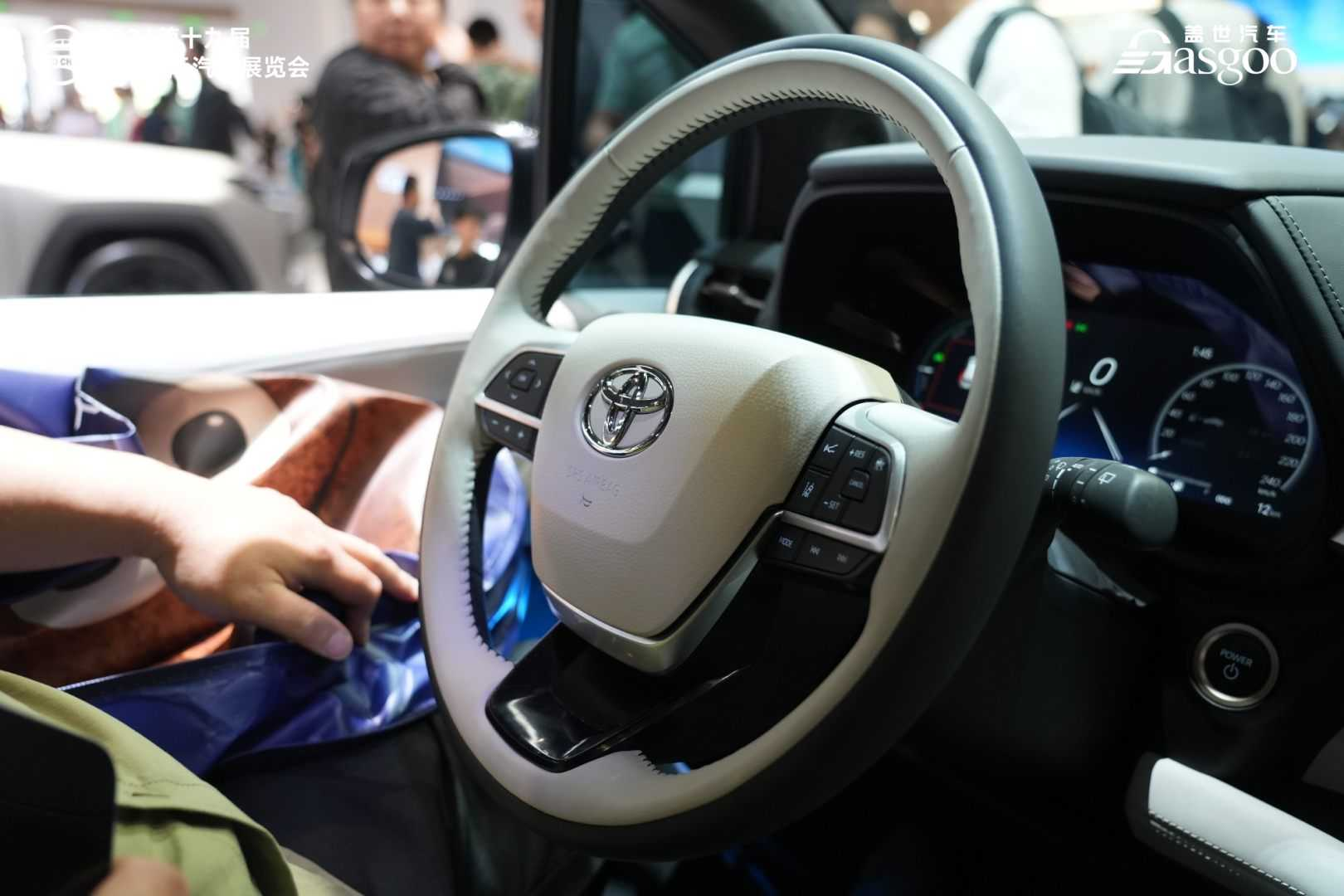
Image source: Gasgoo
In April 2026, Toyota Kirloskar Motor (TKM) reported total sales of 32,086 units, up 17% year-on-year, with domestic sales rising 21% to 30,159 units. Cumulative sales for the first four months of 2026 reached 137,194 units, an increase of 19% year-on-year. Toyota currently holds approximately an 8% market share, which is expected to rise to 10% following its recent capacity expansion.
The underlying reason for this strategic shift is the reality that traditional major markets such as the United States and China are approaching saturation.
Toyota is increasingly facing a ceiling effect in both the Chinese and U.S. markets. In contrast, industry forecasts indicate that India’s light-vehicle market will exceed 5 million units for the first time in 2025 (5.19 million units) and grow to 6.44 million units by 2030—a roughly 20% increase. Meanwhile, Africa’s light-vehicle market is projected to surpass 6 million units by 2050, and the Middle East market is likewise expected to expand significantly.
In the vast landscape of the "Global South," India is not only the largest single growth pole but also a gateway to Africa and the Middle East.
Japanese "Gathering" in India: The Competitive Pressure and Uncertainty Behind the Big Bet
Toyota is not an isolated case.
Japanese auto giants are making a "rally-style" heavy bet on India.
Suzuki has also announced an investment of 700 billion rupees over the next five to six years, with a new plant in Haryana set to begin production in 2025 and another new plant in Gujarat scheduled to come online by 2029, aiming to increase its annual production capacity to 4 million vehicles.
Modern cars are not lagging behind, announcing an investment of 450 billion rupees in India between 2026 and 2030, and planning to increase its total capacity in India to 1.14 million units.
The collective "southward shift" of Japanese automakers reflects a deep adjustment in their global business strategy.
Japanese automakers' market share in China continues to decline, and the Indian market is becoming a key battleground for them to offset the contraction of their business in China.
However, Toyota's current expansion is not without uncertainties.
So far, Toyota has officially stated regarding the news of the new factory that "no final decision has been made, and it will continue to evaluate production layouts globally," indicating that there is still room for adjustment in the plan.
Moreover, despite rapid growth, the Indian electric vehicle market still has low overall penetration, with challenges such as insufficient charging infrastructure and high consumer price sensitivity remaining.
For Chinese car manufacturers, Toyota's significant investment in India sends a clear signal: the competitive focus of the global automotive industry is shifting towards the "Global South."
Japanese automakers have gained buffer time in their electrification transition due to the market foundation and distribution networks they have built in India over several decades. Meanwhile, Chinese automakers are accelerating their presence in the Global South, from Southeast Asia to the Middle East, Africa, and Latin America simultaneously.
In this global reallocation of production capacity and markets, India has become a key battleground for Japanese and Chinese automakers. Whoever can first establish a complete ecosystem from manufacturing to the supply chain in this market will take the initiative in the global automotive competition over the next decade.
【Copyright and Disclaimer】The above information is collected and organized by PlastMatch. The copyright belongs to the original author. This article is reprinted for the purpose of providing more information, and it does not imply that PlastMatch endorses the views expressed in the article or guarantees its accuracy. If there are any errors in the source attribution or if your legitimate rights have been infringed, please contact us, and we will promptly correct or remove the content. If other media, websites, or individuals use the aforementioned content, they must clearly indicate the original source and origin of the work and assume legal responsibility on their own.
Most Popular
-
A Look at the Material Suppliers Behind SpaceX
-
Daily Review: Cost and Supply Support Push Polyester Bottle Film Market Higher
-
Dreame Launches All-Solid-State Battery Sedan With Energy Density Exceeding 450Wh/kg
-

【Overseas News Highlights】 SABIC Launches New Products! Amcor Opens New U.S. Headquarters! UPM and BASF Enter Strategic Partnership!
-
Energy Autonomy and Circular Economy Drive Cortec to Redefine Sustainable Corrosion Protection Packaging Standards in Europe


