



To Secure a 20% Tariff Discount, Pharma Giants Are Forced to Submit a “Comprehensive Audit”! The United States Is Reshaping the Global Pharmaceutical Supply Chain
For multinational pharmaceutical companies, Trump’s “drug tariff stick” is no longer an uncertain risk in rumor; it is a concrete policy directive sitting right before them. With the U.S. Department of Commerce recently releasing an 11-page application document, all pharmaceutical companies that have so far failed to sign Most Favored Nation (MFN) agreements with the White House are now forced to face a nearly “full-audit”-style filing and regulatory process. Whether they can qualify for the relatively lower 20% tariff rate is no longer a matter of “whether to build factories back in the United States” — rather, it isCan you complete an industrial surrender document that involves the company's trade secrets before the deadline of June 12?
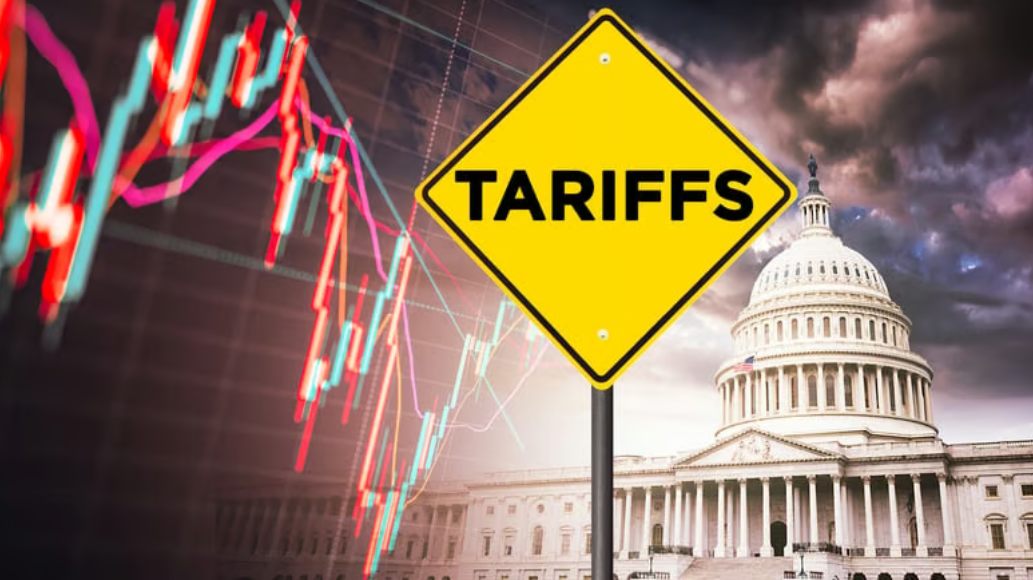
A Costly "Tax Evasion": 20% Tariff Means Full Disclosure
At first glance, the Trump administration established three tariff tiers through an executive order: pharmaceutical companies that have not signed most-favored-nation agreements with the United States face tariffs as high as 100%; companies that commit to shifting production back to the United States are subject to a 20% tariff; and companies that make most-favored-nation pricing commitments enjoy zero tariffs.
However, behind this seemingly “simple” tiered system lies an extremely complex implementation process. According to filings released by the U.S. Department of Commerce, any company seeking to qualify for the 20% tariff must disclose to the U.S. government the full manufacturing map of its global products—specifically, in which countries the drugs are produced and whether they are made in-house or by CDMO contractors. It must also submit a complete U.S. domestic investment roadmap, including detailed plans for future new factories and R&D centers, as well as the corresponding scale of capital investment.
The U.S. Department of Commerce further explicitly requires companies to, “to the greatest extent possible,” relocate all pharmaceutical and active pharmaceutical ingredient (API) production back to the United States by January 2029. Every subsequent step of progress must then be subject to the Department of Commerce’s “approval, oversight, and enforcement.” The pharmaceutical industry is no longer acting on voluntary market strategy, but has instead been incorporated by the federal government into an industrial plan under continuous supervision.
If a company is unable to bring the production of certain specific drugs back to the United States, it must provide a reasonable explanation for each one individually, stating why those products are “not commercially feasible.” Examples of acceptable reasons listed in the document include that the patient population for the drug in the United States is too small, or that the product’s patent is about to expire, making it insufficient to justify the high cost of domestic manufacturing investment.
Moreover, the U.S. government is no longer simply asking, “Where are your factories located?” Instead, it has established a quantitative assessment system: companies must report the proportion of U.S.-made products in their global sales as of January 2025, as well as specific targets for increasing that proportion by 2029. The degree of localization of active pharmaceutical ingredients has likewise become a mandatory disclosure item. Companies are required to report how much of the APIs used in drugs sold in the U.S. market currently comes from within the United States, and how much they expect that share to reach in the future.
In fact, the Trump administration’s oversight system for pharmaceutical companies also includes a strict punitive mechanism: any company that “engages in fraud” or “deliberately misleads” the government regarding onshore commitments will face an immediate 100% punitive tariff, rather than a gradual increase. Federal documents explicitly state that the Department of Commerce has the authority to reimpose the maximum punitive tariff, placing companies’ financial strategies under extremely high-level risk.
To help pharmaceutical companies find countermeasures in the midst of a complex geopolitical game, consulting giant EY has promptly issued guidance letters to its clients, urging companies to quickly assess whether they are eligible to apply for “reshoring agreements” and the potential tariff savings available, and to develop a detailed reshoring strategy that includes investment plans and production schedules, while also integrating the necessary data and documents covering the entire product portfolio and supply chain system.
Two Roads, One Destination: The Divergent Paths of MFN Agreements and Factory Relocation Commitments.
In the Hundred Days negotiation offensive, another path—the most-favored-nation (MFN) agreement—became a survival strategy for some pharmaceutical giants in this game.
According to the executive order signed by Trump this April, pharmaceutical companies, in addition to choosing the 20% tariff option for relocating production back to the United States, can also seek zero-tariff treatment by signing an MFN pricing agreement. The essence of the MFN agreement is extremely radical: the United States is trying to forcibly tie domestic prescription drug prices to those of international benchmark countries—mainly the lowest-priced among developed countries—and compel pharmaceutical companies to offer price levels in the U.S. market that are equivalent to the lowest international market prices.
The deterrent power of this strategy reached its peak in December 2025, when nine major pharmaceutical companies—Amgen, Bristol Myers Squibb, Boehringer Ingelheim, Genentech, Gilead, GlaxoSmithKline, Merck, Novartis, and Sanofi—collectively signed MFN agreements on the same day, agreeing to provide most-favored-nation prices to Medicaid programs in every U.S. state and pledging a total of at least $150 billion in investment in U.S. manufacturing. An analysis by a U.S. national public policy advisory organization showed that Trump convened the CEOs in the Oval Office on the same day, hailing it as “the greatest victory for patients in the history of American healthcare.”
Just before the wave of MFN signings, Pfizer took the lead in breaking the ice. After Trump issued a 100% tariff threat, Pfizer agreed to sharply cut the prices of its drugs for Medicaid patients and pledged to invest $70 billion in U.S. manufacturing in exchange for a buffer period on tariff relief. Under tariff pressure, AbbVie spent $1.95 million to expand an active pharmaceutical ingredient plant and has also signed an MFN agreement, agreeing to include multiple innovative drugs in a low-price list. Lilly, meanwhile, set a detailed cap on what Medicare patients would pay for its new weight-loss drug at no more than $50 per month.
On the surface, “relocating manufacturing plants to exchange for tariff relief” and “signing MFN agreements in exchange for zero tariffs” are two different paths. But analysts point out that both lead to the same destination: whichever option is chosen, pharmaceutical companies will be forced to redeploy more profits and strategic resources in the United States and accept deep government intervention in their R&D, manufacturing, and pricing systems. The U.S. industry group Biotechnology Innovation Organization (BIO) has issued a warning, arguing that tariffs will in fact drive up manufacturing costs, hinder new drug development, and hit undercapitalized small and medium-sized biotech firms the hardest.
03 The Dilemma of APIs: A Supply Chain That Cannot Rebound in the Short Term
If the reflux of finished drug production can still be accelerated through substantial capital investment, then the shortcomings in the supply chain of upstream active pharmaceutical ingredients (API) and key starting materials (KSM) reveal a deeper structural dilemma in this industrial restructuring.
The analysis of supply graph released by the United States Pharmacopeia (USP) in 2025 shows that China is the only country in the world that supplies key key starting materials (KSMs) for active pharmaceutical ingredients (APIs), being the sole supplier of at least one KSM in China. India plays a unique supplier role in another segment of APIs. The research also found that the vast majority of raw materials used in American pharmaceuticals come from India, while China further dominates the production of over 90% of some key APIs.
If we widen the lens to the generics sector, India’s dominance becomes even more pronounced. India has nearly 650 U.S. FDA-certified pharmaceutical manufacturing plants, supplies nearly 90% of America’s generic prescription drugs, and accounts for one-quarter of global API production capacity. This share is so large that if the Trump administration were to impose strict tariffs on Indian pharmaceuticals, the U.S. healthcare system could even face catastrophic drug shortages.
Therefore, the tactical design of this tariff war reflects a “directional strategy”: it primarily targets branded drugs and patented drugs, rather than generic drugs. The current 100% pharmaceutical tariff explicitly exempts generic drugs, biosimilars, and related ingredients, and generic drugs are excluded from the scope of the tariff.
What does this mean? The Trump administration’s intention is not to completely sever U.S. dependence on global active pharmaceutical ingredients and generic drugs, because that is not realistic at this stage. Rather, the U.S. government is using tariffs as a powerful weapon to strike at the branded-drug segment, which has the greatest pricing power, thereby forcing major pharmaceutical companies to rearrange the production chains for their high-value drugs. At the same time, Congress is actively promoting cooperation with countries such as India to build a supply chain that can, to some extent, serve as an alternative outside the API chain dominated by China.
04 Redefining Control of the Global Pharmaceutical Industry
Over the past three decades, the global pharmaceutical industry has developed an efficiency-driven structure in which R&D is concentrated in high-cost countries while manufacturing is carried out in low-cost countries. In this arrangement, the United States has occupied the upper end of the value chain by leveraging its vast consumer market and advanced R&D system, while Europe and Asia have taken on a large share of the manufacturing segment. Today, this structure is being forced to change.
The Trump administration’s deadline for pharmaceutical companies to complete new factory construction by January 2029 is undoubtedly a high-stakes gamble. It means that, in less than three years, major multinational pharmaceutical companies must overturn their long-established and smoothly functioning global production layouts and shift their manufacturing focus back to the United States.
The deeper logic of this executive order lies in the fact that the United States is attempting to reallocate the control of the global pharmaceutical manufacturing industry in an unrefusable manner. The squeeze on the global CDMO (Contract Development and Manufacturing Organization) system, the reorganization of active pharmaceutical ingredient supply routes, and the potential impact on the global generic drug supply landscape all herald the beginning of a new order.
As for whether this ambitious policy experiment can truly lower drug prices for American patients, or merely shift the global manufacturing landscape without creating new value, only time will ultimately tell.
【Copyright and Disclaimer】This article is the property of PlastMatch. For business cooperation, media interviews, article reprints, or suggestions, please call the PlastMatch customer service hotline at +86-18030158354 or via email at service@zhuansushijie.com. The information and data provided by PlastMatch are for reference only and do not constitute direct advice for client decision-making. Any decisions made by clients based on such information and data, and all resulting direct or indirect losses and legal consequences, shall be borne by the clients themselves and are unrelated to PlastMatch. Unauthorized reprinting is strictly prohibited.
Most Popular
-

A Look at the Material Suppliers Behind SpaceX
-
Two Major Chemical Giants to Shut Down, Sell Again
-

Global chemical industry shaken again! amsty and plastic energy announce bankruptcy, accelerating plastics sector shake-up
-
$80 Million Hammered Down! TMD Business Acquired By TNJ Ohio After Judicial Ruling
-
ENGEL at Plastpol :2026 Intelligent production solutions for stable manufacturing processes


