



Thermoforming Industry Adopts Lightweight Solutions and Artificial Intelligence to Address Rising Costs
In the context of regulatory changes and increasing competition, thermoforming packaging manufacturers are facing growing pressure to achieve automation, reduce product weight, and integrate recycled materials.
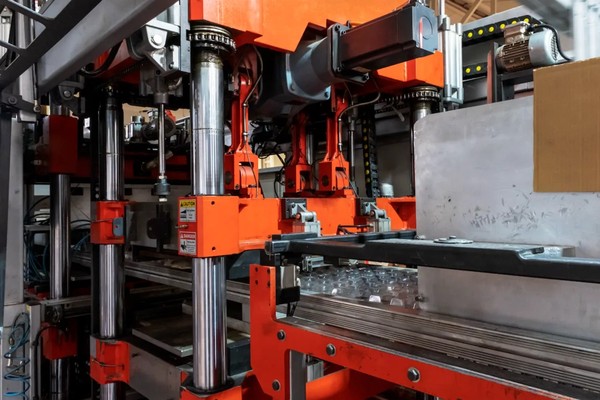
Advanced heating technologies, 3D-printed molds, and artificial intelligence platforms are helping manufacturers reduce costs while improving efficiency and sustainability. (Image source: Yasin Caglayan/iStock via Getty Images)
Plastic thermoforming plays an important role in food, medical, and industrial packaging manufacturing in North America. According to Clefs Advisory’s Thermoformed Packaging Analysis & Outlook 2025, today’s market is supported by demand for food-grade polyethylene terephthalate (PET) and recycled PET (rPET) materials, recycling-related regulations, and technological advances. However, the North American thermoformed packaging industry also faces increasingly intense competition from materials such as paper, as well as growing pressure to automate and improve efficiency due to factors such as labor shortages.
Lightweighting is crucial for reducing costs and ensuring compliance.
Renewed emphasis on lightweighting is key to the future of plastic thermoforming.
Lightweighting is nothing new. Connor Carlin, president of Clefs Advisory, told PlasticsToday that packaging suppliers have been seeking ways to reduce packaging weight for years, including lightweighting achieved by removing material or components, as well as downgauging through the use of thinner starting materials.
Reducing weight often leads to a decrease in material usage, thereby lowering costs and improving transportation efficiency. According to Carlin, these factors contribute to reducing the environmental footprint of packaging, as well as related reporting requirements such as greenhouse gas emissions, carbon disclosure, and sustainable development goals.
"What brings it back into the spotlight are the producer responsibility (EPR) rules that are now in effect in several states in the U.S.," he said. "Packaging is assessed fees based on its material type, specifications, and weight. For example, in Oregon, clear PET thermoformed trays are assessed a fee of $0.57 per pound. These funds are used in Oregon to improve and modernize recycling infrastructure so that more thermoformed products can be collected and recycled."
Extended Producer Responsibility legislation represents a fundamental shift in how packaging costs are calculated and managed across the entire thermoforming supply chain. Companies must now incorporate compliance fees into their pricing models while investing in lightweighting technologies to minimize these fees.
Growing innovation pressure amid regulatory changes
The EPR laws across U.S. states and the European Union’s Packaging and Packaging Waste Regulation (PPWR) are compelling companies to incorporate higher proportions of recycled materials and improve traceability. At the same time, the recycled materials market is experiencing price volatility. Specifically, according to Clefs Advisory, supply constraints, import dependence, and unstable recycling rates are posing challenges to rPET cost management.
As a result, merger and acquisition activity has increased in recent years, leaving packaging manufacturers better positioned for future profitability. For example, Amcor merged with Berry Global in 2025. Amcor produces thermoformed trays, cups, and lids, and claims to reduce environmental impact by offering tray options made from post-industrial recycled materials or post-consumer recycled materials. The company’s SureForm forming films for medical devices use a polyolefin structure, as well as recyclable nylon films that are “recyclable in practice in countries where collection and recycling streams exist.”
Amcor announced in 2026 that it will continue to invest in thermoforming capabilities to meet the strong demand in the ready-to-eat meals and dairy food sectors.
In 2024, Novolex, a film manufacturer and thermoformer headquartered in Charlotte, North Carolina, merged with Pactiv Evergreen to create a leading manufacturer in the food, beverage, and specialty packaging sectors.
Comprehensive advancements in materials and processing fields
Karlin stated that while there have been advancements in thermoforming processes and technologies, materials and other manufacturing processes have also progressed.
“We must acknowledge the role of upstream innovations in resins, additives, and extrusion,” he said. “For example, improvements in chemistry and processing conditions can lead to more consistent, more uniform materials. New additives can improve sheet performance, including reducing sag, lowering processing temperatures, and increasing line speeds. This makes it easier for thermoformers to achieve lighter-weight parts while maintaining stable production. Other additives can eliminate the need for secondary processing steps such as anti-block agents like silicone coatings.”
In thermoforming and tooling technology, according to Karin, the industry has seen overall improvements in heating technology and control, the widespread adoption of three-action servo plug assists to achieve better wall thickness distribution, and smarter control systems, including some early AI applications derived from sensors and process trends.
“The combination of these materials and technological advances enables operators to carry out tightly controlled processes, thereby producing lighter components with greater consistency,” Carlin said.
Kishor Tota, a senior mechanical engineer at Caterpillar, said that in terms of the functionality of plastic materials, technological advances in thermoforming are mainly reflected in the heating end and motion control.
He explained that intelligent heating and modern heating elements (including ceramics and quartz for uniform heating), as well as related technologies such as sensors for real-time monitoring, constitute a closed-loop feedback system that enables precise heating and reduces waste.
“Pixelated and matrix-based heating provide well-controlled thermal pixels that can heat specific film locations for complex cavity walls and deep-drawn corners, improving material flow through optimized stretching,” Torta said. “Matrix zoned heating systems can maintain temperatures within extremely small fluctuation ranges, preventing thermal runaway and reducing energy use. Real-time monitoring systems enable closed-loop control, such as ceramic heating and automatic verification, allowing nominal power tolerances to be mapped and adjusted according to the polymer grade type and its corresponding heating and cooling requirements.”
According to Totta, adding a third action to the servo plunger is a significant benefit for achieving thinner sheet material in thermoforming, and it will not affect strength and quality.
"With this advancement, the plastic industry is moving towards achieving variable wall thickness even in thinner sheet specifications, as the plunger can be repositioned during the molding process. This helps to significantly reduce material usage and allows for any degree of thinning of sheet thickness in the food and consumer goods sectors without sacrificing performance," said Tota.
Although advanced heating elements, three-action servo plungers, infrared sensors, thermal imagers, and control system infrastructure can form a closed loop that delivers higher-quality products, adding AI can further improve cycle times and speed up the process through real-time data and communication with the manufacturing execution system.
“MES provides real-time data on each machine, each part’s quality, and the status of all heating elements on the dashboard, including process and part status. This enables process traceability and part tracking. MES helps identify the cycle time of each process and machine,” Tota said.
Hybrid methods combine 3D printing with traditional methods.
Some thermoforming companies are turning to 3D printing to manufacture molds more quickly and cheaply. According to a report by PlasticsToday in 2023, Duo Form is utilizing 3D printing to rapidly create mold designs and produce full-size prototypes, thereby avoiding approval processes and production delays.
For a train interior panel project measuring 1,294 × 410 × 287 mm, the company stated that, compared with traditional ceramic mold methods, costs were reduced by 88% and lead time was shortened by 65%. According to the article, the cost savings were even greater compared with traditional aluminum molds.
Stratasys reported in a white paper that Xerox has switched to using Stratasys's Fused Deposition Modeling technology, significantly reducing its mold costs.
Xerox was facing the high cost and long lead times of manufacturing thermoforming molds from wood using CNC machining—about $1,200 and 7 days for each iteration. Stratasys helped Xerox adjust the porosity of FDM to produce additive manufacturing molds capable of generating vacuum, eliminating the need for contour machining and drilling operations. This change reduced mold cost to about $100 (US$103 in the case study) and turnaround time to about 0.5 day (4 hours)—saving roughly 91% in cost and 93% in time—while improving vacuum uniformity, part quality, and design freedom, and enabling new applications such as printhead covers and drum supports, the white paper said.
AI Platform Solves the Challenge of Knowledge Transfer
Karlin is one of the founders of thermoform.ai, an artificial intelligence knowledge platform designed specifically for thermoforming manufacturers. The company describes this technology and its necessity as follows: "The most experienced people in your factory will retire in the next three to five years. We capture the knowledge they possess and make it available to everyone—any shift, any factory, any question."
The platform provides operators, factory managers, and process engineers with instant access to what the founders claim is the industry's most comprehensive knowledge base on thermoforming. It also allows companies to upload encrypted documents.
According to Carlin, the number of tools helping plastic thermoforming manufacturers thrive is increasing, but the U.S. response has been slow.
“In an environment of labor shortages and rising wages eroding profits, low levels of automation are becoming an increasing burden. While European thermoformers have largely integrated Industry 4.0 principles, U.S. companies have lagged behind, creating a gap in operational efficiency,” Karin wrote in her report.
【Copyright and Disclaimer】This article is the property of PlastMatch. For business cooperation, media interviews, article reprints, or suggestions, please call the PlastMatch customer service hotline at +86-18030158354 or via email at service@zhuansushijie.com. The information and data provided by PlastMatch are for reference only and do not constitute direct advice for client decision-making. Any decisions made by clients based on such information and data, and all resulting direct or indirect losses and legal consequences, shall be borne by the clients themselves and are unrelated to PlastMatch. Unauthorized reprinting is strictly prohibited.
Most Popular
-
AI Computing Power Demand Ignites Electronic Fabrics! China Jushi Hits Limit Up! Domestic Substitution Welcomes Golden Window
-

Raw Material Supply Shortage! INEOS Phenol Declares Force Majeure on Phenol and Acetone Businesses
-
Trump Administration Imposes Tariff On Canada’s Plastic, Supply Chain Disruption May Be Limited
-
1.451 billion bet! why the newly installed production line of guofeng new materials has japanese giants uneasy?
-

Prysmian Acquires Atkore for $3.8 Billion in Cash


