



The world’s first ai-driven “dark factory” consumes 100,000 tons of plastic waste annually
In Qujiang, a discarded mineral water bottle, after a technological “transformation,” can be turned into fabric for sportswear and even made back into a food-grade packaging bottle. This green and intelligent “magic” is taking place at Quzhou Tongheng Recycling Technology Development Co., Ltd.(hereinafter referred to as “Tongheng Recycling”)It is truly unfolding in the “lights-out factory.”
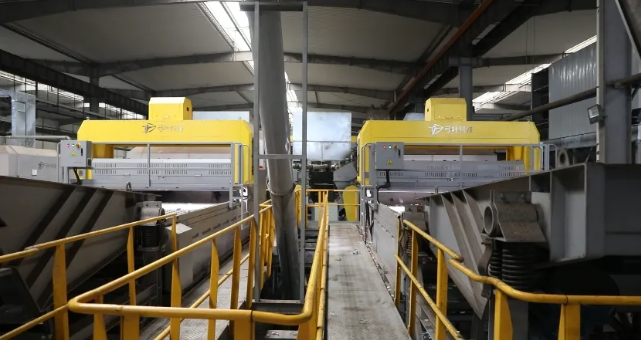
According to the introduction, the factory is the world’s first AI-powered “lights-out factory.” Through three intelligent production lines operating continuously 24 hours a day, it carries out dozens of smart processes for waste plastics, including AI-based sorting, whole-bottle crushing, multi-stage washing, and multiple rounds of intelligent flake sorting, ultimately achieving green recycling and enabling the materials to be reused in everyday applications such as food-grade packaging, clothing, construction materials, and personal care products.
A “lights-out factory” is a 100% fully intelligent factory where humans and smart machines coexist. In 2024,Tongheng RecyclingWe have embarked on a "China Intelligent Manufacturing" journey in the field of recycled plastics by creating an industry-leading "dark factory" demonstration project. This project deeply integrates cutting-edge technologies such as the Internet of Things, artificial intelligence, big data, and industrial robots, incorporating advanced processes like AI intelligent sorting and multi-level deep cleaning, along with independently developed technologies. This has established a comprehensive industrial chain loop covering "recycling - regeneration - application."
The core technical equipment of the factory is the AI intelligent optical sorter. In the pre-processing stage, this complete bottle AI sorting system integrates multi-spectral sensors, AI algorithms, and high-speed jet devices, capable of completing target recognition, judgment, and sorting within 0.1 milliseconds, accurately separating waste plastics by category and impurities with a sorting accuracy exceeding 99.6%. At the same time, the company has established a sorting synchronous traceability system called "AI-SortSync," which assigns a unique "identity card" to each discarded plastic bottle, achieving online monitoring of material quality throughout the process and real-time visualization of production data and progress.
In the post-processing stage, Tongheng Recycling has independently developed the MDUV Process production line platform, ensuring that recycled plastics achieve industry-leading standards in cleanliness, physicochemical properties, and quality consistency. At present, the company has obtained Global Recycled Standard (GRS) certification as well as ISO 9001 and ISO 14001 management system certifications, and its products are equipped with comprehensive global market access qualifications.
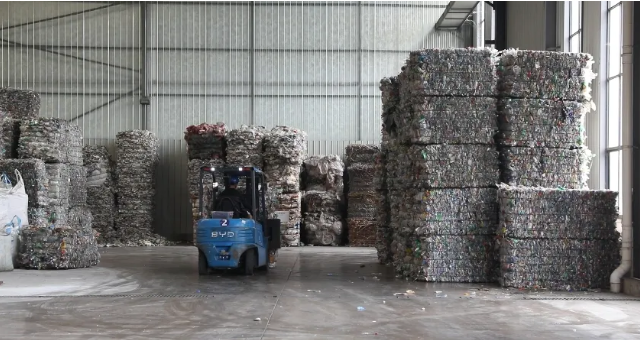
Thanks to the intelligent equipment mentioned above, the factory has achieved a 3- to 4-fold increase in overall production capacity without any change in staff size, resulting in significant improvements in both quality and efficiency. At present, Phase I of the project has an annual waste plastic processing capacity of 100,000 tons, and its products are sold well in both domestic and overseas markets.
In terms of environmental benefits, based on internationally recognized life cycle assessment methods, calculate.Compared with virgin PET,Tongheng RecyclingFor every 1 ton of r-PET material produced, approximately 2 tons of carbon dioxide emissions can be reduced, about 3 tons of crude oil consumption can be saved, and around 6 cubic meters of landfill waste can be avoided.
According to the company’s plan, with all 14 advanced production lines completed and put into operation, it will eventually achieve an annual production capacity of 225,000 tons of r-PET bottle flakes and 100,000 tons of r-PE/r-PP pellets, and is expected to reduce carbon emissions by approximately 250,000 tons each year.
From the high-value rebirth of a discarded plastic bottle to the carbon reduction contribution of producing hundreds of thousands of tons of recycled materials annually, the practices of Tongheng Rebirth reflect the efforts of Qujiang in promoting green, low-carbon, and high-quality development against the backdrop of the "dual carbon" goals and the construction of "zero-waste cities."
【Copyright and Disclaimer】The above information is collected and organized by PlastMatch. The copyright belongs to the original author. This article is reprinted for the purpose of providing more information, and it does not imply that PlastMatch endorses the views expressed in the article or guarantees its accuracy. If there are any errors in the source attribution or if your legitimate rights have been infringed, please contact us, and we will promptly correct or remove the content. If other media, websites, or individuals use the aforementioned content, they must clearly indicate the original source and origin of the work and assume legal responsibility on their own.
Most Popular
-
A Look at the Material Suppliers Behind SpaceX
-
$80 Million Hammered Down! TMD Business Acquired By TNJ Ohio After Judicial Ruling
-
[PVC Weekly Review] Policy Support Weakens, Market Continues Downward Trend
-

Global chemical industry shaken again! amsty and plastic energy announce bankruptcy, accelerating plastics sector shake-up
-
Daily Review: Cost and Supply Support Push Polyester Bottle Film Market Higher


