



Sudden ban! nexperia china hit by mass deactivation from dutch hq—can it retain domestic chip position amid months-long comeback effort?
On March 6, Nexperia (China) Co., Ltd. (hereinafter referred to as “Nexperia”) issued a notice to customers stating that March 3, 2026, at 19:02. Nexperia B.V. (Nexperia Netherlands Headquarters) to ChinaAll employees’ office accounts in the district were disabled in bulk, causing staff members to...Critical office environments such as Office 365 and SAP systems are inaccessible, significantly impacting Nexperia's China operations.
In the face of sudden system bans, Anshi China immediately initiated an emergency response to ensure that production and operations were not significantly impacted.
It is reported thatChina regionIT and business departments have initiated the emergency plan, prioritizing the restoration of critical systems and production scheduling.Currently, translate the above content into English, output the translation directly, without any explanation.Nexperia China statedMost of the services have resumed operation.It can ensure basic production operations.,We are fully committed to minimizing the potential impact on subsequent production and delivery.
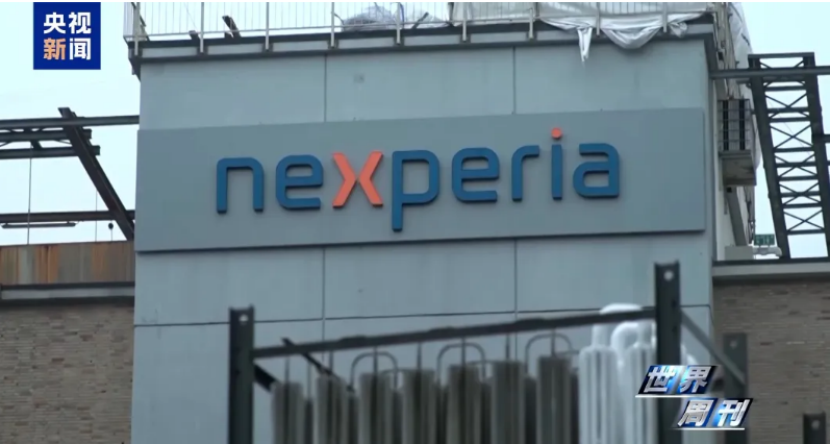
Image source: CCTV News
"Anshi Rebellion" conflict becomes more intense
NXP Semiconductors, headquartered in the NetherlandsNexperia B.V. is one of the world’s largest manufacturers of basic semiconductor chips, primarily producing power semiconductors and other chips for the automotive and consumer electronics industries. It was formerly the Standard Products division of NXP Semiconductors N.V. in the Netherlands and was acquired in full by the Chinese company Wingtech Technology in 2019.
In other words, Amtech Semiconductor is a China-controlled multinational company, with the China region business being one of its core operating segments.
2025 yearOn September 30, the Dutch government issued a ministerial order attempting to seize control of Nexperia, a semiconductor company controlled by Chinese capital, shocking the world.
The Dutch government announced, Aimed at preventing critical goods from being disabled in emergencies to ensure the economic security of the country and Europe. It is based on the Availability of Goods Act.Goods Availability Act),The bill was passed onA 1952 Cold War-era law enacted for "wartime material security," originally designed to ensure access to essential supplies such as fuel, food, and medicine during wartime or natural disasters, authorizes the government to intervene—and even temporarily take over private companies—when the availability of critical products or services is at risk.
Following the issuance of a ministerial order by the Dutch government, the Dutch judicial authorities promptly followed up with a series of coercive measures directly depriving Chinese shareholders of their rights and interests.For example,Zhang Xuezhen, founder of Wingtech Technology, has been suspended from his position; a foreign director has been appointed, and the majority of Nexperia’s shares have been placed under trusteeship, directly depriving Chinese shareholders of their lawful control rights.。
Regarding this,Winning Technology inOn October 12, 2025, a statement was issued strongly condemning the Netherlands for actions that go against the principles of a market economy, pointing out that certain foreign executives are using political pressure to deprive shareholders of their rights, and clearly stating that legal and diplomatic channels will be used to defend legitimate rights and interests.。
As the conflict continues to intensify,The original corporate equity dispute Elevated to a bilateral contest between China and the Netherlands,China and the Netherlands have entered a phase of multiple rounds of negotiations and legal disputes.
China’s Ministry of Commerce and Ministry of Foreign Affairs have repeatedly spoken out through official channels, urging the Dutch government to abandon geopolitical bias, immediately rescind unreasonable restrictions on Nexperia, restore the legitimate rights of Chinese shareholders, and safeguard the openness and stability of the global semiconductor industry chain.
On October 4, 2025, China announced a ban on Nexperia (a Dutch-headquartered entity) from exporting products out of China. On October 9, 2025, the Ministry of Commerce and the General Administration of Customs issued Announcement No. 57, implementing export controls on heavy rare earth-related items, including holmium, erbium, thulium, europium, and ytterbium. Heavy rare earths are key materials for the core optics and precision components of photolithography machines, and the Netherlands is highly dependent on imports of rare earths from China, which directly pressures its photolithography machine industry.
II. Anschutz China's Counterattack, Launching Domestic Replacement
In the face of an unjust ruling, Wingtech Technology(Nexperia’s parent company)Firmly reject the one-sided outcome, on one hand urging the Dutch court to conduct a comprehensive and fair investigation, and thoroughly investigate the illegal actions of the current foreign interim management of Nexperia; on the other hand, have officially initiatedInternational Arbitration Procedure, file a claim against the Dutch government and relevant parties for improper interference, with the claimed amount potentially reaching$8 billion, firmly defending shareholder rights through legal means.
Compared to the long-term legal needs translation, which can be understood as 'legal rights protection' or 'legal redress', thus the sentence can be translated as: Compared to the long-term legal rights protection, the more pressing challenge for Nexperia China is the supply chain disruption from the Dutch headquarters, which has also become a direct opportunity for it to accelerate the promotion of domestic alternatives.
The Dutch headquarters cut off wafer supply, attempting to sever Nexperia China's production chain. Below, An Shi China will immediately launch the code nameContingency Plan B: Finalize cooperation with leading domestic wafer foundries—including Dingtai Jiangxin, Shanghai JieTa, and Xinlian Integrated—within 72 hours; deploy 200 core engineers working in 24-hour rotating shifts to tackle critical challenges., quickly complete the technology adaptation and mass production connection of domestically produced wafers.
After months of technological breakthroughs and supply chain coordination, the national replacement plan of Nexperia China has achieved a key breakthrough.。
In February 2026, Nexperia China officially announced the permanent termination of wafer cooperation with its Dutch headquarters and a full switch to a domestic supply chain. According to the latest report by Reuters, an executive from Aumovio, a subsidiary of German Continental AG and an automotive component supplier, stated that they have recently received the first batch of Nexperia semiconductor chips from China. This is also the first batch of confirmed manufacturers to receive approval for an exemption from China's semiconductor export restrictions. Their clients include Volkswagen, Stellantis, and BMW, among others.
III. Global Semiconductor Supply Chain
The Angsis by no means an isolated case, but rather a microcosm of the restructuring of the global semiconductor power structure, reflecting a profound transformation in the global semiconductor supply chain. Note: "Angs" seems to be a transliteration that doesn't have a clear English equivalent. If "" (Anshi) refers to a specific company or event, please provide the correct context or name for a more accurate translation.
Looking back over the past few decades, the global semiconductor supply chain has developed, under market-oriented principles, into a highly refined and vertically integrated system characterized by extensive multinational collaboration.
The United States leads in chip design and core equipment R&D; Europe specializes in power semiconductors, specialty materials, and industrial-grade chips; East Asia (China, South Korea, and Taiwan, China) handles wafer fabrication and assembly & test; and Southeast Asia undertakes backend packaging support, material processing, and other low-value-added activities.
But as geopolitical rivalry intensifies, technological restrictions escalate, and the risk of supply disruptions increases, this traditional division-of-labor system centered on efficiency is accelerating its collapse. Security prioritization, regional closed loops, and multiple backups have become the new industry rules, bringing fundamental changes to the global semiconductor supply chain.
A new division of labor pattern is gradually taking shape.Firstly, translate the above content into English and output the translation directly without any explanation.Regionalization replacing globalization, self-reliance and controllability replacing single-source dependency, and decentralized layout replacing centralized production capacity. Major economies—including the United States, the European Union, and East Asia—are introducing industrial policies to promote the reshoring of domestic semiconductor manufacturing capacity and are fully committed to building…A self-sufficient system within the "Design-Manufacturing-Packaging and Testing-Equipment and Materials" sector, reducing reliance on cross-regional supply chains.。
With this, the global semiconductor industry has completely bid farewell to the previous era of highly interconnected and interdependent globalization, officially entering a new development stage that prioritizes security and self-reliance.
【Copyright and Disclaimer】This article is the property of PlastMatch. For business cooperation, media interviews, article reprints, or suggestions, please call the PlastMatch customer service hotline at +86-18030158354 or via email at service@zhuansushijie.com. The information and data provided by PlastMatch are for reference only and do not constitute direct advice for client decision-making. Any decisions made by clients based on such information and data, and all resulting direct or indirect losses and legal consequences, shall be borne by the clients themselves and are unrelated to PlastMatch. Unauthorized reprinting is strictly prohibited.
Most Popular
-
Middle East Tensions Escalate Sharply: How Polyolefins Respond Amid Soaring Risk Premium
-

Middle East Tension Spikes Global Energy Pattern, Crude Oil and Plastic Industries Face Multiple Challenges
-

Middle East Polymer Export Hub Hit in Sudden Attack, Global Supply Chain Sounds Alarm
-
Huntsman Introduces “War Surcharge” Amid Shipping Disruption and Soaring Energy Costs, Global MDI Prices Continue to Rise
-

Futures Surge Violently, Polyolefin Spot Prices Rise Sharply in Tandem


