



Shenyang institute of automation proposes carbon fiber/peek 3d printing and welding technology for on-orbit structural manufacturing
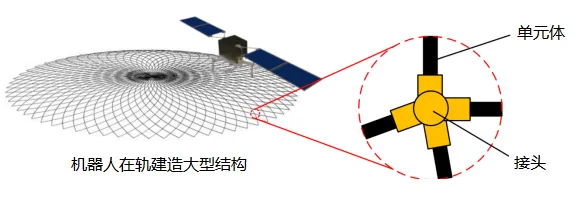
Space-based large antenna in-orbit construction diagram
In recent years, with large-scale space facilities such as space solar power stations, ultra-large aperture antennas, and on-orbit service platforms becoming key focuses of aerospace development, the traditional "ground manufacturing and rocket launch" model faces bottlenecks: the limited dimensions of the rocket fairing and the harsh launch overload make it difficult to meet the construction requirements of structures ranging from hundreds of meters to kilometers. In-orbit construction, which does not require folding during launch and is not limited by launch dimensions, can directly complete component fabrication, connection, and integration in space, becoming a core technology for next-generation aerospace systems.
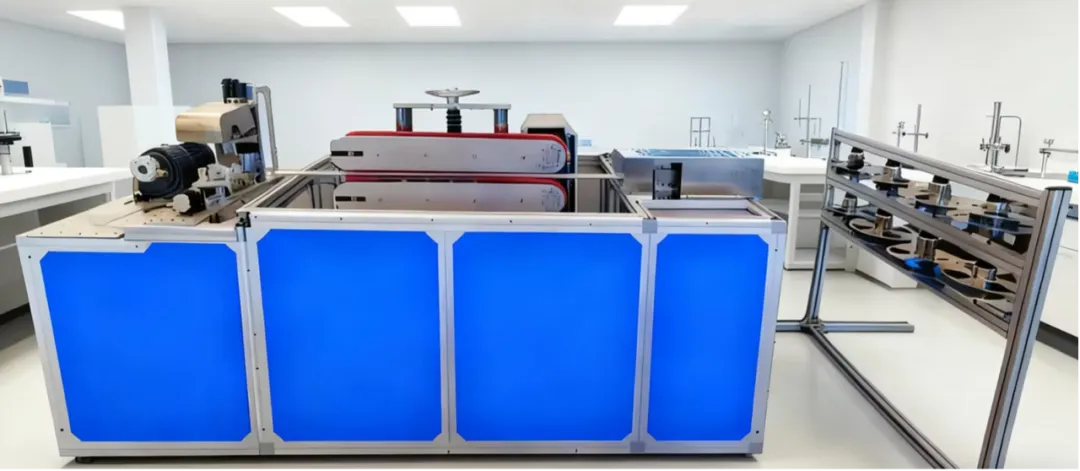
Continuous Pultrusion Prototype Machine for Carbon Fiber-Reinforced Polyetheretherketone (CF/PEEK) Unit Tube Fittings
Against this backdrop, the Shenyang Institute of Automation of the Chinese Academy of Sciences and other institutions have achieved a significant breakthrough in the field of in-orbit construction of large space structures, successfully developing an integrated technology combining pultrusion molding and laser transmission welding for carbon fiber/polyetheretherketone (CF/PEEK) composite tubular units. This innovation provides a new lightweight, high-strength, and highly reliable solution for the automated in-orbit assembly of large space truss structures. The related results were recently published in the international authoritative journal Space: Science & Technology.
A research team addressed two core challenges in on-orbit construction—high-performance structural unit fabrication and reliable connection between components—by proposing a novel technical approach: using CF/PEEK thermoplastic prepreg tapes to fabricate hollow tubular components through a continuous pultrusion process. The research team systematically studied the effects of temperature and pultrusion speed on mechanical properties, and determined the optimal process parameters. The resulting composite tubes exhibit high specific strength, high stiffness, and excellent environmental adaptability, making them highly suitable for long-term space operations.
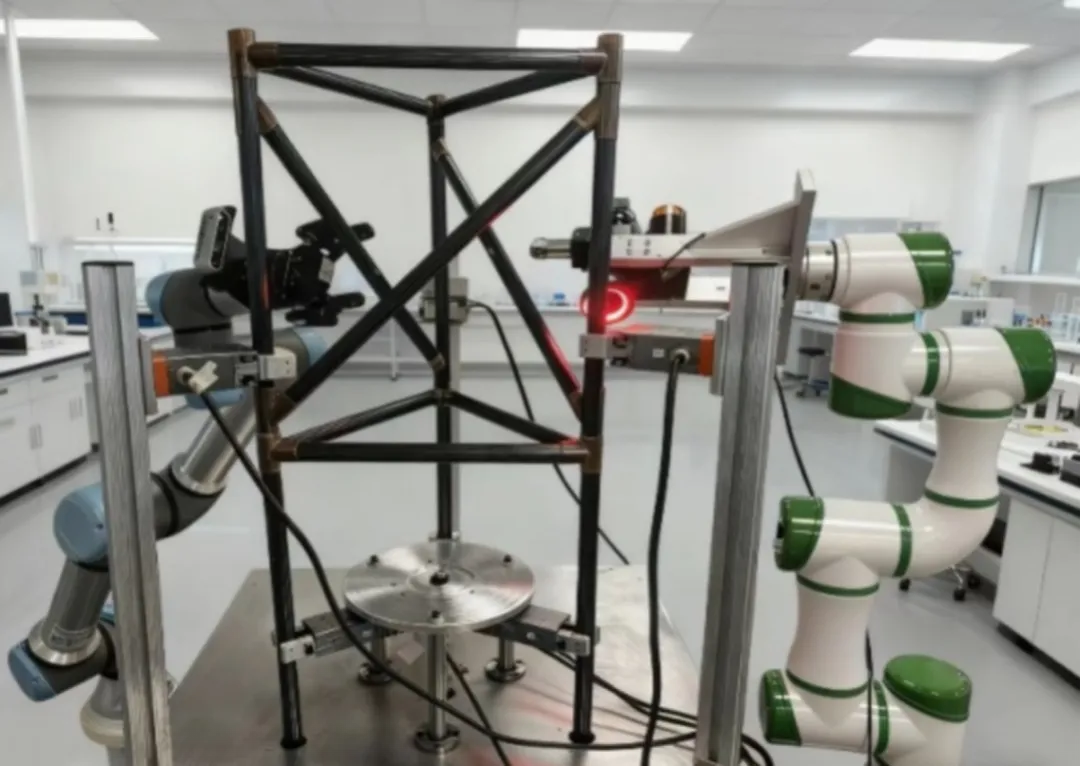
Ground Demonstration and Verification of In-Orbit Manufacturing of Spatial Structures (Truss Products)
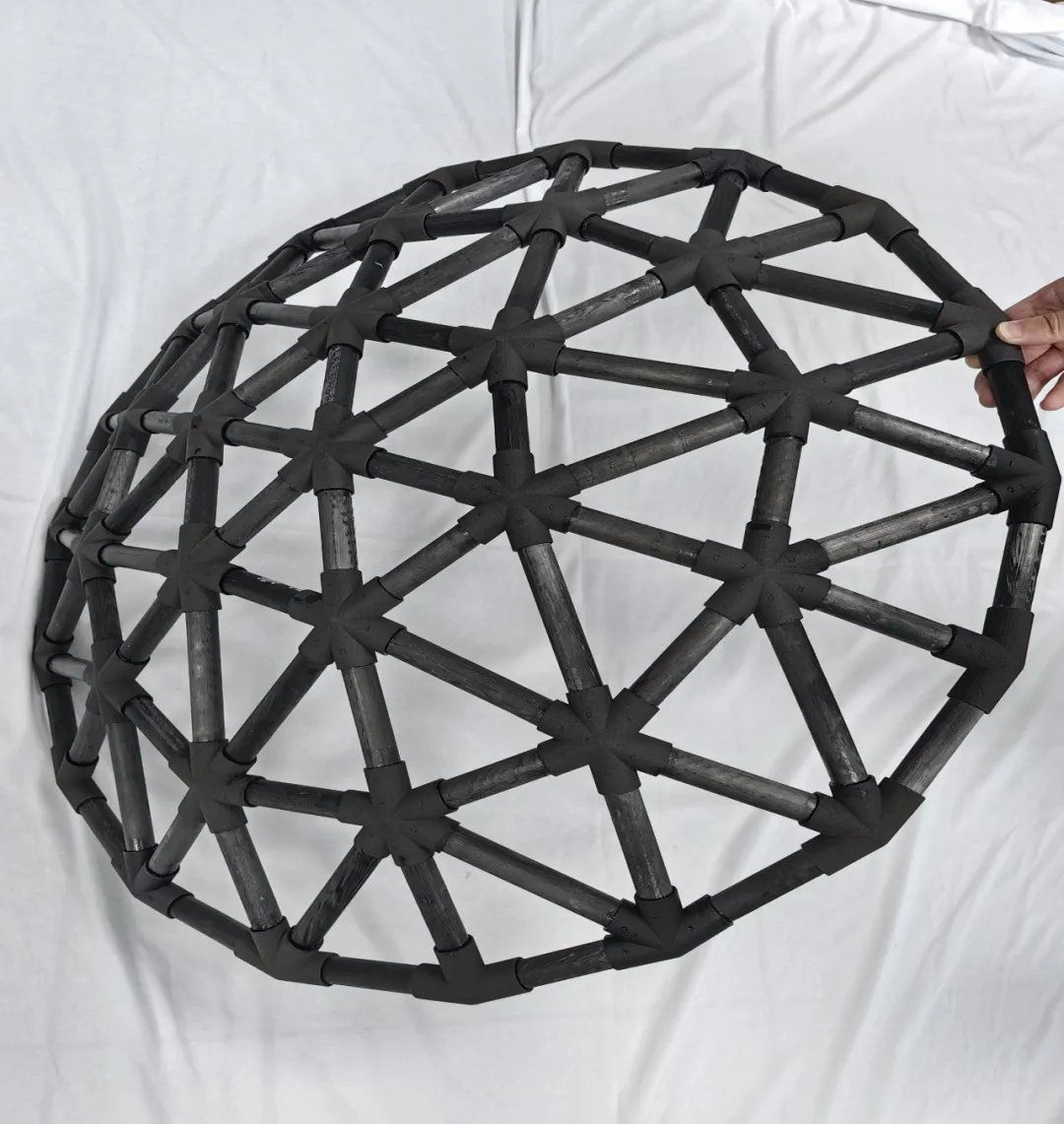
In-orbit manufacturing ground demonstration of spatial structure (mirror support product)
In terms of connection technology, the research team innovatively adopted 3D-printed high-transparency PEEK connectors combined with laser transmission welding to achieve high-precision, high-strength, monolithic integration of tubing and connectors. This non-contact method ensures uniform stress distribution and high efficiency, effectively overcoming the drawbacks of traditional adhesive bonding—such as aging susceptibility—as well as the excessive weight and insufficient reliability of mechanical connections. The weld seam exhibits stable performance meeting the load-bearing requirements of space structures.
To verify the engineering practicality, the research team conducted the integrated manufacturing of a scaled-down prototype of a parabolic antenna truss based on the technology, achieving a full-process integration from materials, forming, connecting to structural assembly, proving that the proposed solution is suitable for in-orbit automated construction in space.
The research was published under the title "Manufacturing and Joining of Composite Units for On-Orbit Construction of Large Structures in Space." Dr. Yuxin Li, a postdoctoral fellow at Shenyang Institute of Automation, is the first author of the paper, and Professor Haitao Luo is the corresponding author. This research was supported by the Fundamental Research Program of Shenyang Institute of Automation.
The Space Structure Dynamics and Optimization Design Team of the Space Automation Technology Research Laboratory has long been dedicated to research on on-orbit construction of large space structures and the application of composite materials, continuously promoting the interdisciplinary integration of advanced manufacturing technologies and aerospace engineering.
【Copyright and Disclaimer】The above information is collected and organized by PlastMatch. The copyright belongs to the original author. This article is reprinted for the purpose of providing more information, and it does not imply that PlastMatch endorses the views expressed in the article or guarantees its accuracy. If there are any errors in the source attribution or if your legitimate rights have been infringed, please contact us, and we will promptly correct or remove the content. If other media, websites, or individuals use the aforementioned content, they must clearly indicate the original source and origin of the work and assume legal responsibility on their own.
Most Popular
-
A Look at the Material Suppliers Behind SpaceX
-
Daily Review: Cost and Supply Support Push Polyester Bottle Film Market Higher
-

Dreame Launches All-Solid-State Battery Sedan With Energy Density Exceeding 450Wh/kg
-
【Overseas News Highlights】 SABIC Launches New Products! Amcor Opens New U.S. Headquarters! UPM and BASF Enter Strategic Partnership!
-
Energy Autonomy and Circular Economy Drive Cortec to Redefine Sustainable Corrosion Protection Packaging Standards in Europe


