



Rwanda Moves Beyond a Simple Plastic Ban, Launches a Green Packaging Implementation Plan
The Rwandan government is significantly accelerating the country's transition away from traditional plastics and promoting the development of a green economy.
Kigali—Rwanda is set to formally approve biodegradable packaging materials for inclusion in the national integrated recycling framework. This move is expected to significantly accelerate the country’s transition away from conventional plastics and further strengthen the green economy.
During a recent visit to the 2026 Expo, Minister of Trade and Industry Antoine Kajangwe revealed that his department is working in collaboration with the Ministry of Environment to develop relevant policies to promote biodegradable packaging, while also establishing a supporting system to ensure that these materials can be recycled after use.
Kajangwe said the focus is not simply on replacing one type of packaging with another, but on building a complete recycling ecosystem to support Rwanda’s environmental development goals.
“We still have two weeks to finalize this recycling framework at the government level. Once the framework is implemented, we can officially roll out biodegradable packaging materials and gradually promote their use nationwide,” the minister said.
He mentioned that public education and awareness are equally important, as many consumers still cannot distinguish between biodegradable plastics and traditional plastics, nor do they understand how to dispose of them after use.
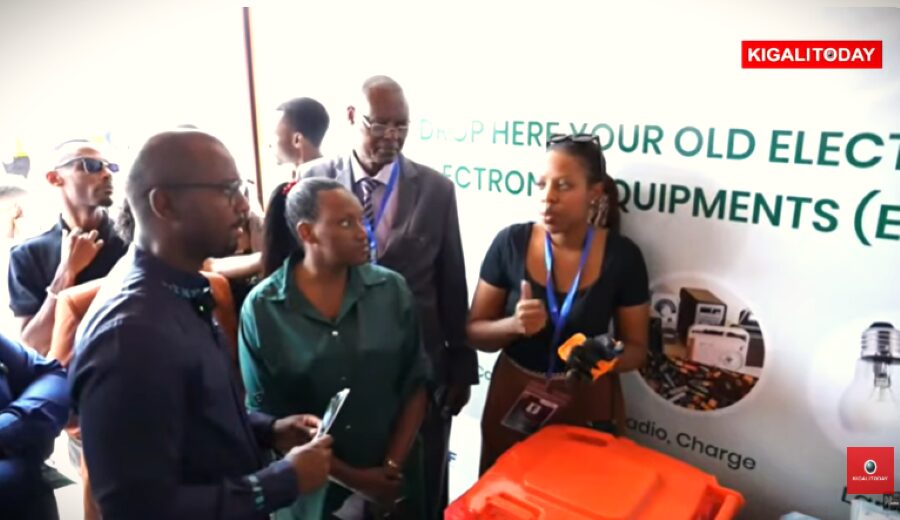
Minister of Trade and Industry Antoine Kajangwe met with investors in the bioplastics sector during the 2026 Expo roadshow.
This policy direction indicates that Rwanda’s focus has shifted from restricting harmful plastics to building comprehensive infrastructure that supports the efficient functioning of the circular economy.
To support this transformation, the Private Sector Federation (PSF) has established a cooperation platform, bringing together a number of companies engaged in the waste management industry. This project is led by the Private Sector Federation (PSF), coordinating the collection, transportation, and recycling of biodegradable waste.
The Private Sector Federation (PSF) stated that Rwanda currently has eight companies responsible for recycling different categories of plastic waste.
The federation is also working with the Rwanda Utilities Regulatory Authority (RURA) to build a comprehensive e-waste recycling system, while planning to introduce advanced recycling technologies that the country has not yet mastered.
At the 2026 exposition, a number of innovative achievements were showcased, including the local company Arth Biobag Ltd., which uses bioplastics to produce biodegradable shopping bags and various packaging materials.
Traditional plastics can remain in the natural environment for up to 500 years, whereas bioplastics are made from renewable plant-based raw materials such as corn, cassava, and sugarcane.
Compostable products can naturally break down into organic matter without leaving long-term residual waste.
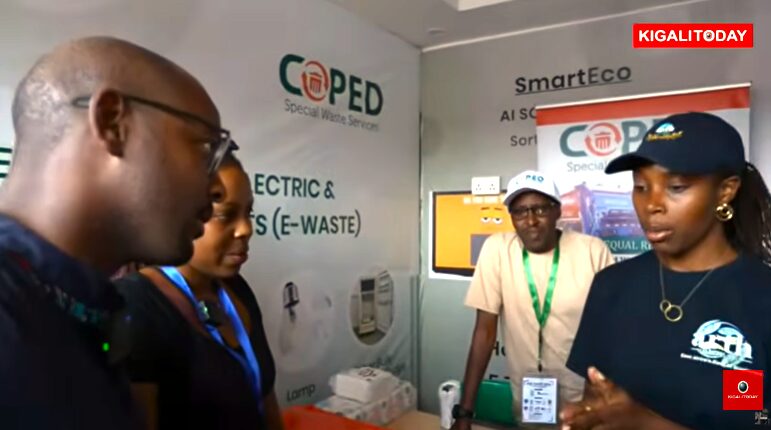
Niyigena Mignonne, Sales and Marketing Specialist at Arth Biobag Co., Ltd., introduces biodegradable plastic products.
Sales and Marketing Specialist Niyigena Mignonne said that Arth Biobag Ltd. was established to provide localized solutions to increasingly severe global environmental challenges while also helping Rwanda realize its vision for green economic development.
She said companies are ready to support the country’s transition, but called for greater public education to help consumers recognize the value of biodegradable products and promote their wider adoption.
“Rwanda is already capable of producing biodegradable packaging locally, and this is a practical and feasible solution. What we need now is to strengthen public awareness and build a supportive enabling environment so that more businesses and consumers are willing to choose sustainable alternative products,” she said.
She expressed her approval of the government's determination to establish a national recycling framework, stating that this sends a strong signal: Rwanda is no longer limited to managing plastic waste, but aims to create an ecological environment conducive to the thriving development of environmental innovation.
As the government prepares to roll out a new framework, both government officials and industry practitioners believe that policy support, private capital investment, and local innovation are crucial to implementing sustainable packaging and circular economy solutions.
With the government planning to introduce certification policies, alongside steadily growing private investment and local innovative achievements, Rwanda is focusing its efforts on building a sustainable system for tackling plastic pollution and promoting environmentally friendly alternatives as the new industry standard.
Biodegradable plastics are suitable for packaging various products.

【Copyright and Disclaimer】This article is the property of PlastMatch. For business cooperation, media interviews, article reprints, or suggestions, please call the PlastMatch customer service hotline at +86-18030158354 or via email at service@zhuansushijie.com. The information and data provided by PlastMatch are for reference only and do not constitute direct advice for client decision-making. Any decisions made by clients based on such information and data, and all resulting direct or indirect losses and legal consequences, shall be borne by the clients themselves and are unrelated to PlastMatch. Unauthorized reprinting is strictly prohibited.
Most Popular
-
2026 Electronic Components Price Increase Notice
-
AI Computing Power Demand Ignites Electronic Fabrics! China Jushi Hits Limit Up! Domestic Substitution Welcomes Golden Window
-

Raw Material Supply Shortage! INEOS Phenol Declares Force Majeure on Phenol and Acetone Businesses
-

Europe’s “Walls” Keep Rising, but China’s Cars Keep Selling More
-

Packaging Industry Faces a Growing Component Obsolescence Crisis


