



Rhein River Water Level Hits Record Low! Covestro And BASF Announce Force Majeure For Some Products
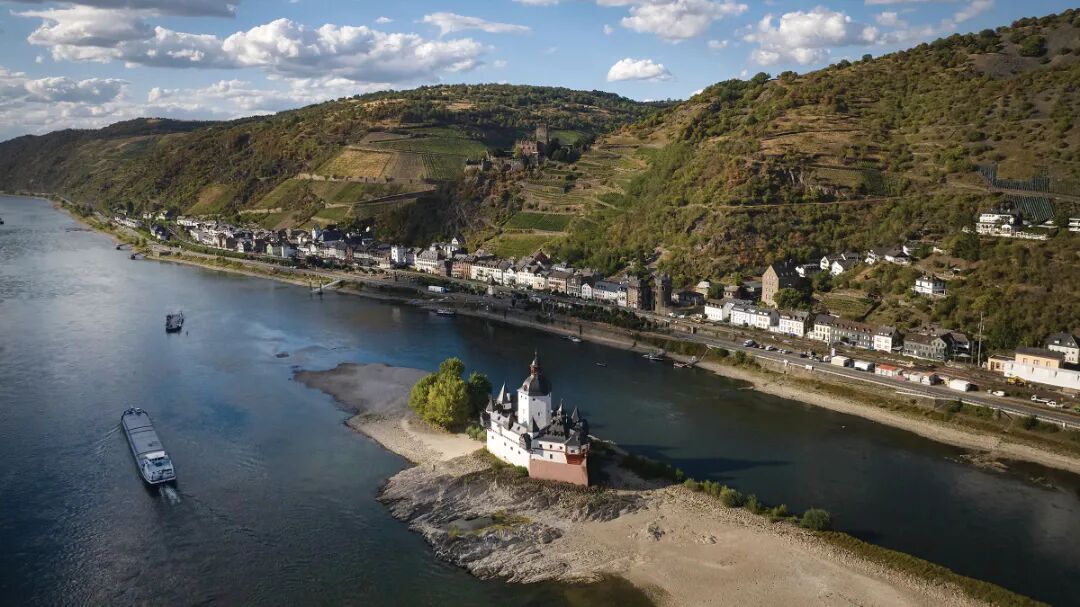
On August 7, 2026, it was reported that due to continued drought in Europe and the resulting decrease in water levels in the Rhine River, the river has recently hit a record low. As an important shipping route for Europe’s chemical industry, this is the second time in eight years that chemical supply chains have been disrupted.
The Rhine River has long suffered from low water levels, with low-water events occurring in 1947, 1959, 1964, and 1976, as well as the historic drought in 2018. The 2018 drought forced multiple industrial sites along the river to shut down, causing Germany’s economic growth rate to decline by 0.4%. Given that the Rhine’s driest months are August and September, many fear that the situation could become even worse.
According to the Federal Institute of Hydrology (BfG) in Germany, on August 5, 2026, the water level at the shipping channel Kaub, located between Ludwigshafen and Cologne, dropped to 20 centimeters, which is 5 centimeters lower than the historical minimum level recorded in 2018.
It is reported that the most critical bottleneck on the Rhine is Kaub. At this time of year, the water level at Kaub is usually around 200 centimeters, while 78 centimeters is the critical level; below that, most barges must reduce their cargo loads to avoid running aground.
Due to the ongoing drought in Europe, this means that this year’s record low water levels have arrived much earlier than during the 2018 crisis, when the Rhine did not reach its lowest point until late October. With no significant rainfall expected in the near term, the German Federal Institute of Hydrology (BfG) anticipates that water levels will continue to fall, and restrictions on inland shipping will remain in place through the autumn.
Chemicals account for 11% of freight transported on the Rhine. The Rhine connects the port of Rotterdam in the Netherlands and the port of Antwerp in Belgium, as well as some of Europe’s largest chemical industry clusters, including the Lower Rhine region, the Cologne chemical corridor, and Ludwigshafen in Germany. Low water levels have prevented large chemical barges from passing; these barges require a minimum draft of 40 centimeters.
Currently, the Rhine River water level issue has led multiple chemical companies to declare force majeure.
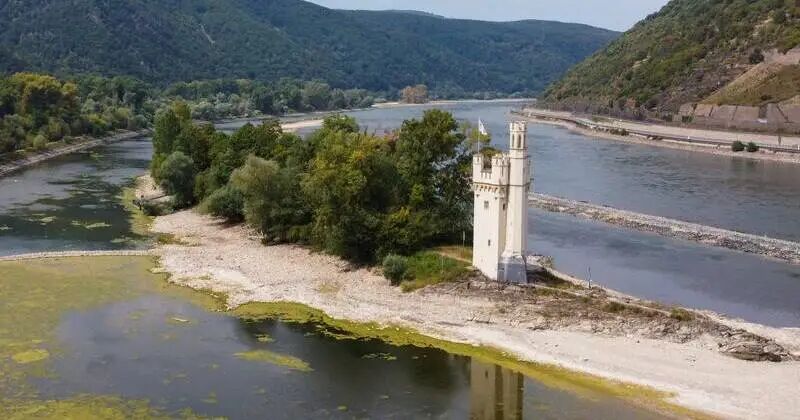
BASF has a large integrated production site in Ludwigshafen, and the company has declared force majeure on a number of surfactant products produced at its European plants. But BASF’s CEO, Dr. Markus Kamieth, told investors on a recent conference call that BASF is now “much better prepared” than eight years ago. Eight years ago, falling Rhine water levels forced the company to suspend operations at its toluene diisocyanate (TDI) unit in Ludwigshafen. The company is currently deploying dedicated low-water vessels and increasing the use of rail and road freight to ensure the transport of raw materials and products.
Similarly, Evonik Industries has also shifted goods transport to rail or road where water levels permit, and allowed some loaded vessels to navigate. A spokesperson stated, "The central lock is still in operation, and access to important canals remains unobstructed." He also added that Evonik's plants in Germany are currently operating as usual.
Innospec stated that by arranging alternative transport routes, the company has successfully maintained the production capacity of the Cologne plant; if necessary, the company is supplying customers from other European plants. Patrick Giefers, General Manager and Plant Manager, said, “We have developed contingency plans to address potential further declines, but we are not at the point where action is needed yet.”
Due to restrictions on barge transportation leading to tight raw material supply, Covestro has reduced production at its plants in the Lower Rhine region. The company is chartering vessels with reduced cargo capacity and increasing sailing frequency to offset the lower load per voyage. On August 7, 2026, Covestro Deutschland AG declared force majeure on its polyether polyol product range. Over the past several weeks, water levels on the Rhine have continued to fall, and the gauge at Düsseldorf has now reached a historic low. These exceptional circumstances, which are beyond Covestro’s control, have directly affected the Dormagen site. The key raw material used to produce polyether polyol products, propylene oxide (PO), can only be delivered by vessel due to on-site technical constraints. Under the current Rhine water levels, sufficient barge supply of raw materials to the Dormagen plant can no longer be ensured. As a result, Covestro’s Dormagen site in Germany is unable to produce sufficient volumes of polyether polyol products to meet its contractual obligations. In the short term, supplies from other plants or external purchases cannot fully compensate for the supply shortfall. Therefore, deliveries of the affected products are expected to face severe delays, reduced output, and interruptions. Covestro stated that during the force majeure period, it cannot guarantee supply, but will consider alternative solutions wherever reasonably and practically possible.
For Covestro, reducing reliance on the Rhine River is not a viable option. The company depends on the Rhine for transporting over 30% of its finished products and 75% of its raw materials in Europe. A barge with a capacity of 1,500 tons can replace about 60 trucks and is more environmentally friendly. The company states that policymakers have a responsibility to find long-term solutions to ensure that the Rhine “can continue to be a reliable lifeline for German industry even in the context of climate change.”
Currently, the German Federal Railway Company (BfG) expects that the rainfall will be insufficient to alleviate the current predicament. Economists warn that the historically low water levels of the Rhine River could jeopardize Germany's nascent economic recovery. According to a report released, the Kiel Institute for the World Economy estimates that this drop in water levels may increase transportation costs and restrict industrial supply chains, which could cause Germany's economic growth rate in the third quarter to decline by 0.1% to 0.2%.
【Copyright and Disclaimer】The above information is collected and organized by PlastMatch. The copyright belongs to the original author. This article is reprinted for the purpose of providing more information, and it does not imply that PlastMatch endorses the views expressed in the article or guarantees its accuracy. If there are any errors in the source attribution or if your legitimate rights have been infringed, please contact us, and we will promptly correct or remove the content. If other media, websites, or individuals use the aforementioned content, they must clearly indicate the original source and origin of the work and assume legal responsibility on their own.
Most Popular
-
2026 Electronic Components Price Increase Notice
-
AI Computing Power Demand Ignites Electronic Fabrics! China Jushi Hits Limit Up! Domestic Substitution Welcomes Golden Window
-

A Look at the Material Suppliers Behind SpaceX
-

Packaging Industry Faces a Growing Component Obsolescence Crisis
-

Grupo Plastilene and ExxonMobil Set a New Benchmark for Packaging


