



Profits Remain Under Pressure as Polypropylene (PP) Downstream Operating Rates and Inventory Both Decline
[Introduction] Due to the strong increase in crude oil and polypropylene markets, the cost pressure on downstream polypropylene product companies has surged, significantly compressing profit margins. To mitigate the risk of losses, some companies have actively reduced their operating loads, resulting in an overall decline in the industry's operating rate. 。
|
Figure 1 Profit Trend Chart of the Polypropylene Downstream Industry from 2024 to 2026 (Unit: yuan/ton ) |
|
|
|
Data source: Longzhong Information |
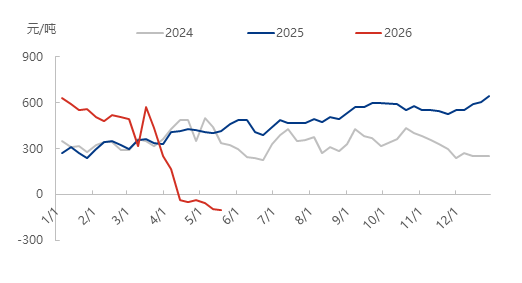
From the perspective of the historical profit performance of downstream industries, there has never been an inversion over the years, but since 4 Starting in mid-month, profits began to turn negative and continued to decline. As of 5 Moon 14 The profits of the downstream polypropylene industry have dropped to. -101 yuan / tons, down from the beginning of the year 116.09% Decreased compared to last year. 513.7 Yuan / tons. Supported by high costs, upstream price increases have been difficult to effectively pass on to downstream sectors, causing downstream polypropylene industries to fall into losses. 。
|
Figure 2 2024–2025 PP Products Industry Operating Rate Trend Chart |
|
|
|
Data source: Longzhong Information |
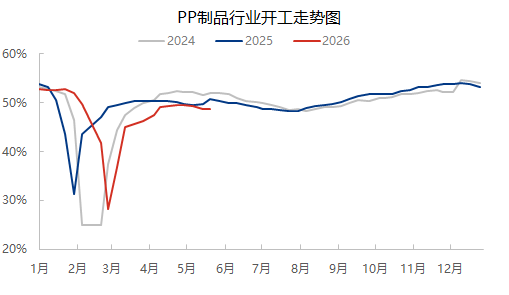
Table 1 Operating Rates of Major Downstream Sectors
|
Product |
This issue |
Last issue |
Percentage Change |
Next issue direction |
|
Plastic woven bag |
42.12% |
42.26% |
Reduce by 0.14 percentage points. |
↓ |
|
Daily-use injection-molded PP |
52.12% |
52.34% |
decrease by 0.22 percentage points |
↓ |
|
BOPP |
55.43% |
56.43% |
Decrease by 1.00 percentage points. |
↓ |
|
PP Pipe materials |
39.02% |
39.18% |
decrease by 0.16 percentage points |
↓ |
|
PP Non-woven fabric |
40.10% |
40.10% |
Keep steady |
↓ |
|
CPP |
45.90% |
45.30% |
increased by 0.60 percentage points |
↑ |
|
PP Transparent |
48.84% |
48.36% |
Increase by 0.48 percentage points |
↑ |
|
Modified PP |
66.49% |
66.46% |
Increase by 0.03 percentage points. |
Stable |
Data source: Longzhong Information
In the context of industry profit inversion and weak terminal demand, the average operating rate of the downstream polypropylene industry has recently shown a downward trend, with only the CPP, PP transparent, and modified PP sectors experiencing an increase. The CPP industry has seen slight support in operating load due to the recovery of demand in food packaging and pre-prepared meal sectors. The PP transparent sector continues to rise slightly, driven by strong demand for essential items like disposable food containers and milk tea cups. The modified PP industry has seen a slight increase in operating rates, supported by a recovery in demand for refrigeration appliances and orders from injection molding factories. In contrast, other sectors such as plastic woven bags, injection molding, BOPP, and PP pipes have all experienced slight declines in operating rates, primarily constrained by terminal demand. The real estate market remains sluggish, leading to a notable drop in demand for cement bags and construction pipes, which has resulted in a month-on-month decline in the operating rates of the plastic woven and PP pipe industries. The BOPP sector has seen a significant drop in operating rates due to low orders for tape mother rolls and some film enterprises halting operations amid weak orders. The PP non-woven fabric industry is currently in an off-season for demand, with limited demand leading to low operating rates. Overall, the weak order conditions in the downstream polypropylene industry have resulted in a slight decline in the average operating rate this week. Rising costs have led to a decrease in profits for downstream sectors, and it is expected that operating enthusiasm in the downstream industries will remain limited next week.
|
Figure 3 2024-2026 PP Downstream Industry Raw Material Inventory Comparison Chart |
|
|
|
Source: Longzhong Information |
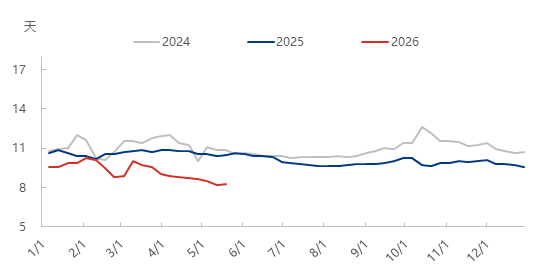
Currently, the overall downstream industry of polypropylene is facing pressure on profits and weak demand. Although the prices of downstream products have risen along with the cost side, the increase is not as significant as that of the raw material polypropylene, resulting in negative profit margins for companies. As a result, the enthusiasm for raw material restocking among companies has significantly decreased, with most maintaining a demand-based procurement strategy and actively reducing raw material inventory levels. Data shows that as of... 5 month 14 As of the day, raw material inventories at downstream polypropylene enterprises have fallen to 8.26 The sky has declined compared to the beginning of the year. 13.69% It has decreased significantly compared to last year. 21.26% Overall, in the short term, downstream enterprises will still mainly focus on consuming existing inventories, and raw material inventory levels are expected to remain low and fluctuate within a narrow range. 。
In summary, the current downstream polypropylene industry is facing dual pressures from inverted profits and weak demand. Since 4 Since mid-month, downstream profits have turned from positive to negative and continued to deteriorate. The main reason is the high upstream costs pushing up polypropylene prices, but the increase has been difficult to effectively pass down to the downstream, resulting in insufficient price hikes for finished products. Against this backdrop, the average operating rate of downstream industries has shown a downward trend. Constrained by both profits and demand, companies have a low willingness to replenish raw materials, with most focusing on destocking and on-demand purchasing.Coupled with a contraction in domestic polypropylene supply, some medium- and large-sized enterprises are experiencing insufficient arrivals of raw materials. It is expected that, in the short term, downstream enterprises’ raw material inventories will remain at low levels with fluctuations, and operating enthusiasm in the industry will be difficult to recover significantly.
【Copyright and Disclaimer】The above information is collected and organized by PlastMatch. The copyright belongs to the original author. This article is reprinted for the purpose of providing more information, and it does not imply that PlastMatch endorses the views expressed in the article or guarantees its accuracy. If there are any errors in the source attribution or if your legitimate rights have been infringed, please contact us, and we will promptly correct or remove the content. If other media, websites, or individuals use the aforementioned content, they must clearly indicate the original source and origin of the work and assume legal responsibility on their own.
Most Popular
-

A Look at the Material Suppliers Behind SpaceX
-
Daily Review: Cost and Supply Support Push Polyester Bottle Film Market Higher
-

【Overseas News】Trump visits china, us auto industry issues collective appeal; china-us economic and trade talks held in south korea; celanese announces price increase
-

$80 Million Hammered Down! TMD Business Acquired By TNJ Ohio After Judicial Ruling
-

Major industry layoffs: BASF, Evonik, Dow, Wacker, and Others Cut 12,550 Jobs


