



Precision in Every Cycle: WINTEC e-win All-Electric Machines for High-Cavity Medical Injection Moulding
In medical device manufacturing, a syringe may appear simple in structure, yet it consists of multiple precision plastic components that must fit together flawlessly. The needle holder and barrel must not only meet stringent dimensional accuracy, concentricity and assembly requirements but also maintain consistent quality in high-cavity, short-cycle continuous production. For manufacturers serving high-volume markets, balancing product quality, cleanroom production, output capacity and per-part cost is the core challenge in medical injection moulding.
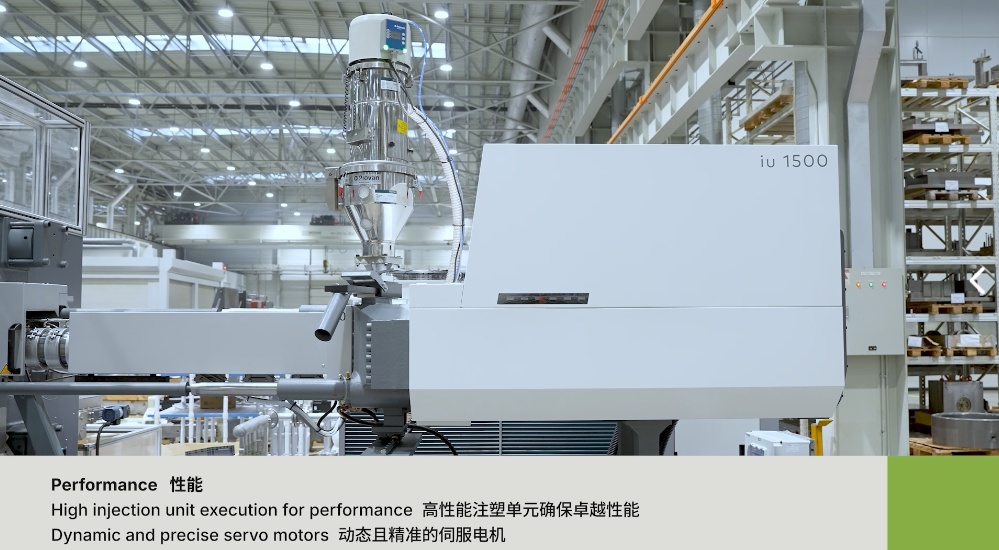
In this application case study, WINTEC e-win all-electric injection moulding machines successfully delivered stable, high-efficiency production of a 128-cavity syringe needle holder and a 48-cavity 10ml Luer lock syringe barrel. Powered by all-electric drives, stable closed-loop control, clean-production-oriented machine design, and ENGEL’s powerful inject AI digital solution suite, these two applications demonstrate WINTEC’s outstanding moulding capabilities and mature solutions for the medical industry.
e-win 1800 | 128-Cavity Syringe Needle Holder – Technical Specifications
|
Parameter |
Value |
|
Clamping Force |
1,800 kN |
|
Injection Unit |
440 |
|
Product |
Syringe Needle Holder |
|
Cycle time |
9 s |
|
Part weight |
0.165 g |
|
Total shot weight |
21.12 g |
|
Cavities |
128 |
|
Material |
PP |
|
Screw diameter |
Ø40 mm, CG10, LD 24 |
Digital Solutions | inject AI
iQ weight control ● iQ clamp control ● iQ hold control
128 cavities operating simultaneously – each cavity must receive an identical injection volume and moulding conditions. With a single part weighing just 0.165 grams, any minor deviation in one cavity is amplified across the entire batch. The e-win runs continuously at a 9-second cycle, ensuring consistency in every shot.
e-win 3200 | 48-Cavity 10ml Luer Lock Syringe Barrel – Technical Specifications
|
Parameter |
Value |
|
Clamping force |
3,200 kN |
|
Injection unit |
440 |
|
Product |
10ml Luer lock syringe barrel |
|
Cycle time |
10 s |
|
Part weight |
4.6 g |
|
Total shot weight |
220.8 g |
|
Cavities |
48 |
|
Material |
PP Bormed™ RG868MO |
|
Screw diameter |
Ø60 mm |
|
Automation |
Z-type conveyor belt |
Digital Solutions | inject AI
iQ clamp control ● iQ weight control plus
The barrel must interface with the plunger, needle holder and other components – its inner diameter, concentricity and connection dimensions directly affect downstream assembly. In a 48-cavity mould, each part weights 4.6 g and the moulded parts are transferred to downstream processes via a Z-type conveyor belt. Behind the 10-second cycle lies continuous control over cavity-to-cavity consistency and long-term operational stability.
Core Challenges in High-Cavity Medical Moulding
Both needle holders and barrels are typical high-precision medical injection moulding applications. Mass production faces several key challenges:
Dimensional accuracy and concentricity: Components such as barrels, plungers and needle holders require stable fit and consistency. Dimensional variations can compromise assembly, sealing and functional performance, potentially posing risks to patient health.
High stability in continuous mass production: Medical products do not tolerate frequent machine adjustments. Weight and dimensional fluctuations between batches must be strictly controlled.
High-cavity moulds filling balance: Each cavity must achieve an identical injection volume and moulding conditions, with repeatability maintained throughout continuous production.
Cleanroom-compatible production: Machine structure, lubrication and moving parts should minimise particle generation and contamination risks, meeting the production environment requirements for medical devices.
Cost control: High volumes mean that every improvement in cycle time, energy consumption, material utilisation and yield rate has a significant impact on per-part cost.
How WINTEC’s e-win All-Electric Solution Addresses These Challenges
More Stable
The e-win employs dynamic, precision all-electric drives with closed-loop control to stabilise critical process parameters. For multi-cavity medical mouldings, precise injection execution helps control shot-to-shot volume, improving consistency across cavities. Full closed-loop control dynamically identifies and compensates for process variations. The inject AI intelligent digital solutions deployed in both cases further enhance melt condition management and process controllability.
Cleaner
All-electric drives eliminate hydraulic system-related media and heat load, making them more suitable for medical injection moulding applications requiring higher production environment standards. The e-win features contactless tie-bar and linear guide designs, effectively reducing oil contamination risk and supporting cleanroom production conditions at the machine structure level. The machine’s cleanliness performance is certified under ISO 14644, achieving cleanroom class ISO 7.
More Efficient
High cavitation combined with short cycle times translates directly into substantial production capacity. The e-win 1800 operates a 128-cavity needle holder mould at a stable 9-second cycle; the e-win 3200 runs a 48-cavity barrel mould at a 10-second cycle, with parts transferred via Z-type conveyor to downstream processes. The efficient injection unit, responsive servo drives and automation integration enable the machine to maintain competitive cycle times under high-volume production conditions.
More Economical
Medical consumables represent a typical high-volume, cost-driven application. All-electric machines drive each axis on demand, helping reduce non-productive energy consumption. Stable repeatability minimises variation, scrap and adjustment losses. The compact machine footprint, high-cavity moulds and automated conveying collectively improve output per unit floor space, helping manufacturers optimise per-part costs across energy, labour, quality and overall equipment effectiveness (OEE).
When production volumes are measured in the millions of units, every incremental improvement in stability — whether it’s reducing one less mid-process re-adjustment, one fewer batch of rejects, or one shorter cycle – translates directly into improved delivery capability and reduced production costs.
From a 0.165-gram needle holder to a 10ml Luer lock syringe barrel, the competitiveness of mass production medical injection moulding comes from the precision and stability of every single cycle. WINTEC e-win all-electric injection moulding machines, powered by ENGEL’s technology and heritage, precision servo control and inject AI digital capabilities, deliver injection moulding solutions that balance precision, cleanliness, efficiency and cost for the medical industry – helping customers build stable, reliable large-scale production capabilities.
For more information about WINTEC e-win all-electric injection moulding machines and medical sector solutions, please visit https://www.wintec-machines.com/product/562.html
【Copyright and Disclaimer】The above information is collected and organized by PlastMatch. The copyright belongs to the original author. This article is reprinted for the purpose of providing more information, and it does not imply that PlastMatch endorses the views expressed in the article or guarantees its accuracy. If there are any errors in the source attribution or if your legitimate rights have been infringed, please contact us, and we will promptly correct or remove the content. If other media, websites, or individuals use the aforementioned content, they must clearly indicate the original source and origin of the work and assume legal responsibility on their own.
Most Popular
-

Billion-Level Project Officially Launched! Building A Hexanediamine-Hexamethylenediamine-Nylon 66-High-End Nylon Industry Chain
-

Avantium FDCA Plant Moves Closer to Start-Up as Commercial Momentum Builds
-

Ineos inovyn proposes full acquisition of runcorn chlor-alkali operations
-
Price hike again! basf to raise north american caprolactam and nylon prices starting september
-
Thermoforming Industry Adopts Lightweight Solutions and Artificial Intelligence to Address Rising Costs


