



Plastic Surge, Cars Dared Not Rise in Price, Supply Chain Profit Pushed to Limit, Will Car Companies Face Collapse in 2026?
Since March, there has been a significant increase in the plastic raw material market. Affected by the geopolitical conflicts in the Middle East, international oil prices have continued to rise, and as a typical petrochemical product, the production cost of plastic is directly affected by the price of crude oil. With the rise in oil prices, the cost of plastic raw materials has quickly increased, triggering a round of concentrated purchasing in the domestic market.
Rising raw material prices usually mean increased costs for manufacturing, but the situation in the automotive industry is somewhat special. Plastic accounts for a significant portion of cars, yet the final vehicle prices are unlikely to rise much. Even when there was a global chip shortage in the past, car prices remained stable. Now, facing rising plastic prices, the final car prices are likely to remain largely unchanged. The problem is, when prices can't be increased, but costs keep rising, who will ultimately bear this cost will be discussed in the article.
Source: Autohome
Plastic raw material prices have surged, the market has entered"Snatch Mode"
According to Zhuan Su View, Zhangmutou Town in Dongguan, Guangdong is one of the largest plastic raw material distribution centers in the country, with an annual turnover exceeding hundreds of billions of yuan. In recent periods, the logistics and storage systems here have become significantly busier. Trucks waiting to load goods are lined up at the warehouse doors, and the loading and unloading that used to take one or two hours now often require waiting for more than six hours. A long-distance driver said that he used to be able to complete three or four orders a day, but now he can only complete one order from morning till night.
Data from warehousing companies also reflect the market's high activity. The head of a large local warehousing center noted that sinceSince early March, the warehouse throughput and the number of logistics vehicles have increased by approximately 50% compared to normal levels. The warehouse area—nearly 70,000 square meters—is currently nearing full capacity, with inventory rapidly surging to about 70,000 tons, a situation unseen in many years. Operations, which originally ended daily at 8 p.m., now frequently extend to 10 p.m. or even later.
Data from online trading platforms also show notable changes. According to data from the South China-based plastic-themed e-commerce platform Plasnet, recent browsing volumes and transaction volumes for plastic raw materials on the platform have significantly increased. Prices for multiple categories have risen rapidly.The price of ABS plastic raw materials rose from about 8,000 yuan/ton in early March to over 13,000 yuan/ton, an increase of more than 60%; the price of PC plastic raw materials increased from 11,000 yuan/ton to over 16,000 yuan/ton, a rise of more than 40%.

Plastic pickup rush in Zhangmutou, Dongguan. Source: Southern Metropolis Daily
As expectations of price increases strengthen, downstream enterprises have begun centralized inventory replenishment. A trader stated that some customers have already secured supply sources for the next several months in advance, and procurement volumes have significantly increased. Previously, the typical single procurement volume wasAround 2 tons, now many companies purchase 6 tons or even more at a time. Meanwhile, the traditional quotation model is gradually decreasing, and "payment before delivery" is becoming the norm in the industry again.
Industry insiders believe that this round of market movement is driven not only by cost pressures but also amplified by sentiment. Supply chain tensions stemming from geopolitical conflicts have triggered panic restocking among downstream enterprises, while upstream producers have become reluctant to sell, gradually forming a market dynamic."Buy more as it rises" cycle.
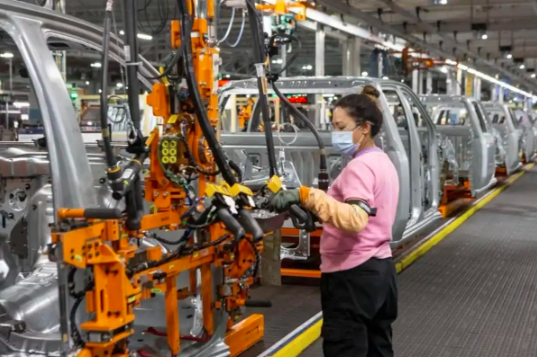
Plastics are widely used in automobiles, yet car prices are difficult to increase.
Plastic prices are rising, and the increase is quickly passed on to the midstream of the industry chain. As a critical link connecting upstream raw materials with downstream manufacturing, modified plastic enterprises are facing significant cost pressures.
Modified plastics are products derived from general-purpose or engineering plastics, with enhanced performance achieved by adding reinforcing agents or other additives, widely used in automotive, home appliances, new energy equipment, and other fields. A manager at a new materials company in Dongguan stated that upstream raw material prices have risen sharply.60%, after being passed on to the corporate end, the overall production costs increased by about 50% to 60%.

Image source: Dao Ge Talks Cars
The problem lies in the fact thatThese rising costs are not easily passed on to downstream parties.Many customers had already signed annual contracts at lower prices before the Spring Festival. Now, with the sudden rise in raw material prices, if companies directly increase prices, downstream enterprises often find it difficult to accept. Therefore, many companies can only adopt."Single order negotiation" and "phased price adjustment" methods to buffer cost pressures.
In many downstream industries, the automotive industry's situation is particularly typical.
Modern cars rely heavily on plastics in terms of material structure. In an ordinary passenger car, plastic materials account for about the weight of the entire vehicle.10% to 15%, yet accounting for nearly half of the total number of components. Instrument panels, door panels, bumpers, lamp housings, battery casings, and numerous interior parts all require engineering plastics such as PA, PC, and PMMA.
In theory, the rise in raw material costs should push up the overall cost of vehicles. However, the reality is that there is almost no room for an increase in car prices.
This has been the case in recent years.The "global chip shortage" period has already been validated. At that time, automotive chip supplies were severely constrained, forcing many car models to cut production due to the shortage. The number of chips used in a car far exceeds that in a smartphone, and for some intelligent vehicles, the chip cost per vehicle can easily reach over a thousand yuan. Yet, even during the peak of the chip shortage, most car prices remained stable and did not show significant increases.
The reason is simple: the automotive industry is extremely price-sensitive.
Consumers often compare multiple brands when purchasing a car. If a certain automaker raises prices first, it may directly lose orders. Therefore, even if costs increase, automakers usually prefer to absorb the costs by optimizing the supply chain, improving efficiency, or cutting profits, rather than directly increasing the selling price.
Prices cannot rise, so the pressure can only be absorbed within the industry chain.
When terminal prices cannot rise, cost pressures must ultimately be absorbed internally within the supply chain.
In the automotive supply chain, OEMs typically hold the strongest bargaining power. Faced with rising raw material costs, automakers often shift part of the pressure onto Tier 1 suppliers by renegotiating prices or cutting procurement costs. In turn, Tier 1 suppliers further pass this pressure down by demanding lower prices from material suppliers, creating a cascading effect.
The issue is that the automotive industry itself has been in a state of intense competition in recent years. The transition to new energy vehicles, price wars, and shifts in technological pathways have continuously squeezed industry profits. Many companies are, in fact, operating on razor-thin margins—or even at a loss.
In 2026, China's automotive market will officially enter the "stock competition" phase. As market growth slows, competition among companies will intensify further. UBS forecasts,In 2026, the growth rate of passenger vehicle sales in China may drop to about -2%, and the growth rate of new energy vehicle wholesale will also decrease from the previous 28% to about 15%.

Photo source: Shangguan News
Meanwhile, the policy environment is also changing. The purchase tax exemption for new energy vehicles has been adjusted from full exemption to a 50% reduction, and the trade-in subsidy has shifted to a model tied to a percentage-based formula. Companies that previously relied on policy-driven benefits to sustain growth will face greater operational pressure in the future.
Within the industry, regardingConsensus on the "elimination round" is growing. Many industry insiders believe that automakers selling fewer than 100,000 vehicles annually have more than an 80% chance of exiting the market. Companies with high debt, prolonged losses, and insufficient product competitiveness are likely to be eliminated in the coming years.
Against this backdrop, the impact of a rise in raw material prices cannot be ignored. The simultaneous increase in the cost of various raw materials such as plastics, chips, and metals will further compress corporate profit margins. For car manufacturers with weaker financial strength, any fluctuation in costs may become a critical variable.
From this perspective, although the rise in plastic prices is just one part of the supply chain, the chain reaction it causes could potentially affect the competitive landscape of the entire automotive industry.
Epilogue: Translate the above content into English, output the translation directly, without any explanation.
When terminal prices cannot rise, profits continue to shrink, and competition intensifies, some enterprises may still survive by leveraging economies of scale and supply chain capabilities, while many others may struggle to bear the ongoing cost pressures.
For automakers already operating on the brink of losses,This round of plastic price increases may not immediately alter the market landscape, but it could very well be the last straw.
【Copyright and Disclaimer】This article is the property of PlastMatch. For business cooperation, media interviews, article reprints, or suggestions, please call the PlastMatch customer service hotline at +86-18030158354 or via email at service@zhuansushijie.com. The information and data provided by PlastMatch are for reference only and do not constitute direct advice for client decision-making. Any decisions made by clients based on such information and data, and all resulting direct or indirect losses and legal consequences, shall be borne by the clients themselves and are unrelated to PlastMatch. Unauthorized reprinting is strictly prohibited.
Most Popular
-
Middle East Tensions Escalate Sharply: How Polyolefins Respond Amid Soaring Risk Premium
-
Huntsman Introduces “War Surcharge” Amid Shipping Disruption and Soaring Energy Costs, Global MDI Prices Continue to Rise
-

Middle East Polymer Export Hub Hit in Sudden Attack, Global Supply Chain Sounds Alarm
-
Supply Extremely Tight! LG Chem Declares Force Majeure on Export Contracts for Di-Octyl Terephthalate (DOTP)
-

Overseas News Highlights: Major Reversal! Iranian Military Says It Has Not Blocked the Strait of Hormuz! BASF, Dow, Polyplastics Announce Price Hikes!


