【Overseas Highlights】Big Reversal! Iran's Military Says It Has Not Blocked the Strait of Hormuz! BASF, Dow and Polyplastics Announce Collective Price Increases!
International News Digest:
Raw Materials News – BASF, Dow, Polyplastics, and Evonik Japan Co., Ltd. Announce Collective Price Increases!
Auto News: Honda Plans to Import Vehicles from China and the U.S. to Boost Domestic Sales in Japan
Packaging News: Reduce Weight by 25%! Colgate-Palmolive Develops New HDPE Bottle Technology
Other News – Adidas Launches Latest Mass-Produced 3D-Printed Running Shoe, CLIMACOOL LACED
Macro News – Iranian military official states Strait of Hormuz has not been blocked
Exchange Rate Information—The central parity rate of RMB against the US dollar was set at 6.9007, up by 117 basis points.
The following is the detail of international news.
1. Evonik achieves its 2025 earnings guidance and confirms its 2026 earnings outlook.
Evonik Industries AG announced on March 4 that it has achieved its 2025 financial guidance and reaffirmed its 2026 earnings outlook. The company’s final 2025 financial results confirmed the preliminary figures released on February 5: adjusted EBITDA amounted to €1.87 billion, broadly in line with the prior forecast of approximately €1.9 billion. Evonik expects adjusted EBITDA for 2026 to range between €1.7 billion and €2.0 billion. The company also confirmed other key financial metrics: sales declined by 7% year-on-year to €14.1 billion; free cash flow stood at €695 million (€873 million in 2024), with a cash conversion rate of 37%, at the upper end of the target range of 30% to 40%; and net income increased to €265 million (€222 million in 2024).
2. BASF will increase prices for plastic additives.
On March 4, BASF announced that it would increase global prices for its product portfolio of antioxidants, processing stabilizers, and light stabilizers for plastic applications, with increases of up to 20%. This price adjustment is primarily driven by substantial increases in the costs of key raw materials, inflationary impacts on fixed costs, and rising freight costs.
3. Fibrant has shut down its caprolactam production facility in Geleen, the Netherlands. The company is part of China's Hengshen Group.
On March 3, a spokesperson for Fibrant disclosed that the company has shut down its caprolactam plant in Geleen, the Netherlands. This move will take approximately 135,000 metric tons per year of caprolactam capacity offline in Europe. The plant produces caprolactam via the phenol route and also generates ammonium sulfate as a by-product. Fibrant first announced its intention to close the caprolactam plant in Geleen, the Netherlands, in a statement released on October 21, 2025, with the original plan being a permanent shutdown. According to Fibrant’s official website, the company was founded in 1952 with the establishment of its first caprolactam production facility in the Netherlands. Fibrant, founded in 1952, is now part of China’s Hengshen Group. Hengshen Group has become the world’s largest producer of caprolactam and ammonium sulfate, with production facilities located in both the Netherlands and China (Fujian and Nanjing).
4. Japan Soken Launches Construction of New COP Plant, Increasing Capacity by 30% to Strengthen Global Supply of High-End Materials
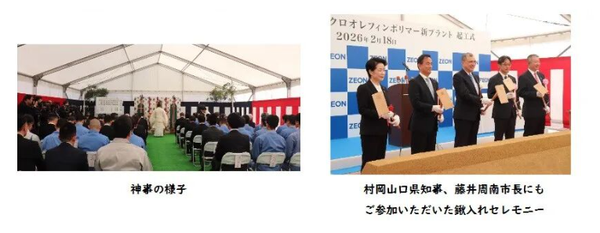
Recently, Zeon Corporation held a groundbreaking ceremony for its new cyclic olefin polymer (COP) plant at its industrial site in Yuka-cho, Shunan City, Yamaguchi Prefecture, Japan, marking the commencement of substantive construction for its expansion of high-end functional materials production capacity. According to the plan, construction of the project will officially begin in March 2026, with completion and commencement of operations scheduled for the first half of fiscal year 2028. Upon commissioning, the new plant will increase Zeon’s annual COP production capacity by approximately 30% over current levels, aligning with continuously growing market demand in optical, medical, and semiconductor applications.
5. Adidas launches the latest mass-produced 3D printed sports shoe, CLIMACOOL LACED
Adidas has recently launched its new CLIMACOOL LACED sneaker in an all-white colorway, featuring the brand’s iconic white stripes and laces. This sneaker represents the latest achievement of Adidas’ new footwear manufacturing technology, delivering superior 360-degree breathability—elevating ventilation to an entirely new level. Utilizing 3D printing technology, this sneaker was first released in a limited edition in 2024 and is now available globally starting today, offering broad options for wearers seeking ultimate everyday comfort off the court.

Weight Loss of 25%! Colgate-Palmolive Develops New HDPE Bottle Technology
Colgate-Palmolive, Polyplastics Co., Ltd., and PTI have jointly launched an innovative HDPE bottle production process, reportedly reducing both bottle weight and production cycle time by 25%. This new technology adapts the injection stretch blow molding (ISBM) process—commonly used for PET bottles—to produce lightweight, heat-fillable HDPE containers. The three companies state that incorporating a second component—Polyplastics’ ethylene-based copolymer TOPAS COC (cycloolefin copolymer)—into HDPE significantly broadens HDPE’s processing window, making ISBM practical and efficient for HDPE, while the resulting containers remain recyclable.

7. Dow, price increase!
8. Honda Plans to Import Cars from China and the US to Boost Domestic Sales in Japan
On March 5th, due to increasing losses in the automotive business, Japanese carmaker Honda Motor Co. plans to strengthen its domestic product lineup by importing vehicles from the United States and China for sale in its home market. After recording an operating loss of 166.4 billion yen ($1.1 billion) in its automotive business for the first nine months of the fiscal year, Honda is reassessing its strategy to boost competitiveness.
9. Polyplastics Co., Ltd. and Evonik Japan Co., Ltd. announce price increases for polyamide and polyether ether ketone (PEEK) resins.
According to Zhuansu View, Polyplast - Evonik Industries announced that it will implement price adjustments to its product portfolio starting April 1, 2026. Polyplast - Evonik stated that due to exchange rate fluctuations caused by the depreciation of the Japanese yen and rising raw material costs, the company is no longer able to absorb the related cost pressures on its own, making this price adjustment necessary. This price adjustment involves two product categories: polyamide resins and polyether ether ketone resins. The target products include DAIAMID® , VESTAMID® , VESTOSINT® , VESTAMELT® , TROGAMID® , VESTENAMER® and VESTAKEEP® . The company will release the price adjustment notice to customers according to the following details.
Overseas macro market:
【Israel plans to reopen its airspace on March 8.
Israeli Transportation Minister Miri Regev announced that Israel is prepared to reopen its airspace to outbound flights on the 8th. Regev stated: “Following an assessment, we have decided to allow outbound flights starting Sunday (the 8th), though specific arrangements will depend on the evolving security situation. We will provide updates on the latest developments around the clock.”
Iran claims to have hit a U.S. oil tanker in the northern Persian Gulf.
According to Iranian media reports on the 5th, the Islamic Revolutionary Guard Corps stated that its naval fighter jets struck a U.S. oil tanker in the northern Persian Gulf early this morning, and "the tanker is currently on fire."
Australian Prime Minister: “Military assets” have been deployed to the Middle East.
Australian Prime Minister Albanese said on Thursday that Australia has deployed "military assets" in the Middle East. Albanese mentioned during a parliamentary inquiry that the Australian government has sent six crisis response teams to the Middle East to assist Australian citizens stranded there, and deployed "military assets" this week as part of an emergency preparedness plan. Australian Foreign Minister Penny Wong previously, when asked about the involvement of military personnel, did not disclose details, stating that the government and staff are "considering all possible contingencies."
Iranian Foreign Minister and Turkish Foreign Minister Hold Telephone Conversation
According to Iran’s Mehr News Agency on May 5, Iranian Foreign Minister Hossein Amir-Abdollahian spoke by phone with Turkish Foreign Minister Hakan Fidan, emphasizing that Iran would “respond with the strongest possible force” against the United States and Israel. The report stated that Amir-Abdollahian also said Iran’s strikes against U.S. and Israeli military bases in the region comply with international law. Mehr News Agency further reported that on May 4, Iranian President Masoud Pezeshkian conveyed a message via social media to “leaders of neighboring and friendly countries,” stating that Iran had attempted cooperation and sought to avert war through diplomatic means, but “the aggression by the United States and Israel has left us with no alternative but to exercise self-defense.”
[Islamic Revolutionary Guard Corps: Military and commercial vessels belonging to the US, Israel, Europe, and their supporters are strictly prohibited from passing through the Strait of Hormuz]
A reporter from the General Station learned that on the morning of March 5th, local time, the Islamic Revolutionary Guard Corps of Iran stated that in the early hours of the same day, an American oil tanker was hit by a missile launched by its navy in the northern part of the Persian Gulf, and the tanker is still on fire. The statement said that Iran had previously stated that, according to relevant international laws and resolutions, during wartime, the rules for the passage through the Strait of Hormuz would be controlled by the Iranian side. The statement also said that military and commercial vessels belonging to the United States, Israel, European countries, and their supporters are strictly prohibited from passing through these waters, and if discovered, they will be attacked.
Iranian military official says Strait of Hormuz has not been blocked
At around 5 a.m. local time, Amir Haidari, Deputy Commander of Iran’s Khatam al-Anbia Central Command, stated in an interview that Iran has not blocked the Strait of Hormuz. Haidari said that Iran is currently handling vessels transiting the Strait in accordance with relevant international rules and established agreements.
Price Information:
The central parity rate of the Chinese yuan against the US dollar was set at 6.9007, up by 117 pips; the previous trading day's central parity rate was 6.9124, the official closing price was 6.9120, and the overnight trading session closed at 6.8951.
Upstream Raw Material USD Market Price
March 4, CFR Northeast Asia 800 USD/ton, up 20 USD/ton, CFR Southeast Asia 770 USD/ton, up 10 USD/ton.
The FOB Korea average price of propylene in Northeast Asia increased to 850 USD/ton, up 30 USD/ton. The CFR China average price increased to 890 USD/ton, up 10 USD/ton.
North Asia CFR prices: propane at $779–781/ton; butane at $779–781/ton.
China South China FOB price for April, propane 836-846 USD/ton; butane 831-841 USD/ton.
Taiwan area FOB price for frozen cargo: Propane 779-781 USD/ton; Butane 779-781 USD/ton.
LLDPE USD Market Price
Film: USD 900 per metric ton (CFR Shanghai)
Injection molding: USD 1,080 per metric ton (CFR Huangpu)
[HDPE USD market price]
Film: USD 1,060 per metric ton (CFR Huangpu)
Hollow: 950 USD/ton (CFR Huangpu)
Injection molding: No quotation available;
Pipe: No quotation;
LDPE USD Market Price
Film: USD 1,160/ton (CFR Dongguan);
Coating: No quotation.
[PP US Dollar Market Price]
Homopolymer: USD 975/ton (CFR Huangpu)
Copolymer: $1,010/ton (CFR Nansha);
Film: 1120 USD/ton (CFR Huangpu)
Transparent: $1,185/ton (CFR Huangpu);
Pipe material: 1200 USD/ton (CFR Shanghai).
【Copyright and Disclaimer】This article is the property of PlastMatch. For business cooperation, media interviews, article reprints, or suggestions, please call the PlastMatch customer service hotline at +86-18030158354 or via email at service@zhuansushijie.com. The information and data provided by PlastMatch are for reference only and do not constitute direct advice for client decision-making. Any decisions made by clients based on such information and data, and all resulting direct or indirect losses and legal consequences, shall be borne by the clients themselves and are unrelated to PlastMatch. Unauthorized reprinting is strictly prohibited.
Most Popular
-
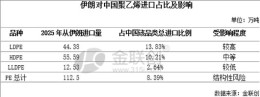
Middle East Tensions Escalate Sharply: How Polyolefins Respond Amid Soaring Risk Premium
-
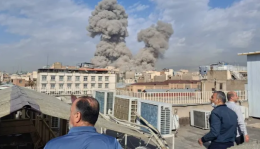
Middle East Tension Spikes Global Energy Pattern, Crude Oil and Plastic Industries Face Multiple Challenges
-
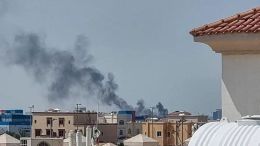
Middle East Polymer Export Hub Hit in Sudden Attack, Global Supply Chain Sounds Alarm
-
[Forward-Looking Analysis] Impact of Escalating U.S.-Iran Tensions on Domestic Chemical Market
-

Futures Surge Violently, Polyolefin Spot Prices Rise Sharply in Tandem