Novel Biosensor Can Detect Polystyrene (PS) Nanoplastics in 20 Minutes
Researchers now have a faster way to detect nanoplastics in water. A research team at the Institute of Science Tokyo in Japan has developed a biosensor that can identify polystyrene nanoparticles in water within 20 minutes without labeling or complex sample pretreatment. The device was tested in both laboratory water samples and real water samples spiked with polystyrene nanoparticles, and it can detect particles as small as 50 nanometers, helping researchers better understand and address the accumulation of nanoplastics in the environment.
Why are simpler methods for detecting nanoplastics needed?
Plastic continuously breaks down into smaller particles over time, ultimately forming nanoplastics, which are particles ranging in size from 1 to 1000 nanometers. Nanoplastic particles have spread to various environments and have been detected in biological organisms, including the human body, raising concerns about their potential harm to the environment and human health.
Current analytical methods for detecting nanoplastics mainly include microscopy and spectroscopic techniques. These methods require expensive instruments and equipment, involve complicated sample pretreatment procedures, and are difficult to apply to routine monitoring.
A biosensor capable of label-free selective detection of polystyrene nanoparticles
A research team at the Tokyo Institute of Science has developed this biosensor for the rapid detection of polystyrene nanoparticles in freshwater. Polystyrene is one of the most widely used plastic raw materials in household and industrial settings, making polystyrene nanoparticles an important target in nanoplastic detection research. The device enables label-free, selective detection in aquatic environments with minimal sample pretreatment, helping to improve water quality assessment and marking an important step toward the practical detection of nanoplastics.
The study was led by Associate Professor Mana Toma of the Department of Electrical and Electronic Engineering, School of Engineering, Institute of Science Tokyo, in collaboration with Assistant Professor Shuo Cheng of the School of Environment and Society. The related paper was published online on May 9, 2026, and will be formally published in Volume 308 of Biosensors and Bioelectronics on September 15, 2026.
Mana Toma said, “Nanoplastics are extremely small in size, making them difficult to detect using traditional methods. We developed a biosensing platform that enables the sensor surface to specifically capture polystyrene nanoparticles and detect them optically, thereby overcoming this challenge.”
Biosensors rely on biorecognition elements that bind specific targets and subsequently generate measurable signals. In this device, a peptide capable of binding polystyrene is used as the recognition element. The peptide is immobilized on a thin gold film via a polyethylene glycol linker, which reduces nonspecific binding and enhances the specific capture of polystyrene nanoparticles.
The biosensor works based on surface plasmon resonance (SPR) optical sensing technology, which can capture minute changes in the refractive index at the sensor surface in real-time. A laser is directed through a high-refractive-index glass prism onto a thin gold film, exciting the collective oscillation of free electrons on the metal surface, known as surface plasmons. When polystyrene nanoparticles bind to the sensor, the local refractive index near the gold film changes, resulting in a shift in the resonance angle. The system monitors changes in the intensity of reflected light at a selected incident angle to capture this shift. By comparing the intensity changes with a calibrated SPR response-concentration curve, the concentration of polystyrene nanoparticles in water can be quantitatively determined.
Validation of detection performance in simulated water samples and actual water samples
Researchers used laboratory water samples designed to mimic the ion composition of freshwater and added polystyrene nanoparticles with a known, controllable concentration. In these water samples, the sensor was able to detect 50 nm polystyrene nanoparticles within 20 minutes, with a detection limit as low as 1.3 micrograms per milliliter. The research team also added polystyrene nanoparticles to aquarium water and pond water, and performed detection validation using these real-world, environment-like water samples.
Mana Toma mentioned: “Traditional detection methods require specialized instruments and involve complicated sample pretreatment steps. This biosensor simplifies the detection process, making nano-plastic monitoring much easier to carry out.”
Continuous use and degradation of plastics lead to the ongoing accumulation of nanoplastics in the environment. This biosensor simplifies the detection process and improves the practicality of monitoring, enabling researchers to further investigate the dispersion pathways and behavioral characteristics of nanoplastics and helping to tackle this environmental challenge.
【Copyright and Disclaimer】This article is the property of PlastMatch. For business cooperation, media interviews, article reprints, or suggestions, please call the PlastMatch customer service hotline at +86-18030158354 or via email at service@zhuansushijie.com. The information and data provided by PlastMatch are for reference only and do not constitute direct advice for client decision-making. Any decisions made by clients based on such information and data, and all resulting direct or indirect losses and legal consequences, shall be borne by the clients themselves and are unrelated to PlastMatch. Unauthorized reprinting is strictly prohibited.
Most Popular
-
2026 Electronic Components Price Increase Notice
-
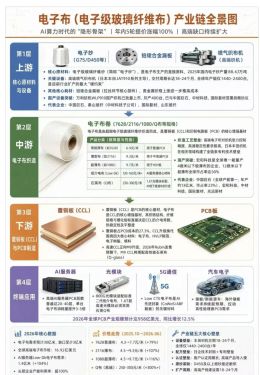
AI Computing Power Demand Ignites Electronic Fabrics! China Jushi Hits Limit Up! Domestic Substitution Welcomes Golden Window
-

A Look at the Material Suppliers Behind SpaceX
-

Packaging Industry Faces a Growing Component Obsolescence Crisis
-

Europe’s “Walls” Keep Rising, but China’s Cars Keep Selling More