Nissan and honda, a reversal of fortunes
In 2026, when facing Nissan again, Honda may not have the same confidence as when it previously refused to merge.
At the time, Honda’s confidence stemmed from its relatively solid financial position. In its view, Nissan was in a state of emergency, and the merger was more like a rescue than an equal integration. Yet in just over a year, the fortunes of the two Japanese giants have reversed: Nissan, once mired in trouble, has shown signs of rebounding from the bottom, while Honda, once seemingly composed, has slipped into difficulty.
This differentiation is taking place against the backdrop of uncertainty in the entire Japanese automotive industry. Affected by the turmoil in the Middle East and rising raw material prices, the combined net profit of Japan's seven major automakers is expected to drop to approximately 3.9 trillion yen in the fiscal year 2026, a nearly 50% decline from the historic high of 7.54 trillion yen in the fiscal year 2023.
Against the same headwinds, Nissan's recovery appears to be more substantial.
Performance divergence: one rises, one falls.
The 2025 fiscal year report card has drawn a dividing line between the two companies.
First, looking at Nissan: in fiscal year 2025, global sales reached 3.15 million units, with consolidated net revenue of 12 trillion yen, operating profit of 58 billion yen, and an operating profit margin of 0.5%. The full-year net loss was 533.1 billion yen. Compared to the previous year, Nissan's operating performance improved. Notably, in the second half of 2025, the company's automotive business achieved positive free cash flow, reaching 112 billion yen.
For the fiscal year 2026, Nissan has provided clear recovery guidance: it expects consolidated net revenue of 13 trillion yen, operating profit of 200 billion yen, and net profit of 20 billion yen. This will mark Nissan's first annual profit in three years.
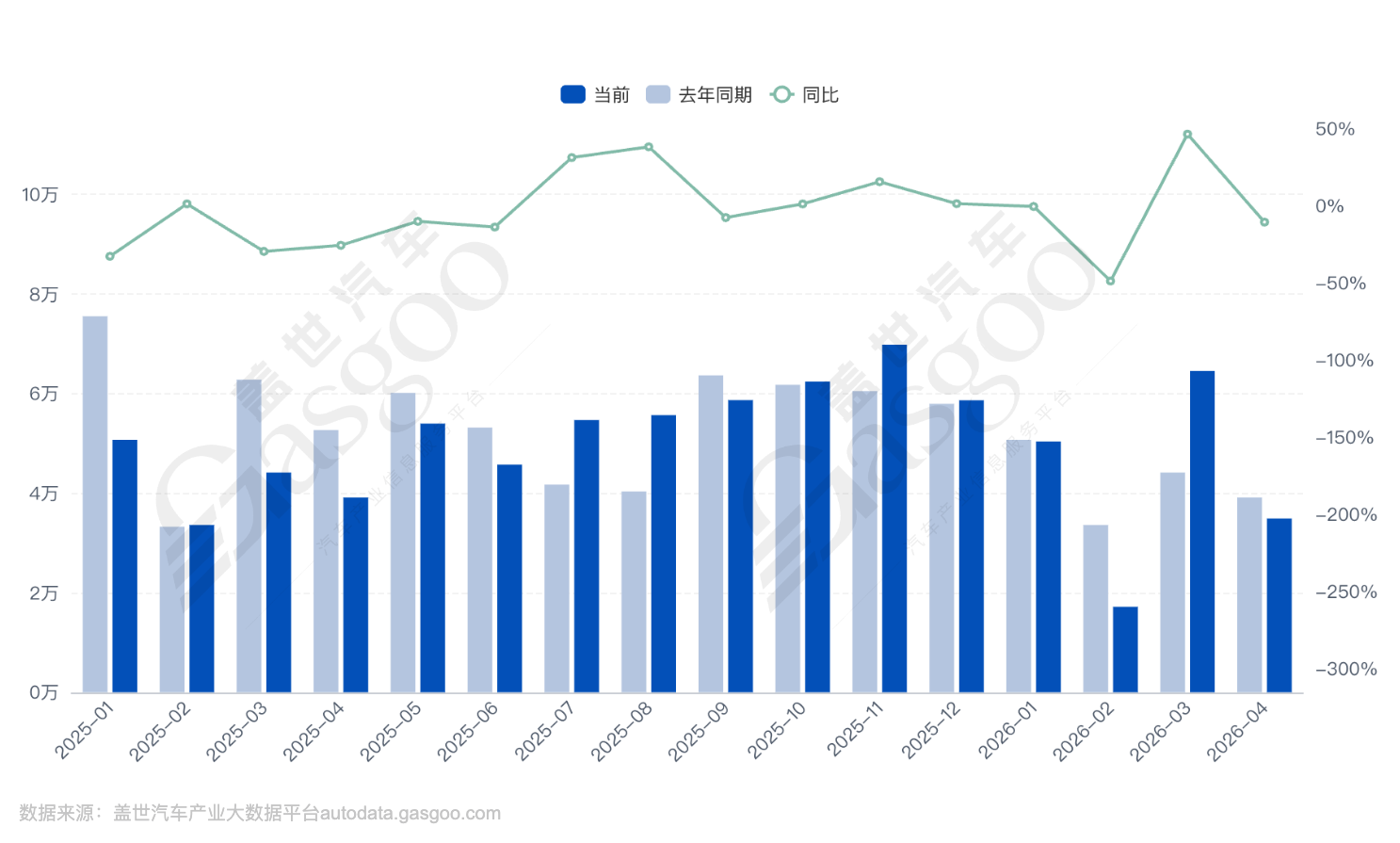
Nissan Domestic Sales from January 2025 to April 2026
Nissan CEO Ivan Espinosa said, “Fiscal year 2025 is a year of steady progress under our ‘Re:Nissan’ plan. We have moved beyond the recovery phase and are now entering the growth phase.”
Now look at Honda. In fiscal year 2025, Honda posted a net loss of 414.3 billion yen for the full year, marking the company’s first annual net loss since it went public in 1957.
The direct hit to losses stemmed from failures in its electrification strategy. According to Honda, a reassessment of its electric-vehicle strategy and the cancellation of three North American EV models resulted in a total of 2.5 trillion yen in charges and losses, of which 1.45 trillion yen invested in electrification was written down. The cancelled models include the 0-series SUV, the 0-series sedan and the Acura RSX.
At the earnings briefing, President Toshihiro Mibe candidly stated, "Ultimately, the responsibility lies with me." Honda expects the loss related to electric vehicles in fiscal year 2026 to narrow to 500 billion yen, but operating profit excluding losses related to electric vehicles will reach 1 trillion yen.
The performance of the two companies in core markets around the world also differs slightly.
In the Chinese market, Nissan is rebounding. In the second half of 2025, Nissan’s sales in China increased by 4.5% year on year; in the first quarter of 2026, the growth rate further rose to 7.2%, reversing the previous continuous downward trend.
Nissan China Chairman Stephen Ma said the company aims to restore its domestic sales to 1 million vehicles by the end of 2030. “I remember that in 2018, the joint venture company sold 1.55 million vehicles, of which about 1.2 million were Nissan-brand vehicles. We have achieved that before, so it is achievable.”
Supporting this recovery is the gradual rollout of Nissan’s N Series new energy product lineup. The company has successively launched models such as the N6, N7, and NX8, covering multiple technical routes including pure electric, plug-in hybrid, and range-extended powertrains.
Honda faces a very different situation in China. Public data shows that Honda’s sales in China in 2025 fell by 60% from their 2020 peak. Entering 2026, sales have shown no improvement, with April sales alone dropping 48.3% year on year to around 20,000 units. The e:N series of electric vehicles has received a lukewarm market response and failed to gain traction.
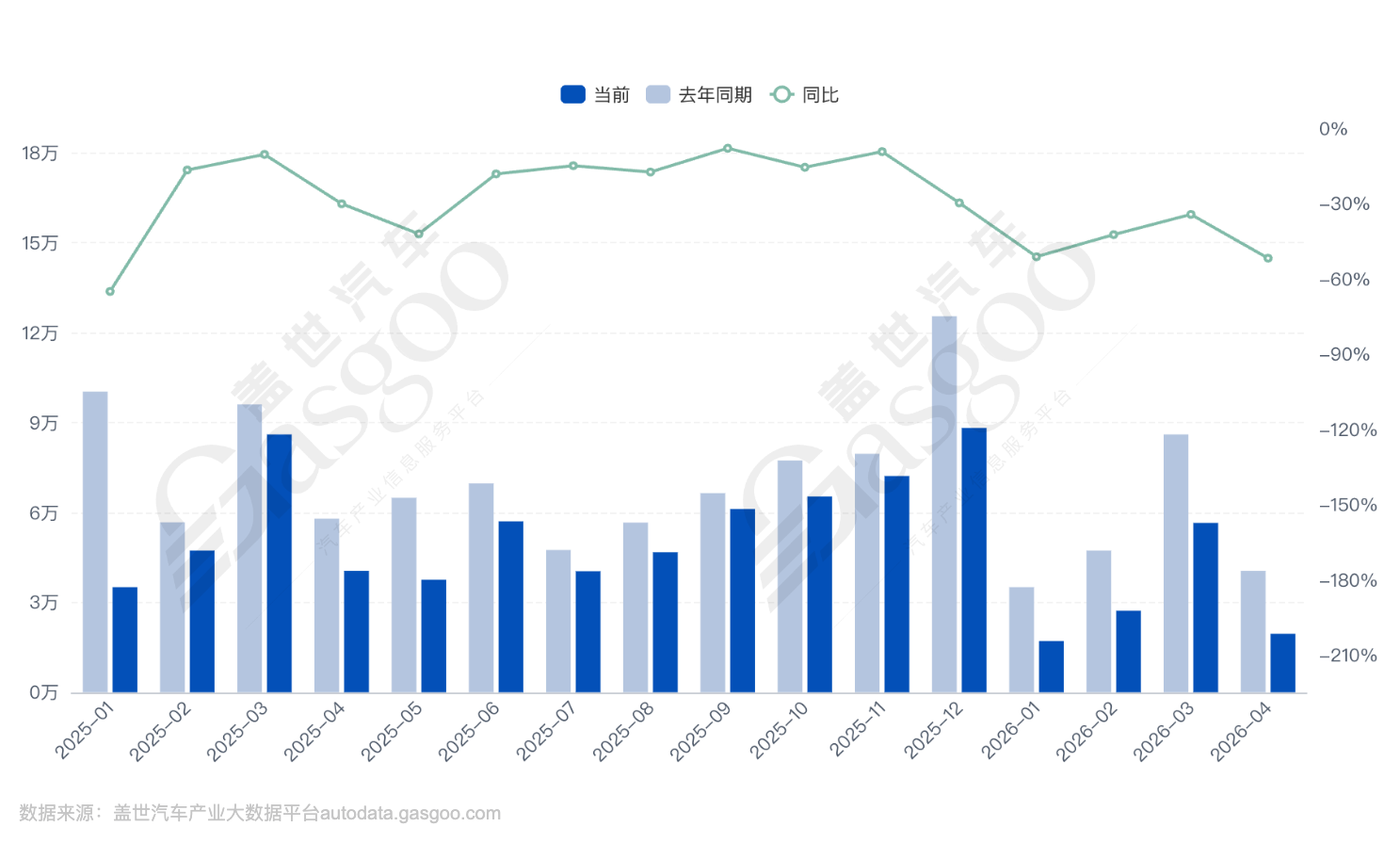
Honda domestic sales from January 2025 to April 2026
However, in the North American market, both Nissan and Honda saw declines in the first quarter of 2026, though the drops were relatively moderate. Honda, however, was hit hard by its faltering electrification transition. Its plan to produce three electric vehicle models in the United States in 2026 was canceled, the battery plant jointly built with LG Energy Solution in Ohio was shifted to hybrid battery production, and its project in Canada was suspended indefinitely.
In Japan, Honda has the edge in sales, but Nissan is also striving to catch up. Nissan plans to focus on the compact car segment, aiming to achieve annual sales of 550,000 units by fiscal 2030.
In emerging markets, Nissan has found a new path. It has positioned China as an export hub, planning to export vehicles manufactured in China to Canada, Latin America, Southeast Asia, and the Middle East. According to a recent report by Bloomberg, Nissan is considering exporting models produced by its joint venture in China to Canada. Nissan China's initial annual export target is 100,000 units, with a long-term goal of increasing it to 300,000 units.
Honda is facing pressure from Chinese brands in markets such as Southeast Asia and Latin America. Taking the Southeast Asian market as an example, the market share of Japanese brands represented by Toyota, Suzuki, and Honda has fallen below 70%.
Why is it our turn again?Honda?
The rise and fall of Nissan and Honda stems from differences in the intensity of their reforms and their market strategy choices.
Nissan’s turnaround began with a “surgery.” Facing outdated models, high debt, and management turmoil, Nissan launched its “Re:Nissan” business restructuring plan in 2025, covering the layoff of 20,000 employees and the closure and consolidation of multiple vehicle assembly plants, reducing its global production facilities from 17 to 10. The consolidation of seven plants is currently underway, including the transfer of production capacity.
Nissan stated that, as of the end of fiscal 2025, it had made substantial progress toward its ¥500 billion cost-reduction target: fixed costs were reduced by ¥200 billion, variable costs by ¥55 billion; in the R&D area, cost per labor hour decreased by 18%, and it is on track to reach the 20% target without affecting project schedules.The company also plans to streamline its global vehicle lineup from 56 models to 45.
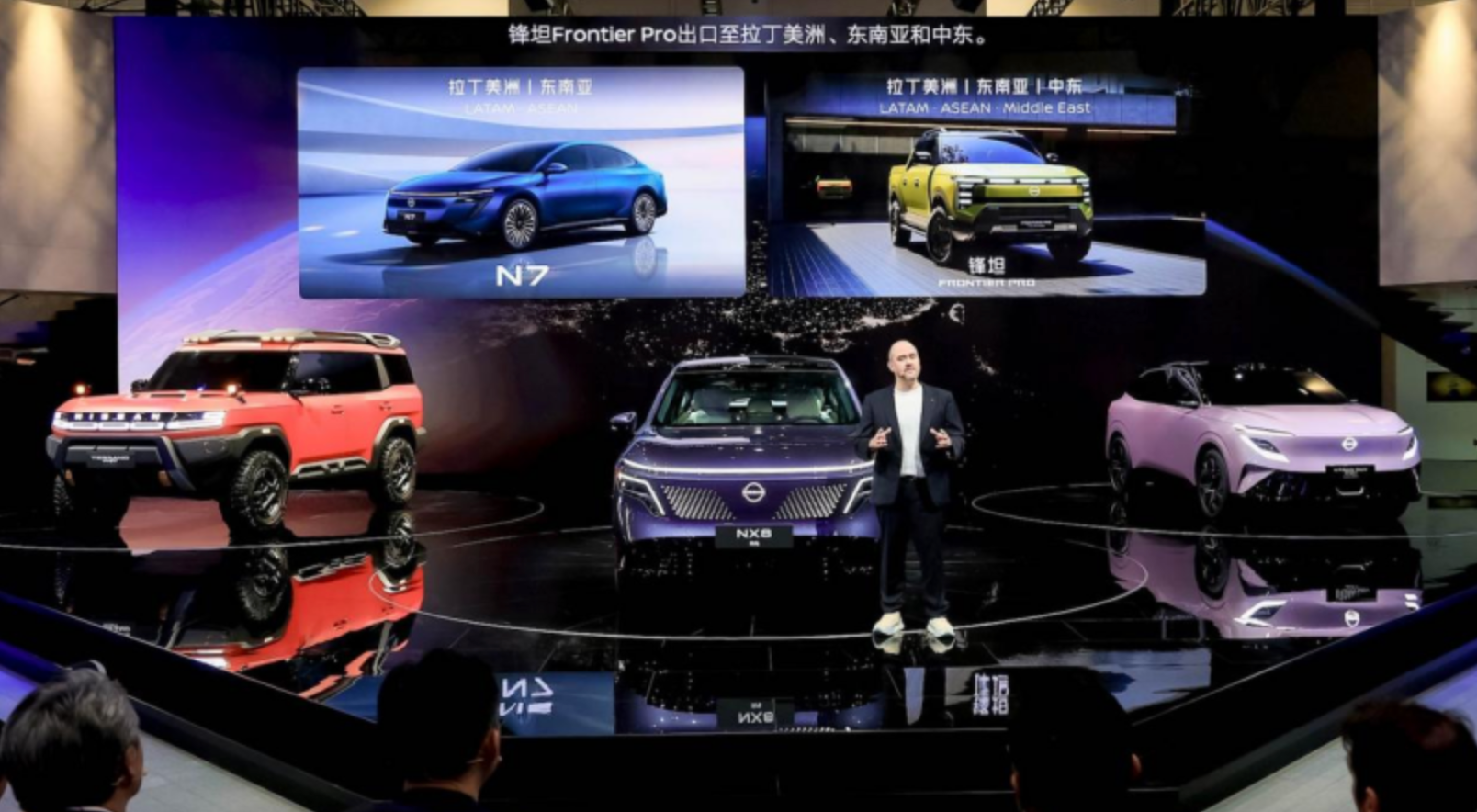
Image source: Nissan
Nissan has also adjusted its positioning and approach in the Chinese market. In the past, multinational automakers typically localized global models. Today, foreign automakers are breaking away from this model, and Nissan is doing the same.
From the N7 to the NX8, Nissan’s new-energy lineup is deeply integrated with China’s local supply chain. Taking the NX8 as an example, the entire range is equipped with Dongfeng Nissan’s Yundun Battery 2.0, with the main-selling versions using CATL battery cells; its advanced driver-assistance system is developed in close collaboration with Momenta and built on a reinforcement-learning large model.
The pure electric version of the vehicle is equipped with an 800V high-voltage silicon carbide platform and 5C ultra-fast charging technology, allowing for a range of 300 kilometers with just 6 minutes of charging, and it takes only 12 minutes to charge from 10% to 80%. The extended range version is powered by a 1.5T four-cylinder range extender, achieving a CLTC pure electric range of 310 kilometers and a comprehensive range of 1450 kilometers.
These configurations and specifications fully align with the standards of China’s mainstream new energy vehicles. In other words, Nissan is no longer trying to “educate” Chinese consumers, but has chosen to “keep up with” the pace of the Chinese market.
More importantly, Nissan has elevated the Chinese market into a global hub for innovation and exports. Leveraging the local R&D and supply chain systems of Dongfeng Nissan and Zhengzhou Nissan, Nissan has established in China a complete closed loop spanning R&D, production, and exports. The first models to be exported to the Latin American market are the all-electric sedan N7 and the Frontier Pro electric pickup, among others. In the future, other models such as the NX8 will also be added to the export lineup.
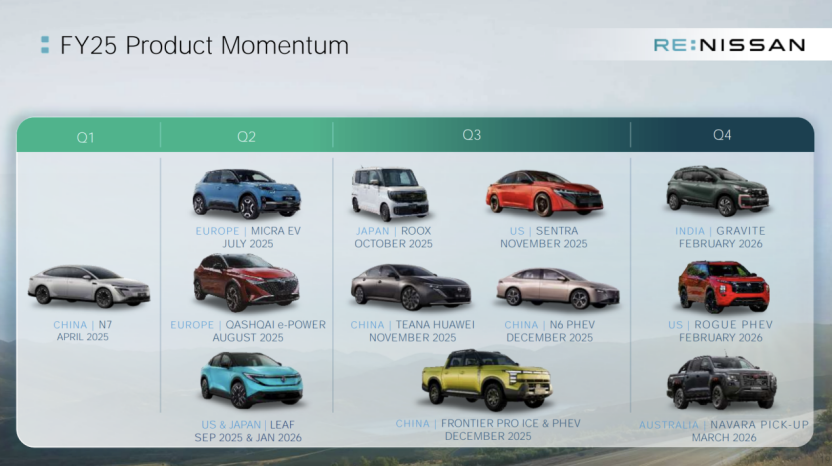
Image source: Nissan
On the technical front, Nissan has also avoided putting all its eggs in one basket. In April 2026, Nissan unveiled its long-term vision, “Making Intelligent Mobility Shine in Life,” and established the direction of “AI-defined vehicles,” while at the same time pursuing a multi-track strategy that includes fully electric vehicles, e-POWER, plug-in hybrids, extended-range electric vehicles, and gasoline-powered models. Although this approach spreads resources more thinly, when the growth of the pure EV market slows, the other paths can serve as a buffer.
In contrast, Honda's predicament stems more from strategic wavering and slow execution. As mentioned above, Honda has gone through repeated phases of aggressive entry into and withdrawal from the electrification route, incurring costs and losses of 2.5 trillion yen. But that is not all.
In the hybrid vehicle sector, Honda should have been a leader, but it has become a follower. In 1999, Honda launched the Insight in the United States, seven months earlier than the Toyota Prius. But today, Honda offers only four hybrid models in the U.S. market, while Toyota has 29.
Toyota offers hybrid versions across most of its lineup, including core models like the Camry and Sienna, allowing it to seize the hybrid market early and protect its market share. Ford has also opened up a new market with the compact hybrid pickup Maverick, and the hybrid version of its F-150 now accounts for roughly one-third of total sales.
Image source: Honda
In contrast, Honda did not announce until 2025 that it would launch 15 all-new hybrid models by 2029. However, it must be noted that by then, the market window for hybrid vehicles had already narrowed.
In the Chinese market, Honda’s response has likewise been slow, and it has yet to fully shift toward a localized operational mindset. Its e:N series of electric vehicles, developed specifically for the Chinese market, has seen heavy investment but limited results, and has been criticized as “unable to compete with Chinese domestic rivals that are more technologically advanced and lower in cost.”
The cumulative result of these missteps is that Honda made heavier upfront bets on its pure electric vehicle projects, recording impairment losses of JPY 1.45 trillion in fiscal 2025 alone. A sunk cost of this magnitude means that even if Honda begins to scale back and adjust, its financial recovery may take longer.
The Road to Refactoring: What Comes Next
Faced with massive losses, Honda is taking the same path Nissan has already started down: shrinking, cutting costs, and refocusing.
In 2026, Honda will define the next three years as a "critical period for the restructuring of the four-wheeled business." The key measures include: optimizing the global cost structure and integrating inefficient production capacity; abandoning aggressive pure electric goals and reallocating resources towards hybrid power; and concentrating operational resources in core regions such as North America, Japan, and India.
In terms of hybrid products, Honda has stated that it plans to launch next-generation models equipped with a new hybrid system starting in 2027, with a goal of introducing 15 models globally by 2029. According to Honda's plan, the cost of the new generation hybrid system will be reduced by more than 30% compared to the 2023 models, and fuel efficiency is expected to improve by about 10%.
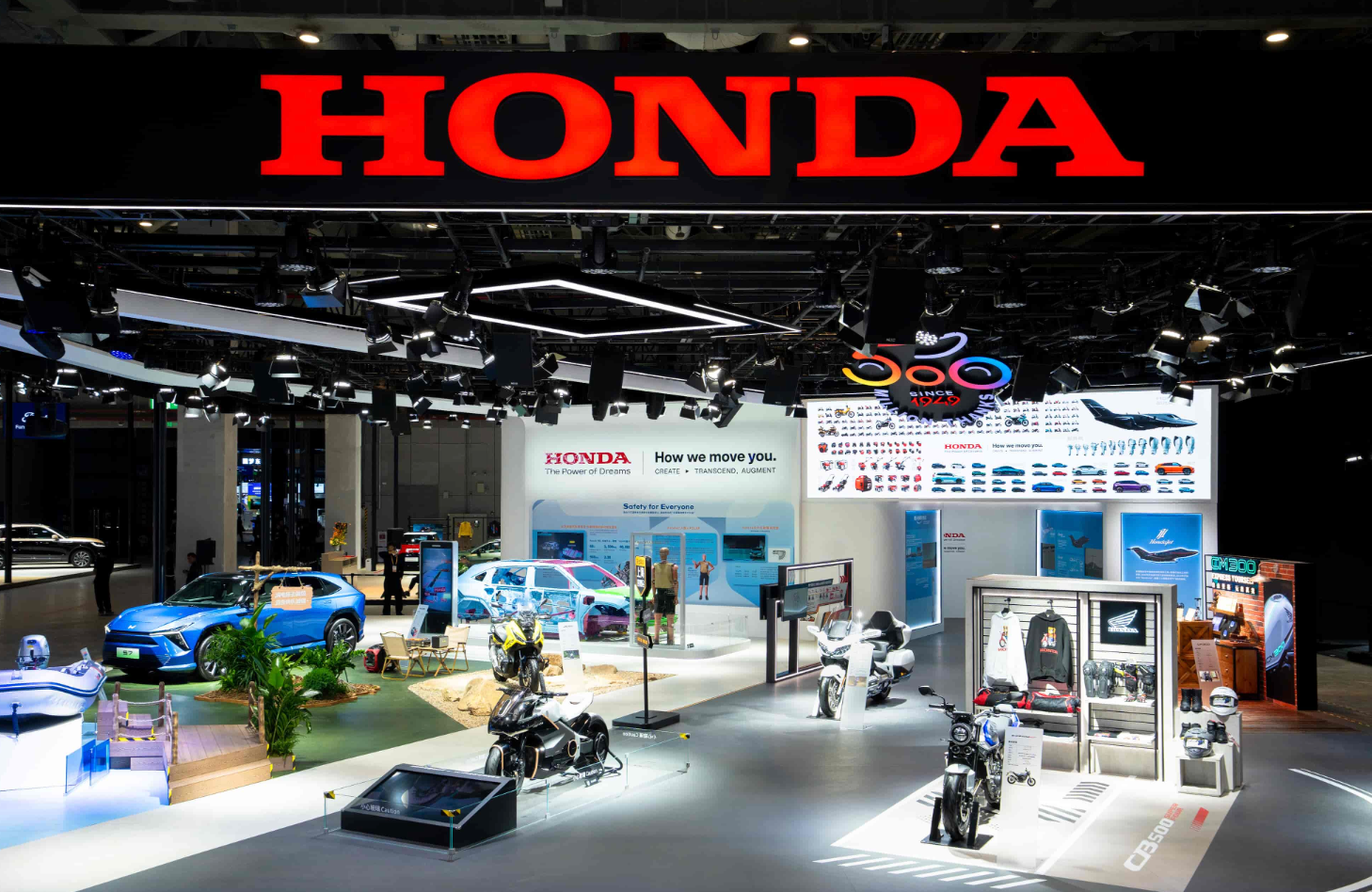
Image source: Honda China
To make up for lost time, Honda has also taken drastic measures to improve R&D efficiency. Its goal is to cut development costs, development time, and development man-hours by half, using 2025 as the benchmark. With the help of digitalization and AI tools, the development cycle for minor facelift models will be shortened by half starting this year, and all-new next-generation models launched after 2028 will also follow this pace.
In addition, Honda plans to leverage the cost advantages of China and India to enhance cost competitiveness through the standardization of components.
Although the priority of the battery-electric sector has been reduced, Honda has not completely given up. Development of all-solid-state batteries is still ongoing, and the electronic/electrical architecture will be changed to a domain-based structure to allow flexible adjustments for different markets. The in-house "ASIMO OS" in-vehicle system will also be expanded in the future from battery-electric vehicles to hybrid vehicles.
In the Japanese market, Honda also plans to launch a kei electric vehicle in 2028, continuing to defend its home-market stronghold.
In terms of production, Honda aims to improve production efficiency by about 20% over the next five years, mainly by optimizing the investment pace for new models and equipment.
These measures bear similarities to Nissan’s “Re:Nissan” plan. The difference is that Nissan’s reforms have already entered the payoff phase, while Honda’s adjustments are only just beginning. How effective they will be still needs time to prove.
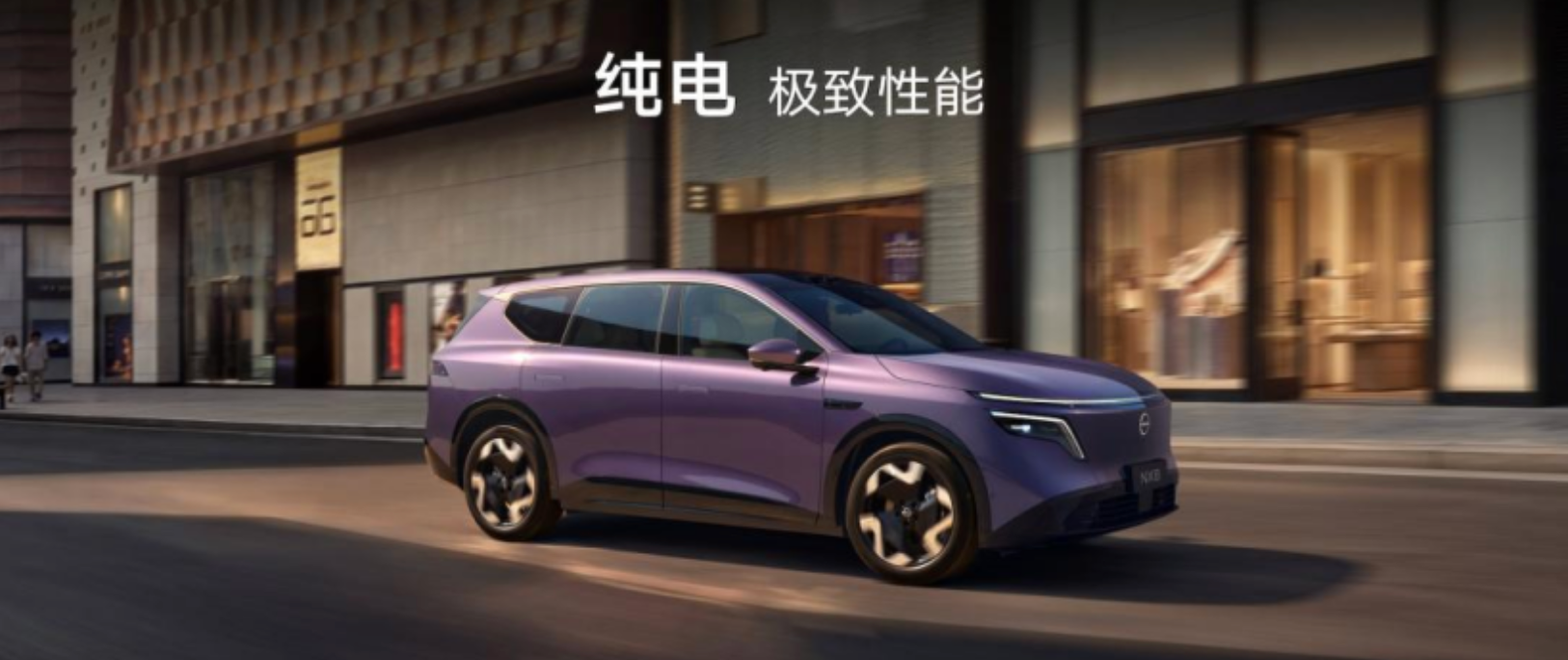
Image source: Nissan
As for the Chinese market, although Nissan and Honda are in different situations, the two companies are converging in their positioning in this market: China is no longer just a sales market.
Like Nissan, Honda is also leveraging China’s supply chain to support other markets. One change is that Honda has rebadged the China-made e:NS2 crossover as the fourth-generation Insight and imported it for sale in the Japanese market, with the first batch limited to 3,000 units. This makes it the first Japanese automaker to sell a China-produced model under its own brand in its home market of Japan.
This trend is not unique to Nissan and Honda. Volkswagen also plans to export models made in China to Europe to reduce costs and enhance market competitiveness; BMW and Tesla have consistently been exporting domestically produced vehicles overseas. Renault, on the other hand, is deeply integrating the Chinese new energy supply chain to support its electric vehicle business in Europe.
The core logic behind the actions of foreign car companies is consistent: China has one of the most complete electrification and intelligent supply chains in the world, one of the fastest R&D iteration speeds, and the most intense market competition environment. Products and technologies tested in the Chinese market generally possess global competitiveness.
For Nissan and Honda, reaching this consensus took different amounts of time and came at different costs. Nissan made the choice proactively after going through management turmoil and declining sales; Honda followed under the pressure of losses. But in any case, both companies ultimately moved in the same direction: to survive in the Chinese market, they must do things the Chinese way. In the development of the global auto market, they also need to draw on “China’s strength.”
Conclusion: Translate the above into English and output the translation directly, without any explanation.
No automaker can stay at the top forever. General Motors once went through bankruptcy restructuring, and Ford also made drastic adjustments after the financial crisis. Losses, adjustments, and restructuring are the norm in the automotive industry cycle, and also the necessary path for companies to weather the cycle.
The electrification transformation is reshaping the global automotive industry landscape. Traditional automakers face multiple pressures including technology route choices, market structure changes, and organizational adjustments, making growing pains inevitable. Nissan's case illustrates that proactive reform, focusing on core strengths, and deep localization can provide opportunities for a rebound even when deeply troubled. Honda's case, on the other hand, shows that strategic wavering, slow response, and ignoring market changes can lead to a passive position despite having a strong foundation.
For Nissan, turning a profit in fiscal 2026 is only the first step. As the “Re:Nissan” plan enters its final phase, whether its China export base can continue to play a strong role and whether its NEV product lineup can remain competitive will determine whether it can truly return to the global first tier.
For Honda, the next three years of restructuring will be fraught with challenges—whether cost reductions and efficiency gains can take effect, how its electrification strategy should be rebalanced, and whether it can catch up in localizing for the Chinese market. Every step will be a matter of survival.
There are no eternal winners in the automotive industry, only those who continuously transform. At the crossroads of electrification and intelligence, respecting the market, embracing change, and taking decisive action are the only ways to survive through cycles. Often, the timing of reforms and the determination to execute matter more than the resources a company possesses in determining its destiny.
【Copyright and Disclaimer】The above information is collected and organized by PlastMatch. The copyright belongs to the original author. This article is reprinted for the purpose of providing more information, and it does not imply that PlastMatch endorses the views expressed in the article or guarantees its accuracy. If there are any errors in the source attribution or if your legitimate rights have been infringed, please contact us, and we will promptly correct or remove the content. If other media, websites, or individuals use the aforementioned content, they must clearly indicate the original source and origin of the work and assume legal responsibility on their own.
Most Popular
-
A Look at the Material Suppliers Behind SpaceX
-
BASF, Selling Again!
-

BASF Cuts Core Business As It Exits All Non-Core Operations, Triggering A New Round Of Industry Restructuring
-
Gas Explosion Accident at Shanxi Tongzhou Group Liushenyu Coal Mine Results in 82 Deaths
-

Bola Carbon Black Announces Global Restructuring of Specialty Carbon Black and Multi-Walled Carbon Nanotube Business