



Market Capitalization Down to Just $14 Million! Bill Gates-Backed Surgical Robot Delisted from NYSE
On March 5, Eastern Time, Vicarious Surgical (NYSE: RBOT)—a surgical robotics company previously backed by Bill Gates and granted the FDA's "Breakthrough Device" designation—officially received a delisting notice from the New York Stock Exchange, initiating the delisting process for its Class A common stock. Trading of the company’s shares had already been halted after the market close on the previous day, March 4, marking the end of its SPAC-fueled public listing saga that began in 2021, culminating in a 95% plunge in market value and a quiet exit.
Second Life: Market Value Falls Below the Threshold, Relocating to OTC for Survival
The core reason for this delisting is that Vicarious Surgical triggered the NYSE's listing bottom line — a global average market value of less than $15 million for 30 consecutive trading days. As of the last trading day before delisting, the company's stock price was only $0.38, a plunge of over 95% from the closing price on its first day of SPAC listing in 2021, with a total market value of about $14 million, completely falling below the listing threshold.
According to NYSE rules, a company has the right to submit a written appeal within 10 business days after receiving a delisting notice. However, as of the time of publication, Vicarious Surgical has not yet disclosed a specific appeal plan. To avoid a complete trading suspension, the company has already obtained approval from the OTC Markets Group to resume trading on the OTC market under the ticker symbol “RBOT” beginning March 11.
As an over-the-counter (OTC) market, its regulatory standards are far lower than those of the NYSE, yet its liquidity is extremely poor—meaning Vicarious Surgical’s future fundraising capacity will be further constrained, allowing it to advance product development only in a “life-sustaining” manner.
II. Former Stars: The "Immersive Surgery" Dream of MIT Startups, with Gates Personally Involved
In 2014, Vicarious Surgical was founded by three co-founders based on technology from MIT: Co-founder and former CEO Adam Sachs (son of an MIT professor, "entrepreneur second generation"), classmate Sammy Khalifia, and Dr. Barry Greene, who has 30 years of experience in laparoscopic surgery.
Adam Sachs's entrepreneurial inspiration came from the movie "The Incredible Shrinking Man" — he wanted to allow surgeons to "shrink" into the patient's body to complete delicate surgeries from a first-person perspective. This vision ultimately materialized into the world's first robotic system that integrates VR technology with single-port minimally invasive surgery.
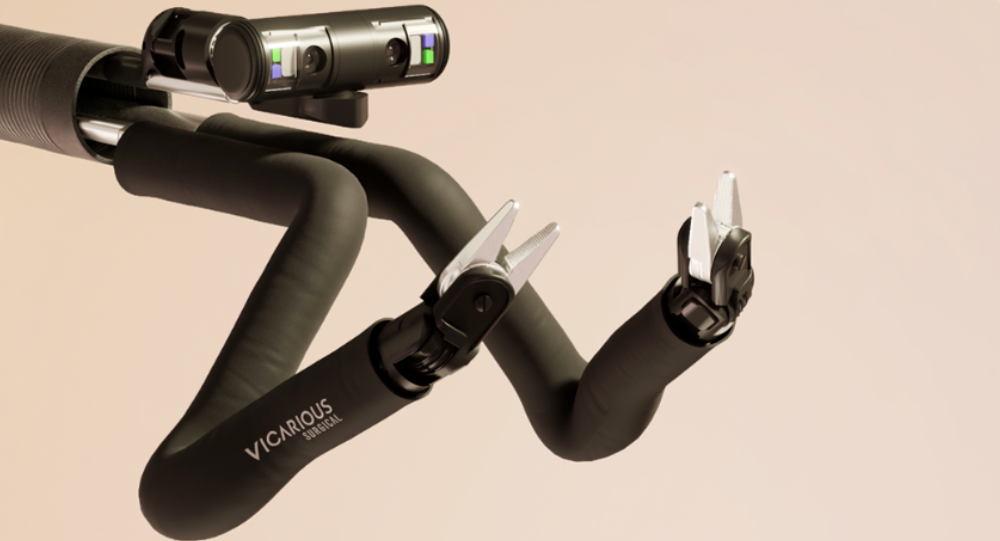
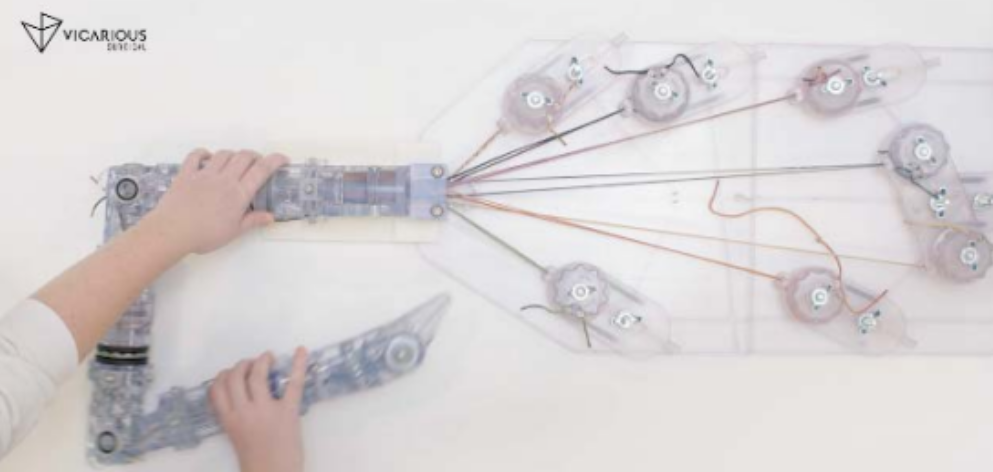
This product, named Vicarious Surgical SYSTEM, quickly gained attention with its disruptive design: it only requires a single 1.5 cm incision to insert a camera and two bionic arms; the bionic arms are equipped with 28 sets of sensors, allowing for 360° operation without blind spots, with flexibility comparable to the human wrist; through an immersive 3D visualization console, doctors can feel as if they are "inside" the patient's abdomen, performing precise diagnosis and treatment. More importantly, the system is compact, mobile, and costs much less than traditional surgical robots, once being seen as a strong challenger to the Da Vinci Surgical System.
In 2019, the product was granted the U.S. FDA's "Breakthrough Device" designation, becoming the only surgical robot in the world to receive this honor at the time. This recognition also opened the door to capital. Bill Gates' fund, along with well-known institutions such as Becton Dickinson and Khosla Ventures, invested in the company. In September 2021, Vicarious Surgical went public by merging with the SPAC company D8 Holdings, raising $220 million, and its market value reached as high as $1.1 billion at its peak.
III. An Intractable Dilemma: Repeated Setbacks in R&D, Cost Reduction Also Fails to Halt Losses
After going public, Vicarious Surgical quickly fell into the "death cycle" of the medical robotics industry: high R&D investment, long approval cycles, and no product revenue.
Its core pain point lies in the continuous delay in product development. Initially, the company planned to submit the FDA 510(k) application for abdominal hernia surgery by the end of 2023. However, due to the disruptive nature of the technical approach, the company opted for a more challenging De Novo approval pathway, pushing the application date to the end of 2024. By 2026, the company directly canceled the originally planned clinical trial program set to start in 2025, and instead focused on the design optimization of the commercial version.
Although the company announced in January this year that it had completed key validation for ventral hernia repair surgery in animal laboratories and planned to complete system design freeze by the end of the year, this progress is still a long way from the product's launch. During this period, the company has already exhausted the market's patience: in 2023, Vicarious Surgical faced its first delisting crisis and managed to barely survive through asset restructuring; over the past five years, the company has undergone multiple rounds of layoffs, with the core team experiencing continuous turmoil.
After taking office, current CEO Stephen From launched an aggressive "cost reduction and efficiency enhancement" plan: outsourcing certain robotic functional modules to external engineering software firms while retaining in-house R&D only for core components such as micro robotic arms and immersive visualization systems. Financial data shows the company has revised its projected full-year 2025 cash burn down from $50 million to $45 million, with a further reduction expected to $35 million in 2026.
But this is just a "temporary measure". According to the latest quarterly report, the company's cash and cash equivalents balance is $82 million. At the current rate of spending, if financing or product development cannot be achieved soon, the company's cash flow will face a risk of collapse within the next 2-3 years. More critically, the company has yet to release its full-year 2024 financial report, and the ongoing losses have completely eroded investor confidence.
Fourth, Industry Warning: The "Life and Death Test" of Medical Robots, Not Just Technology
The delisting of Vicarious Surgical is not an isolated case, but rather a reflection of the medical robotics industry. In recent years, several once-star companies have also failed: Titan Medical was delisted from the NASDAQ due to its stock price remaining below $1 for an extended period, and eventually turned to asset sales; many startup companies have been forced to terminate their projects due to exhausted R&D funds.
Behind this is the core barrier of the medical robotics industry: high technical development difficulty, long regulatory approval cycles, and high costs for commercialization. Single-port surgical robots, as an innovative direction in the industry, are seen as a future trend. However, from the laboratory to the operating room, they need to overcome multiple hurdles including clinical validation, regulatory approval, and market education. Any delay in any of these steps could lead a company into the crisis of capital chain rupture.
For Vicarious Surgical, after moving to the OTC market, its top priority is to quickly finalize product design, advance clinical trials, and attract investment with substantive progress. However, more realistically, losing its listing on the NYSE has significantly narrowed its financing channels. Even if the product is eventually approved, it may still face the outcome of being acquired by a major company.
From Bill Gates’ investment to the NYSE’s delisting notice, the rise and fall of Vicarious Surgical has sounded an alarm for all medical technology startups: in the medical robotics sector, technological innovation is merely a ticket to enter the arena—the ability to survive is what ultimately determines success. Whether this dream of “immersive surgery” can continue amid the harsh winter of the OTC market remains a huge unknown.
【Copyright and Disclaimer】This article is the property of PlastMatch. For business cooperation, media interviews, article reprints, or suggestions, please call the PlastMatch customer service hotline at +86-18030158354 or via email at service@zhuansushijie.com. The information and data provided by PlastMatch are for reference only and do not constitute direct advice for client decision-making. Any decisions made by clients based on such information and data, and all resulting direct or indirect losses and legal consequences, shall be borne by the clients themselves and are unrelated to PlastMatch. Unauthorized reprinting is strictly prohibited.
Most Popular
-
Huntsman Introduces “War Surcharge” Amid Shipping Disruption and Soaring Energy Costs, Global MDI Prices Continue to Rise
-
Middle East Tensions Escalate Sharply: How Polyolefins Respond Amid Soaring Risk Premium
-
Supply Extremely Tight! LG Chem Declares Force Majeure on Export Contracts for Di-Octyl Terephthalate (DOTP)
-

Middle East Polymer Export Hub Hit in Sudden Attack, Global Supply Chain Sounds Alarm
-

Overseas News Highlights: Major Reversal! Iranian Military Says It Has Not Blocked the Strait of Hormuz! BASF, Dow, Polyplastics Announce Price Hikes!


