



Kalogon Launches Custom Wheelchair Cushions
Kalogon launches Medicare-coded custom wheelchair cushions using 3D printing and foam milling technology to meet complex postural support needs.
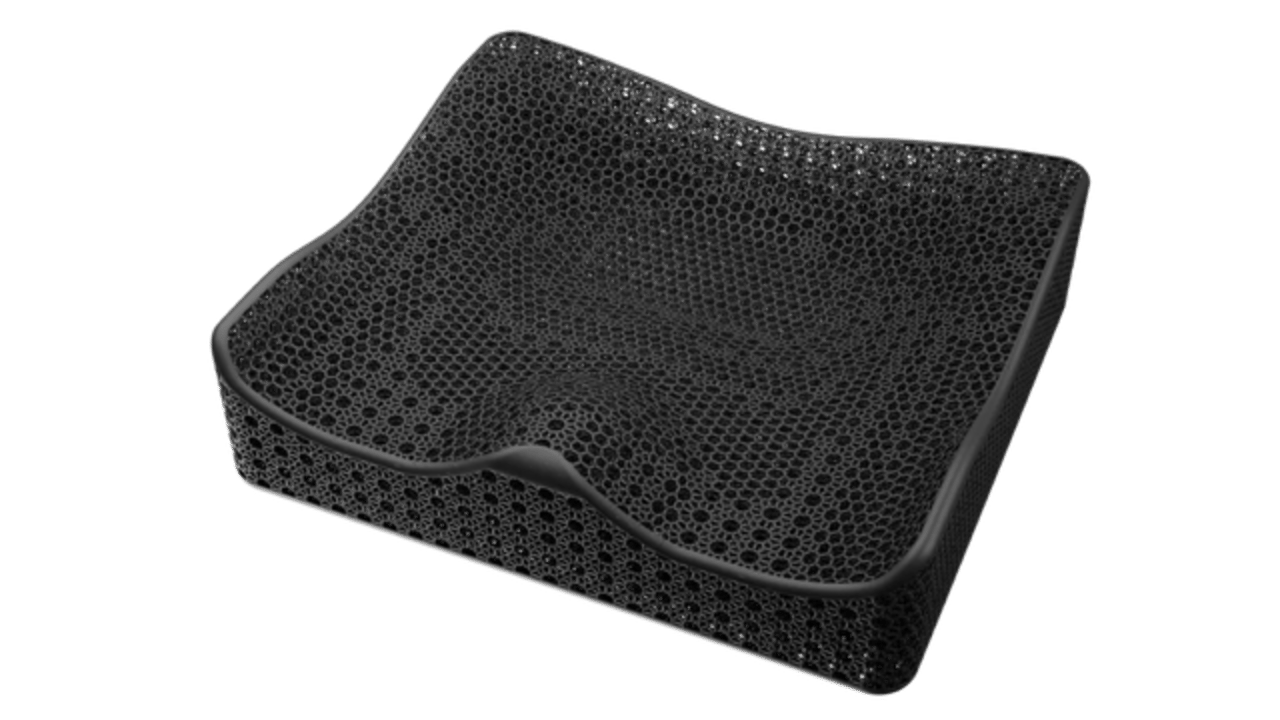
Add Medicare billing code E2609 to enable broader insurance reimbursement for custom 3D-printed and foam-milled cushion solutions, benefiting more users. — Kalogon
Nowadays, personalized medical devices come in all shapes and forms. One of the latest examples uses additive manufacturing technology to help patients sit securely.
Kalogon, founded in 2019 in Melbourne, Florida, has developed a series of new custom wheelchair cushions with Medicare codes for users with significant postural support needs. The series offers two styles: the 3D-printed Verro version, which uses a variable-density lattice structure, and the Verro version made of dual-density foam—the latter is milled from a dense foam block and then covered with a soft foam top layer.
Kalogon explains that the Verro series is designed specifically for "wheelchair users whose bodies require precise fit and cannot be satisfied by standard cushions, including those with windblown postures, pelvic tilt, or bodily asymmetry."
The company uses a “proprietary high-performance elastomer blend” to 3D print the Verro mesh version and employs a patent-pending variable-density mesh technology.
Kalogon founder and CEO Tim Balz said, “Clinicians continually tell us that their most complex patients are being overlooked, so we developed a technology that can 3D print cushions with precise, localized control over support and pressure relief. Using our variable-density lattice, we can create subtle variations across the surface and sides of the cushion that traditional materials simply cannot achieve. These customization options are highly personalized, with the goal of providing each customer with the best possible comfort, support, and fit.”
Advanced materials enhance breathability and hygiene.
The open-grid structure allows air to flow freely through the cushion, helping manage temperature and moisture while making it up to two pounds lighter than standard cushions. In addition, the material is hydrophobic, allowing liquids to pass through without pooling around the user, and the cushion can be cleaned on the top rack of a dishwasher. The product comes standard with a breathable cover, and an incontinence-resistant liner is available as an optional add-on.
The custom-cut Verro foam base can be trimmed and adjusted after delivery, providing flexibility for seating specialists as user needs change over time. Kalogon has equipped this product with an incontinence protection liner as standard.
The company states that users who prioritize breathability and temperature regulation are often better suited to a mesh structure. Those who wish to make adjustments after a trial fitting, or seat specialists serving users who are new to contoured cushions, typically prefer the foam version.
Expanded Accessibility of Medicare Reimbursement Codes
Notably, these new types of wheelchair cushions have been assigned dedicated Medicare billing codes, enabling eligible users to access broader reimbursement and greater opportunities for use.
Wohlers Associates, an additive manufacturing consulting and market intelligence firm affiliated with ASTM International, commented on this development:
“Kalogon cushions are the latest example of how additive manufacturing is making personalized medical devices commercially viable, following the path paved by custom orthotics and prosthetics. Although reimbursement issues are often a barrier to the adoption of 3D-printed medical devices, the introduction of dedicated Medicare billing codes is expected to significantly improve patient access.”
Wohlers pointed out that Kalogon estimates that pressure injuries cost over $11 billion in healthcare expenses in the United States each year, which means that even small improvements in cushioning and pressure management could quickly yield economic benefits and improve patient outcomes. Prior to this product launch, Kalogon completed a $5.75 million funding round in June, which will be used to support the expansion of its personalized seating technology.
Simplify the ordering process and shorten delivery time.
Kalogon states that there are two ways to order the new cushion. Each Verro cushion begins with a precise capture of the user’s body. Clinicians can place an order through Kalogon’s interactive real-time configurator, Launch Pad, by choosing one of the following two methods:
3D scan the physical mold of the user in an ideal seated posture; this approach can provide the most accurate fit and allow seating specialists to choose the most suitable shape.
Directly input detailed dimensions in the Launch Pad to provide a familiar and easy-to-operate workflow for seat experts.
Regardless of which method is used, Kalogon will ship within 14 days after receiving the order, and states that this is only a small fraction of the standard industry delivery cycle.
Kalogon Certified Clinical Advisor Kelly Waugh said, “Every client is unique, and seating specialists need options that reflect that. Verro enables us to match each individual with a more suitable solution based on their postural support needs, personal preferences, and expectations for on-site modifications.”
【Copyright and Disclaimer】This article is the property of PlastMatch. For business cooperation, media interviews, article reprints, or suggestions, please call the PlastMatch customer service hotline at +86-18030158354 or via email at service@zhuansushijie.com. The information and data provided by PlastMatch are for reference only and do not constitute direct advice for client decision-making. Any decisions made by clients based on such information and data, and all resulting direct or indirect losses and legal consequences, shall be borne by the clients themselves and are unrelated to PlastMatch. Unauthorized reprinting is strictly prohibited.
Most Popular
-
2026 Electronic Components Price Increase Notice
-
AI Computing Power Demand Ignites Electronic Fabrics! China Jushi Hits Limit Up! Domestic Substitution Welcomes Golden Window
-

A Look at the Material Suppliers Behind SpaceX
-

Packaging Industry Faces a Growing Component Obsolescence Crisis
-

Grupo Plastilene and ExxonMobil Set a New Benchmark for Packaging


