International oil prices drive regional divergence, asian pp market continues to rise while europe and america face pressure
I. Overall Performance of the International Market This Week
This week, the international polypropylene (PP) market showed significant regional divergence. The Asian market continued its upward trend driven by costs, while the European and American markets came under pressure due to weak demand, with mixed price movements.
| Price Type | This week's price (USD/ton) | Weekly change in price | ||
|---|---|---|---|---|
| Wire drawing / homopolymer injection molding | CFR | 1052-1054 | ↑10 | |
| BOPP film | CFR | 1087-1089 | ↑90 | |
| IPP | CFR | 1082-1084 | ↑65 | |
| Low melting copolymer | CFR | 1112-1114 | ↑10 | |
| Southeast Asia | Drawing / Homopolymer Injection Molding | CFR | 1032-1034 | ↑10 |
| Southeast Asia | BOPP film | CFR | 1052-1054 | ↑10 |
| Southeast Asia | IPP | CFR | 1082-1084 | ↑10 |
| Southeast Asia | Low-melting copolymerization | CFR | 1072-1074 | — |
| Houston | FAS | 1182-1208 | ↓12 | |
| Houston | Low-melting copolymer | FAS | 1249-1271 | ↓11 |
| Northwestern Europe | FD | 2229-2233 | ↓62 | |
| Northwestern Europe | Low-melting copolymerization | FD | 2320-2324 | ↓63 |
| Northwest Europe | FOB | 1211-1215 | ↑20 | |
| Northwestern Europe | Low-melting copolymerization | FOB | 1325-1329 | ↑20 |
| Stringing/Homopolymer Injection Molding | FOB | 903-905 | ↑37 |
II. Asian Market: Cost-Driven Rally Continues
1. Far East Market: Significant Price Increase of BOPP and IPP
This week, the Far East PP market continued its upward trend, but the increases varied significantly among different grades.
Raffia/homopolymer injection was quoted at USD 1,052–1,054/tonne (CFR), up USD 10/tonne from last week. On July 22, CFR Far East PP raffia prices rose to USD 1,055/tonne. The core driver of this round of increases still comes from the cost side—continued escalation of the U.S.-Iran conflict has pushed international crude oil prices higher amid volatility, with rising upstream costs continuing to pass through to the PP market.
BOPP film saw the most notable increase, quoted at USD 1,087–1,089/tonne (CFR), surging by USD 90/tonne week on week. IPP also posted a significant rise, quoted at USD 1,082–1,084/tonne (CFR), up USD 65/tonne. Gains in film-grade products far outpaced those of raffia grades, reflecting demand elasticity in specific downstream sectors and tight supply conditions. Low-melt copolymer was quoted at USD 1,112–1,114/tonne (CFR), up USD 10/tonne.
Southeast Asian market: moderate upward trend, cautious buyer sentiment.
Southeast Asian markets also rose this week, but the gains were relatively modest.
Raffia/Homo injection grade was quoted at USD 1,032–1,034/ton (CFR), up USD 10/ton. BOPP film was quoted at USD 1,052–1,054/ton (CFR), up USD 10/ton. IPP was quoted at USD 1,082–1,084/ton (CFR), up USD 10/ton. Low-melt copolymer was quoted at USD 1,072–1,074/ton (CFR), unchanged from last week.
In the Vietnamese market, polypropylene prices rebounded last week (July 13–17) after stopping their decline. Due to seasonal slowdown, end-user demand remained weak, and downstream inventories were low, with purchases limited to just-in-time needs. This week, to guard against the risk of price increases, buyers have started to restock in small volumes, but they remain cautious about large-scale purchases. Although buyers expect prices to soften if the Middle East conflict is resolved, they have been forced to accept higher prices passively as suppliers have broadly raised their offers to meet immediate consumption needs.
A Singaporean trader said that PP buyers “believe that crude oil prices will not continue to rise.” Indonesian producers have also adopted a cautious stance: “Due to the sharp increase in crude oil prices, sellers are also being cautious.” Overall, ample domestic supply across Southeast Asia and weak buying sentiment have continued to limit the upside potential for PP prices.
3. North American Market: Weak Demand, Slight Price Decline
In stark contrast to the continued rally in the Asian market, the Houston PP market in the United States edged down slightly this week.
Drawn yarn was quoted at USD 1,182–1,208/ton (FAS), down USD 12/ton. Low-melt copolymer was quoted at USD 1,249–1,271/ton (FAS), down USD 11/ton.
Although spot polymer-grade propylene (PGP) prices rose from $0.40/lb to $0.47/lb, driven by an outage at Enterprise’s PDH unit and maintenance at Dow’s Freeport facility, the PP market remains well supplied and demand is weak. Although PP inventories declined in June, overall market supply remains ample. Phillips 66’s Bayway unit turnaround is reportedly expected to be extended into August. Overall, the North American PP market balance remains favorable to buyers, with no July price increase initiatives announced.
IV. European Market: Significant Regional Divergence
The European PP market showed a split pattern this week, with domestic prices weak and overseas prices strong.
Northwest European draw-textured yarn (FD) was quoted at USD 2,229–2,233/ton, down USD 62/ton; low-melt copolymer (FD) was quoted at USD 2,320–2,324/ton, down USD 63/ton. Local demand in the European market remained weak, with very limited trading activity, and processors showed no urgency to purchase ahead of the summer season.
However, Northwest Europe raffia (FOB) was quoted at USD 1,211–1,215/ton, up USD 20/ton; low-melt copolymer (FOB) was quoted at USD 1,325–1,329/ton, also up USD 20/ton. The increase in FOB prices reflects relatively smooth cost pass-through in the export market, while weak domestic demand weighed on the performance of FD prices.
5. Middle East Market: Strong Upward Momentum
The Middle East PP market performed strongly this week.
raffia/homopolymer injection molding was quoted at USD 903–905/ton (FOB), up by USD 37/ton, marking the largest increase among all global markets. As a key global PP production and export hub, the Middle East’s FOB prices are closely linked to crude oil costs. This week, international oil prices rose sharply (Brent spot crude at USD 82.21/barrel, up 10.7% week on week; WTI spot crude at USD 79.70/barrel, up 11.9% week on week), directly pushing up Middle East PP export quotations.
6. Analysis of Market Drivers
1. Crude Oil: Geopolitical Conflicts Dominate, Prices Rise Sharply
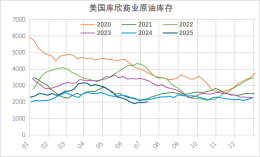
This week, international crude oil prices have risen sharply overall. On July 12, tensions between the United States and Iran flared up again and continued for several days, with shipping through the Strait of Hormuz facing disruption and market expectations of crude oil supply interruptions rising. After renewed conflict between the US and Iran on July 7 and the US cancellation of sanctions waivers for Iranian oil sales, Iran once again blocked the Strait of Hormuz, and fears of supply disruptions dominated the market. Although OPEC+ announced it would continue to increase production in August, the actual supply increase is limited under a blockade of the strait.
From July 12 to July 19, WTI crude oil futures closed at $82.49 per barrel, with a weekly increase of 15.52%; Brent crude oil futures closed at $88.10 per barrel, with a weekly increase of 15.91%. As of July 22, the ICE Brent crude oil futures September contract was quoted at $94.07 per barrel.
Acrylic: After rising sharply, it fell back, and cost transmission was once smooth.
Propylene, as the direct upstream raw material for PP, experienced a trend of rapid surge followed by a pullback this week.
As of July 16, mainstream propylene transactions in Shandong were at RMB 8,850/ton, up 10.6% week-on-week; mainstream propylene transactions in East China were at RMB 8,630/ton, up 8.6% week-on-week. High propylene prices have significantly pushed up production costs for downstream PP. However, the positive impact from propylene has largely been priced in, while many downstream sectors are operating at losses and show little willingness to continue following price increases. Approaching the weekend, the propylene market once again entered a rapid downward trend. FOB Korea propylene was quoted at USD 930/ton, while CFR China propylene was quoted at USD 1,010/ton.
The surge and subsequent pullback in propylene prices means that cost-side support for PP is marginally weakening.
VII. Market Outlook
In the short term, the international PP market will continue to exhibit regional divergence.
In the Asian market, the cost side remains the core variable. The Iran-U.S. conflict is unlikely to be resolved in the short term, and before geopolitical risks ease, crude oil is more likely to rise than fall, providing cost support for PP. However, propylene prices have already shown signs of decline, and the strength of cost support may weaken marginally. On the demand side, Southeast Asian buyers have sufficient inventory and limited willingness to chase higher prices, which will curb further upside. The Asian PP market is expected to fluctuate at elevated levels, while film-grade products such as BOPP and IPP may remain relatively firm due to tight supply and demand.
In the European and U.S. markets, the underlying weak demand is unlikely to change in the short term. In North America, supply remains ample and buyers have stronger bargaining power; in Europe, it is currently the summer off-season for demand, and processors have little willingness to purchase. PP markets in Europe and the U.S. are expected to remain weak.
Overall, the current round of PP price gains is a cost-driven rally, and its sustainability depends heavily on crude oil performance. If tensions in the Middle East ease and oil prices pull back, the upward momentum in PP will weaken rapidly. Market participants are advised to focus on the following key variables: developments in the U.S.-Iran geopolitical situation and international crude oil price trends, changes in propylene prices and plant operating dynamics, the restocking pace of Southeast Asian buyers, and the progress of global PP plant maintenance and restart schedules.
Disclaimer: The data in this report is sourced from third-party commodity information platforms such as Oilchem, Longzhong Information, and CommoPlast. It is for reference only and does not constitute investment advice.
【Copyright and Disclaimer】This article is the property of PlastMatch. For business cooperation, media interviews, article reprints, or suggestions, please call the PlastMatch customer service hotline at +86-18030158354 or via email at service@zhuansushijie.com. The information and data provided by PlastMatch are for reference only and do not constitute direct advice for client decision-making. Any decisions made by clients based on such information and data, and all resulting direct or indirect losses and legal consequences, shall be borne by the clients themselves and are unrelated to PlastMatch. Unauthorized reprinting is strictly prohibited.
Most Popular
-
Strait of Hormuz Blocked Again, Supply-Demand Mismatch in Polyolefin Market Set to Intensify!
-
Anshi semiconductor's new progress! power semiconductor giant stalls, global automakers caught in chip war
-
AI Computing Power Demand Ignites Electronic Fabrics! China Jushi Hits Limit Up! Domestic Substitution Welcomes Golden Window
-

Focus on going global! kingfa sci. leads, huitong, preter, and kumho nire follow, china’s modified plastics frenziedly expanding worldwide
-
Intelligent plastics technology company obtains patent for bioassimilable polyolefin technology