



INEOS Project ONE Key Components Successfully Crossed The Strait Of Hormuz And Arrived In Antwerp
- The first core module of the large-scale Antwerp project, in which INEOS is investing 5 billion euros, has arrived today, having been stranded in the Strait of Hormuz for several months prior.
- Two modules will complete the construction of the Project ONE cracker unit, with the final module expected to arrive at the port within the next few days.
- Each module weighs approximately 7,000 tons and stands 55 meters tall.
- The construction site of the Antwerp ethane cracking unit has entered the peak construction phase, with approximately 2,500 people working on site.
From being trapped in the strait to arriving in Antwerp smoothly
INEOS today received the first of the last two modules at the Port of Antwerp. This equipment will be used to complete the construction of the cracker unit for the Project ONE project.
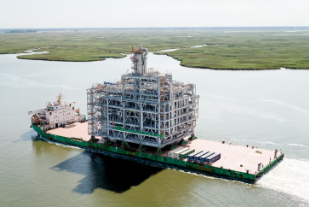
Key components are being put in place one after another: two sets of ultra-large modules are used to build a giant cracking unit.
The module arrived this time weighs 6,920 tons and stands 55 meters tall. Its weight is nearly equivalent to the total steel structure weight of the Eiffel Tower, and its height is comparable to that of a mid-rise skyscraper. It is one of the largest heavy-lift cargoes to have arrived at the Port of Antwerp in recent years, and it weighs more than the ONE project heating furnace equipment that arrived at the Port of Antwerp last year.
The last module set weighs 7,200 tons and will arrive shortly, helping INEOS complete the construction of the entire unit.
The transport vessel will continue to dock at the terminal to dismantle the protective steel structure for long-distance transportation of the modules, after which the modules will be hoisted and placed in the core area of the plant.
Modular Construction Plan
Approximately 2,500 on-site construction personnel.
Civil engineering works have been completed, and the final module has entered the installation phase. The Antwerp plant is currently focusing on mechanical, electrical, and instrumentation installation works. At present, around 80 contractors and a total of 2,500 construction workers are mobilized on site, with cumulative construction man-hours exceeding 14 million.
Debugging work is a crucial step in the implementation of a project, ensuring the safe and stable commissioning of the equipment. During the debugging phase, the entire system's subsystems will be thoroughly tested to confirm construction safety and that all indicators meet design quality standards. After the mechanical completion of each subsystem, debugging will be carried out in stages.
【Copyright and Disclaimer】This article is the property of PlastMatch. For business cooperation, media interviews, article reprints, or suggestions, please call the PlastMatch customer service hotline at +86-18030158354 or via email at service@zhuansushijie.com. The information and data provided by PlastMatch are for reference only and do not constitute direct advice for client decision-making. Any decisions made by clients based on such information and data, and all resulting direct or indirect losses and legal consequences, shall be borne by the clients themselves and are unrelated to PlastMatch. Unauthorized reprinting is strictly prohibited.
Most Popular
-
Strait of Hormuz Blocked Again, Supply-Demand Mismatch in Polyolefin Market Set to Intensify!
-

【Overseas News】Shipping traffic in the Strait of Hormuz has sharply declined! South Korea approves the reorganization of Liuzhi Petrochemical; Italy shuts down the PE plant
-
Versalis Shuts Down Polyethylene Plant in Brindisi, Italy
-

[Overseas News] US Senate Approves Bill! SABIC Collaborates with Saudi Automobile Brand! Anti-fog Biodegradable Film Launched
-

Lantiche Group To Shut Down Italian Adipic Acid Production Plant


