Global Chemical Superpower? BASF Holds Preliminary Talks With Evonik On Merger
According to reports from prominent international news outlets such as Mergermarket and Dealreporter, citing multiple informed sources, German chemical giant BASF has initiated preliminary discussions in 2026 regarding a potential merger with its peer Evonik. However, several sources have also pointed out that the likelihood of the deal being finalized in the short term remains low due to constraints related to financing and the progress of business divestitures.
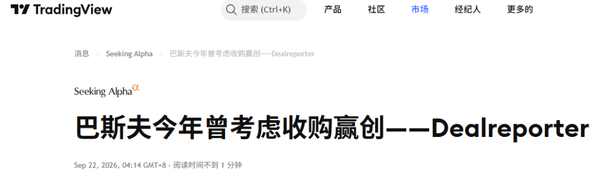
Reports indicate that five informed sources have disclosed the progress of related negotiations to the media.
It has been confirmed that the two companies have initiated relevant discussions, and any subsequent substantive actions will be conducted exclusively at the senior executive level.
Sources say the deal has the potential to reshape the industry landscape, with preliminary preparations still underway and a theoretical possibility of completion; however, some argue that while negotiations have begun, the overall situation remains uncertain.
Multiple sources have stated that the idea of a merger between BASF and Evonik is not new; the topic was discussed by their boards of directors many years ago, with related concepts having been under consideration for nearly two decades, remaining long in the conceptual stage.
Multiple insiders have acknowledged that the transaction, publicly referred to as a “merger,” is essentially BASF’s acquisition of Evonik.
In terms of market capitalization, BASF is currently valued at approximately €46 billion, while Evonik stands at around €8.1 billion. If the acquisition were to be carried out through a share swap, BASF would likely wait for its stock price to rise further before proceeding. To date, BASF’s shares have gained just over 15% this year, still trailing about 25% below their early-2022 peak.
Capital constraints and the business spin-off plan are the core factors constraining the short-term progress of this transaction.
According to insiders, BASF is currently facing tight liquidity and will not initiate any major acquisitions before completing the initial public offering (IPO) of its Agricultural Solutions business. The company has recently appointed Citigroup, Deutsche Bank, Goldman Sachs, and JPMorgan Chase as global coordinators for the IPO, which is expected to take place as early as mid-2027.
Financial data shows that as of the end of the first half of 2026, BASF’s net debt stood at €17.12 billion, with EBITDA before special items for the trailing twelve months amounting to €7.269 billion, resulting in a leverage ratio of 2.35x. Free cash flow in the first half of 2026 was -€1.56 billion, further deteriorating compared to -€1.266 billion in the same period of 2025.
From an industry perspective, the European chemical sector is under significant pressure. Declining local industrial competitiveness, market competition from Chinese chemical companies, and tariff risks are common challenges facing the industry, leading the market to view the potential closure of this transaction at some future point as reasonable. However, the completion of the deal also faces considerable resistance: if the transaction goes through, the new group’s need to cut costs by shutting down factories will encounter complex local political challenges.
Legal experts believe that the acquisition of Evonik aligns with the current trend of consolidation in the European chemical industry.
On one hand, BASF’s Zhanjiang Verbund site is scheduled to commence official operations in March 2026, solidifying its market presence in China. In June of the same year, BASF completed the divestment of its Coatings business to The Carlyle Group for an enterprise value of €7.7 billion, demonstrating its practical capability in executing large-scale asset restructuring. The acquisition of Evonik would help BASF enhance operational efficiency in its home market of Germany and stabilize its business scale.
Another favorable condition stems from the regulatory landscape. The EU’s new merger guidelines offer companies greater operational flexibility compared to previous regulations, as the EU aims to cultivate domestic champions with scale advantages to enhance industrial resilience. Companies can cite the need to counter Chinese industrial overcapacity as a justification for the rationality of their transactions during merger reviews.
According to sources, if the deal ultimately goes through, the proposed merger between BASF and Evonik will serve as a key test case for the EU’s new merger control regulations.
The report also emphasized that the relevant negotiations are currently in the preliminary stages, with no substantive agreements reached yet, and significant uncertainties remain regarding whether the transaction will proceed.
【Copyright and Disclaimer】The above information is collected and organized by PlastMatch. The copyright belongs to the original author. This article is reprinted for the purpose of providing more information, and it does not imply that PlastMatch endorses the views expressed in the article or guarantees its accuracy. If there are any errors in the source attribution or if your legitimate rights have been infringed, please contact us, and we will promptly correct or remove the content. If other media, websites, or individuals use the aforementioned content, they must clearly indicate the original source and origin of the work and assume legal responsibility on their own.
Most Popular
-
Humanoid Robot Industry Develops Rapidly, China PEEK Market Accelerates Its Rise
-

Evonik Parts Ways With The Polyester Business! A Strategic Retreat By A Germany Chemical Giant And The Global Industry Shift
-
Chemical Recycling Sector Gains Momentum: TotalEnergies Takes Full Ownership of Grandpuits Advanced Plastic Recycling Plant
-

Covestro Launches Advanced Chemical Recycling Pilot Plant For Elastomers In Germany