



Geopolitical Risks Drive Costs Higher, Weekly Polyethylene Surges 4.79%! Short-Term Volatile Pattern May Persist
I. Geopolitical risks drive up crude oil costs, significantly lifting PE spot prices.
In early July 2026, the temporary ceasefire agreement in the Middle East expired, and geopolitical risks heated up again, driving international oil prices higher amid volatility. In China’s polyethylene market, prices continued to move upward amid a tug-of-war between rising costs and weak off-season demand, with the overall market strengthening in a volatile pattern. As of July 11, the PE index was up 388 week on week, a gain of 4.79%.
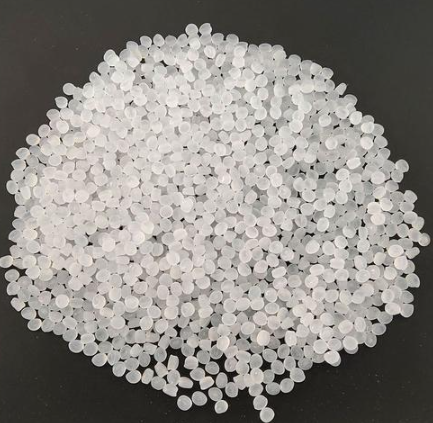
The core driver of this market volatility stems from disruptions caused by the geopolitical situation in the Middle East. On July 7, the United States revoked the general license for Iranian crude oil sales, and a vessel attack occurred in the Strait of Hormuz, triggering market concerns over a tightening of global crude oil supply. On July 8, the U.S.-Iran peace agreement was declared terminated, further amplifying geopolitical safe-haven sentiment.
Data show that Brent and WTI crude oil rose 3.09% and 2.58% week on week, respectively, while naphtha, an upstream feedstock for PE, also increased in price, providing strong cost support for the market. Driven by rising feedstock costs, domestic refineries raised their ex-works prices in a concentrated manner, and traders followed suit. Product differentiation was notable, with LDPE gains far outpacing those of LLDPE and HDPE. Meanwhile, uncertainty over navigation through the Strait of Hormuz intensified market concerns about delays in imported cargo arrivals. Coupled with continued destocking of domestic petrochemical and social inventories, which are at low levels in recent years, this has reinforced the price floor. Futures and spot prices strengthened in tandem, and restocking driven by downstream rigid demand supported a short-term market improvement. However, after the rapid price rally, downstream resistance to high prices increased, and market trading sentiment gradually cooled.
II. Supply and demand, along with differentiated profit structures, result in a lack of unilateral upward momentum in the market.
The current polyethylene market shows a significant differentiation in supply and demand dynamics, as well as in processing profits, lacking a core driving force for sustained unilateral price increases. The supply side exhibits a differentiated trend with a short-term tightness and a mid-term loosening. In the short term, low inventory levels and tight circulation of goods provide bottom support for prices, while the concentration of new capacity releases pressures the medium to long-term market.
Currently, the Tarim Petrochemical Phase II 900,000 tons/year full-density unit has started trial production. In August, the Shandong New Era 250,000 tons/year LLDPE unit is scheduled to be put into operation. The supply pressure of domestic PE is expected to significantly increase in the third quarter, and the market's expectation of looseness continues to strengthen.
In terms of profits, the disparity in profitability among different production processes continues to exist. Oil-based PE is under pressure from both high raw material costs and weak terminal demand, leading to a sustained squeeze on profit margins. In contrast, coal-based PE maintains a relatively good profit level due to its inherent cost advantages. As geopolitical risk premiums gradually dissipate and the market returns to fundamentals, the profit differentiation between these two processes is expected to gradually narrow. On the demand side, prices continue to be dragged down; July is traditionally a low season for agricultural film consumption, with mainstream downstream sectors such as packaging film and injection molding experiencing low operating rates and insufficient finished product orders. End-user companies are only maintaining essential purchases, with no concentrated stockpiling actions, resulting in weak demand-side support for price increases, hindering the potential for sustained price surges.
3. The ongoing contest between bulls and bears will lead to a short-term market predominantly characterized by range-bound fluctuations.
Overall, the current PE market is characterized by a tug-of-war between geopolitical sentiment and weak fundamentals. In the short term, geopolitical risks in the Middle East have not fully dissipated, international oil prices are likely to remain elevated and volatile, and low industry inventories continue to provide support, limiting the room for a sharp market pullback and lending a certain degree of resilience to the market.
However, caution is warranted: if the situation in the Middle East eases, the risk premium in crude oil could fall rapidly, and the PE market will quickly return to being driven by supply-demand fundamentals. The gains previously fueled by sentiment would then face correction pressure. Overall, the market has cost support on the upside and demand constraints on the downside, making it difficult for any one-way rally or decline to persist. Going forward, close attention should be paid to the navigation status of the Strait of Hormuz, the pace of fluctuations in international oil prices, and the timing of the start of autumn agricultural film demand. In the short term, China’s polyethylene market is expected to mainly fluctuate within a range, with price trends moving flexibly in response to marginal changes in costs and end-user demand.
【Copyright and Disclaimer】This article is the property of PlastMatch. For business cooperation, media interviews, article reprints, or suggestions, please call the PlastMatch customer service hotline at +86-18030158354 or via email at service@zhuansushijie.com. The information and data provided by PlastMatch are for reference only and do not constitute direct advice for client decision-making. Any decisions made by clients based on such information and data, and all resulting direct or indirect losses and legal consequences, shall be borne by the clients themselves and are unrelated to PlastMatch. Unauthorized reprinting is strictly prohibited.
Most Popular
-
AI Computing Power Demand Ignites Electronic Fabrics! China Jushi Hits Limit Up! Domestic Substitution Welcomes Golden Window
-

Focus on going global! kingfa sci. leads, huitong, preter, and kumho nire follow, china’s modified plastics frenziedly expanding worldwide
-
PA66 Cost and Profit: Broad-Based Weakness in the Feedstock Market Continues to Erode Cost Support for PA66 (202606)
-
Off-Season Demand Weighs, Polyethylene Market Expected to Fluctuate Under Pressure
-
Back-to-back major joker moves! covestro’s 1.32 million ton mdi dual-line expansion and hdi acquisition reshape global polyurethane landscape


