



Gas Explosion Accident at Shanxi Tongzhou Group Liushenyu Coal Mine Results in 82 Deaths
At 7:29 p.m. on May 22, 2026, a gas explosion occurred at the Liushenyu Coal Mine of Tongzhou Group in Qinyuan County, Changzhi City, Shanxi Province. According to CCTV News, a total of 247 workers were on duty underground at the time. The accident has left 82 people dead and 9 missing, and rescue efforts are still underway.
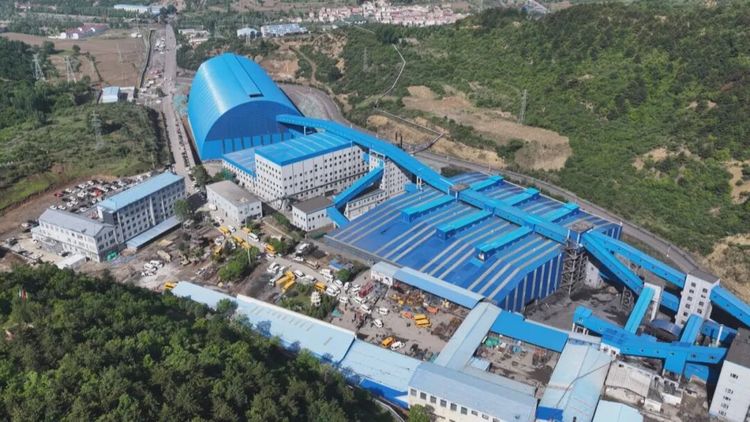
Public information from the Changzhi Energy Bureau shows that the coal mine is a high-gas mine. Shanxi Tongzhou Group Liushenyu Coal Industry Co., Ltd. is affiliated with Shanxi Tongzhou Coal and Coke Group Co., Ltd. It has a production capacity of 1.2 million tons per year, adopts inclined-shaft development, and has six shafts. The company was established in 2010, and the number of employees covered by social insurance in 2025 was 1,724.
The shadow of the Tunlan mine disaster reappears.
Shanxi was once one of the Chinese provinces with the highest incidence of coal mine safety accidents. According to statistics, from 1950 to 2016, a total of 294 extraordinarily serious coal mine accidents occurred nationwide, causing 16,223 deaths. Among them, Shanxi, Henan, and Heilongjiang were the three provinces most severely affected, accounting for 108 of these extraordinarily serious accidents. Gas and coal dust explosions, occurring more than seven times as often as all other types of accidents combined, were the overwhelming dominant type of extraordinarily serious accident.
On February 22, 2009, a gas explosion occurred at Tunlan Mine of Xishan Coal and Electricity, Shanxi Coking Coal Group. Among the 436 workers on duty, 358 were confirmed to have survived, 77 were killed, and 1 remained missing. The Tunlan Mine disaster is one of the most painful memories in the history of coal mine safety in Shanxi.
After the Tuntan Mine disaster, coal mine safety in Shanxi Province continued to improve. Over the past 17 years, no coal mine accident in Shanxi had resulted in more than 50 fatalities. However, on May 22, 2026, the gas explosion at the Liushenyu Coal Mine, which claimed 82 lives, directly broke this record and became the deadliest mining disaster in Shanxi since 2009.
Gas explosions have long been known as the “number one killer” of coal mine safety. Since the founding of the People’s Republic of China, there have been 19 coal mine disasters nationwide with more than 100 deaths in a single incident, resulting in 3,162 deaths. Among them, 15 were gas explosion accidents, causing 2,140 deaths, accounting for 79% and 68% respectively.
Corporate safety loopholes: repeatedly penalized, yet failed to prevent tragedy in a “high-gas” environment
Shanxi Tongzhou Group Liushenyu Coal Industry Co., Ltd. is not without prior offenses in terms of safety supervision. According to the Tianyancha app, in 2025 the company was twice subjected to administrative penalties for safety issues.
On July 13, 2025, the company was subject to an administrative penalty because some workers entered the mine without wearing work clothes bearing reflective markings. On December 3, 2025, the company was again fined RMB 20,000 by the Qinyuan County Emergency Management Bureau because “the emergency-stop protection pull cord for the chairlift on the track dip in the No. 3 mining area was hung on cable hooks and pinned down by cables at multiple locations including Nos. 37, 117, and 127, making it unreachable by personnel on the chairlift and rendering the emergency-stop protection ineffective; and the roof at the entrance of the 2311 track entry was fractured, with no reinforcement support measures in place.”
Ironically, not long before the accident occurred, Shanxi Tongzhou Group Liushenyu Coal Industry Co., Ltd. was selected for inclusion in the *2025 Shanxi Province Green Mine List (First Batch)*, released by the Shanxi Provincial Department of Natural Resources in September 2025. A company that had been penalized for multiple safety hazards was nevertheless recognized as a “green mine,” starkly revealing the enormous gap between safety regulation and the actual safety management practices of enterprises.
In April 2026, the Shanxi provincial government and regulatory departments were still emphasizing production safety. The Shanxi Provincial Emergency Management Department, at a coal mine safety production warning meeting, required "full efforts to prevent major accidents with multiple casualties... and to strengthen the proactive management of major disasters such as gas, water, and fire." The Provincial Safety Committee also demanded "to remain vigilant in ensuring mine safety, strictly implement hard measures to prevent and curb major production safety accidents in the mining sector, and continuously improve the prevention and control level of major disasters such as gas..." However, less than two months later, this major mining disaster occurred.
Rescue and accountability: The responsible person has been detained, and the authorities have launched an investigation.
After the accident occurred, the Party committees and governments at the provincial, municipal, and county levels attached great importance to it. The principal leaders immediately made arrangements and deployments, promptly activated the emergency response, and rushed to the scene at once to direct the rescue operations. The Qinyuan County Emergency Management Bureau has established an on-site command center, and the rescue work is still being carried out intensively.
Meanwhile, the person in charge of the company involved has been lawfully placed under control measures.
As a major coal-producing province, Shanxi has repeatedly endured the pain of mining disasters, and it has also made certain progress in safety governance. But the tragedy at Liugenyu Coal Mine once again proves this: once the safety line of a high-gas mine is breached, the cost is devastating. The loss of 47 lives and 82 shattered families raises an unavoidable question—under layers of regulation, why are safety loopholes repeatedly overlooked? Those seemingly “minor” hazards in the penalty records—cables being crushed, workers not wearing reflective vests—what do they really reveal: management negligence, or disregard for human life?
From “gas killer” to “olefin feedstock”: a path that should have been taken through to the end
Methane is the main component of coal mine gas (coalbed methane). It is not only the “number one killer” in coal mine safety, but also a valuable clean energy source and an important chemical feedstock. In the modern coal chemical industry chain, methane, like coal, can be converted into syngas and then further into methanol. Through methanol-to-olefins technology, it can ultimately be used to produce basic chemical products such as ethylene and propylene, which are then made into various plastic products used in daily life.
For Tongzhou Group, the company itself has already established a circular industrial chain of “coal–coke–chemical–hydrogen energy.” Its methanol chemical plant has an annual capacity of 500,000 tons of chemical products and is currently advancing chemical extension projects such as methanol-to-polyoxymethylene dimethyl ethers. If the gas extracted from underground is incorporated into the raw material system—after enrichment and concentration, it can be converted into synthesis gas through catalytic transformation, and then basic chemical products can be produced via the methanol-to-olefins route—a brand-new value chain of “gas–methanol–olefins–plastics” clearly emerges.
This not only turns the “killer” that threatens miners’ lives into a high-value raw material, but also fully aligns with the “coke–chemicals–hydrogen energy” circular system the company is advancing. Regrettably, while the modern coal chemical industry has been expanding rapidly, Tongzhou Group suffered fatal oversights in the basic aspects of underground safety management and failed to safely “tame” gas—this “precious resource”—ultimately leading to a painful price.
【Copyright and Disclaimer】This article is the property of PlastMatch. For business cooperation, media interviews, article reprints, or suggestions, please call the PlastMatch customer service hotline at +86-18030158354 or via email at service@zhuansushijie.com. The information and data provided by PlastMatch are for reference only and do not constitute direct advice for client decision-making. Any decisions made by clients based on such information and data, and all resulting direct or indirect losses and legal consequences, shall be borne by the clients themselves and are unrelated to PlastMatch. Unauthorized reprinting is strictly prohibited.
Most Popular
-

A Look at the Material Suppliers Behind SpaceX
-
Two Major Chemical Giants to Shut Down, Sell Again
-
BASF, Selling Again!
-

Global chemical industry shaken again! amsty and plastic energy announce bankruptcy, accelerating plastics sector shake-up
-
$80 Million Hammered Down! TMD Business Acquired By TNJ Ohio After Judicial Ruling


