



Flying Ant's Backend Technology Breakthrough: New Fabric from Recycled Clothing
Recently, Feimayi, a leading domestic comprehensive recycling and processing platform for used clothing, announced a major breakthrough in its backend technology research and development. The platform has successfully achieved the full-chain conversion of discarded garments into brand-new fabric, overcoming the long-standing challenge of high-value recycling of used clothing and injecting strong new momentum into the development of the circular economy for waste textiles.
— 1 —
Core Technology: Integration of Physical and Chemical Processes to Achieve a “Garment-to-Garment” Closed Loop
The core of this technological breakthrough lies in Feimayi’s newly developed technology for recycling old clothes into regenerated fabric. Combining the advantages of both physical and chemical recycling processes, the technology uses key steps such as precise sorting, fiber separation, purification, and polymerization to transform discarded clothing that was previously difficult to upcycle into new fabrics with quality comparable to virgin materials.
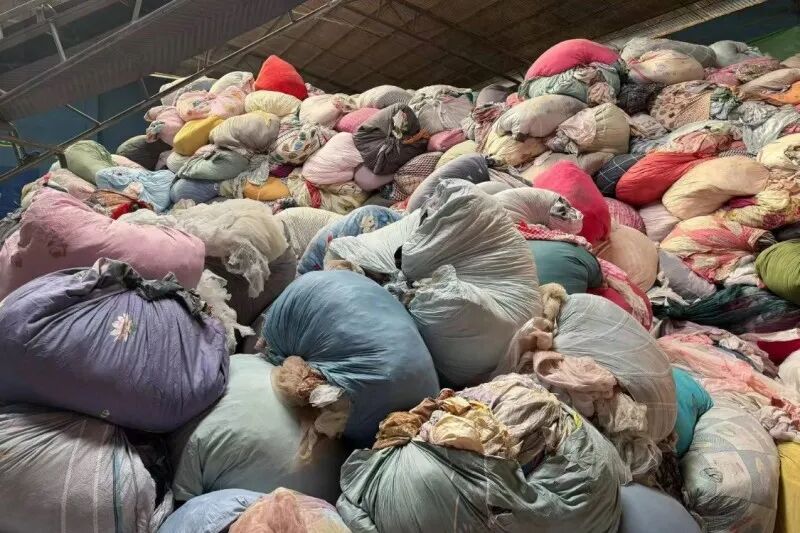
1. The Entire “Journey of Rebirth”
In FeiMayi’s recycling system, every used garment goes through a standardized “rebirth journey”:
High-Value Recycling vs Traditional Downcycling
Traditional used-clothing recycling has mostly adopted a downcycling model, such as turning old garments into thermal insulation cotton, mops, and other low-value-added products. This time, Feimayi has achieved high-value regeneration of old clothes, producing recycled fabrics that can be directly used in apparel, home textiles, and even industrial fabrics, greatly improving the utilization rate of textile waste resources. This “textile-to-textile” (T2T) closed-loop model is an important milestone in the technological upgrading of the textile waste industry.
— 2 —
Environmental benefits: significantly reduce energy consumption and carbon emissions, helping achieve the dual carbon goals.
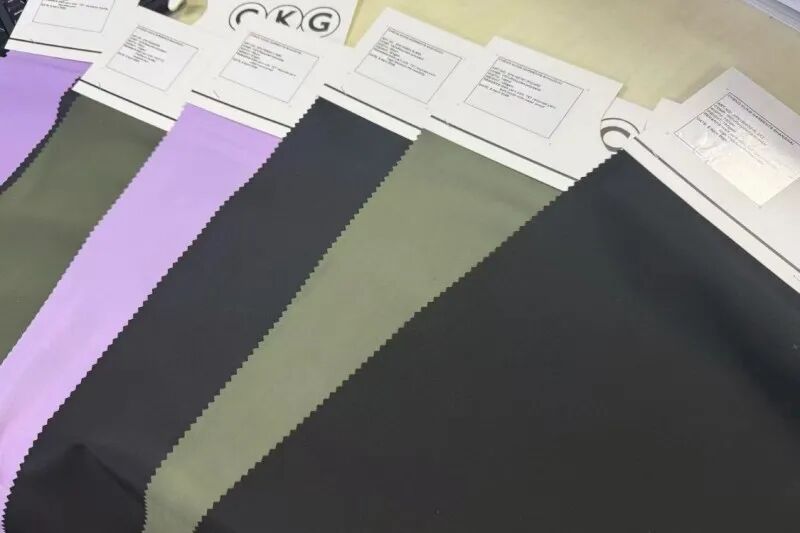
Feimayi’s technological breakthrough is not only groundbreaking in commercial value, but also demonstrates great potential in terms of environmental benefits.
— 3 —
Industrial layout: improve the entire industrial chain and promote industrialized application.
This technological breakthrough further's "recycling-sorting-reprocessing-reutilization" full industry chain layout. As one of the largest comprehensive recycling and processing platforms for used clothing in China, Feimayi has consistently advocated for "letting idle items shine again" since its establishment in 2014.
1. Fundamentals of Large-Scale Recycling
Feimayi, leveraging its innovative O2O model of Internet Plus resource recycling, has established a recycling network covering more than 360 cities across China and has served nearly 60 million users in total. As of 2025, the platform had recycled more than 150,000 tons of used clothing cumulatively, with its recycling volume in 2025 alone exceeding 150,000 tons. Guangdong and other regions have become representative areas with strong enthusiasm for recycling.
Cross-border collaboration and technological deepening
Feymayi has not developed in isolation; instead, it has actively partnered with chemical giants such as BASF, research institutions, and a number of environmental protection companies to jointly advance the research and development of recycled clothing. Through cross-industry collaboration, Feymayi has successfully launched products such as recycled nylon and expanded into a variety of application scenarios, including automotive soundproofing cotton, building insulation materials, and eco-friendly shopping bags.
3. Future Outlook
In the future, Fei Ant will continue to deepen its research and development of used-clothing recycling technologies, promote the industrial application of regenerated fabrics, and bring recycled textiles made from old clothes into more everyday scenarios. At the same time, the platform will continue to engage more users in environmental action, using technological innovation to lead the waste textile industry toward a higher level of circular economy and resource utilization.
【Copyright and Disclaimer】The above information is collected and organized by PlastMatch. The copyright belongs to the original author. This article is reprinted for the purpose of providing more information, and it does not imply that PlastMatch endorses the views expressed in the article or guarantees its accuracy. If there are any errors in the source attribution or if your legitimate rights have been infringed, please contact us, and we will promptly correct or remove the content. If other media, websites, or individuals use the aforementioned content, they must clearly indicate the original source and origin of the work and assume legal responsibility on their own.
Most Popular
-

A Look at the Material Suppliers Behind SpaceX
-

Two Major Chemical Giants to Shut Down, Sell Again
-

BASF, Selling Again!
-

Global chemical industry shaken again! amsty and plastic energy announce bankruptcy, accelerating plastics sector shake-up
-
$80 Million Hammered Down! TMD Business Acquired By TNJ Ohio After Judicial Ruling


