



Erima Group Revenue Falls 28% Yet Remains Profitable
This family-owned recycling technology company remains profitable, but delayed customer investments and rising costs in Europe have weakened its competitiveness.
The company anticipates a significant increase in market demand for high-performance recycling technology. It is predicted that by 2060, global plastic consumption will triple compared to today. Manfred Hackl, CEO of Erema Group, is inspecting the output of the melt filter on the Intarema equipment. With high-performance recycling technology and continuous investment in research and development, Erema Group is fully prepared to embrace the next growth phase in the plastic recycling industry.
要点速览
Erima Group’s revenue fell by 28% to 235 million euros, but profitability was maintained through cost control measures.
2. It is projected that global demand for plastics will triple by 2060, and the market urgently needs to expand recycling infrastructure.
3. Enterprises are investing in BlockTexx to enter the textile recycling business, showcasing the development potential of the polyester fiber market.
In the 2025-2026 fiscal year, the market environment is challenging, yet the Erima Group continues to deliver positive operational results, demonstrating strong resilience in an industry facing unprecedented challenges. As a family-owned business, the company continues to invest in research and development, increasing the proportion of recycled materials used in plastic products. Management has stated that with the rising global consumption of plastic, there will be a significant increase in market demand for high-performance recycling technologies.
The plastics recycling market has been under tremendous pressure for the third consecutive year, with persistently high energy costs, weak demand for recycled materials, and intensifying international competition. Manfred Hackl, CEO of the EREMA Group, said that European companies have been particularly hard hit by these challenges.
“In Europe, the cost structure we have created is increasingly putting industrial companies at a disadvantage in the international market,” said Manfred Hackl.
Revenue declines, but profits remain.
Erema Group has personally felt the impact brought by current market trends. For the previous fiscal year ending in March, the recycling technology company recorded revenue of €235 million, down 28% year-on-year.
“Many clients are delaying their investments,” said Horst Wolfsgruber, CFO of Erima Group. “We immediately felt the impact of this. Despite the challenging market environment, Erima Group still achieved profitability in the last fiscal year, which makes me both proud and grateful. This achievement is thanks to our stable family business structure, strict cost management, and the relentless efforts of all our employees.”
Despite a significant decline in revenue, the family-owned company has still maintained profitability, demonstrating its excellent operational management capabilities and strategic positioning—focusing on long-term development rather than chasing short-term performance.
Global plastic demand drives future growth
Erema Group’s business spans the globe, and to some extent, it can rely on orders from other regions of the world to offset the decline in demand in the European market. However, Europe remains the company’s largest market.
"Europe is the traditional birthplace of the recycling industry," explained Manfred Hackl, "but other regions are catching up quickly. Asia has made remarkable progress, and the Americas are also showing positive momentum, mainly focused on the recycling of production waste. Africa is currently lagging behind, ranking fourth, but in the coming years, the demand for plastics and corresponding recycling solutions here will see the fastest growth."
The growth expectations are quite promising. According to data from the OECD, global plastic demand is projected to increase from 460 million tons in 2019 to 1.2 billion tons by 2060, doubling in scale. To rely on recycled materials to meet a larger proportion of plastic demand, it is essential to expand recycling infrastructure and invest more in high-performance recycling technologies. The OECD estimates that by 2060, only 17% of plastics will be recyclable.
The Erema Group frequently invites clients from around the world to visit its headquarters in Ansfelden-Linz, Austria, to showcase new solutions for plastic recycling and share practical technical experiences.
Technology ready to support the circular economy
“Contrary to widespread public perception, plastics recycling can already deliver outstanding results in many application scenarios,” said Manfred Hackl. “The key question for the future is how we can keep more materials, with higher quality requirements, in continuous circulation while consistently maintaining the high quality of the finished products.”
When the quality of input materials fluctuates significantly, a stable and reliable equipment system is indispensable. Filtration and degassing processes, combined with an in-depth understanding of the entire workflow, are precisely the core competitive advantages of the EREMA Group.
"Our recycling equipment has excellent decontamination performance, ensuring product quality; the equipment itself is highly stable, which can guarantee consistent output," said Manfred Hackl. "In addition, the energy-saving solutions can minimize customers' operating costs to the greatest extent."
To achieve a circular economy, material design, collection, sorting, cleaning, and extrusion processes must be mutually compatible, enabling the produced recycled material to be used for manufacturing new products of equivalent quality. Leveraging the technological collaboration between EREMA and Lindner Washtech, customers can obtain a fully integrated solution that seamlessly connects the entire process from secondary raw material handling to recycled material output. The high level of coordination among all processes enhances the quality of the final products, processing capacity, and cost efficiency of the entire system.
Layout of a New Track for Textile Recycling
Erema Group has also begun expanding into entirely new business segments. In October 2025, the company invested in BlockTexx. This pioneering Australian company has developed a process that can separate and extract polyester and cellulose from blended fabrics, representing a major breakthrough in textile recycling. The market size of the polyester fiber industry is three times that of the PET bottle industry, yet currently only about 1% of polyester fiber can be recycled.
A policy framework is a necessary condition for industry growth.
To enable the recycling industry to play a greater role in meeting the growing demand for plastics in the future, a reliable regulatory framework is needed to provide a foundation for investment. The EU’s Packaging and Packaging Waste Regulation (PPWR), End-of-Life Vehicles Directive (ELV), and other regulatory measures are important milestones for the industry’s development.
“But most importantly, the relevant rules must be clear, reliable, and implemented uniformly across Europe,” said Manfred Hackl. “If enforcement standards vary, no one will be willing to invest. We need a standardized system to make recycled materials more attractive in the market. Only by doing so can the recycling industry truly become an important part of a long-term raw materials strategy.”
Important growth regions such as China and India are gradually realizing the significance of the circular economy for raw material supply and maintaining market competitiveness. Both countries are introducing regulations and initiatives to develop local recycling industries. The EREMA Group has been deeply involved in these markets for nearly thirty years: it established a factory in Shanghai in 2001 and jointly founded EREMA India with LindnerWashtech in February 2026. The company also has branches in North America, South Africa, and Thailand.
Leveraging its global footprint and sustained investment, the EREMA Group is well positioned to capitalize on this wave of industry growth.
“For us, plastics recycling has always been, and will continue to be, a growth industry,” emphasized Manfred Hackl. “EREMA Group’s various solutions play a crucial role in promoting the sustainable use of plastics and enabling the circular flow of raw materials.”
【Copyright and Disclaimer】This article is the property of PlastMatch. For business cooperation, media interviews, article reprints, or suggestions, please call the PlastMatch customer service hotline at +86-18030158354 or via email at service@zhuansushijie.com. The information and data provided by PlastMatch are for reference only and do not constitute direct advice for client decision-making. Any decisions made by clients based on such information and data, and all resulting direct or indirect losses and legal consequences, shall be borne by the clients themselves and are unrelated to PlastMatch. Unauthorized reprinting is strictly prohibited.
Most Popular
-
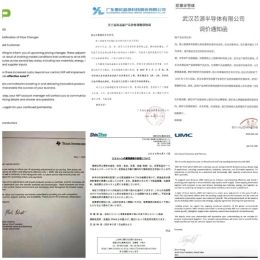
2026 Electronic Components Price Increase Notice
-
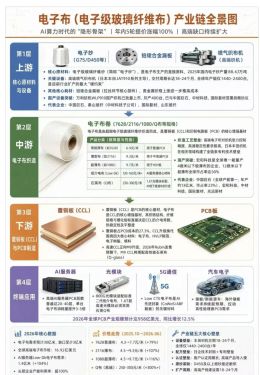
AI Computing Power Demand Ignites Electronic Fabrics! China Jushi Hits Limit Up! Domestic Substitution Welcomes Golden Window
-

A Look at the Material Suppliers Behind SpaceX
-

Packaging Industry Faces a Growing Component Obsolescence Crisis
-

Grupo Plastilene and ExxonMobil Set a New Benchmark for Packaging


