Design Concept of Reusable Delivery Service Aims to Significantly Reduce Packaging Waste
ReBento’s durable, leak-proof lunchbox replaces single-use plastic waste in subscription meal delivery services and has been recognized with the 2026 Berlin Green Product Award.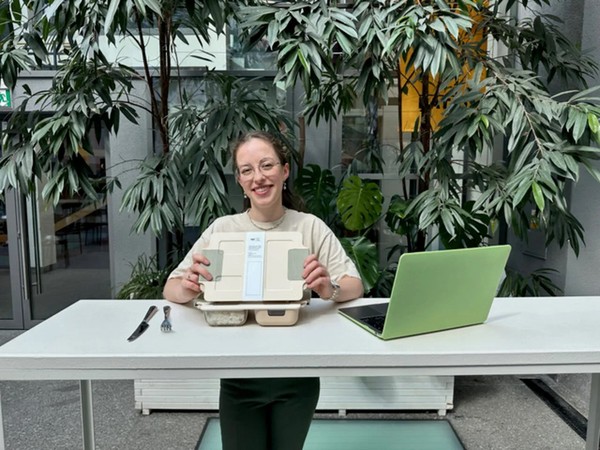
Polish design student Kaja Brunke has designed ReBento, a reusable container system aimed at addressing the growing problem of waste from single-use takeaway packaging.
Food delivery has become extremely popular, but it comes at the cost of packaging waste. As the number of consumers subscribing to such services grows, the accumulation of disposable plastic containers and foam clamshell boxes is becoming increasingly severe.
As a design student from Poland, Kaia Blenk proposed a solution aimed at minimizing the issue. This design recently won the Green Concept Award in the packaging category at the 2026 Green Product Award held in Berlin.
Brunek was born in Bydgoszcz, Poland. In high school, she studied advanced mathematics and physics courses, which she says helped her develop and apply solution-based logic when designing new products. Last year, she obtained a master's degree in product design from the Academy of Fine Arts in Gdańsk.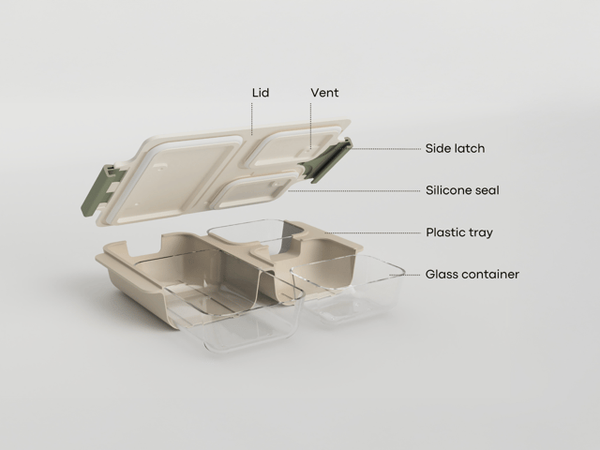
This reusable takeaway delivery packaging design recently won the Green Concept Award in the Packaging category at the 2026 Green Product Award held in Berlin. Image courtesy of Kaya Brunck.
Her latest project, ReBento, is a reusable container system for subscription-based meal delivery services designed to replace single-use plastic waste. These containers are durable, leakproof, and reusable.
The Berlin jury stated: “This project does not propose another disposable container made from alternative materials; instead, it places the emphasis on durability and functionality. This modular lunch box incorporates glass components, allowing food to be reheated directly in the container, and offers a robust and practical alternative to single-use packaging.”
The jury further pointed out that its innovation lies in its seamless integration with existing express logistics, enabling empty containers to be collected, recovered, and reused an unlimited number of times, thereby reducing tons of plastic waste.
Designers Respond to the Challenges of Sustainable Food Packaging
In a recent email interview, Brunke shared details about the design concept and its origins.
She said that during the course of her research, she spoke with well-known food and beverage businesses and found articles exploring the issue. “Many customers say that the fact that takeaway containers are single-use is a problem for them. What sets my idea apart from existing solutions on the market is that those so-called ‘eco-friendly’ packages are often of poor quality.” They tend to leak, offer a poor user experience, and, most importantly, given the enormous scale at which they are produced, they are not really much better for the planet.
She said many potential customers told her they would be more willing to subscribe to a meal delivery service if the packaging containers were recyclable.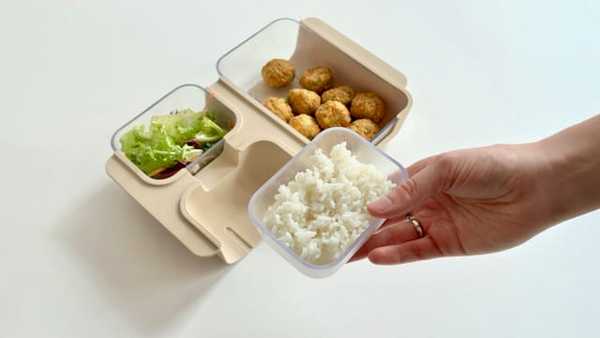
In her design concept, Brunk focused on creating containers that are aesthetically pleasing, durable, leak-proof, and reusable. Photo courtesy of Kaya Brunk.
Innovative modular design integrating glass and silicone components
Her proposed design concept includes a plastic tray for holding three removable glass containers. The rigid plastic lid on top is fitted with separate silicone sealing rings to ensure a tight fit. Each side of the lid has a rigid plastic latch, and the latches also contain silicone vent seals, which are only visible in cross-section.
Brunk pointed out that the side latch serves three functions: covering the vent hole on the lid (opening the latch breaks the seal so that the lid can be removed); securing the two sides of the lid to the tray (the lid cannot be removed without pushing the latch open); and providing a gripping part to make it easier to pull the lid away from the tray.
Blunk said, "At present, I have created a prototype that can be practically demonstrated using alternative materials. I have not yet selected the specific plastic, silicone, or glass to be used, as these decisions need to be made in collaboration with material experts, preferably in conjunction with the team that will eventually produce the product."
She acknowledges that there are still areas she needs to improve, as well as some adjustments to make, such as offering lunch boxes with only one or two containers. To move this project forward, she would very much welcome hearing from any companies interested in licensing the project or collaborating to bring this concept to market.
Circular Economy Logistics for Food Delivery Services
Regarding logistics, Blenk pointed out that the Polish market is dominated by only two or three delivery companies. She suggested that those responsible for daily meal deliveries should also collect the containers used the previous day and return them to a central location.
She envisioned the following two models:
These lunch boxes are owned by an independent intermediary company, which rents them out to catering companies. At the intermediary's location, they receive used lunch boxes from delivery companies, clean, disinfect, and check for any damages. After that, the lunch boxes are sent to the catering companies for their on-demand use.
Alternatively, food service companies can invest in and purchase meal containers themselves, just as they would buy tableware. The delivery company is responsible for returning the used containers to the food service company. In short, the trucks bring back empty, dirty containers while picking up clean ones. The receiving company then sorts, washes, and sanitizes the containers itself using standard industrial dishwashing equipment.
Blenk acknowledges that all of this requires professionals in logistics, finance, and business to handle the planning and decision-making. “My degree is entirely focused on design, so the design aspects are the most thoroughly developed. But I’m proud to say that this appears to be a viable market idea, and I’m working to validate it and find partners who are interested in exploring it with me.”
The judges of the Berlin Green Product Award seem to agree with this.
【Copyright and Disclaimer】This article is the property of PlastMatch. For business cooperation, media interviews, article reprints, or suggestions, please call the PlastMatch customer service hotline at +86-18030158354 or via email at service@zhuansushijie.com. The information and data provided by PlastMatch are for reference only and do not constitute direct advice for client decision-making. Any decisions made by clients based on such information and data, and all resulting direct or indirect losses and legal consequences, shall be borne by the clients themselves and are unrelated to PlastMatch. Unauthorized reprinting is strictly prohibited.
Most Popular
-
Strait of Hormuz Blocked Again, Supply-Demand Mismatch in Polyolefin Market Set to Intensify!
-

Versalis Shuts Down Polyethylene Plant in Brindisi, Italy
-
【Overseas News】Shipping traffic in the Strait of Hormuz has sharply declined! South Korea approves the reorganization of Liuzhi Petrochemical; Italy shuts down the PE plant
-
AI Computing Power Demand Ignites Electronic Fabrics! China Jushi Hits Limit Up! Domestic Substitution Welcomes Golden Window
-

[Overseas News] US Senate Approves Bill! SABIC Collaborates with Saudi Automobile Brand! Anti-fog Biodegradable Film Launched