Chinese EVs Sting the United States
"Forget about Huawei and TikTok for now, let's think about Chinese cars."
Ford CEO Jim Farley’s public lament once laid bare the deep anxiety gripping today’s North American auto industry. Before this, the competitive focus of both the American political and business spheres had long been fixed on the digital technology sector, where they often wielded the big stick called “tariffs,” launching trade wars and frequently profiting from them.
Today, however, Chinese electric vehicles have become the industry rival they fear most and find hardest to compete against.
Jim Farley’s warning is by no means alarmist. Behind it lies the breakthrough of Chinese electric vehicles in the global market, which has quietly completed an encirclement of the North American auto market. In particular, over the past two years, domestic automakers have focused on developing the American market, further improving their overseas expansion layout. Unbeknownst to many, an invisible encirclement around the United States has gradually taken shape.
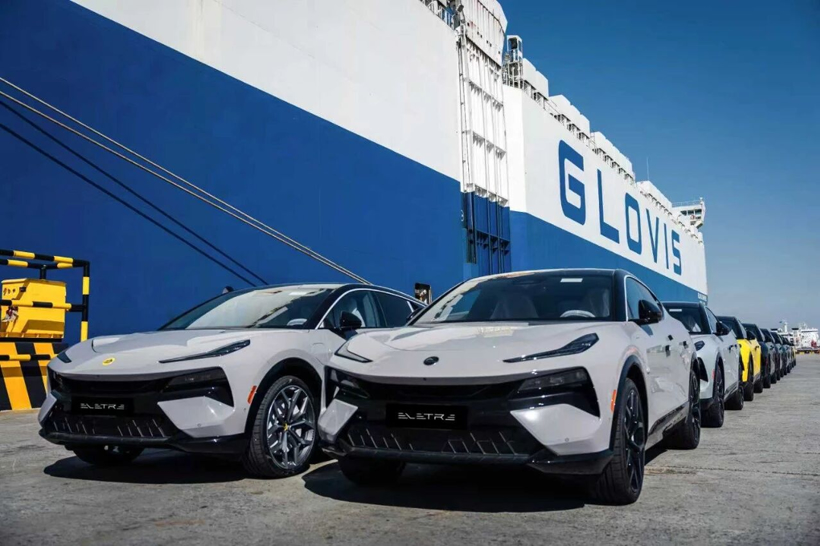
In the South American market, such as Mexico, Chinese automakers including BYD and Great Wall Motor are steadily expanding their presence, with sales continuing to rise and factory plans moving forward, firmly securing the gateway from Latin America to North America.
At the same time, the Canadian market is experiencing a significant breakthrough. The China-Canada electric vehicle cooperation agreement will be implemented in 2026, with Canada lowering tariffs on Chinese electric vehicles and opening up permissions for local manufacturing. The first batch of Lotus Eletre has already hit the roads in Canada, priced 450,000 RMB lower than the same model in the United States, with deliveries starting as early as this summer.
Currently, Chinese electric vehicles have established a foothold in Europe, Australia, and Southeast Asia, continuously squeezing the survival space of local car manufacturers overseas with their strong product capabilities, competitive pricing, and increasingly mature after-sales service systems.
Especially in North America, although it is currently difficult to enter the U.S. market, Chinese automakers are consolidating their base in Mexico to the south and opening up a foothold in Canada to the north, effectively completing a market encirclement of the United States. This is also why the U.S. is willing to deploy policy measures at all costs to strictly block and prevent Chinese EVs from entering the American market.
During this period, multiple lawmakers jointly sent a letter to the White House, demanding a clear ban on Chinese car manufacturers building factories in the United States, while also preventing Chinese electric vehicles assembled in Mexico and Canada from entering the U.S. market.
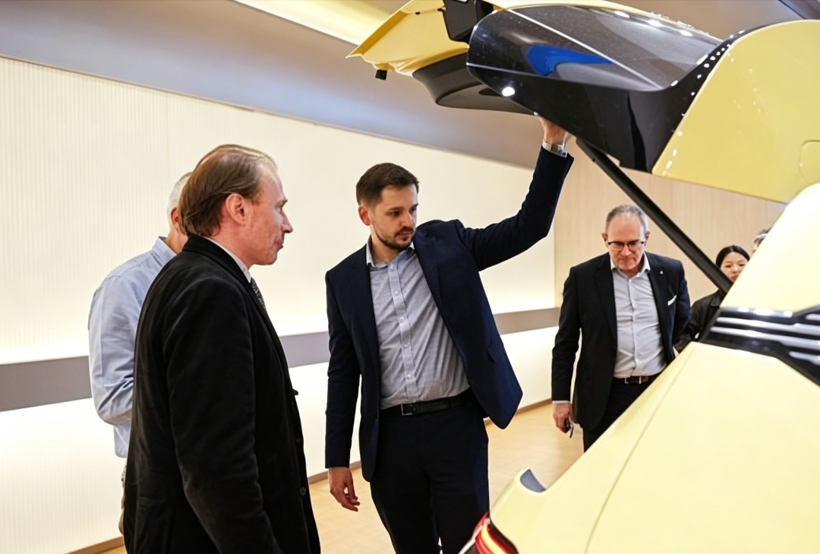
Behind the hardline blockade policy, however, are industrial chain shortcomings that the United States has struggled to overcome. Experts from the American Automobile Association (AAA) also reluctantly admit that no effective way has yet been found to systematically counter China’s new energy industry chain.
01Chinese cars have not entered the U.S. market.But then entered the United States again.
How difficult is it for Chinese electric vehicles to enter the U.S. market?
According to the article “Priced from RMB 620,000: The U.S. Further Moves to Block Chinese Cars” published by Auto Commune, Chinese electric vehicles currently face multiple layers of taxation to legally enter the U.S. market: the basic most-favored-nation tariff, the Section 232 auto tariff, a 100% punitive tariff targeting Chinese companies, plus additional emergency tariffs, bringing the combined maximum tariff rate to over 137.5%.
Exorbitant taxes and fees have effectively shut down the formal import channel. A JINPENG AMY micro electric car, with an FOB price of only RMB 26,700, sees its final cost soar to RMB 620,000 after customs clearance in the United States, while the import price of mid- to high-end models more than doubles.
However, the stringent trade barriers have failed to dampen American consumers’ enthusiasm for buying cars, and a niche yet unusual “cross-border proxy buying” car-buying boom has quietly spread along the U.S.-Mexico border.
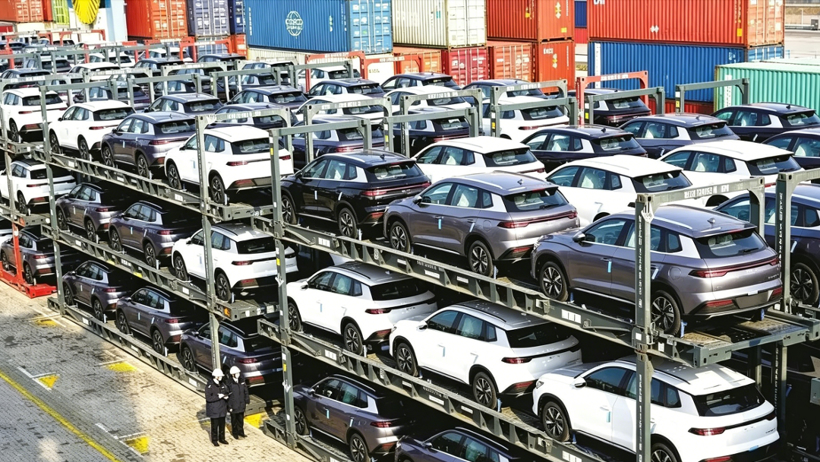
Just 8 kilometers from the U.S.-Mexico border, Ciudad Juárez in Mexico has now become a “distribution hub” for Chinese electric vehicles destined exclusively for American consumers. Popular Chinese models such as the BYD Seal and XPeng G6 are lined up in neat rows, as U.S. buyers drive across the border to choose their cars, take delivery on the spot, and then drive them back to the United States themselves, forming a mature informal delivery chain.
The core logic behind this unique phenomenon is simple and straightforward: overwhelmingly superior cost performance.
In a comparison of vehicles in the same category, the local price of Chinese electric cars in Mexico is around $20,000, while the starting price for the Tesla Model Y in the U.S. is as high as $36,900, resulting in a price difference of over $16,000 per vehicle. The gap is even more pronounced for entry-level models, with the BYD Seagull priced at $10,000 overseas, compared to the average price of $50,000 for electric vehicles in the U.S., creating a difference of over five times. Even with the addition of a 100% tariff cost, Chinese electric cars still maintain a price advantage, making them an irreplaceable choice with high cost-effectiveness in the eyes of ordinary consumers.
The consumer car-buying boom is intensifying, and survey data shows that about 30% of Americans are willing to buy Chinese electric vehicles, pushing the alarm among U.S. politicians to its peak.
Beyond the congressional letter to the White House mentioned at the outset, the United States had already introduced stringent new rules as early as January 2025: starting in 2027, intelligent connected vehicles equipped with Chinese software will be barred from entering the country, and starting in 2030, those equipped with Chinese hardware will likewise be prohibited; moreover, any automaker with ties to Chinese capital will be banned from selling its products in the U.S. market regardless of where in the world they are manufactured, completely closing off any possibility of circumventing the restrictions.
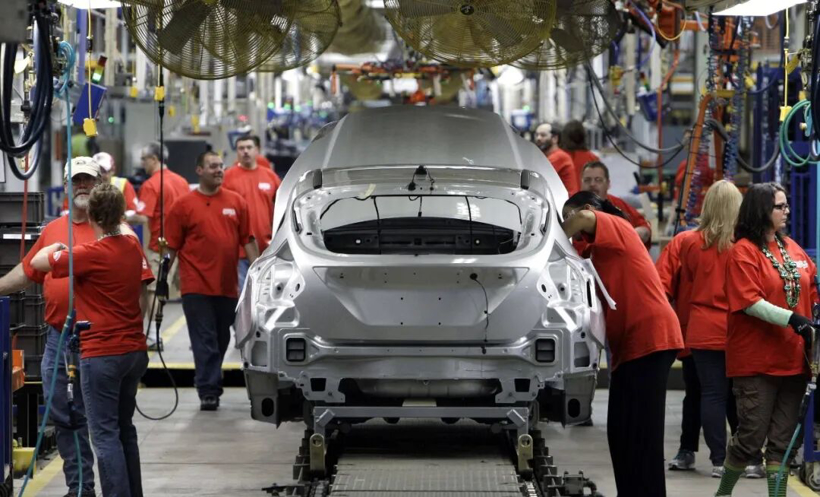
U.S. lawmakers have explicitly stated that allowing Chinese automakers to build factories in the U.S. would put domestic automakers at an absolute disadvantage and even pose national security risks. Ford CEO Jim Farley has also predicted that if the entry of Chinese electric vehicles is fully opened, the production lines for domestic gasoline vehicles will see irreversible order shrinkage within 18 months.
However, attitudes within the U.S. market are not entirely uniform. Some industry analysts have proposed a compromise: if Chinese companies invest tens of billions to acquire and revamp idle automaking plants in the American Midwest, they may be able to secure access to the market.
On the one hand, there is a hard-line ban; on the other, there is a conciliatory trial balloon. This contradictory policy stance exposes the United States’ conflicted mentality: both wary of China’s automotive manufacturing prowess and eager for foreign industrial capital.
02Global discourse power in the automotive industryIrreversibly turn toward China
The popularity of cross-border purchasing and the surge in overseas markets are essentially external manifestations of China's strength in the electric vehicle sector.
At the domestic market level, domestic independent brands have firmly established their core position. In April, the market share of domestic independent new energy vehicles surpassed 60% for the first time, continuing to overwhelm joint-venture automakers. Many long-established joint-venture automakers, hampered by lagging technological upgrades and insufficient product competitiveness, have had no choice but to withdraw from the Chinese market. Clearly, the domestic industry’s elimination race has already come to an end, and leading independent brands have completed deep accumulation in technology, production capacity, and supply chains, laying a solid foundation for large-scale overseas expansion.
On the other hand, export data more directly confirms the industry’s rapid rise. Based on data from the China Association of Automobile Manufacturers (CAAM) and publicly available sources, China’s total annual automobile exports reached 7.098 million units in 2025, up 21.1% year on year; among them, exports of new energy vehicles (NEVs) reached 2.615 million units, soaring 103.7% year on year. NEV exports accounted for 36.8% of total vehicle exports, becoming the core growth engine of automobile exports.
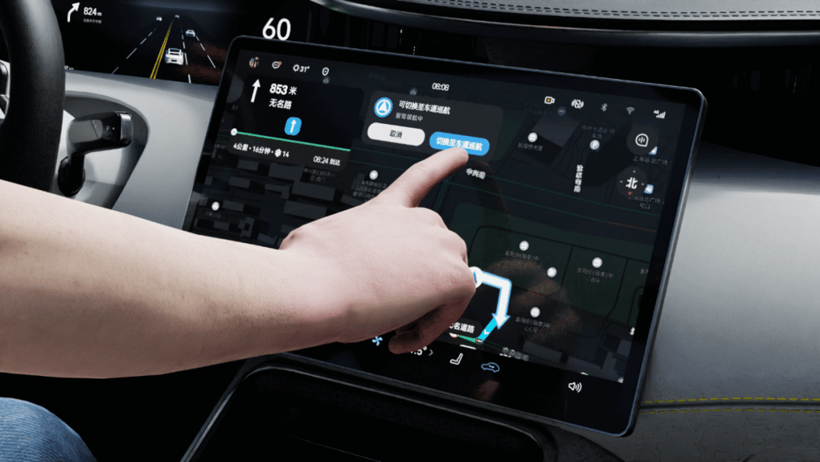
In addition to impressive sales figures, China's electric vehicles have achieved a qualitative leap. Among the many achievements in going global, there is a symbolic milestone: by 2025, BYD is set to surpass Tesla in annual sales, claiming the top spot in global new energy vehicle sales.
In recent years, when looking at China's automobile exports, terms like "leap" and "doubling" frequently appear. This reflects that China's automotive overseas expansion is not merely a simple increase in sales volume but also a rooted development of systemic strength.
At the technical level, Chinese cars’ cutting-edge technologies such as CTB battery-body integration, 800V high-voltage fast charging, one-piece die-casting, and map-free city NOA have created a clear technological gap between Chinese automakers and overseas brands.
At the same time, in terms of overseas expansion, domestic automakers have explored a mature model, creating an integrated overseas system of "complete vehicle export + local manufacturing + self-owned logistics + policy dividends."
Based on a systematic approach and leading technology, Chinese automobiles have achieved remarkable results in major global markets. The South American market, in particular, has become a source of concern for the United States, as mainstream cars on the streets have quietly changed appearance, with BYD, Chery, and Great Wall gradually replacing German and Japanese models. In Brazil, 80% of electric vehicles are made in China. The North American market continues to expand its indirect breakthroughs, as high-cost-performance Chinese electric vehicles enter Canada under the China-Canada cooperation agreement, continuously exerting external pressure on the U.S. market.
By 2026, Chinese cars in the South American market had grown beyond just sales volume and market share.
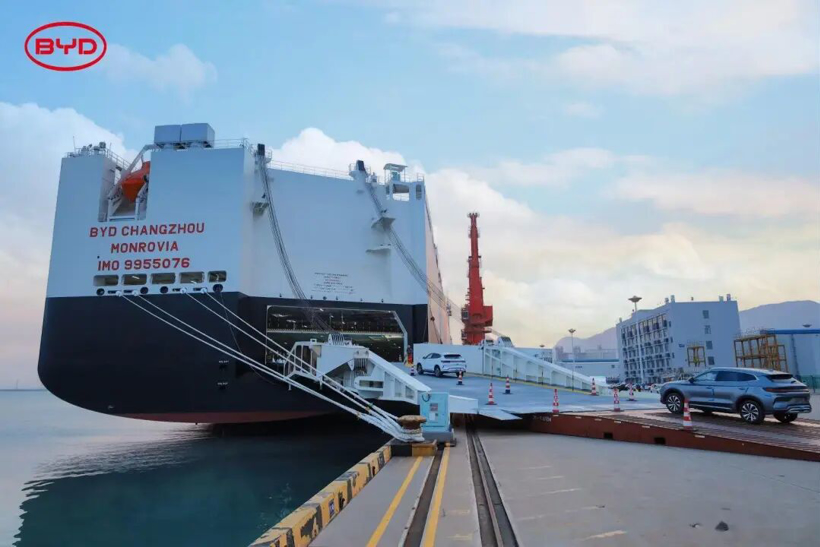
In January 2026, the “Changzhou” roll-on/roll-off vessel, carrying 5,841 BYD new energy vehicles, docked at a port in Argentina, setting a local record for the transport of Chinese-funded new energy vehicles. Meanwhile, BYD continues to expand its ocean-going roll-on/roll-off fleet, planning to build an overseas shipping fleet of eight specialized transport vessels by 2026 to establish global logistics links.
Local production has been accelerating in step. In 2025, BYD’s Brazil factory officially began production, and the 14 millionth new energy vehicle of the brand rolled off the line there. Annual sales in the Brazilian market surpassed 100,000 units, and Brazilian President Luiz Inácio Lula da Silva personally attended the ceremony and highly praised BYD’s contribution to localization. In addition to BYD, automakers such as Chery, Great Wall Motor, and SAIC have also followed suit. Among them, Great Wall Motor took over Mercedes-Benz’s Brazil factory and completed its refurbishment and start of production, jointly helping Chinese automakers expand in the South American market and even the global market.
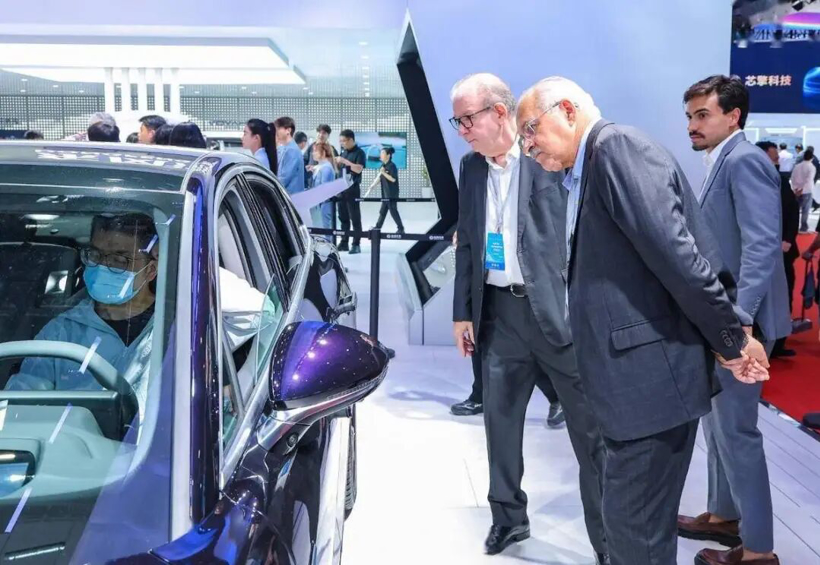
As Ford CEO Jim Farley said: “70% of the world’s electric vehicles are produced in China, and 80% of power batteries come from China. This is no longer merely a quantitative advantage, but absolute control built on deep integration across the entire industrial chain.”
In contrast, U.S. domestic automakers are finding it difficult to reverse their decline. Ford and General Motors have frequently shut down production plants and carried out large-scale layoffs, while their electrification transitions have remained in the red for a long time, with slow technological iteration and persistently high vehicle manufacturing costs.
As one rises while the other declines, the gap between the Chinese and American automotive industries continues to widen. At this stage, America’s policy blockade is merely a short-term trade protection measure. In the face of the laws of the globalized market and China’s mature and complete industrial chain, the collapse of trade barriers is only a matter of time.
Because it is well known that in the era of electrification, the global automotive industry's discourse power is irreversibly shifting towards China.
【Copyright and Disclaimer】The above information is collected and organized by PlastMatch. The copyright belongs to the original author. This article is reprinted for the purpose of providing more information, and it does not imply that PlastMatch endorses the views expressed in the article or guarantees its accuracy. If there are any errors in the source attribution or if your legitimate rights have been infringed, please contact us, and we will promptly correct or remove the content. If other media, websites, or individuals use the aforementioned content, they must clearly indicate the original source and origin of the work and assume legal responsibility on their own.
Most Popular
-
A Look at the Material Suppliers Behind SpaceX
-
Daily Review: Cost and Supply Support Push Polyester Bottle Film Market Higher
-
【Overseas News】Trump visits china, us auto industry issues collective appeal; china-us economic and trade talks held in south korea; celanese announces price increase
-

Major industry layoffs: BASF, Evonik, Dow, Wacker, and Others Cut 12,550 Jobs
-
【Overseas News】BASF Launches TPU Product Portfolio! Middle East Conflict Sparks Sulfur Price Surge! First Batch of Chinese Electric Vehicles Lands in Canada