



Carbios and Wankai New Materials Terminate Cooperation, Revoke Asia Exclusive License, And Engage With Sinopec Xunke On Enzymatic Recycling
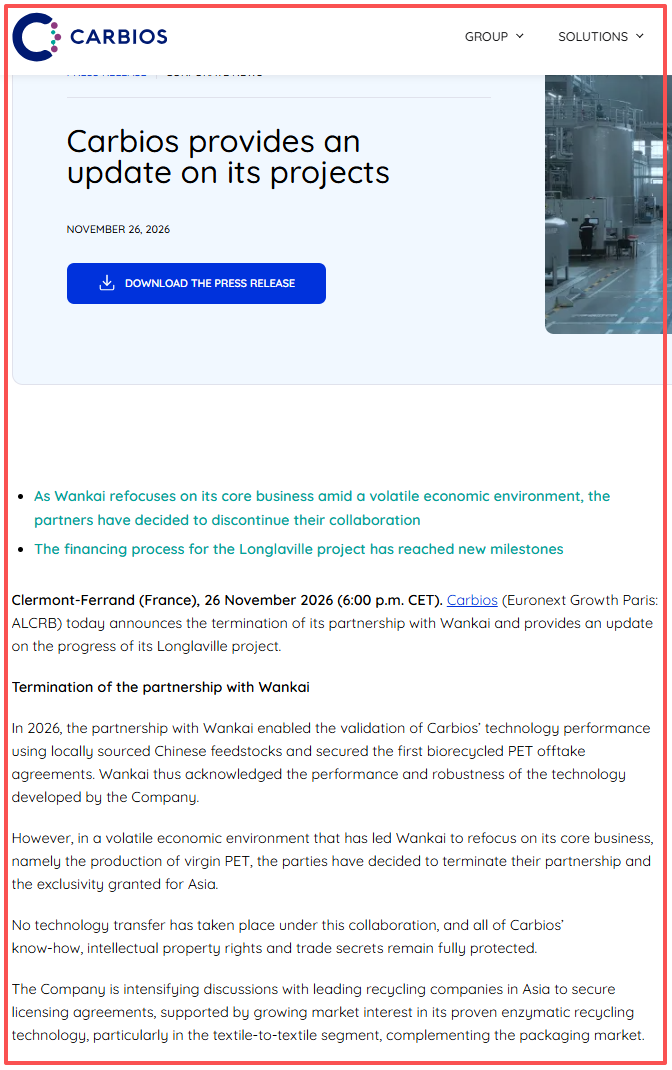
On November 26, Carbios, a French company specializing in enzymatic PET recycling technology, issued an official announcement stating that it had negotiated with Wankai New Materials to terminate their strategic partnership and revoke the previously granted exclusive license for the Asian region, thereby interrupting the previously planned pathway for industrial implementation in China.
This partnership served as a key vehicle for Carbios to enter the Asian polyester recycling market. According to the announcement, during the collaboration period leading up to 2026, both parties completed technical validation using locally sourced Chinese raw materials and finalized the first purchase agreement for bio-recycled PET. Carbios stated in its announcement that Wankai New Materials recognized the technology’s performance and stability; however, this statement represents unilateral disclosure by Carbios, and no corresponding confirmation has been seen in a simultaneous announcement from Wankai New Materials.
The announcement stated that, due to fluctuations in the economic environment, Wankai New Materials has chosen to focus on its core virgin PET business, leading both parties to reach a consensus to terminate the cooperation. No technology transfer occurred during this collaboration, and all of Carbios’ know-how, intellectual property rights, and trade secrets have been fully protected.
Following the termination of the partnership, Carbios stated that it will accelerate engagements with leading local recycling companies in Asia to seek new technology licensing opportunities. The announcement noted that market interest in its validated enzymatic recycling technology continues to grow, with the textile closed-loop recycling niche gaining significant favor as a complementary direction to the packaging PET recycling market. However, the announcement did not indicate a strategic shift by the company toward the textile sector.
Notably, just days before this announcement, on November 17, Carbios CEO Benoît Grenot and his delegation visited Sinopec Recycling Technology Co., Ltd., where they held discussions with Li Chuxin, Director and Party Secretary of the company. The two sides exchanged views on technological innovation and market cooperation in the field of PET recycling.
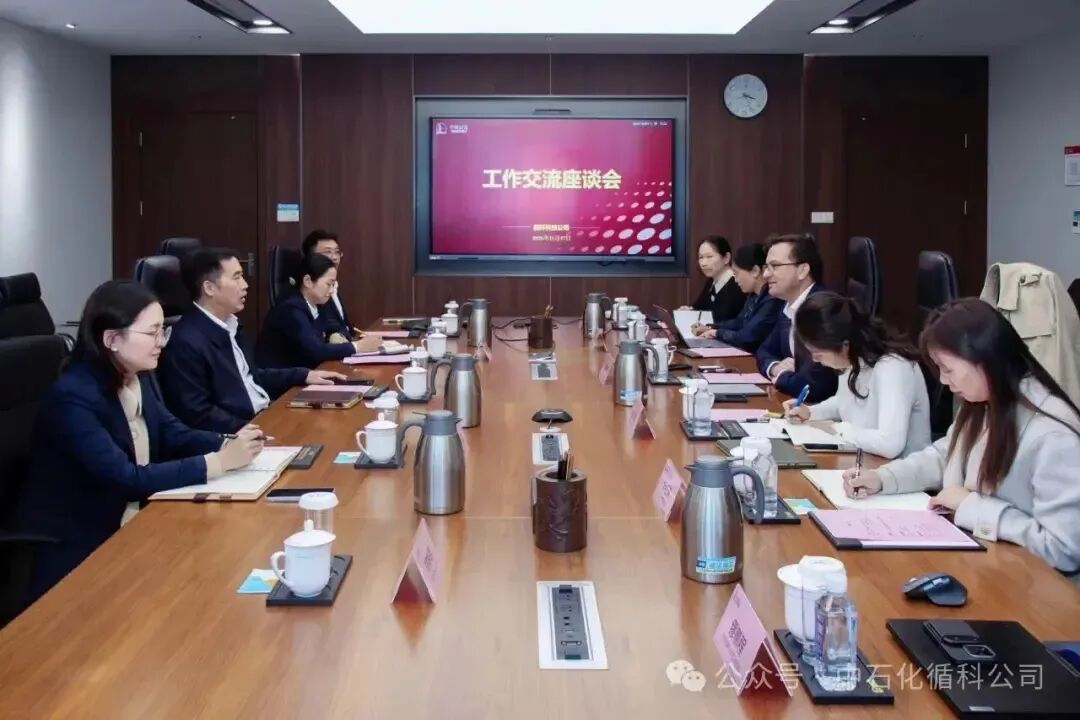
During the discussion, Carbios presented its patented enzymatic PET recycling technology, global patent portfolio, and progress on overseas projects, while Sinopec Xunke outlined its waste plastic circularity system and recycled polyester business layout. The two parties engaged in in-depth discussions on process compatibility, raw material supply security, sample validation, and commercial economic viability. They agreed to establish a regular liaison mechanism and explore diversified cooperation models, thereby paving the way for future technology implementation.
Industry analysis indicates that the end of the partnership with Wan Kai New Materials marks a setback for Carbios’ previous localization strategy in China. However, its discussions with Sinopec Xunke demonstrate that it has not abandoned the Chinese market and is still seeking new industrial partners. The high investment requirements and long commercialization cycle of the enzymatic PET biological recycling route remain ongoing challenges for its large-scale promotion.
【Copyright and Disclaimer】The above information is collected and organized by PlastMatch. The copyright belongs to the original author. This article is reprinted for the purpose of providing more information, and it does not imply that PlastMatch endorses the views expressed in the article or guarantees its accuracy. If there are any errors in the source attribution or if your legitimate rights have been infringed, please contact us, and we will promptly correct or remove the content. If other media, websites, or individuals use the aforementioned content, they must clearly indicate the original source and origin of the work and assume legal responsibility on their own.
Most Popular
-
2026 First-Half Polypropylene Market Review And Trend Outlook
-

Key Players: The 10 Most Critical Publicly Listed Companies in Solid-State Battery Raw Materials
-
Another Brominated Flame Retardant Restricted! DBDPE Listed As SVHC, Modified Plastics Brominated Flame Retardant System Faces Change
-
European Union (EU) Launches Anti-Dumping Investigation into China’s PBAT! China’s One-Million-Ton Biodegradable Plastic Production Capacity Faces a Critical Test
-

Turkey: Anti-dumping Measures on Waterproof Tarpaulins Made of Chinese Polyethylene and Polypropylene, as well as Polymer Plastic Products, Set to Expire