



Automotive entry into paid features era, charging boundaries must be clarified
Recently, automakers such as BYD, XPeng, and Li Auto have all raised the prices of optional advanced intelligent driving packages, with increases generally exceeding RMB 2,000. This collective adjustment marks the smart car industry’s entry into a new stage of function-based charging and service monetization. As “software-defined vehicles” has moved from an industry concept to a routine application, software services such as OTA remote upgrades, intelligent driving, and in-vehicle ecosystem subscriptions have broken the traditional consumption model of “one-time car purchase, lifetime use,” enabling automakers to move beyond the limitations of hardware-based profits and open up a new long-term revenue stream. However, in this process, industry malpractice has also emerged, including duplicate charges for preinstalled hardware, covert locking of basic functions, and vague or chaotic pricing standards, all of which have continued to trigger consumer disputes. How to clarify the legal boundaries of paid vehicle functions, balance automakers’ commercial profits with consumers’ legitimate rights and interests, and promote the industry’s shift away from unregulated growth has become a core issue in the high-quality development of the smart car industry.
The underlying logic behind the rise of subscription models for automotive feature payments.

The rise of the pay-per-feature model in the automotive industry is not merely a profit-driven maneuver by car manufacturers, but rather the inevitable result of the combined forces of product value reconstruction, business model evolution, and technological iteration. It represents a core trend in the transformation of the automotive industry in the intelligent era.
For traditional automobiles, the core value is concentrated in hardware configurations such as the engine, transmission, and chassis; product differentiation and brand premium are determined by hardware, and automakers' profits rely entirely on vehicle sales and after-sales service. However, with the wave of intelligentization sweeping through, the car has been upgraded from a traditional means of transportation to a "mobile intelligent terminal." Consumers' primary demands when buying a car are no longer merely for transportation, but for intelligent driving, smart cockpits, vehicle connectivity, ecosystem services, and other intelligent experiences.
Meanwhile, profits from traditional whole-vehicle sales have been continuously squeezed, and "selling cars doesn't make money" has become the industry norm. According to Cui Dongshu, Secretary-General of the Passenger Vehicle Branch of the China Automobile Dealers Association, domestic automotive industry profits totaled RMB 78.4 billion in January–March 2026, and the sales profit margin fell to 3.2%, a low level for recent years. By contrast, software subscription services typically have gross margins exceeding 60% and can generate stable cash flow, becoming a new profit growth point for automakers. For example, according to Tesla's 2025 financial report, its global FSD subscription users have surpassed 5 million, contributing over $12 billion in revenue with a gross margin as high as 70%, whereas Tesla's vehicle business gross margin over the same period was only 23%. A report from Global Market Insights shows that the global automotive software market reached $19.8 billion in 2025, and the ADAS subscription market reached $1.3 billion; they are expected to grow to $56.5 billion and $7.5 billion respectively by 2035, with compound annual growth rates of 11.1% and 19.1%. The profit-seeking nature of enterprises drives iteration and upgrading of business models: the traditional one-time profit model of "selling cars to earn margins" can no longer cover the long-term costs of intelligent vehicle R&D and services. The "pre-installed hardware plus software subscription" model perfectly addresses this pain point, enabling automakers to achieve a commercial closed loop of "one-time hardware investment, long-term continuous revenue."
In addition, the upgrade of the vehicle’s technical architecture provides solid support for a subscription-based payment model. With the widespread adoption of centralized electronic and electrical architectures in smart vehicles, the technical limitations of traditional distributed architectures have been completely broken, enabling decoupling of hardware and software across the entire vehicle and giving vehicles full-domain OTA remote upgrade capabilities. After delivery to users, automakers can remotely update the in-vehicle system, optimize driving algorithms, and add new vehicle functions through cloud-based back-end systems. This creates continuous service value and room for iteration, making software service payments both reasonable and feasible.
Chaotic disorder: unreasonable payment models are eroding trust in the industry

Under the dividends of industrial transformation, some automakers, eager to cash in on market gains, have abused software permission control capabilities, blurring the boundary between “basic hardware functions” and “value-added software services,” which has given rise to a series of unreasonable pay-to-unlock practices.
The most iconic controversial case was BMW’s seat-heating subscription incident. In 2022, BMW introduced subscription services for heated seats and heated steering wheels in multiple markets worldwide, requiring customers to pay a monthly fee of several hundred yuan. As soon as the model was launched, it immediately triggered a collective backlash from car owners around the world, with consumers criticizing it as “having to rent features after buying the car.” Under public pressure, BMW ultimately discontinued the subscription service entirely.
Following closely on the heels of the Mercedes-Benz rear-wheel steering subscription incident, the issue of paid automotive features has once again become a hot topic of public debate. All models of the Mercedes-Benz EQS pure electric flagship come standard with hardware capable of 10-degree rear-wheel steering, but the automaker restricts this through software, allowing only a default 4.5-degree rear-wheel steering function. If consumers wish to unlock the full hardware capability, they must pay a subscription fee of 16,000 yuan per year or make a one-time payment to permanently unlock the feature. This excessive commercialization has led to a significant decline in the brand’s reputation, ultimately forcing Mercedes-Benz to cancel this subscription policy.
Recently, the controversy over Ford’s electric vehicles charging for access to the front trunk opening function has pushed industry malpractice to a new level. As a basic storage structure, the front trunk relies on purely mechanical components and fixed electrical circuits, making it an inherent, basic feature of the vehicle. Yet Ford has used software settings to lock the front trunk opening permission on some models, requiring consumers to pay to unlock this basic function. This kind of compulsory charge with no value-added service whatsoever has completely crossed the line of consumer acceptance.
In addition, multiple car companies have included basic functions such as in-car ETC activation, karaoke without a microphone, zoned seat massage usage, and remote start in their paid service lists. Liu Junhai, Vice President of the China Consumers Association, bluntly stated that such practices violate the spirit of contracts and may infringe upon consumers' rights to information and fair trade. At present, the chaos surrounding paid functions has become a major area of consumer disputes in the automobile sector, severely eroding the trust between the industry and consumers.
Clarify the boundaries: clearly define the red lines for paid services and distinguish between legitimate value-added services and improper charges.
It should be made clear that the pay-for-features model itself aligns with the development trajectory of the smart automotive industry and is not the root cause of the sector's problems. The core of the current public debate has never been "whether functions can be charged for," but rather "which functions may be charged for and which must never be charged for." Clarifying the boundaries of responsibilities and distinguishing reasonable value-added services from unlawful hardware charges is the key to regulating the industry's development.
From the perspectives of industry logic and consumer fairness, software value-added services that can be continuously iterated possess a legitimate basis for charging fees.
Firstly, high-level intelligent driving services, including urban navigation assistance, all-scenario intelligent avoidance, and automatic parking functions, rely on massive cloud-based data training, continuous algorithm iteration, and 24/7 backend operations, resulting in extremely high technical investment costs. The payment models for high-level intelligent driving services such as Huawei's Qian Kun Intelligent Driving ADS, Tesla's FSD, and Xpeng's XNGP are all reasonable. Taking Huawei's Qian Kun Intelligent Driving as an example, by April 2026, the cumulative mileage of assisted driving has exceeded 10.2 billion kilometers. In 2024 and 2025, Huawei's investment in intelligent driving will exceed 10 billion yuan, and it is expected that research and development investment will exceed 18 billion yuan in 2026.
其二,持续性内容与生态服务,包括车载影音、专属音乐会员、车载游戏、定制化车机主题、专属流量包等,这类服务依托版权内容更新、后台生态运维,具备持续增值属性,消费者可根据自身需求自愿订阅,收费模式合理合规。
Thirdly, personalized performance optimization services, achieved through software tuning for upgrades in power response and chassis mode optimization, provide personalized features that do not compromise driving safety and can be reasonably priced. For instance, Volkswagen previously launched a performance paid upgrade service in the UK market for the ID.3 Pro and Pro S models, charging £16.5 per month, transforming a car with originally 201Ps into a performance version with 228Ps, and increasing the torque from 265N·m to 310N·m.
Relatively speaking, basic functions that rely on fixed hardware, factory-embedded logic, and have no ongoing iterative value should not incur secondary charges. Functions such as seat heating, steering wheel heating, front trunk opening, and basic remote vehicle control fall into this category. The hardware devices, control circuits, and underlying software logic for these functions are fully fixed at the time the vehicle is manufactured, requiring no cloud maintenance, algorithm updates, or content iteration. The hardware costs have already been 100% included in the vehicle's selling price, and consumers have fully paid for them when purchasing the vehicle. If automakers subsequently lock these functions via software and charge unlocking fees, it essentially amounts to re-leasing or reselling hardware that has already been sold, which is a typical example of unreasonable charging.
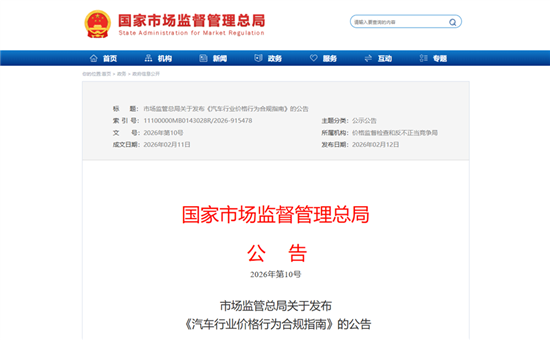
At present, the various consumer disputes arising from automotive feature subscription fees have drawn significant attention from regulators. In early 2026, the "Compliance Guidelines for Pricing Practices in the Automotive Industry," guided by the Ministry of Industry and Information Technology, was officially released. This document imposes rigid constraints on the "paid unlocking" model: automakers must clearly disclose the list of functions that require payment, the duration of free access, and the charging standards during the sales process, strictly prohibiting misleading promotions that induce purchases. Additionally, the guidelines explicitly prohibit "loss leader sales" aimed at eliminating competitors to avoid vicious price wars. Although these guidelines were not specifically tailored for software subscriptions, they mark the first time a clear boundary has been set for charging for automotive features from a pricing compliance perspective.
Multi-party Collaboration: Co-building a New Ecosystem for Smart Vehicle Payments
The standardized development of the automotive function payment model cannot rely solely on a single entity's efforts; it requires collaboration among car manufacturers, regulatory authorities, and consumers, each performing their respective roles to build a healthy industry ecosystem.
For automakers, as key players in the industry, they must uphold fundamental business ethics and abandon short-term profit-seeking thinking. They should strictly adhere to the core principle that “hardware belongs to hardware, and services belong to services,” and completely give up opportunistic practices such as pre-installed hardware lockouts and charging twice for basic functions. It is recommended to adopt a tiered model of “permanently free basic functions + on-demand subscription for value-added services,” balancing companies’ profitability needs with users’ consumption experience, and enhancing users’ willingness to pay as well as brand reputation through high-quality services.
From a regulatory perspective, rules need to be continually refined and law enforcement strengthened. First, vehicle function categories should be clearly defined, specifying which features are standard basic functions and which are paid value-added functions, so as to clarify the scope of safety-critical functions and close regulatory loopholes. Second, market inspections should be strengthened, and violations such as false advertising, hidden charges, mandatory subscriptions, and disguised price increases should be severely penalized, with offending automakers publicly named and held accountable.
Consumers should take the initiative to understand their rights and respond rationally to function-based payment models. When purchasing a vehicle, they should proactively verify the list of standard equipment, post-purchase paid features and relevant rules, and retain evidence such as sales materials and communication records. They should rationally distinguish between basic hardware functions and value-added services, recognize the value of paying for continuously upgraded services, and firmly reject unreasonable secondary charges. In the event of improper fees or damage to their rights and interests, they should proactively file complaints with regulatory authorities or third-party complaint platforms in a reasonable and lawful manner to safeguard their rights.
Summary: Translate the above content into English and output only the translation result directly, without any explanation.
Paid automotive features are an inevitable trend in the industry’s technological upgrading and business model evolution, and an important manifestation of the “software-defined vehicle” concept and the industry’s move toward high-quality development. There is nothing inherently right or wrong with charging for features; the real problem lies in unclear boundaries and unchecked profit-seeking. In the future, automakers should operate in compliance with regulations, regulators should refine oversight and enforcement, and consumers should provide rational supervision. Together, these three parties should work to curb industry irregularities and promote automotive feature monetization toward greater transparency, standardization, and sustainability, so as to steer the smart vehicle industry toward steady, healthy, and long-term development.
【Copyright and Disclaimer】The above information is collected and organized by PlastMatch. The copyright belongs to the original author. This article is reprinted for the purpose of providing more information, and it does not imply that PlastMatch endorses the views expressed in the article or guarantees its accuracy. If there are any errors in the source attribution or if your legitimate rights have been infringed, please contact us, and we will promptly correct or remove the content. If other media, websites, or individuals use the aforementioned content, they must clearly indicate the original source and origin of the work and assume legal responsibility on their own.
Most Popular
-

A Look at the Material Suppliers Behind SpaceX
-

BASF, Selling Again!
-

BASF Cuts Core Business As It Exits All Non-Core Operations, Triggering A New Round Of Industry Restructuring
-

Gas Explosion Accident at Shanxi Tongzhou Group Liushenyu Coal Mine Results in 82 Deaths
-

Bola Carbon Black Announces Global Restructuring of Specialty Carbon Black and Multi-Walled Carbon Nanotube Business


